
Soundcraft Ui24R vs Top Rack Mixers: Australian Buyer's Guide 2026
Soundcraft Ui24R vs Top Rack Mixers: Australian Buyer's Guide 2026
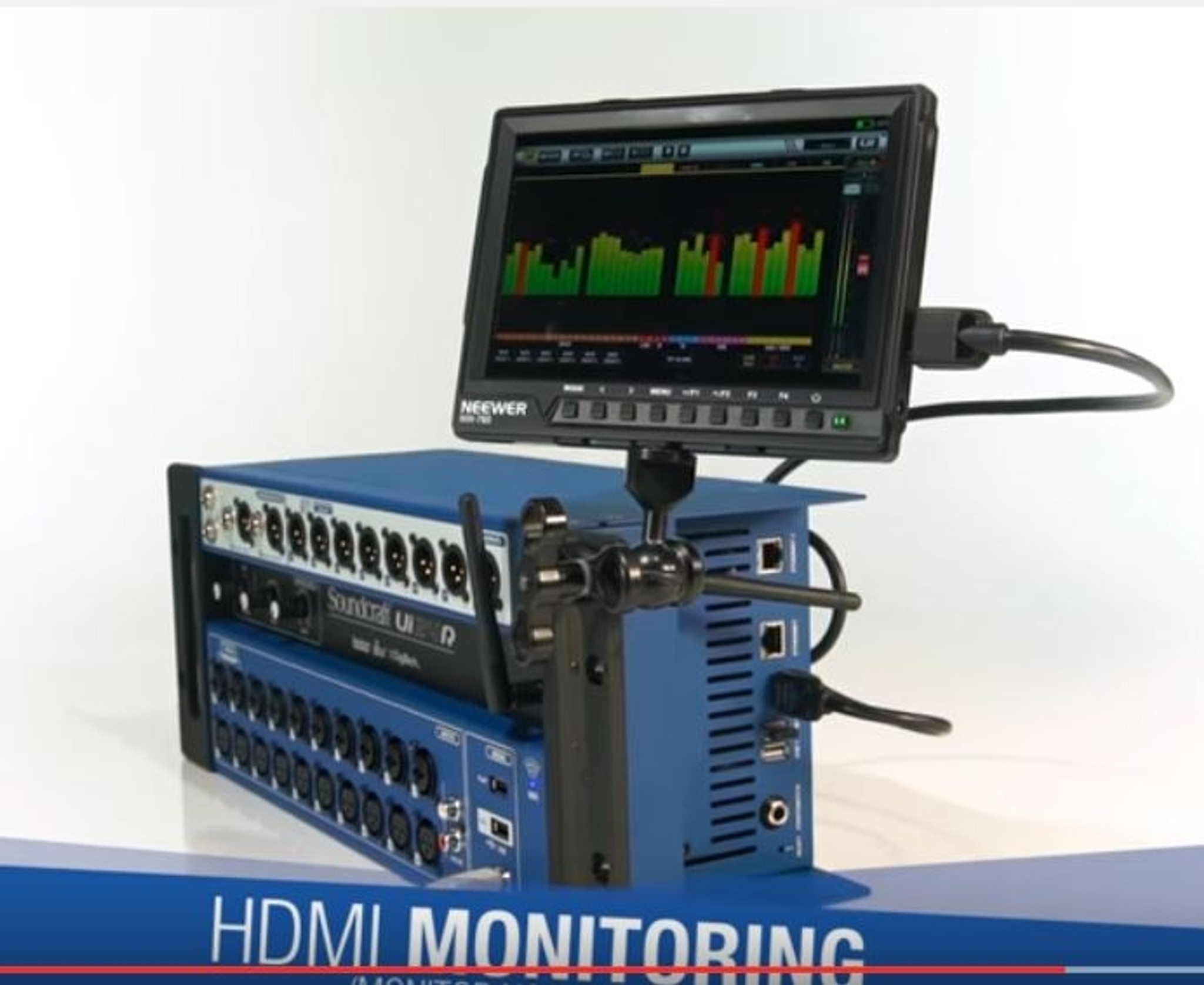
If you're shopping for a rack-mount digital mixer in Australia, the Soundcraft Ui24R sits in one of the most competitive segments of the pro audio market. It's a fully-featured 24-channel digital mixer that ditches the physical control surface entirely, putting everything in your web browser. That's either brilliant or terrifying, depending on how you feel about touching faders.
But here's the thing — the Ui24R isn't your only option. Behringer, Midas, Allen & Heath, and PreSonus all have compelling rack-mount mixers vying for your dollars. So how do you choose? This guide breaks down the Soundcraft Ui24R's strengths, weaknesses, and how it stacks up against the competition so you can spend wisely.
What Makes the Soundcraft Ui24R Different?
The Ui24R is a 24-channel rack-mount digital mixer built by Soundcraft, a Harman/JBL brand with decades of mixing console heritage. Its defining characteristic is that it has no physical controls whatsoever — no faders, no knobs, no buttons on the unit itself. Everything is controlled via a built-in web server accessible from any device with a browser: tablet, phone, laptop, even a smart TV if you're feeling adventurous.
That web-based approach is the Ui24R's greatest strength and its most polarising feature. It means you don't need proprietary software or apps — just open Chrome, Safari, or Firefox on whatever device you've got. It also means multiple operators can connect simultaneously, which is genuinely useful for monitor mixing at live gigs.
Key Specifications at a Glance
- Channels: 24 inputs (20 mic/line via XLR/TRS combo, 2 dedicated line inputs, USB stereo playback)
- Preamps: Studer-designed preamps with up to 55dB gain
- Aux Sends: 10 auxiliary outputs
- Effects: Lexicon reverbs and delays, dbx compression and dynamics, DigiTech guitar FX
- Recording: 22-channel USB recording to DAW, plus 2-track recording to USB stick
- Connectivity: Built-in Wi-Fi (dual-band), Ethernet
- Form Factor: 1U rack-mount
- Weight: Approximately 5.4kg
The Studer-designed preamps deserve special mention. Studer is legendary in the recording world, and these preamps genuinely deliver a warm, musical character that you don't typically find at this price point. If audio quality is your primary concern, the Ui24R punches well above its weight here.
The Competition: What Else Is Out There?
Before diving into direct comparisons, let's establish the key players in the rack-mount digital mixer space that Australian buyers are typically choosing between:
- Behringer XR18 (X Air) — The budget champion
- Midas MR18 — Behringer's premium sibling
- Allen & Heath Qu-SB — The premium workhorse
- PreSonus StudioLive 24R — The recording-focused option
Head-to-Head Comparison Table
| Feature | Soundcraft Ui24R | Behringer XR18 | Midas MR18 | Allen & Heath Qu-SB | PreSonus StudioLive 24R |
|---|---|---|---|---|---|
| Input Channels | 24 | 18 | 18 | 32 (18 mono + 3 stereo) | 24 |
| Mic Preamps | 20 (Studer-designed) | 16 (Midas-designed) | 16 (Midas PRO) | 16 (Allen & Heath) | 24 (XMAX) |
| Aux/Monitor Sends | 10 | 6 | 6 | 12 (mono/stereo) | 16 |
| Built-in Effects | Lexicon, dbx, DigiTech | 4x effects engines | 4x effects engines | 4x iLive FX engines | Fat Channel + 4x FX buses |
| Built-in Wi-Fi | Yes (dual-band) | Yes | Yes | No (external router needed) | No (external router needed) |
| Control Method | Any web browser | Proprietary app | Proprietary app | Proprietary app (Qu-You for musicians) | UC Surface app |
| Multitrack Recording | 22 channels via USB | 18 channels via USB | 18 channels via USB | 32 channels via USB | 24 channels via USB/AVB |
| Rack Size | 1U | 1U (half-rack) | 1U (half-rack) | 3U | 4U |
| Approx. AU Price Range | $1,800–$2,200 | $750–$950 | $900–$1,100 | $2,800–$3,400 | $2,500–$3,200 |
Detailed Comparison: Where the Ui24R Wins and Where It Doesn't
Audio Quality and Preamps
This is where the Soundcraft Ui24R genuinely shines. The Studer-designed preamps have a musical warmth and clarity that's immediately noticeable. Side by side with the Behringer XR18, the difference is real — the Ui24R sounds more refined, with better transient detail and a wider stereo image. It's not night-and-day dramatic, but experienced engineers will hear it.
The Midas MR18 closes that gap considerably with its Midas PRO-level preamps, which are excellent in their own right. The Allen & Heath Qu-SB arguably matches the Ui24R's preamp quality, and some engineers prefer the A&H voicing for live sound work.
Where the Ui24R really differentiates itself is in the onboard effects. Having Lexicon reverbs, dbx dynamics processing, and DigiTech modulation effects isn't just marketing — these are genuinely high-quality processors from brands that built their reputations on exactly these tools. The Lexicon plate reverb, in particular, sounds gorgeous on vocals and is something you'd normally need an outboard unit or plugin to achieve.
Winner for audio quality: Ui24R takes it on effects quality. Preamps are competitive with the Midas MR18 and Allen & Heath Qu-SB.
Channel Count and I/O
With 24 input channels, the Ui24R gives you significantly more to work with than the XR18 or MR18 (both 18 channels). If you're mixing bands with more than a basic setup — say a 5-piece with multiple vocal mics, DI feeds, and drum overheads — those extra channels matter enormously.
The 10 auxiliary sends are also a major advantage for monitor mixing. With the XR18's 6 aux sends, you're often compromising on monitor mixes for larger bands. The Ui24R gives you enough sends to keep a full band happy with individual monitor mixes, which is a genuine workflow improvement at live gigs.
The Qu-SB and StudioLive 24R match or exceed the Ui24R on channel count, but they cost considerably more.
Winner for I/O: Best value-for-channels goes to the Ui24R. The Qu-SB and StudioLive 24R offer more but cost more.
Control Interface and Workflow
Here's where opinions diverge sharply. The Ui24R's browser-based control is its most distinctive feature. No app to install, no software to update, no compatibility issues — if your device has a web browser, it works. That's genuinely liberating.
In practice, the web interface is well-designed and responsive on tablets. Multiple users can connect simultaneously, which is brilliant for scenarios where the FOH engineer controls the main mix while individual musicians adjust their own monitor mixes from their phones. You can also set access permissions so musicians can only adjust their own monitors — a sensible feature that prevents accidental chaos.
However, the browser-based approach has trade-offs. On smaller phone screens, the interface can feel cramped. And while it works on any browser, there can be occasional rendering inconsistencies between browsers. The Behringer/Midas proprietary apps, while requiring installation, are specifically optimised for their hardware and can feel smoother on phones.
The Allen & Heath Qu-SB's app ecosystem is arguably the most polished of the bunch, with the separate Qu-You app for musicians being particularly user-friendly.
Winner for control: Ui24R for flexibility and multi-user access. Allen & Heath for app polish. Behringer/Midas for phone-sized mixing.
Wi-Fi and Connectivity
The Ui24R includes built-in dual-band Wi-Fi (2.4GHz and 5GHz), which is a significant convenience advantage. You pull it out of the box, power it up, and connect — no external router needed. For smaller gigs, rehearsals, or situations where you need to set up quickly, this is genuinely valuable.
That said, experienced live sound engineers will tell you: always use a dedicated external router for serious gigs. Built-in Wi-Fi on any mixer — Soundcraft, Behringer, or Midas — simply doesn't have the range and reliability you need in a noisy RF environment like a pub or event venue. The Ui24R's Ethernet port is there for exactly this reason, and you should use it with a quality router for any gig where dropping connection isn't an option.
The Qu-SB and StudioLive 24R require an external router from the start, which means extra cost and setup time but arguably encourages better practice from day one.
Winner for connectivity: Ui24R for convenience, but all options benefit from an external router for serious use.
Recording Capabilities
All five mixers offer multitrack recording via USB, making them genuinely useful for both live sound and studio work. The Ui24R records 22 channels simultaneously to a DAW, which covers most recording scenarios comfortably.
The Ui24R also offers 2-track recording directly to a USB stick, which is handy for quick live recordings without a laptop. You can record the full stereo mix or a specific aux output, making it easy to capture rehearsals or create reference recordings.
The PreSonus StudioLive 24R edges ahead here with its deep integration with Studio One DAW and AVB networking for multi-stage recording setups. If recording is your primary concern over live mixing, the StudioLive ecosystem is worth serious consideration.
The Qu-SB's 32-channel USB recording is the most capable for pure multitrack work, but you're paying a significant premium for that capability.
Winner for recording: PreSonus StudioLive 24R for studio integration. Ui24R offers the best recording features at its price point.
Build Quality and Reliability
The Ui24R is solidly built for its price range. The 1U metal chassis feels robust, connectors are well-mounted, and the unit runs cool enough to rack alongside other gear without ventilation concerns. Soundcraft's heritage as a professional mixing console manufacturer shows in the build quality.
The Behringer XR18, while functional, uses lighter materials and has historically had more reports of connectivity issues. The Midas MR18 improves on this with better build quality, but both share the same underlying platform.
The Allen & Heath Qu-SB is arguably the best-built unit in this comparison — the 3U chassis is tank-like and the connectors feel like they'll outlast you. But that build quality is reflected in both the price and the physical size.
Winner for build quality: Allen & Heath Qu-SB. The Ui24R offers good build quality at a mid-range price.
Who Should Buy the Soundcraft Ui24R?
Best For: Gigging Musicians and Small Venue Operators
The Ui24R hits a sweet spot for working musicians, small-to-medium venue operators, and houses of worship who need more capability than the budget rack mixers offer but can't justify the premium pricing of Allen & Heath or PreSonus.
Specifically, it excels for:
- Cover bands and function musicians who need 20+ channels and quality effects without lugging a full console
- Small venue operators who want set-and-forget rack mounting with remote control
- Churches and community venues where multiple volunteers need simple access to mix controls
- Mobile DJs and event companies who need reliable, compact mixing for corporate events
- Home studio owners who also play live and want one device for both
When to Choose the Behringer XR18 or Midas MR18 Instead
If you genuinely only need 16 mic inputs and 6 aux sends, the Behringer XR18 saves you serious money. It's the right choice for smaller bands (4-piece or under), solo performers who want backing tracks plus a couple of vocal mics, or anyone on a tight budget who needs a capable digital mixer.
The Midas MR18 splits the difference — better preamps and build quality than the XR18, but still fewer channels and aux sends than the Ui24R. It's worth considering if audio quality matters but you don't need the extra channels.
When to Choose the Allen & Heath Qu-SB Instead
If you're mixing in high-pressure professional environments — touring, major event production, professional theatre — the Qu-SB's superior build quality, more polished app ecosystem, and Allen & Heath's professional support network justify the premium. The iLive-derived effects engines are also excellent, though arguably not superior to the Ui24R's Lexicon/dbx offering.
When to Choose the PreSonus StudioLive 24R Instead
If multitrack recording is at least as important as live mixing in your workflow, the StudioLive 24R's integration with Studio One DAW and AVB networking makes it the stronger choice. It's also worth considering if you're planning to expand into a multi-stage setup using AVB networking.
Common Mistakes When Choosing a Rack-Mount Mixer
After seeing countless Australian musicians and venue operators make purchasing decisions in this category, these are the mistakes that come up most often:
- Underestimating channel needs. You almost always need more channels than you think. A 5-piece band with drums, bass, two guitars, keys, and three vocals can easily eat 16+ channels. The Ui24R's 24 channels give you headroom that the XR18 simply doesn't.
- Ignoring aux send count. If your band members want individual monitor mixes (and they will), 6 aux sends isn't enough. The Ui24R's 10 sends is a much more comfortable number for real-world monitor mixing.
- Relying on built-in Wi-Fi for important gigs. Every rack-mount mixer with built-in Wi-Fi — including the Ui24R — will struggle in RF-congested environments. Budget for a decent dual-band router and use the Ethernet connection.
- Choosing on price alone. The XR18 is cheaper, but if you need more channels six months later, you're buying a second mixer. Getting the right channel count from the start is almost always cheaper long-term.
- Overlooking the effects quality. Budget mixers with mediocre effects mean you'll eventually buy outboard processors or software plugins. The Ui24R's Lexicon/dbx effects are genuinely good enough to use without supplementation.
Value Analysis: What Are You Actually Paying For?
Let's break down the cost-per-channel and what you get at each price tier in Australian dollars:
| Mixer | Approx. AU Price | Cost per Input Channel | Value Tier |
|---|---|---|---|
| Behringer XR18 | $850 | ~$47 | Budget |
| Midas MR18 | $1,000 | ~$56 | Budget-Mid |
| Soundcraft Ui24R | $2,000 | ~$83 | Mid-Range |
| PreSonus StudioLive 24R | $2,850 | ~$119 | Mid-Premium |
| Allen & Heath Qu-SB | $3,100 | ~$97 (32ch) | Premium |
The Ui24R sits in a fascinating middle ground. Per channel, it's significantly more expensive than the Behringer/Midas options, but you're getting meaningfully better effects, more aux sends, and Studer-designed preamps. Compared to the premium options, it's delivering about 80% of the capability at 60-70% of the price.
For most Australian buyers in the gigging and small venue market, that's the value sweet spot — professional-quality results without the professional-tier price tag.
Practical Tips for Getting the Most From the Ui24R
If you decide the Ui24R is right for you, here are some practical insights to hit the ground running:
- Invest in a quality router. A dual-band router like the TP-Link Archer series (around $80-120 AU) transforms the Ui24R's reliability for live work. Connect via Ethernet and use the 5GHz band for your control devices.
- Use a 10-inch tablet as your primary control surface. The web interface works on phones but truly shines on a tablet-sized screen. An iPad or Samsung Galaxy Tab mounted near your rack is the ideal setup.
- Save scene presets for different scenarios. The Ui24R supports scene recall — create presets for different band configurations, venue types, and rehearsal vs performance modes.
- Take advantage of multi-user access. Set up user profiles with restricted access for band members so they can adjust their own monitors without affecting the main mix.
- Use the USB recording function for virtual soundchecks. Record a full multitrack of the first set, then use playback through the mixer to fine-tune your mix without the band needing to be on stage.
Final Verdict: Should You Buy the Soundcraft Ui24R?
The Soundcraft Ui24R is one of the best-value digital mixers available in Australia in 2026. It doesn't try to be everything to everyone — it's not the cheapest, it's not the most premium, and it's not the most feature-packed. What it does is deliver genuinely professional audio quality with Studer preamps and Lexicon/dbx effects, enough channels and aux sends for serious work, and a uniquely flexible browser-based control system, all in a compact 1U rack format.
If you're outgrowing an XR18 or MR18, or you're stepping up from analogue mixing and want something that'll last, the Ui24R deserves serious consideration. It's the mixer that makes the most sense for the largest number of Australian musicians, venue operators, and sound engineers who need professional results at a mid-range price.
For the budget-conscious, the Behringer XR18 remains unbeatable on raw value. For those with bigger budgets and professional touring demands, the Allen & Heath Qu-SB is the industry standard for good reason. But for everyone in between — and that's most of us — the Soundcraft Ui24R delivers where it counts.
Ready to upgrade your live sound setup? Check current pricing on the Soundcraft Ui24R at MusiconStage and see how it fits your rig.