
Shure SM58S vs SM58: Which Switched Mic Is Right for You in 2026?
Shure SM58S vs SM58: Which Switched Mic Is Right for You in 2026?
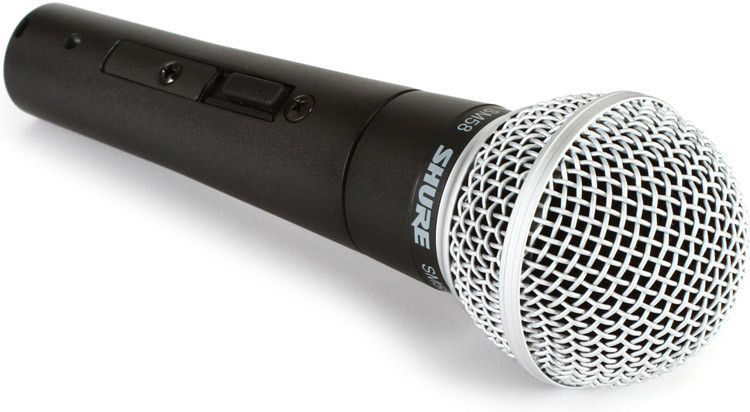
If you've spent any time around live sound — whether it's a pub gig in Fitzroy, a corporate event in North Sydney, or a community hall in suburban Adelaide — you've almost certainly seen a Shure SM58. It's the microphone that refuses to die, both literally and figuratively. But here's the thing: Shure actually makes two versions of this legendary mic, and choosing between them matters more than most people realise.
The Shure SM58S is the switched variant — identical to the standard SM58 in every sonic respect, but with an integrated on/off switch built right into the body. Sounds like a small difference? For plenty of working musicians, sound techs, presenters, and worship leaders across Australia, that switch changes everything about how the mic fits into their workflow.
This guide breaks down the SM58S against the standard SM58, other switched alternatives, and competing vocal mics in the same price bracket. Whether you're buying your first proper microphone or adding to a venue's mic locker, we'll help you figure out exactly which option earns its place in your setup.
Understanding the Shure SM58S: What You're Actually Getting
Let's start with what the SM58S is before we get into comparisons. The SM58S is a dynamic cardioid microphone with a built-in pneumatic on/off switch. Internally, it shares the same capsule, transformer, and frequency response as the standard SM58. The only physical difference is that sliding switch on the body.
Core Specifications
| Specification | Shure SM58S |
|---|---|
| Type | Dynamic (moving coil) |
| Polar Pattern | Cardioid (unidirectional) |
| Frequency Response | 50 Hz – 15 kHz |
| Sensitivity | -54.5 dBV/Pa (1.85 mV) |
| Impedance | 150 ohms |
| On/Off Switch | Yes — integrated slide switch |
| Connector | XLR-3 (male) |
| Weight | 330g |
| Construction | Steel mesh grille, enamel-painted die-cast body |
That frequency response — with the carefully shaped presence peak around 5–10 kHz and the bass rolloff below 100 Hz — is what gives the SM58 its signature vocal clarity without muddiness. The SM58S delivers that same tonal character note for note.
SM58S vs SM58: The Switch Debate, Settled
This is the comparison most buyers are actually making, so let's address it head-on.
Head-to-Head Comparison
| Feature | SM58S (Switched) | SM58 (Standard) |
|---|---|---|
| Sound Quality | Identical | Identical |
| Frequency Response | 50 Hz – 15 kHz | 50 Hz – 15 kHz |
| Polar Pattern | Cardioid | Cardioid |
| On/Off Switch | Yes — slide switch | No |
| Build Quality | Identical construction | Identical construction |
| Weight | 330g | 330g |
| Accessories Included | Stand adapter, zip pouch | Stand adapter, zip pouch |
| Typical AU Price | Slightly higher | Slightly lower |
Sonically, there is zero difference. Same capsule, same transformer, same everything inside. Shure hasn't compromised the audio path to accommodate the switch — it's a clean mute, not a signal degradation.
When the Switch Is a Genuine Advantage
- Presenters and MCs: Being able to mute yourself quickly between announcements without relying on a sound tech is genuinely useful. Corporate events, conferences, and award nights run smoother when the presenter controls their own mic.
- Worship and church environments: Pastors and worship leaders who alternate between speaking and stepping back benefit from having direct mute control, especially in smaller churches without a dedicated sound operator.
- Rehearsal spaces: When you're running your own rehearsal without a front-of-house engineer, the switch lets you cut your mic during breaks without leaving the stage area.
- Multi-mic setups: If you've got several mics set up on stands for a panel discussion, choir, or drama production, switches on each mic reduce the need for complex mute groups at the desk.
- Buskers and solo performers: Running your own PA in a park or market? The switch means one less thing to reach for on your mixer between songs.
When You Should Skip the Switch
- Professional live sound: Most experienced sound engineers prefer muting from the console. An on-body switch that performers might accidentally bump is a liability during a critical mix. If your FOH engineer manages your channels, the switch adds risk without benefit.
- Studio recording: In the studio, signal flow is controlled from the interface or DAW. A physical switch on the mic body is unnecessary and could introduce handling noise if brushed during a take.
- Touring bands with sound techs: If someone else manages your sound, let them manage the muting. Accidental switch bumps mid-song are every sound tech's nightmare.
The honest verdict: If you control your own sound, the SM58S switch is a practical tool. If someone else runs your mix, the standard SM58 is the safer choice. Neither is objectively "better" — it's entirely about your workflow.
How the SM58S Stacks Up Against Competing Vocal Mics
The SM58S doesn't exist in a vacuum. Several other dynamic vocal microphones compete in the same price bracket across Australia. Here's how they compare.
Competitive Comparison Table
| Feature | Shure SM58S | Sennheiser e835 | Audio-Technica AT2010 | Rode M1 |
|---|---|---|---|---|
| Type | Dynamic | Dynamic | Condenser (handheld) | Dynamic |
| Polar Pattern | Cardioid | Cardioid | Cardioid | Cardioid |
| On/Off Switch | Yes | No (e835 S has switch) | No | No |
| Frequency Range | 50 Hz – 15 kHz | 40 Hz – 16 kHz | 40 Hz – 20 kHz | 75 Hz – 18 kHz |
| Best For | All-round vocals, durability | Detailed vocals, feedback rejection | Bright, articulate vocals | Warm, smooth vocals |
| Durability | Legendary | Excellent | Good (more fragile) | Very good |
| Handling Noise | Good (pneumatic shock mount) | Good | Moderate | Good |
| Country of Origin | Mexico | Germany | China | Australia |
Shure SM58S vs Sennheiser e835
The Sennheiser e835 is probably the SM58's closest direct rival. It offers a slightly wider frequency response on paper and many users find it has a touch more high-frequency detail. The e835 also has excellent feedback rejection, arguably matching or slightly exceeding the SM58 in very loud stage environments.
However, the SM58S wins on two fronts: the integrated switch (Sennheiser does make the e835 S, but it's less commonly stocked in Australia) and the SM58's legendary durability. There are well-documented stories of SM58s surviving being run over by tour buses, dropped from balconies, and used as hammers. The e835 is robust, but the SM58 is practically indestructible.
Choose the SM58S if you need the switch, prioritise ruggedness, and prefer the SM58's warmer midrange character.
Choose the e835 if you want slightly brighter detail and don't need a switch.
Shure SM58S vs Audio-Technica AT2010
This is a genuinely different comparison because the AT2010 is a condenser microphone in a handheld form factor. It requires phantom power and offers a wider frequency response with more high-frequency sparkle and detail. For vocalists who want studio-like clarity on stage, the AT2010 delivers.
The trade-off? Condensers are more sensitive to handling noise, feedback, and rough treatment. The AT2010 won't survive the same abuse an SM58S will shrug off. It also doesn't have an on/off switch.
Choose the SM58S if durability, feedback rejection, and the switch matter to you.
Choose the AT2010 if you're in a controlled environment and want the most detailed vocal reproduction possible.
Shure SM58S vs Rode M1
The Rode M1 deserves special mention for Aussie buyers — it's designed and engineered right here in Australia. The M1 has a slightly tighter low-end rolloff (75 Hz vs 50 Hz), which can actually be an advantage for live vocals as it naturally reduces proximity-effect boom. Its tone is warm and smooth, sitting nicely in a live mix without much EQ intervention.
The SM58S edges ahead on durability testing (though the M1 is no slouch), and obviously offers the switch that the M1 lacks. The M1's frequency response extends higher to 18 kHz, giving it marginally more air on vocals.
Choose the SM58S if you want the switch, maximum durability, and the industry standard.
Choose the Rode M1 if you want to support Australian manufacturing and prefer a slightly smoother, warmer tone.
Who Should Buy the Shure SM58S? Situation-Specific Recommendations
Best for: Solo Performers and Buskers
If you're running your own PA, singing at markets, or performing solo acoustic gigs in cafés across Australia, the SM58S is arguably the perfect mic. You get the SM58's bulletproof reliability (critical when your gear gets thrown in a car boot every weekend) plus a switch that lets you mute between songs without reaching for your mixer. It handles vocals beautifully, rejects feedback well in tricky acoustic spaces, and will outlast just about any other piece of gear you own.
Best for: Churches and Community Venues
Smaller churches, community halls, and school auditoriums often don't have a dedicated sound technician at every event. The SM58S lets speakers, pastors, and presenters control their own muting, reducing the workload on volunteer sound operators. Buy a few SM58S mics for your venue and they'll serve you reliably for a decade or more.
Best for: Corporate Events and Presentations
Conference organisers and AV companies know the SM58 well. The switched version gives presenters autonomy — they can mute during audience Q&A, step away from the podium, or simply cut the mic when they're not speaking. It's professional, reliable, and everyone knows how to use it.
Consider an Alternative If:
- You're recording in a studio — Look at a large-diaphragm condenser like the Audio-Technica AT2020 or Rode NT1 instead. Dynamic mics aren't ideal as primary studio vocal mics.
- You need wireless — The SM58 capsule is available in Shure's wireless systems (SLX, BLK, and QLXD ranges). You'll get the same sound without the cable.
- Your sound engineer prefers no switch — Respect their preference. The standard SM58 might be the better choice for a managed live sound environment.
- You're on a very tight budget — While the SM58S represents strong value, there are decent budget dynamics from Behringer and Samson if you genuinely can't stretch to it. Just know you're making compromises on durability and sound quality.
Value Analysis: Is the SM58S Worth the Premium Over Budget Mics?
Let's talk honestly about value, because it's a question Australian buyers rightly ask. The SM58S sits at a higher price point than budget dynamic mics from brands like Behringer (XM8500) or Samson (Q2U). Is the difference justified?
Short answer: Yes, overwhelmingly.
Here's why. A budget $40–$60 dynamic mic might sound acceptable for casual use, but the SM58S offers:
- Dramatically better build quality. The SM58's steel mesh grille and die-cast body are engineered to survive professional abuse. Budget mics crack, dent, and develop rattles within months of regular use.
- Consistent performance. Every SM58S sounds like every other SM58S. Budget mics often have significant unit-to-unit variation in frequency response.
- Better internal shock mounting. The SM58S uses a pneumatic shock mount system that genuinely reduces handling noise. Budget mics transmit every finger movement into the signal.
- Superior feedback rejection. The SM58's cardioid pattern is tightly controlled and consistent across its frequency range. Cheaper mics often have poorly controlled off-axis response, making feedback a constant battle.
- Longevity. An SM58S will last 10–20+ years of regular use. A budget mic might last 1–3 years. Per-year cost of ownership actually favours the SM58S.
The price difference between a budget mic and an SM58S is the difference between a tool and a disposable item. For anyone who performs or presents regularly, the SM58S pays for itself quickly.
Common Buying Mistakes to Avoid
After years of seeing Australians buy microphones, these are the mistakes that come up again and again:
- Buying the switched version when your sound tech doesn't want it. Always check with your engineer first. Some techs have strong opinions about on-body switches, and for good reason — accidental mutes during performances are genuinely problematic.
- Assuming you need a condenser. Many buyers think "condenser = better" because condensers pick up more detail. For live vocals, that extra sensitivity often means more feedback, more bleed, and more problems. The SM58S's dynamic design is a feature, not a limitation.
- Forgetting about cables and stands. The SM58S ships with a stand adapter and zip pouch but no cable or stand. Budget for a decent XLR cable (at least 5m for stage use) and a mic stand. Cheap cables cause more problems than cheap mics.
- Buying counterfeit SM58s. Fake Shure microphones are disturbingly common online. Buy from authorised Australian dealers like MusiconStage to guarantee you're getting the genuine article with full Australian warranty.
- Overthinking the decision. The SM58 (with or without switch) has been the world's best-selling vocal microphone for over 50 years. It's not the most exciting purchase, but it's never the wrong one.
Questions to Ask Before Buying
Before you click "add to cart," run through these:
- Do I control my own sound, or does someone else? If you control it → SM58S. If someone else does → ask them first.
- Am I using this live or in the studio? Live → SM58S is excellent. Studio → consider a condenser instead.
- How often will I use it? Regular use → SM58S is a no-brainer investment. Once a year → a budget mic might suffice.
- Do I need wireless? If yes → look at Shure's wireless systems with SM58 capsules instead.
- Am I buying from an authorised dealer? Always buy from authorised Australian retailers for warranty protection and authenticity.
Final Recommendation
The Shure SM58S is one of those rare products where the recommendation is straightforward: if you need a switched vocal microphone for live use, presentations, or any situation where you control your own sound, this is the one to buy. Full stop.
It's not the cheapest option. It's not the most feature-rich. It doesn't have the widest frequency response on paper. But it does something no spec sheet can capture — it works, every single time, for years on end, without drama. In Australia's harsh climate, from humid Brisbane summers to dusty outback festival stages, the SM58S just keeps performing.
The integrated switch adds genuine utility for self-managed performers, presenters, and smaller venues without dedicated sound operators. If that describes you, the SM58S is the clear choice over the standard SM58. If it doesn't, save a few dollars and grab the switchless version — you're getting the same iconic microphone either way.
Ready to buy? Pick up the Shure SM58S from MusiconStage — an authorised Australian dealer with fast shipping and local warranty support. It's the kind of microphone you buy once and use forever.