
Shure SM58S Switched Mic: Real-World Use Guide 2026
Shure SM58S Switched Mic: Real-World Use Guide 2026
If you've spent any time around live sound in Australia, you've held an SM58. It's the microphone you'll find in pub backlines from Cairns to Hobart, sitting in church AV cupboards, lined up at school assemblies, and bundled into wedding DJ kits. The Shure SM58S is the same legendary cardioid dynamic vocal mic — with one critical addition: a built-in on/off switch. That little slider changes who this microphone is for and where it genuinely shines.
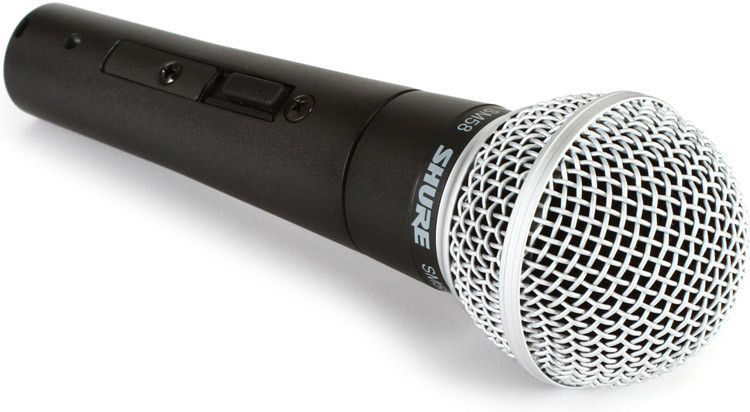
This guide isn't another spec-sheet rehash. Instead, we'll walk through exactly how the SM58S performs in the situations Aussie buyers actually use it in — and where you should think twice before adding the switch model to your cart. If you'd rather skip ahead, you can view the Shure SM58S on MusiconStage any time.
Why the Switch Changes Everything (and Nothing)
Sonically, the SM58S is identical to the standard SM58. Same cardioid polar pattern, same 50Hz–15kHz frequency response with that famous presence peak around 4–6kHz that flatters vocals, same pneumatic shock-mount system and steel mesh grille that survives being dropped on a stage floor for the hundredth time. What you're paying a small premium for is the slider switch on the body — and that switch quietly solves a handful of very specific real-world problems.
It also creates one problem of its own, which we'll get to. First, let's look at where the switch earns its keep.
Real-World Scenario 1: Houses of Worship and Community Halls
Walk into any suburban church on a Sunday morning and there's a good chance you'll spot an SM58S on the pulpit or being passed between readers. This is arguably the use case the switch model was made for.
Most churches and community halls don't have a dedicated sound operator at the desk every service. Volunteers run the system, lay readers come up to share announcements, and microphones are passed between people who have no idea what "phantom power" or "channel mute" means. The on/off switch gives the person holding the mic direct control — no whispering across the room to ask someone to unmute their channel, no awkward dead time while a volunteer at the desk hunts for the right fader.
- Pass-around readings: Readers can switch on as they approach, off as they sit down. No feedback, no rustling clothing picked up at high gain.
- Pulpit use: Speakers can mute the mic when stepping away to consult notes or take a sip of water, without anyone touching the desk.
- Volunteer-friendly: The switch is large, tactile, and unmistakable. Even non-technical users understand it instantly.
The trade-off in this setting is minimal because nobody's running a tight festival set. The switch is a feature, not a hazard.
Real-World Scenario 2: Wedding DJs, MCs and Mobile Setups
Mobile DJs across Australia have been quietly buying the SM58S for years, and the reasoning is practical. When the MC hands the mic to the bride's father for a speech, then to the best man, then back to the celebrant — every person has direct control. No squealing feedback when the mic gets pointed at a monitor mid-handover, no awkward silence while the DJ scrambles between Spotify and the mixer.
For wedding and event MCs running their own gear, the switch also means you can confidently set the mic down on a table or lectern without worrying about every clink of cutlery being amplified to the back of the room. Flick it off, set it down, flick it on when you need it.
One practical tip: tape a small piece of gaffer over the switch once a speech is underway. It looks rough, but it stops nervous speakers from fidgeting the switch off mid-sentence — which absolutely will happen at least once a season if you don't.
Real-World Scenario 3: Schools, Drama Productions and Assemblies
If you're kitting out a high school hall or running productions in a community theatre, the SM58S is genuinely hard to beat for the price. Australian schools tend to share microphones across drama, music, debating, sports presentations and assemblies — and the switch model handles all of that without an AV coordinator needing to be present.
For student MCs at assemblies, the switch means a confident on/off action rather than relying on whoever is at the desk to mute between speakers. For drama productions where actors might use the mic for a single monologue, they can step on stage with the mic on, deliver their lines, and switch off before walking back into the wings — clean handovers without a sound op intervention.
The SM58 series is also famously durable, which matters when the mic lives in a cupboard with a dozen Year 9s who think microphones are cricket bats. The cast zinc body, hardened steel mesh grille and internal shock mount have made this design legendary for surviving abuse that would destroy a condenser.
Real-World Scenario 4: Rehearsal Rooms and Home Studios
For singers tracking demos at home, the SM58S is a sensible everyday workhorse. The cardioid pattern rejects room noise and computer fan hum reasonably well, and the dynamic capsule won't pick up the air-con kicking on the way a sensitive condenser will. The switch is handy here too — between takes, flick it off so you're not feeding hum into your interface while you reach for the mouse or talk to someone in the room.
For band rehearsal rooms, the same logic applies. Vocalists can mute between songs while the band discusses arrangements, without having to ask whoever's nearest the mixer to pull the fader down.
Where the Switch Becomes a Liability
Here's the honest counterpoint: working pro vocalists on professional stages should generally avoid the SM58S. Most touring sound engineers actively dislike switched mics, and for good reason.
- Accidental muting mid-song: A singer gripping the mic tightly or doing dynamic stage moves can knock the switch off without realising. Suddenly the vocal vanishes mid-chorus and there's nothing the engineer at front of house can do.
- The switch "thump": Toggling the switch on a live PA produces an audible thump or click through the speakers, which is unprofessional in a paid performance setting.
- Engineer control: On a real gig, mute decisions belong at the desk where the engineer can manage them in context — not in the hand of the performer.
If you're a working originals band playing pub venues, a function band, or any performer who hands their mic to a sound engineer at the start of the night, buy the standard SM58 (non-switched) instead. The pros use the unswitched version for a reason.
How It Compares: SM58S vs the Alternatives
SM58S vs Shure SM58 (LC, unswitched)
Identical sound. The only differences are the switch and a small price bump. Choose SM58S if you control the gear and need on-mic muting; choose the standard SM58 if a sound engineer is running the show.
SM58S vs Shure Beta 58A
The Beta 58A is a supercardioid with a hotter output and a brighter top end — better for cutting through dense band mixes and singers with darker voices. But it's also more feedback-prone if you don't know where to point it, and the tighter pattern is less forgiving of off-axis singers. For volunteers, MCs and untrained users, the SM58S is the safer choice.
SM58S vs Sennheiser e835S
The e835S is Sennheiser's switched dynamic competitor and a genuinely good mic. It has slightly more output and a touch more presence in the upper-mids. The SM58S wins on parts availability, repair network in Australia, and three-plus decades of proven durability. For a microphone that gets handed around volunteers and students, the SM58S is the safer long-term bet.
SM58S vs cheaper switched dynamics
You'll find sub-$100 switched dynamics online that look similar. They're not. The SM58's pneumatic shock mount, internal pop filter, and capsule consistency are why it remains the global standard. Cheaper alternatives often have rattling switches, inconsistent capsules between units, and grilles that dent on the first drop.
Who Should Buy the SM58S
Buy the SM58S if you are:
- A church, community hall or AV coordinator equipping a venue used by non-technical volunteers
- A wedding or event MC running your own audio setup
- A mobile DJ who hands the mic around during speeches
- A school, drama club or debating society buying a shared microphone
- A presenter, trainer or speaker running your own portable PA
- A home studio singer who wants on-mic muting between takes
Buy the standard SM58 (unswitched) instead if you are:
- A working live vocalist whose mic gets run through a venue's sound desk
- A touring or function band where an engineer manages mutes
- A theatre production with a dedicated sound operator
For everyone in the first list, you can grab the Shure SM58S from MusiconStage with confidence — it'll outlast most of the gear you pair it with.
Getting the Most From Your SM58S in Real Use
- Mind the proximity effect. Like all cardioid dynamics, the SM58 gets noticeably bassier the closer you sing to it. For untrained users, coach them to keep a finger's width between lips and grille — it cleans up muddy speech instantly.
- Don't cup the grille. The classic "rapper grip" wrapping the hand around the windscreen destroys the cardioid pattern and turns the mic into a feedback magnet. Show first-time users where to hold it.
- Use a quality XLR cable. The SM58 has a low output by modern standards (around -54.5 dBV/Pa). Cheap cables and dirty connections cost you headroom you can't afford with a dynamic mic.
- Add a foam windscreen for outdoor use. Even a light Aussie breeze produces low-frequency rumble that eats into your usable gain. A simple foam cover stops it cold.
- Tape the switch for important moments. Gaffer tape across the switch during a wedding speech or a critical part of a service is professional, not amateurish — it prevents disasters.
Frequently Asked Questions
Does the SM58S sound the same as the regular SM58?
Yes, sonically identical. Same capsule, same polar pattern, same frequency response. The only difference is the on/off switch on the body.
Does the SM58S need phantom power?
No. It's a dynamic microphone and runs straight into any XLR input on a mixer, audio interface or portable PA without any power.
Will the SM58S work outdoors at events?
Absolutely — this is one of the toughest vocal mics ever made. Pair it with a foam windscreen for windy conditions and you're set for outdoor weddings, school sports days, and outdoor church services.
Can the switch be disabled or locked?
Shure doesn't offer an official lock, but a strip of gaffer tape across the slider is the standard pro workaround for situations where you don't want the switch toggled mid-use.
How long should an SM58S last?
With reasonable care, decades. There are SM58s still in working order from the 1970s. Capsules can be replaced if ever needed, and Australian service options are widely available.
Is the SM58S good for podcasting or streaming?
It's serviceable for podcasting, especially for multi-host setups in untreated rooms where its tight cardioid pattern rejects room sound well. For solo studio podcasting, a large-diaphragm dynamic like the SM7B is the more popular choice — but the SM58S is a perfectly respectable starting point at a fraction of the cost.
The Bottom Line
The Shure SM58S is the right microphone for a very specific group of buyers: anyone who controls their own audio setup, hands the mic to non-technical users, or needs on-mic muting in a setting where a sound engineer isn't running the desk. For churches, schools, mobile DJs, MCs and home studio singers, that little switch is genuinely useful — and the underlying microphone is the global benchmark for live vocal sound, durability and value.
For touring pros and stage vocalists working with engineers, stick with the unswitched SM58. Right tool, right job.
Ready to add one to your kit? Check current pricing and availability on the Shure SM58S at MusiconStage.