
Shure SM58S Review: Why the On/Off Switch Matters in 2026
Shure SM58S Review: Why the On/Off Switch Matters in 2026
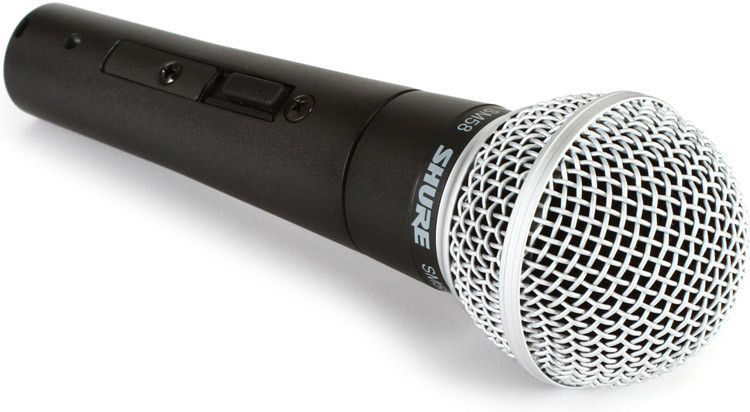
The Shure SM58 is the microphone most Australians have held at least once, whether they realised it or not. School assemblies, pub gigs, wedding speeches, council meetings, karaoke nights — it's the same grey die-cast body with the ball grille turning up everywhere. The SM58S is that exact microphone with one addition: a lever-style on/off switch built into the handle.
That single feature sounds trivial. In practice it's the thing that decides whether the SM58S is the perfect mic for your situation or the wrong version to buy. Some sound engineers will actively refuse to put a switched mic on a stage. Some venue managers won't buy anything else. Both positions are defensible, and this guide explains why so you can work out which camp you're in before you spend the money.
Below we cover what the switch actually does, the full technical specification, how the SM58 capsule really behaves on different voices, where it falls short compared to a condenser or a Beta 58A, and what you need to know about buying one in Australia — including the counterfeit problem, which is worse for the SM58 than for almost any other microphone on earth.
What the "S" Actually Means
Shure sells the SM58 in a few configurations. The SM58-LC is the standard version with no switch and no cable (LC stands for "less cable"). The SM58-CN adds a cable. The SM58S is the switched model — mechanically identical to the standard SM58 except for a recessed lever switch on the body that opens the signal path.
Two points people commonly get wrong:
- The capsule is the same. The SM58S uses the same R59 cartridge as every other SM58. It does not sound different, quieter, or worse. Anyone telling you the switched version is sonically compromised is repeating a myth.
- The switch is a true signal interrupt, not a mute button on the desk. When it's off, the microphone stops sending audio down the cable. Your mixing engineer sees nothing on the channel — which is precisely why some of them dislike it.
The switch itself is a simple mechanical lever that slides along the handle. It has a firm detent, so it doesn't flick over from a light knock, but it has no lock. That matters, and we'll come back to it.
Ready to buy? View Shure SM58S pricing and availability — genuine Shure stock with Australian warranty.
Full Specifications
| Specification | Detail |
|---|---|
| Type | Dynamic (moving coil), no power required |
| Polar pattern | Cardioid, uniform with frequency |
| Frequency response | 50 Hz – 15 kHz |
| Sensitivity (at 1 kHz) | –54.5 dBV/Pa (1.85 mV) |
| Impedance | Rated 150 Ω (300 Ω actual) |
| Cartridge | R59 (user-replaceable) |
| Switch | Lever-type on/off, non-locking |
| Connector | 3-pin XLR, male |
| Weight | 298 g |
| Construction | Die-cast metal body, steel mesh spherical grille, internal pop filter, pneumatic shock mount |
| Supplied with | Break-resistant swivel stand adapter, storage bag |
| Warranty | 2 years (Shure, via authorised Australian channels) |
A note on the numbers that people fixate on. Shure doesn't publish a maximum SPL figure for the SM58, and that's not an oversight — a moving-coil capsule of this design has no practical distortion ceiling for a human voice or a guitar cab. You will never overload an SM58 by singing into it. What you can overload is your preamp, which is a different problem with a different solution (turn the gain down).
The sensitivity figure of –54.5 dBV/Pa is the one worth paying attention to. That's a fairly low output by modern standards. Into a decent live console preamp it's a non-issue. Into a budget USB interface with a noisy preamp, recording a soft speaker at a distance, you may find yourself running the gain near maximum and hearing hiss. That's a genuine limitation, and we cover the fix further down.
How It Actually Sounds
The SM58's frequency response is deliberately not flat, and understanding the shape explains most of its behaviour.
There's a broad presence rise through roughly 2–6 kHz, peaking around 4 kHz. This is the part of the spectrum where vocal intelligibility lives — consonants, sibilance, the "cut" that lets a voice sit above a band. It's why an SM58 sounds articulate through a PA even when the mix is busy, and it's why the mic works so well for spoken word in a reverberant room.
Below that, the response rolls off progressively under about 150 Hz on-axis. This is intentional low-frequency tailoring, and it does two jobs: it reduces stage rumble and handling noise, and it counteracts the proximity effect that occurs when a singer works the mic close.
Proximity effect is the SM58's defining characteristic in use. As a cardioid mic, it gains significant low-end as the source gets closer — several dB by the time lips are touching the grille. Experienced vocalists use this as a real-time tone control, pulling back for a brighter, thinner sound on high passages and moving in for warmth and body on quieter, intimate lines. Inexperienced singers hold it 20 cm away and wonder why they sound thin and why the mic keeps feeding back (because the engineer has cranked the gain to compensate).
The cardioid pattern gives around 6 dB of rejection at 90 degrees off-axis and maximum rejection directly behind. In practical terms: point the back of the mic at your wedge, not at the side. Get that wrong and you'll blame the microphone for something that's a placement issue.
The Switch: An Honest Assessment
This is the section that should decide your purchase, so let's be genuinely balanced about it.
When the switch is a real advantage
- Conference rooms, boardrooms and council chambers. Presenters can silence themselves without needing an operator. Nobody is monitoring a desk.
- Houses of worship and community halls. Volunteers pass the mic around. Being able to switch off between speakers prevents open-mic feedback in rooms that are usually acoustically awful.
- Wedding and event MCs. Handing the mic to a nervous best man is safer when he can't accidentally broadcast a private aside.
- Karaoke, school events, sporting clubs. Mic passed between untrained users, often with no engineer present at all.
- Solo performers with no engineer. If you're a duo running your own small PA from the stage, killing the mic while you tune or take a break is genuinely convenient.
- Hire and rental stock. A switched mic reduces support calls from clients who don't understand why there's howling feedback.
When the switch is a liability
- Managed live sound. If there's an engineer at a desk, the switch introduces a second point of control that they can't see. The classic failure: a vocalist knocks the switch off mid-set, the engineer sees a dead channel and starts troubleshooting cables, gain and phantom power while the song runs on with no vocal. It happens constantly.
- It doesn't lock. There's no mechanical lock-out, which is why you'll find gaffer tape over the switch on countless touring SM58S units. If you're buying for a managed stage and you plan to tape it permanently, buy the SM58-LC and save the money.
- One more mechanical part. Switches are the component most likely to fail on any microphone. In a decade of hard use, a switched contact can become intermittent or scratchy. It's a small risk on a Shure, but it's a non-zero risk that the LC version simply doesn't have.
- Switching pops. Opening the signal path on a live, gained-up channel can produce an audible thump through the PA, particularly on bigger systems. Not a fault — just physics.
The honest summary: buy the SM58S when nobody is running sound, and buy the SM58-LC when somebody is. That single rule will get the decision right the vast majority of the time.
SM58S vs the Alternatives
| SM58S | SM58-LC | Beta 58A | |
|---|---|---|---|
| Switch | Yes, non-locking | No | No |
| Pattern | Cardioid | Cardioid | Supercardioid |
| Response | 50 Hz – 15 kHz | 50 Hz – 15 kHz | 50 Hz – 16 kHz |
| Output level | Standard | Standard | Noticeably hotter |
| Character | Warm mids, controlled top | Identical to SM58S | Brighter, more extended top end |
| Best for | Unmanaged rooms, shared mics, events | Managed stages, studios, general use | Loud stages, singers wanting more air |
The Beta 58A comparison is worth expanding, because it's the upgrade people most often consider. The Beta's supercardioid pattern rejects more from the sides but has a small rear lobe, which changes wedge placement — put a monitor directly behind a Beta 58A and you may get feedback you wouldn't get with an SM58. The Beta is also brighter and hotter, which flatters some voices and makes sibilant singers harder to manage. It isn't strictly better; it's different, and the SM58 remains the safer default for a mic that has to work for anyone who picks it up.
If you're weighing a condenser instead: a condenser will capture more detail and more air, and it will also capture the air conditioning, the room reflections, the person coughing at table four and the wedge you're standing in front of. For live vocals in a typical Australian pub, club or function room, the SM58's limitations are the feature.
Sorting out a mic setup? Shop the Shure SM58S with free shipping across Australia and full two-year manufacturer warranty.
Getting the Best Out of It
- Work the mic close. Two to five centimetres from the grille for singing. Close enough to touch is a legitimate technique, not bad practice — it's how the mic was designed to be used.
- Sing on-axis, straight into the top of the grille. Not across it. The high-frequency response drops away off-axis and the voice loses its cut.
- Point the rear at the monitor. The null is directly behind the mic. This is the single biggest lever you have over feedback.
- Give it enough gain. For quiet spoken word into a budget interface, an inline gain booster (Cloudlifter, FetHead or similar, which draws phantom power) adds roughly 20–25 dB of clean gain and transforms the result. You don't need this for live sound through a proper console.
- Don't add phantom power expecting improvement. The SM58S doesn't need it and won't use it. Leaving 48V on won't damage the mic on a correctly wired balanced cable, but it does nothing useful.
- Check the switch first when a channel goes dead. Add it to your troubleshooting order, before you start swapping cables.
- Clean the grille. It unscrews. The internal foam pop filter can be removed, washed in warm soapy water and dried completely before reassembly. Do this at least once a year on a shared mic — it's a hygiene item as much as an audio one.
Buying an SM58S in Australia
Two things specific to the Australian market are worth knowing.
Counterfeits are a genuine problem. The SM58 is among the most counterfeited pieces of audio equipment in existence, and fakes flood online marketplaces and auction sites at prices that look like a bargain. They can be visually convincing. They do not sound the same, they don't hold up, and they carry no warranty. Buying through an authorised Australian dealer is the only reliable protection. If a price looks dramatically below the usual Australian retail range, that's the reason.
Warranty is handled locally. Shure products bought through authorised Australian channels carry a two-year manufacturer warranty serviced domestically, which means you're not shipping a faulty mic overseas. Grey-import stock may not be supported.
On price: the SM58S typically sits modestly above the SM58-LC — you're paying a small premium for the switch. If the switch solves a real problem for you, it's money well spent. If it doesn't, spend the difference on a decent cable or a second mic instead.
Common Questions
Does the SM58S need phantom power?
No. It's a dynamic microphone and generates its own signal. Phantom power is neither required nor harmful on a properly wired balanced XLR connection.
Can I lock the switch on?
Not mechanically — there's no built-in lock. The standard workaround on managed stages is a strip of gaffer tape over the lever. If you'll always be taping it, the non-switched SM58-LC is the better purchase.
Is it good for podcasting or home recording?
Yes, with caveats. It's a genuinely good spoken-word mic with excellent room rejection, which suits untreated home spaces far better than a condenser does. The caveat is gain: pair it with a clean preamp or an inline booster, and speak close to it.
Will it work on instruments?
It's a capable guitar cab mic and works on snare, toms and brass at a pinch, though the SM57 is the more common choice for those roles. The SM58 is essentially an SM57 capsule behind a ball grille with a built-in pop filter — the sonic difference is largely the grille.
How long does it last?
Properly cared for, decades. There are SM58s still in nightly service that are older than the people singing into them. The R59 cartridge is replaceable if it's ever damaged, and grilles are a cheap consumable.
Should I choose the SM58S or a wireless system?
If the mic stays in one place and a cable isn't in anyone's way, wired is more reliable, cheaper and has no batteries or frequency coordination to manage. Go wireless when movement genuinely matters — and note that Shure's wireless handhelds are frequently fitted with the same SM58 capsule, so you're not giving up the sound.
The Verdict
The SM58S isn't an upgrade over the SM58 — it's a variant aimed at a specific set of problems, and it solves them well. For churches, function venues, conference rooms, schools, sporting clubs, karaoke setups, hire stock and solo performers running their own PA, the switch removes an entire category of headaches: open mics squealing, presenters broadcasting asides, and untrained users with no way to silence themselves.
For a band on a stage with an engineer at the desk, it's the wrong choice, and the tape over the lever on every touring rig tells you why. Buy the SM58-LC for that job.
Everything else about the microphone is the reason it's been the industry default since 1966: a response curve tuned for vocal intelligibility rather than hi-fi flattery, a pattern that behaves predictably in front of a wedge, a build that survives being dropped on concrete, and no power requirements to think about. It won't give you the detail of a good condenser, its output is on the low side for quiet studio work, and its low end needs technique to manage. Those are real limitations, and they're also exactly the compromises that make it work when conditions are less than ideal — which, in live sound, is most of the time.
If your rooms are unmanaged and your microphone gets passed around, this is the version to buy.
Browse the Shure SM58S at MusiconStage — authorised Shure dealer, genuine stock, two-year warranty and hassle-free returns across Australia.