
Shure GLX-D+ Dual Band Wireless with Beta 58A: Australian Pro Audio Guide 2026
Shure GLX-D+ Dual Band Wireless with Beta 58A: What Australian Performers Actually Need to Know
If you've spent any time on stage or behind a mixing desk in Australia, you already know the frustration of wireless microphone dropouts. Crowded 2.4 GHz bands, interference from Wi-Fi networks, and the general chaos of modern RF environments have made reliable wireless performance harder to achieve than ever. Shure's answer to this is the GLX-D+ system — a dual-band wireless platform that pairs the legendary Beta 58A supercardioid capsule with intelligent frequency management across both 2.4 GHz and 5.8 GHz bands.
This isn't just an incremental upgrade over the original GLX-D. The addition of 5.8 GHz operation fundamentally changes how the system handles interference, and for Australian users dealing with everything from packed pub gigs to corporate events in Wi-Fi-saturated conference centres, that matters enormously. Let's break down exactly what this system offers, where it excels, and whether it's the right choice for your setup.
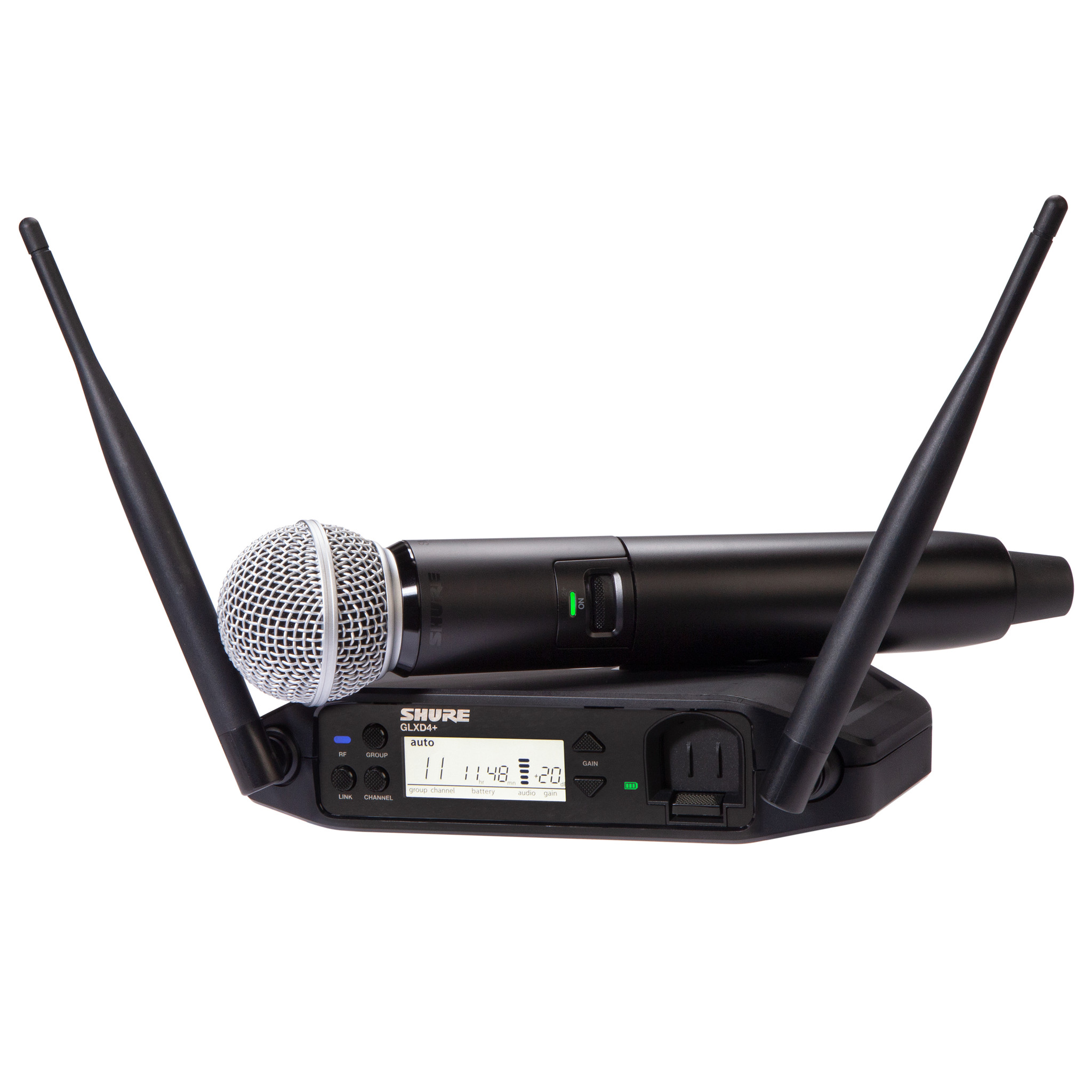
Looking to buy? View the Shure GLX-D+ with Beta 58A at MusiconStage with free shipping across Australia.
Understanding Dual Band: Why 2.4 GHz Alone Isn't Enough Anymore
The original Shure GLX-D operated exclusively on the 2.4 GHz band. It was a solid system, but it shared spectrum with Wi-Fi routers, Bluetooth devices, wireless presentation clickers, and just about every other piece of consumer wireless tech in the room. In a small rehearsal space, that was rarely a problem. In a hotel ballroom with 200 guests all connected to Wi-Fi? That's where things got dicey.
The GLX-D+ addresses this by operating across both 2.4 GHz and 5.8 GHz bands simultaneously. This isn't a simple band-switching arrangement where you manually choose one or the other. The system's intelligent frequency management continuously monitors both bands and selects the cleanest available frequencies in real time. If 2.4 GHz gets congested, it seamlessly shifts to 5.8 GHz — and vice versa. You don't hear it, your audience doesn't hear it, and you don't need to do anything.
For Australian performers, this dual-band approach is particularly relevant. Our venues often have dense Wi-Fi deployments, and the 5.8 GHz band remains significantly less congested than 2.4 GHz in most Australian environments. The system essentially gives itself twice as much usable spectrum to work with, which translates directly to reliability.
How It Compares to Licensed-Band Systems
It's worth noting that the GLX-D+ operates in licence-free spectrum, which means you don't need to coordinate frequencies with the ACMA or worry about the ongoing changes to UHF spectrum allocation that affect systems in the 500-700 MHz range. This is a genuine advantage for touring musicians and hire companies who work across different states and regions. You set up, you power on, and it works — no frequency coordination required.
That said, licence-free operation does come with trade-offs. The 2.4/5.8 GHz bands have shorter effective range than UHF systems, and they're more susceptible to absorption by walls, bodies, and other obstacles. For large-scale productions requiring dozens of simultaneous channels across a major venue, higher-end UHF systems like Shure's own Axient Digital still have the edge. But for most working musicians and small-to-medium production companies in Australia, the GLX-D+ hits a sweet spot of reliability, convenience, and value.
The Beta 58A Capsule: Why It Matters
Shure offers the GLX-D+ handheld system with different capsule options, and this particular unit comes fitted with the Beta 58A — and that's a meaningful distinction worth understanding.
The Beta 58A is a supercardioid dynamic capsule, which means it has a tighter pickup pattern than the more common SM58 cardioid. In practical terms, this translates to several real-world benefits:
- Superior off-axis rejection: The Beta 58A does a better job of ignoring sound coming from the sides and rear. For performers working near monitor wedges, drum kits, or guitar amplifiers, this means significantly less bleed and a cleaner vocal sound in the mix.
- Extended frequency response: The Beta 58A has a brighter, more detailed top end compared to the SM58. It captures more vocal presence and articulation, which cuts through dense mixes without needing as much EQ intervention.
- Higher output level: The hotter output means better signal-to-noise ratio, which is especially beneficial in a wireless system where you want the cleanest possible signal hitting the transmitter.
- Neodymium magnet design: This gives the capsule its characteristic punchy, articulate sound with strong midrange presence.
The supercardioid pattern does require a bit more microphone discipline than a standard cardioid — you need to stay more on-axis for the best sound. But for experienced performers, this tighter pattern is overwhelmingly an advantage. It gives the sound engineer more control and produces a more polished front-of-house sound.
Beta 58A vs SM58 in the GLX-D+ System
If you're deciding between the GLX-D+ with Beta 58A versus the SM58 capsule version, here's the honest breakdown:
| Feature | Beta 58A | SM58 |
|---|---|---|
| Polar Pattern | Supercardioid | Cardioid |
| Frequency Response | 50 Hz – 16 kHz | 50 Hz – 15 kHz |
| Sound Character | Bright, detailed, articulate | Warm, smooth, forgiving |
| Off-Axis Rejection | Excellent | Good |
| Feedback Rejection | Superior (tighter pattern) | Good |
| Ideal For | Experienced vocalists, loud stages | All-round use, shared microphones |
| Mic Technique Required | Moderate (stay on-axis) | Minimal (very forgiving) |
For most professional and semi-professional vocalists, the Beta 58A is the stronger choice. The SM58 remains excellent if you're buying a mic that multiple singers will share (its wider pattern is more forgiving of different techniques), but if this is your personal wireless mic, the Beta 58A rewards good technique with noticeably better sound quality.
System Specifications and Technical Details
Let's get into the specifics of what the GLX-D+ system delivers from a technical standpoint.
Transmitter (GLXD2+ Handheld)
- Frequency bands: 2.4 GHz (2400–2483.5 MHz) and 5.8 GHz (5725–5875 MHz)
- RF output power: 10 mW (2.4 GHz), 20 mW (5.8 GHz)
- Operating range: Up to 30 metres line-of-sight (typical performance in real venues is 15-25 metres depending on environment)
- Battery: Shure SB904 lithium-ion rechargeable (up to 12 hours runtime)
- Charging: USB-C direct charging or optional GLXD charging dock
- Audio conversion: 24-bit digital
- Latency: 4.4 ms (imperceptible for live performance)
- Construction: Rugged metal body with integrated antenna
Receiver (GLXD4+ Tabletop)
- Dual-band antennas: Internal 2.4 GHz and 5.8 GHz
- Outputs: XLR balanced and 6.35mm (1/4") unbalanced
- Audio frequency response: 20 Hz – 20 kHz
- Dynamic range: >120 dB
- Total harmonic distortion: <0.1% at 1 kHz
- Display: LED indicators for group, channel, RF signal, audio level, battery status
- Power: External power supply included
A few numbers worth calling out: the 24-bit digital conversion and over 120 dB of dynamic range mean this system isn't compromising your audio quality to go wireless. That's studio-grade performance in a live wireless package. And the 4.4 ms latency? For context, sound travels roughly 1.5 metres in that time. Unless your ears are literally next to the PA speaker, you won't perceive it.
Real-World Performance: Where This System Shines
Specifications tell you what a system can do. Here's what the GLX-D+ with Beta 58A actually delivers in common Australian performance scenarios.
Pub and Club Gigs
This is arguably the GLX-D+'s sweet spot. Australian pub gigs typically involve compact stages, loud monitoring, and venues with consumer Wi-Fi networks. The Beta 58A's tight pattern handles stage volume brilliantly, and the dual-band operation shrugs off the Wi-Fi interference that would cause issues for older 2.4 GHz-only systems. The 30-metre range is more than sufficient for these venues, and the rechargeable battery comfortably covers a full three-set night with plenty of reserve.
Corporate Events and Conferences
Conference centres and hotels are among the most challenging RF environments you'll encounter in Australia. Dense Wi-Fi infrastructure, Bluetooth from hundreds of devices, and other wireless systems all competing for spectrum. The GLX-D+'s dual-band intelligence genuinely earns its keep here, automatically finding clean frequencies in what would otherwise be a nightmare RF environment. The professional appearance of the system doesn't hurt either — it looks the part at corporate functions.
Houses of Worship
Churches and worship venues across Australia have increasingly adopted wireless systems, and the GLX-D+ fits well here. The system's ease of setup appeals to volunteer operators, while the Beta 58A's off-axis rejection helps manage the acoustic challenges common in reverberant worship spaces. If you're running multiple wireless channels, the system's automatic frequency management is a genuine time-saver compared to manually coordinating UHF frequencies.
Where It Has Limitations
In the interest of honesty, here are the scenarios where you might want to look at other options:
- Very large venues (theatres, arenas): The 30-metre maximum range can be limiting. If performers are regularly more than 20 metres from the receiver in a cluttered RF environment, you'll want a UHF system with greater range.
- High channel counts: If you need more than 6-8 simultaneous wireless channels, the 2.4/5.8 GHz bands start getting crowded. Large productions with many wireless mics and in-ear monitors should consider UHF-based systems.
- Outdoor festivals with long throws: Open-air environments with large stage-to-mixing-desk distances can push the range limits, particularly if there are physical obstacles between transmitter and receiver.
Battery Life and Charging: A Genuine Strength
The GLX-D+ uses the Shure SB904 lithium-ion rechargeable battery, and the battery implementation is one of the system's standout features. Up to 12 hours of continuous use from a single charge is genuinely impressive — that's enough for even the longest event days without anxiety about running flat.
Charging is via USB-C directly on the handheld transmitter, which is convenient for travel and means you can top up from any USB-C power source. There's also the option of the GLXD charging dock (sold separately) for drop-in charging, which is ideal if you're using the system regularly and want a dedicated charging station.
The receiver displays real-time battery status, so you always know exactly how much runtime you have left. This might seem like a small detail, but anyone who's had a wireless mic die mid-set because they were guessing at battery levels knows how valuable this information is.
Setup and Usability
One of the GLX-D+ system's strongest selling points is its simplicity. Shure designed this for performers and small production teams who don't have a dedicated RF technician on staff.
Initial setup takes about 60 seconds:
- Connect the receiver to your mixer or PA via XLR or 1/4" cable
- Power on the receiver
- Power on the handheld transmitter
- The system automatically links and finds the cleanest available frequencies
- Set your gain level and you're ready to perform
That's it. No manual frequency scanning, no coordination charts, no firmware updates before you can use it. The automatic channel management handles everything in the background, continuously optimising frequency selection throughout your performance.
For those who want more control, Shure's ShurePlus Channels app provides remote monitoring and management via Bluetooth. You can check RF signal strength, audio levels, battery status, and even adjust gain from your phone or tablet. It's a useful tool for sound engineers monitoring the system from the mixing position.
Ready to simplify your wireless setup? Shop the Shure GLX-D+ with Beta 58A at MusiconStage — authorised Australian dealer with free delivery and local warranty support.
Build Quality and Durability
The handheld transmitter feels solid and professional in hand. The metal construction can withstand the inevitable knocks and drops of live performance — this isn't a fragile studio piece. The Beta 58A grille is the same hardened steel design used on the wired version, so it protects the capsule effectively from impacts.
The receiver is a compact tabletop unit that sits neatly on top of a mixer, rack shelf, or equipment table. It's not rack-mountable without an accessory tray, which is worth noting if you're building a rack-based system. For most users in the GLX-D+'s target market, the tabletop form factor works perfectly well.
Shure's build quality reputation is well-earned, and the GLX-D+ maintains the standard. This is a system built to survive touring and regular use, not just look good in a showroom.
Australian-Specific Considerations
There are several factors specifically relevant to Australian buyers:
Regulatory Compliance
The GLX-D+ operates in the 2.4 GHz and 5.8 GHz ISM bands, which are licence-free across all Australian states and territories. You don't need an ACMA apparatus licence to operate this system, and there are no regional restrictions within Australia. This is a significant advantage over UHF systems, which operate in spectrum that has been subject to ongoing reallocation and regional variations.
Climate Considerations
The system's operating temperature range (specified at -18°C to 57°C) comfortably handles Australian conditions, from cold Victorian winter outdoor gigs to scorching Queensland summer events. The lithium-ion battery performs best between 10°C and 35°C, so in extreme heat, you may see slightly reduced battery life — but this is true of any lithium-ion powered device.
Warranty and Support
Purchasing through an authorised Australian dealer like MusiconStage ensures you receive full Shure warranty coverage valid in Australia. This matters because grey-market imports (purchased from overseas retailers) may not be covered by Shure's Australian warranty, and you'll have no local support if something goes wrong. Given that this is a professional tool you're relying on for paid work, buying through proper channels is worth the peace of mind.
Who Should Buy the GLX-D+ with Beta 58A?
This system is an excellent fit for:
- Working vocalists who perform regularly at pubs, clubs, functions, and small-to-medium venues
- Solo artists and duo/trio performers who need reliable wireless without complex setup
- Cover bands who play in diverse venue environments each week
- Houses of worship needing professional wireless with volunteer-friendly operation
- Corporate AV providers who need dependable wireless for presentations and events
- Mobile DJs and entertainers who want a quality vocal mic without cable constraints
- Schools and community groups that need durable, easy-to-use wireless systems
It may not be the best choice if:
- You need operating range beyond 25-30 metres consistently
- You're running more than 6-8 simultaneous wireless channels in one venue
- You prefer a warm, darker vocal tone (the SM58 capsule version might suit better)
- You need rack-mountable receivers for a touring rack system (look at the GLX-D+ rack receiver variant or step up to Shure's SLX-D series)
Frequently Asked Questions
Can I use the GLX-D+ system anywhere in Australia without a licence?
Yes. The 2.4 GHz and 5.8 GHz bands are licence-free throughout Australia under ACMA regulations. You can use this system in any state or territory without any licensing requirements or fees.
How many GLX-D+ systems can I run simultaneously?
Shure specifies up to 8 compatible systems in a single environment when using both 2.4 and 5.8 GHz bands. In practice, 4-6 is a more reliable number in dense RF environments. The automatic frequency management handles the coordination between multiple systems.
Is the Beta 58A capsule interchangeable?
Yes, the GLX-D+ handheld transmitter uses a threaded capsule mount. You can swap the Beta 58A for other compatible Shure capsules (SM58, SM86, SM87A, Beta 87A, Beta 87C, KSM8, KSM9) if your needs change. This modularity is a significant long-term value proposition.
What's the actual battery life like in real-world use?
Shure rates the SB904 battery at up to 12 hours. In typical live use, expect 9-11 hours depending on RF conditions and transmitter power management. That's comfortably enough for any standard performance or event day without needing to recharge.
Does the system work with Shure's Wireless Workbench software?
The GLX-D+ integrates with Shure's ShurePlus Channels mobile app for monitoring and basic control. For the full Wireless Workbench experience with advanced spectrum management and multi-system coordination, you'd need to step up to the SLX-D or Axient Digital platforms.
Can I use standard AA batteries in an emergency?
No, the GLXD2+ transmitter is designed exclusively for the Shure SB904 rechargeable battery. It's worth keeping a spare SB904 charged and ready for critical gigs rather than relying on being able to swap to disposable batteries.
The Verdict: Is It Worth It?
The Shure GLX-D+ with Beta 58A represents the current sweet spot in professional wireless microphone systems for Australian performers and production companies. The dual-band operation genuinely solves the reliability issues that plagued earlier 2.4 GHz-only systems, the Beta 58A capsule delivers vocal quality that holds up against wired alternatives, and the entire package is designed for real-world ease of use.
Is it the absolute best wireless system money can buy? No — Shure's own Axient Digital and competitors like Sennheiser's EW-DX offer more features and greater scalability for large-scale professional productions. But those systems also cost significantly more and require more technical expertise to manage. The GLX-D+ delivers roughly 90% of the performance at a fraction of the complexity and cost.
For the vast majority of Australian working musicians, venues, worship facilities, and production companies, the GLX-D+ with Beta 58A is a genuinely smart investment. It's reliable, it sounds excellent, it's easy to use, and it's built by a company with decades of wireless expertise and strong Australian support infrastructure. That's a combination that's hard to argue with.
Browse the Shure GLX-D+ with Beta 58A at MusiconStage — authorised Australian dealer with genuine Shure products, free shipping, and hassle-free local warranty support.