
Shure BLX188/CVL Dual Lapel Wireless System: Full K14 Specs & Guide 2026
Shure BLX188/CVL Dual Lapel Wireless System: Complete K14 Technical Breakdown for Australian Users 2026
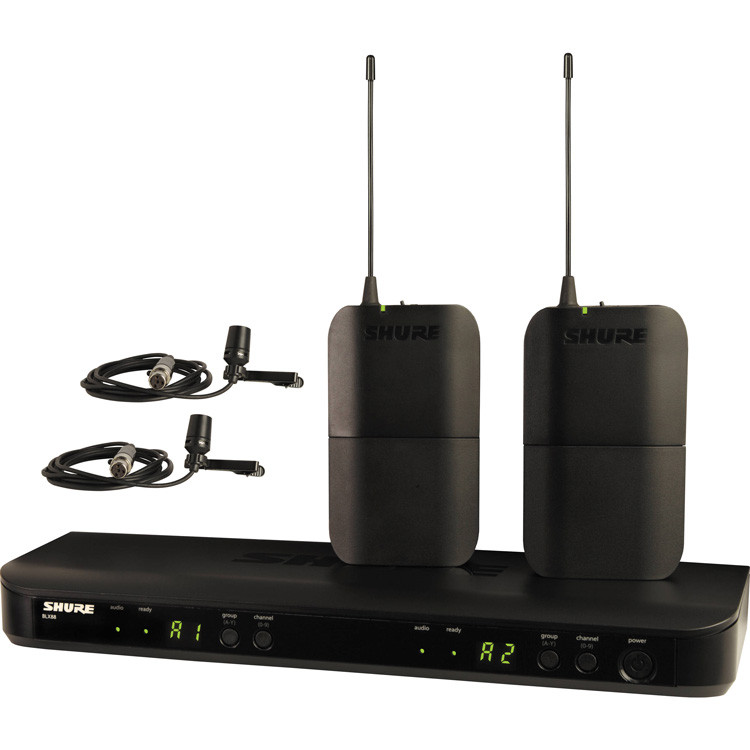
Running two wireless lavalier microphones simultaneously without dropouts, interference, or the kind of RF headaches that ruin a presentation halfway through — that's a surprisingly tall order in the sub-$1,500 price bracket. The Shure BLX188/CVL is Shure's answer to that challenge, bundling a dual-channel receiver with two bodypack transmitters and a pair of CVL condensers in a single kit. For Australian users, the K14 frequency band (614–638 MHz) is the critical detail, and there's a lot to unpack about why that matters and how this system actually performs in the field.
This isn't a surface-level overview. Below, we'll dig into the RF architecture, the CVL capsule's acoustic characteristics, real-world range performance, and the specific considerations Australian buyers need to weigh before committing. Whether you're fitting out a house of worship, running corporate AV, or producing content that demands two simultaneous lavaliers, this guide covers the technical ground.
What's Actually in the Box
The BLX188/CVL package is a complete dual-channel wireless lavalier system. Here's exactly what you get:
- BLX88 Dual-Channel Wireless Receiver — rack-mountable (with optional adapter), dual 1/4-wave antennas, two independent XLR and 1/4" TRS outputs
- 2x BLX1 Bodypack Transmitters — each powered by 2x AA batteries, featuring a TQG (TA4F) input connector for the lavalier mic
- 2x CVL Lavalier Condenser Microphones — cardioid pattern, terminated with TQG connector, includes windscreens and clothing clips
- Power supply, user documentation, and 2x antenna caps
Notably, the BLX88 receiver is the dual-channel variant — not two separate single-channel receivers stacked together. This matters for frequency coordination and rack space, which we'll cover shortly.
K14 Frequency Band: Why It Matters in Australia
The K14 designation refers to the 614–638 MHz operating range, and this is arguably the most important specification for Australian purchasers. Here's why it deserves careful attention.
Following the Australian Communications and Media Authority (ACMA) digital dividend restack, portions of the UHF spectrum previously available for wireless audio have been reallocated to mobile broadband services. The K14 band sits in a portion of the spectrum that remains available for wireless microphone use in Australia, but users should always verify current ACMA regulations for their specific location, as regional TV broadcasting allocations can vary.
The 614–638 MHz range provides a 24 MHz bandwidth window. Within this, the BLX system can operate across multiple compatible frequencies. For a dual-channel system like the BLX188, this is generally sufficient. However, if you're planning to expand to additional BLX channels or coordinate with other wireless systems in the same venue, understanding this bandwidth limitation becomes critical.
Practical note: Shure's QuickScan feature on the BLX88 receiver automatically identifies and selects the cleanest available frequencies within the K14 range. In metropolitan areas with denser RF environments — think Sydney CBD, Melbourne's Southbank conference precinct, or Brisbane's convention centres — this automated scanning saves significant setup time compared to manual frequency coordination.
Detailed Technical Specifications
| Specification | BLX88 Receiver | BLX1 Transmitter |
|---|---|---|
| Frequency Band (K14) | 614–638 MHz | 614–638 MHz |
| Frequency Response | 50 Hz – 15 kHz (±3 dB) | — |
| Operating Range | Up to 100 metres (300 ft) line-of-sight | |
| RF Sensitivity | -97 dBm at 12 dB SINAD | — |
| Transmit Power | — | 10 mW typical |
| Audio Output (Receiver) | XLR balanced, 1/4" TRS (per channel) | — |
| Output Impedance | 200 Ω (XLR), 200 Ω (1/4") | — |
| Dynamic Range | >100 dB (A-weighted) | — |
| THD | <0.5% at 1 kHz | — |
| Battery Life | — | Up to 14 hours (2x AA alkaline) |
| Input Connector (Transmitter) | — | TQG (TA4F compatible) |
| Dimensions (Receiver) | 190 × 140 × 42 mm | — |
| Dimensions (Transmitter) | — | 63 × 82 × 25 mm |
| Weight (Transmitter) | — | ~99g (without batteries) |
CVL Lavalier Microphone Specifications
| Specification | Detail |
|---|---|
| Transducer Type | Condenser (electret) |
| Polar Pattern | Cardioid |
| Frequency Response | 50 Hz – 18 kHz |
| Connector | TQG (TA4F) |
| Cable Length | 1.27 m (50 inches) |
| Colour | Black |
RF Architecture: What's Under the Hood
The BLX series uses Shure's proprietary companding system for audio processing — essentially a compression/expansion scheme that encodes the audio signal at the transmitter and decodes it at the receiver. This is an analogue wireless system, not digital. That's an important distinction.
Analogue vs. digital in this context: Digital wireless systems (like Shure's SLXD or QLXD lines) offer lower latency, wider dynamic range, and more efficient use of RF spectrum. The BLX's analogue architecture means you're getting a proven, reliable signal chain, but with the characteristic trade-offs — slightly narrower dynamic range, audible companding artefacts if the system is pushed hard, and less spectral efficiency when coordinating many channels.
For a dual-channel setup, these limitations are largely academic. The >100 dB dynamic range is more than adequate for speech applications, and two channels within a 24 MHz window is comfortable. Where it becomes a consideration is if you're planning to scale beyond four or more channels in the same venue, at which point you'd want to look at stepping up to the SLX-D or GLX-D+ platforms.
The BLX88 receiver features dual independent antenna inputs (non-diversity — the BLX line doesn't use true diversity reception). Each channel gets its own antenna, which provides reasonable RF performance in straightforward environments. In complex RF environments with lots of reflective surfaces (think metal-framed conference centres or industrial venues), a diversity receiver would perform better, but again, for the price point, this is an expected trade-off.
The CVL Capsule: Honest Assessment
Let's be straightforward about the CVL lavalier microphone, because it's both the system's most practical inclusion and its most debatable component.
The CVL is a small-diaphragm electret condenser with a cardioid polar pattern. For a bundled lavalier, it performs respectably — clear midrange articulation that's well-suited to speech, reasonable off-axis rejection for a capsule this small, and a frequency response that rolls off gracefully below 50 Hz (which actually helps in live environments by reducing handling rumble and low-frequency room noise).
Where it shines: Corporate presentations, panel discussions, house of worship services, educational recordings, and any scenario where intelligible speech is the primary goal. The cardioid pattern helps reject ambient noise from behind the capsule — air conditioning, audience noise, and other environmental sound sources.
Where it's limited: The CVL isn't a broadcast-grade capsule. If you're producing high-end video content or need the transparent, flat response of something like a DPA 4060 or Countryman B3, you'll notice the CVL's more coloured midrange and slightly compressed top end. The good news? The BLX1 transmitter accepts any TQG-terminated lavalier, so you can upgrade the capsule without replacing the wireless system.
The included 1.27-metre cable length is adequate for most clip-on placements but can feel short if you need to route the cable discretely under formal wear or costumes. Worth noting for theatre and broadcast applications.
Real-World Range and Performance
Shure rates the BLX system at 100 metres (300 feet) line-of-sight range. In practice, here's what that translates to in typical Australian venues:
- Small to medium conference rooms (up to 200 sqm): Solid, reliable performance with no dropouts. The 10 mW transmit power handles these spaces comfortably.
- Houses of worship (up to 500 sqm): Generally reliable, though venues with steel-frame construction or reinforced concrete may experience occasional signal attenuation in far corners.
- Large halls and outdoor events: This is where you start pushing the BLX's limits. Without diversity reception, multipath interference becomes more likely in complex acoustic environments. For venues approaching the 100-metre range limit, consider antenna placement carefully — line-of-sight between transmitter and receiver is essential.
- Multi-room setups: If presenters need to move between rooms while staying on-mic, the BLX's range and non-diversity architecture make it a poor choice. Step up to SLXD for roaming applications.
Battery life reality check: The 14-hour rating assumes fresh alkaline AA batteries. In practice, you'll get 10–12 hours with typical use patterns. Rechargeable NiMH batteries (1.2V nominal vs. 1.5V for alkaline) will work but may reduce operating time to 8–10 hours due to the lower voltage. The BLX1 transmitter includes a battery status LED — green, amber, and red indicators — but unlike higher-end Shure systems, there's no precise battery gauge on the receiver. For mission-critical events, swap in fresh batteries before each session.
Setup and Frequency Coordination
One of the BLX system's strongest practical advantages is its simplicity. The setup process genuinely takes under five minutes:
- Power on the BLX88 receiver and press the QuickScan button. The receiver scans the K14 band and selects two clean frequencies automatically.
- Sync each transmitter by pressing the Sync button on the receiver while holding the transmitter near the receiver's IR sync window. One-touch infrared sync transfers the selected frequency to the bodypack.
- Set gain levels using the rear-panel gain controls on each receiver channel. The audio level LEDs on the front panel provide visual feedback for proper gain staging.
- Connect outputs — XLR for balanced connections to mixers or audio interfaces, 1/4" TRS for direct connections to powered speakers or camera inputs.
The QuickScan and IR sync combination is genuinely useful technology that eliminates the need for manual frequency programming. For users who aren't RF engineers — which is most of the BLX's target market — this automation removes a significant barrier to reliable wireless operation.
How Does It Compare? Technical Alternatives
Understanding where the BLX188/CVL sits in the market helps frame its value proposition. Here's how it stacks up against the most common alternatives Australian buyers consider:
| Feature | Shure BLX188/CVL | Sennheiser XSW 1-ME2 Dual | Shure SLXD14D/CVL |
|---|---|---|---|
| System Type | Analogue | Analogue | Digital |
| Channels | 2 | 2 (two single receivers) | 2 |
| Dynamic Range | >100 dB | >106 dB | >120 dB |
| Diversity | No | Yes (antenna diversity) | Yes (true digital diversity) |
| Battery Life | Up to 14 hrs (AA) | Up to 10 hrs (AA) | Up to 8 hrs (rechargeable) |
| Frequency Sync | IR QuickScan | Auto sync | IR sync |
| Receiver Form | Single dual-channel unit | Two single units | Single dual-channel unit |
| Price Point | Mid-range | Mid-range | Upper mid-range |
| Networkable | No | No | Yes (Dante optional) |
Against the Sennheiser XSW 1 dual setup: The Sennheiser offers antenna diversity, which gives it an edge in challenging RF environments. However, requiring two separate receiver units means double the rack space and two power connections vs. the BLX88's single-unit solution. For straightforward venue installs where space matters, the BLX's integrated dual-channel receiver is a practical advantage.
Against the Shure SLXD14D: This is the clear step-up within Shure's own range. The SLXD's digital architecture delivers noticeably better audio quality — wider dynamic range, no companding artefacts, and true diversity reception. If your budget allows it, the SLXD is the technically superior system. The BLX188 makes sense when the budget is firm, the application is primarily speech, and the operating environment is relatively straightforward.
Against budget wireless systems: Cheaper wireless lavalier systems from brands outside the professional audio tier can be tempting, but they typically lack proper frequency coordination, use crowded ISM bands (2.4 GHz), and don't comply with ACMA regulations for UHF operation. The BLX's K14 frequency allocation, Shure's reputation for RF reliability, and the overall build quality justify the premium over no-name alternatives. In professional applications, a wireless dropout during a CEO's keynote or a pastor's sermon is simply not acceptable.
Build Quality and Practical Durability
The BLX1 bodypack transmitters use a moulded plastic construction that's lighter than the metal bodies found on Shure's QLXD and ULXD bodypacks. For lavalier use, this is actually an advantage — lighter bodypacks are easier to clip to clothing and less likely to drag on lightweight fabrics. The trade-off is durability: drop a BLX1 on a concrete floor from waist height and you'll likely crack the battery door. The QLXD1's metal body would shrug that off.
The BLX88 receiver is solidly built with a metal chassis. It's not rack-mountable out of the box — you'll need the optional Shure WA371 rack mount kit if you want to integrate it into a standard 19" equipment rack. For permanent installations, this is worth factoring into your budget.
The TQG connectors on both the transmitter and CVL microphone are the standard Shure mini 4-pin connector used across their bodypack wireless range. This means compatibility with a wide range of aftermarket and upgrade lavalier microphones — a significant advantage for future flexibility.
Who Should Buy the BLX188/CVL?
This system fits specific use cases exceptionally well, and it's worth being honest about where it does and doesn't make sense:
Ideal for:
- Houses of worship running two simultaneous lavalier mics — pastor and worship leader, or two speakers in a panel format
- Corporate AV for dual-presenter setups in conference rooms and small event spaces
- Educational institutions needing reliable dual-mic setups for lecture capture
- Content creators recording interviews, podcasts, or two-person video content
- Small to medium event production companies needing a dependable dual-lav kit
Look elsewhere if:
- You need to coordinate more than 4–6 wireless channels in a single venue — the BLX's 24 MHz K14 bandwidth becomes limiting
- You're operating in complex RF environments with significant multipath interference — invest in diversity reception (SLXD or QLXD)
- You need broadcast-quality audio — the analogue companding and CVL capsule are adequate for speech but not for demanding production work
- You require network integration, remote monitoring, or Dante connectivity — these features begin at the SLXD tier
Australian-Specific Considerations
A few points that are particularly relevant for Australian purchasers:
Frequency compliance: The K14 band (614–638 MHz) is the correct variant for Australian use. Do not purchase M15, H9, H10, J10, or other frequency variants from overseas retailers — they operate on frequencies that may be allocated to other services in Australia, and using them can breach ACMA regulations and result in significant penalties. Always purchase from an authorised Australian dealer to ensure you receive the correct frequency variant with local warranty support.
Warranty and support: Shure products sold through authorised Australian distributors (currently Jands) carry a full manufacturer's warranty valid in Australia. Grey-market imports may not be covered. Given that wireless systems can be affected by regional RF conditions, having access to local technical support is particularly valuable.
Climate considerations: Australia's temperature extremes — from sub-zero nights in alpine regions to 45°C+ days in inland areas — can affect battery performance and, in extreme cases, electronic reliability. The BLX system is rated for operation between 0°C and 50°C, which covers most Australian conditions. For outdoor events in extreme heat, keep receivers shaded and carry spare batteries, as high temperatures accelerate battery drain.
Ready to kit out your dual lavalier setup? Check the current price on the Shure BLX188/CVL K14 at MusiconStage — an authorised Australian retailer with local warranty and support.
Technical FAQs
Can I use non-CVL lavalier microphones with this system?
Yes. The BLX1 bodypack accepts any lavalier microphone terminated with a Shure TQG (TA4F) connector. Popular upgrade options include the Shure WL185 (cardioid), WL184 (supercardioid), and third-party options from Countryman, DPA, and Rode (with appropriate adapter cables). This makes the BLX188 a flexible platform that can grow with your needs.
Can I use this system with a handheld microphone instead?
The BLX88 receiver is compatible with BLX2 handheld transmitters. You could run one bodypack with a lavalier and one handheld, or two handhelds, by purchasing BLX2 transmitters separately. The receiver doesn't care what type of transmitter is connected to each channel — it's frequency-agnostic.
How many BLX systems can I run simultaneously in one venue?
Within the K14 band's 24 MHz window, Shure rates the BLX for up to 6 compatible systems (12 channels). However, real-world RF congestion in metropolitan areas often reduces this. For more than 4 channels, seriously consider stepping up to the SLXD platform, which uses the spectrum more efficiently and offers better frequency coordination tools.
Is this system suitable for camera-mount use?
The BLX88 receiver is mains-powered and not designed for camera mounting. If you need a camera-mount wireless receiver, look at the Shure BLX14 (single channel) or the SLXD15 portable receiver. The BLX88's dual XLR/TRS outputs are designed for connection to mixers, audio interfaces, or installed sound systems.
What's the audio latency?
As an analogue wireless system, the BLX has effectively negligible latency — under 3 milliseconds. This is lower than digital wireless systems, which typically range from 2–4 ms (Shure SLXD) to higher figures for some consumer-grade digital systems. For live speech applications, this latency difference is imperceptible, but it's worth noting for applications involving video sync or in-ear monitoring.
Final Technical Verdict
The Shure BLX188/CVL on the K14 band is a well-engineered dual-channel wireless lavalier system that hits a specific sweet spot: reliable dual-channel operation, straightforward setup, and Shure's proven RF platform, all at a price point that doesn't require upper-tier budget approval. It's not the most technically advanced wireless system in Shure's lineup — that's not what it's trying to be.
What it is trying to be is the system that works reliably every time you turn it on, doesn't require an RF engineering degree to set up, and delivers clean, intelligible audio for two wireless lavalier channels. On those criteria, it delivers.
The technical limitations are real — no diversity reception, analogue companding, limited channel count scalability — but they're appropriate trade-offs for the price point and target applications. For Australian users specifically, the K14 frequency allocation provides compliant UHF operation, and purchasing through authorised channels ensures you get proper local support.
If those specifications align with your requirements, the BLX188/CVL is a sound investment. If they don't, at least you now know exactly which specifications to prioritise when evaluating alternatives.
Get the Shure BLX188/CVL Dual Lapel Wireless System K14 from MusiconStage — Australia's trusted source for professional audio equipment.