
Shure BLX188/CVL Dual Lapel Wireless System: Beginner Guide 2026
Shure BLX188/CVL Dual Lapel Wireless System: A Beginner's Guide for 2026
If you've ever watched a presenter walk freely across a stage, run a fitness class hands-free, or interview two people on a podcast without a tangle of cables, chances are a wireless lapel system was doing the quiet work behind the scenes. For newcomers, though, wireless microphone kits can feel like a wall of jargon — frequencies, diversity receivers, capsules, channels. This guide breaks it all down in plain English, using the Shure BLX188/CVL Dual Lapel Wireless System (K14 band) as our real-world example, so you can understand exactly what you're buying and why it matters.
New to Wireless Mics? Start Here
Let's define the essentials before we go further, because understanding these terms makes everything else click into place.
- Wireless microphone system: A microphone that sends its audio to your speakers or recorder over radio waves instead of a cable. It has two main parts — a transmitter (worn or held by the talker) and a receiver (connected to your mixer or PA).
- Lapel mic (also called a lavalier or "lav"): A tiny microphone that clips discreetly to a shirt, tie, or collar. It keeps hands free and stays out of the camera frame — ideal for presenters, teachers, and video.
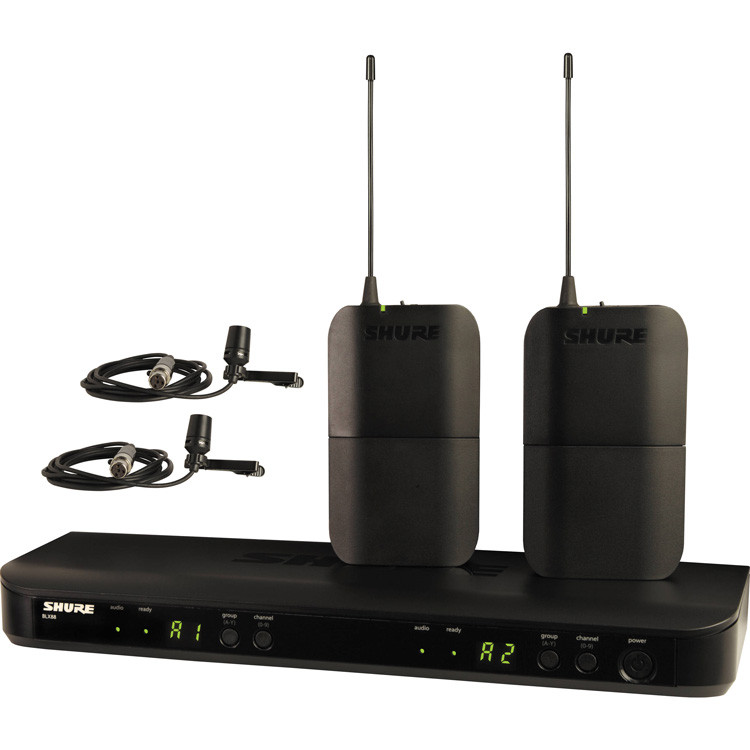
- Dual system: "Dual" simply means two complete channels in one receiver. The BLX188 lets two people speak at once, each on their own microphone — perfect for interviews, duets, or a presenter plus a co-host.
- K14 band: This refers to the specific slice of radio frequency the system operates on (614–638 MHz for K14). More on why this matters shortly.
With those basics in hand, let's look at what the Shure BLX188/CVL actually is.
What Is the Shure BLX188/CVL?
The Shure BLX188/CVL is a dual-channel wireless system built around two CVL lavalier microphones. In one package you get one receiver that handles two independent wireless signals, two bodypack transmitters (the small units that clip to a belt or waistband), and two CVL clip-on lapel capsules.
Shure's BLX range sits in the company's entry-level-to-intermediate tier. That positioning is deliberate and, for beginners, genuinely helpful: BLX gives you the trusted Shure build quality and reliable radio performance the brand is famous for, without the complexity and cost of professional touring systems. It's the kind of gear you'll see in schools, houses of worship, community theatres, conference rooms, fitness studios, and small AV hire companies right across Australia.
The "188" in the name is Shure's shorthand for the dual-bodypack configuration, and "CVL" identifies the specific lavalier capsule included. Put simply: this is a two-person, clip-on, hands-free wireless kit ready to go out of the box.
Understanding the Key Features (Without the Jargon)
Two Channels, One Receiver
The headline feature is right in the name — two microphones running simultaneously through a single rack-friendly receiver. For a beginner, this is a big deal because it keeps your setup simple. Instead of two separate boxes, cables, and power supplies, you have one unit to connect, power, and manage. If you regularly need two mics (host and guest, teacher and student demonstrating, two-person panel), a dual system is far more convenient and usually cheaper than buying two single systems.
The CVL Lavalier Capsule
The CVL is a condenser lavalier microphone with an omnidirectional pickup pattern. Two more terms worth knowing:
- Condenser: A sensitive microphone type that captures clear, detailed speech — well suited to the quiet, close-to-the-mouth job a lapel mic does.
- Omnidirectional: It picks up sound evenly from all directions. The practical benefit is that it stays consistent even if the speaker turns their head, which is exactly what you want from a clip-on mic where you can't control head movement.
Frequency Bands and the K14 Question
This is where beginners often get nervous, so let's make it simple. Wireless mics broadcast on radio frequencies, and different countries regulate which frequencies are legal to use. The K14 band covers 614–638 MHz. In Australia, wireless microphone frequency rules matter, so it's genuinely important to confirm the band you buy is compatible and licence-free for your intended use in your area.
Beginner tip: Before buying any wireless system, check current Australian Communications and Media Authority (ACMA) guidance on wireless microphone frequencies, or simply ask the retailer to confirm the band suits your location. This is the single most common oversight new buyers make, and it's easily avoided.
QuickScan Frequency Selection
Shure's BLX receivers include a QuickScan feature that automatically finds a clear, interference-free frequency for you at the press of a button. For someone setting up their first wireless system, this removes a genuinely intimidating step — you don't need to understand radio theory to get a clean signal. Press scan, sync the transmitter, and you're running.
Bodypack Transmitters
Each CVL mic connects to a compact bodypack the speaker clips to a belt or slips into a pocket. Bodypacks run on standard AA batteries, which is a quiet advantage for beginners — batteries are cheap, easy to find anywhere, and simple to swap mid-event if needed. Always keep a spare set on hand.
Who Is This System For?
The BLX188/CVL shines in situations where two people need to speak clearly with their hands free. Common use cases across Australia include:
- Presenters and trainers running workshops or corporate sessions with a co-host
- Schools and universities for lectures, demonstrations, or drama productions
- Houses of worship where a speaker and a translator or worship leader both need mics
- Podcasters and video creators recording two-person interviews
- Fitness instructors teaching hands-free, though note a lapel mic sits differently to a headset for high-movement classes
- Small AV hire businesses needing a dependable, easy-to-deploy two-person kit
A Beginner's Buying Guide: What to Prioritise
When you're buying your first wireless lapel system, focus on these fundamentals rather than chasing spec-sheet bragging rights.
- Confirm the frequency band is right for you. As covered above, this is non-negotiable. Get it confirmed before you pay.
- Match the channel count to your real needs. If you only ever need one mic, a single system saves money. If two-person use is even occasionally on the cards, the dual BLX188 is the smarter long-term buy.
- Think about range and environment. BLX systems offer ample operating range for typical rooms, halls, studios, and classrooms. Very large venues or crowded RF environments (multiple wireless systems running together) are where you'd eventually look at higher tiers.
- Budget for the whole picture. Factor in batteries, and consider whether you'll want a case or extra capsules down the track.
Common Beginner Mistakes to Avoid
- Ignoring the frequency band — the number one error, and entirely preventable.
- Clipping the lapel too far from the mouth — position it roughly a hand's width below the chin, on the centre of the chest, for consistent volume.
- Forgetting spare batteries — a dead bodypack mid-presentation is the classic avoidable disaster.
- Running the transmitter too far from the receiver with obstacles in between — keep line-of-sight where possible for the most reliable signal.
Getting Started: What to Expect
One of the reasons the BLX range is so beginner-friendly is that the learning curve is gentle. Here's a realistic picture of your first setup:
- Connect the receiver to your mixer or PA and power it on.
- Run QuickScan to find a clear frequency.
- Insert fresh AA batteries into each bodypack and power them up.
- Sync each transmitter to the receiver (usually an infra-red "sync" step that takes seconds).
- Clip the CVL lav to the speaker's chest, do a quick sound check, and adjust levels.
Most first-timers are up and running in well under half an hour. The system is designed to be forgiving, and Shure's global reputation means online tutorials, manuals, and support resources are plentiful if you get stuck.
Common Questions From Beginners
"Can I use both mics at the same time without interference?" Yes — that's the entire point of a dual system. The two channels are engineered to run together cleanly.
"Is a lapel mic better than a handheld?" It depends on the job. Lapels win for hands-free presenting and staying out of shot; handhelds win for passing between people and for singers who want to work the mic. The BLX188/CVL is purpose-built for the hands-free scenario.
"Will this work for singing?" The CVL lavalier is optimised for spoken word. For vocals, a handheld system with a dynamic capsule is typically the better tool.
"What happens when I outgrow it?" A natural growth path leads toward Shure's higher tiers such as the GLX-D digital or wired-network professional systems, which add features like automatic frequency management across many channels. For most beginner and intermediate users, though, the BLX188 has plenty of headroom.
The Honest Verdict
The Shure BLX188/CVL is a sensible, dependable first wireless lapel system for anyone who needs two people to speak clearly and hands-free. Its strengths are exactly what beginners need: trusted build quality, genuinely easy setup with QuickScan, the convenience of two channels in one box, and standard AA power. Its limitations are equally honest — it's built for spoken word rather than vocals, and very large or RF-crowded environments will eventually call for a step up the range.
If you're educating, presenting, worshipping, interviewing, or teaching in typical Australian rooms and halls, this system removes the intimidation from wireless audio and lets you focus on your message. That's a strong place to start.
Ready to explore the specs and current pricing? View the Shure BLX188/CVL Dual Lapel Wireless System at MusiconStage and check that the K14 band suits your location before you buy. If you'd like guidance choosing the right band or configuration, reach out to the MusiconStage team for friendly, expert advice.