
Sennheiser SpeechLine DW SL Headmic Set: Australian Buyer's Guide 2026
Sennheiser SpeechLine DW SL Headmic Set: Australian Buyer's Guide 2026
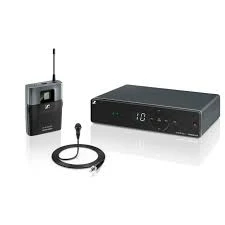
Choosing the right wireless headmic system for speech applications is one of those purchase decisions that looks simple on the surface but gets surprisingly tricky once you start comparing options. Australian conference venues, houses of worship, corporate training rooms, and educational institutions all share the same fundamental problem: presenters need to be heard clearly, hands-free, with zero dropouts, and without an audio engineer babysitting the rig. The Sennheiser SpeechLine Digital Wireless SL Headmic Set DW 3 AU R is purpose-built for exactly this use case, but is it the right choice for your venue?
This comprehensive buyer's guide compares the SpeechLine DW SL Headmic Set against analogue UHF rivals, competing digital systems, and entry-level alternatives. We'll cut through the marketing language and give you the honest analysis you need to make a confident decision.
Understanding the Speech Wireless Market in Australia
Before diving into product-specific comparisons, it helps to understand the landscape. Wireless presentation systems in 2026 broadly fall into three categories:
- Legacy analogue UHF systems — affordable, familiar, but increasingly squeezed by ACMA spectrum reallocation and prone to interference
- Digital 1.9 GHz DECT-based systems — license-free, secure, and immune to UHF spectrum chaos (this is where the SpeechLine sits)
- 2.4 GHz digital systems — license-free but share spectrum with Wi-Fi, Bluetooth, and IoT devices
The Sennheiser SpeechLine series operates in the 1.9 GHz DECT band, which is reserved internationally for voice applications and protected from Wi-Fi congestion. For Australian buyers who've experienced their UHF lapel pack dropping out mid-presentation because someone fired up a competing system in the next room, this matters enormously.
What's in the SpeechLine DW SL Headmic Set DW 3 AU R?
The DW 3 AU R bundle is configured specifically for the Australian market. The package includes the EM (receiver) unit, an SK bodypack transmitter, and the SL Headmic discreet earworn microphone capsule. It's a complete, ready-to-deploy speech reinforcement system rather than a piecemeal kit you have to specify yourself.
Key system attributes include:
- License-free 1.9 GHz DECT operation (no ACMA licence required in Australia)
- AES 256-bit encryption — important for boardrooms and government applications
- Up to 8-hour battery runtime with rechargeable BA 30 accupack
- Automatic frequency management with no scanning or coordination required
- Discreet flesh-tone SL Headmic capsule that virtually disappears on camera
- Integrated Command app support for remote monitoring and configuration
View full specifications and current Australian pricing →
SpeechLine DW vs Analogue UHF Alternatives
The most common comparison Australian buyers ask about is whether to spend the premium on SpeechLine digital or save money with a traditional UHF system. Here's an honest side-by-side analysis:
| Factor | SpeechLine DW SL | Typical UHF System |
|---|---|---|
| Frequency band | 1.9 GHz DECT (protected) | 520–694 MHz UHF (congested) |
| ACMA licence | Not required | May be required depending on band |
| Frequency coordination | Automatic, none needed | Manual scan and assignment |
| Encryption | AES 256-bit standard | Rarely included |
| Audio latency | ~19 ms digital | ~3 ms analogue |
| Susceptibility to interference | Low — protected band | Moderate to high |
| Multi-system capacity | Up to 20 channels per site | Depends on band plan |
| Typical entry price (AUD) | Premium tier | Budget to mid-tier |
Verdict: If you operate in a single, isolated venue with no nearby RF competition and budget is the dominant constraint, a quality UHF system can still serve well. For multi-system installs, multi-tenant buildings, or any application where dropouts during a live presentation would be career-damaging, the SpeechLine's DECT operation is genuinely worth the price premium.
SpeechLine DW vs Sennheiser EW-D and EW Series
Within Sennheiser's own catalogue, buyers often weigh the SpeechLine against the more general-purpose Evolution Wireless Digital (EW-D) and the well-known EW G3/G4 series. These ranges aren't direct competitors — they target different jobs — but the choice isn't always obvious.
SpeechLine DW: Built for Speech
- Best for: Permanent installs in conference rooms, classrooms, lecture theatres, houses of worship, courtrooms
- Strengths: Set-and-forget operation, encryption, no frequency coordination, integrated bodypack workflows
- Limitations: Not designed for music applications or instrument use
EW-D / EW G4: General-Purpose Wireless
- Best for: Bands, theatre productions, mixed speech-and-instrument deployments, touring
- Strengths: Broader capsule options, music-friendly audio chain, established workflow for live sound engineers
- Limitations: UHF spectrum dependency, requires frequency coordination, no native encryption
The rule of thumb: if every user of the system will be a speaker — not a singer or instrumentalist — SpeechLine is the smarter long-term investment. The hands-free, automatic operation pays dividends every single deployment.
SpeechLine DW vs Shure Microflex and Competing Brands
Shure's Microflex Wireless (MXW) and ULX-D ranges are the most credible competitors in the install-grade speech category. Both offer digital operation, encryption, and Dante networking. So how does Sennheiser hold up?
| Feature | Sennheiser SpeechLine DW | Shure MXW (DECT) | Shure ULX-D |
|---|---|---|---|
| Band | 1.9 GHz DECT | 1.9 GHz DECT | UHF |
| Encryption | AES 256-bit | AES 256-bit | AES 256-bit |
| Networked control | Sennheiser Control Cockpit | SystemOn / MXW Software | Wireless Workbench |
| Headmic discretion | SL Headmic — very discreet | MX153 — discreet | Various — variable |
| Battery management | Integrated charging accupack | Integrated charging dock | Rechargeable SB900 batteries |
| Best application | Permanent speech installs | Boardroom/AV integration | Larger multi-channel systems |
Verdict: The SpeechLine and Shure MXW are genuinely close competitors in the speech-install space. Sennheiser tends to win on capsule discretion and audio character (warmer, more natural speech reproduction), while Shure typically edges ahead on integrated ceiling-array workflows and networked AV ecosystem depth. For a presenter-focused deployment with a headmic, the SpeechLine is the more elegant solution.
Who Should Buy the SpeechLine DW SL Headmic Set?
Different buyers have different priorities. Here's how the SpeechLine DW SL fits various Australian use cases:
Houses of Worship
This is where the SpeechLine shines brightest. Pastors, ministers, and lay readers need reliable hands-free audio without IT or AV staff on standby. The automatic frequency management means volunteers can deploy the system confidently. The discreet flesh-tone headmic doesn't dominate the on-camera aesthetic for livestreamed services.
Corporate Boardrooms and Training Facilities
AES 256-bit encryption is a genuine requirement for many enterprise clients, particularly in financial services, defence, and government. The SpeechLine satisfies most procurement security checklists out of the box, which is rarely true of analogue alternatives.
Education — Lecture Theatres and Tutorials
Universities running multiple simultaneous lectures benefit massively from the SpeechLine's automatic coordination. Twenty lecturers across a building can use systems on the same DECT infrastructure without any of them ever touching a frequency setting.
Conference Centres and Hire Companies
For Australian event hire companies, the value proposition is slightly different. SpeechLine's reliability reduces support callouts and the cost of a botched conference can dwarf the price difference versus UHF. Plus, the SL Headmic survives the rough-and-tumble of rental deployment well.
Small Venues with Single-System Use
Honestly? If you're a small Australian church or community hall running one wireless system in an RF-quiet area, a quality UHF system from Sennheiser EW-D or AKG WMS40 may serve you just as well at a significantly lower cost. The SpeechLine's strengths emerge when you scale or when reliability is non-negotiable.
Value Analysis Across Price Tiers
Wireless presentation systems in the Australian market broadly break down into these price tiers:
- Budget tier (~$300–$600 AUD): Entry-level UHF systems, basic dynamic capsules. Fine for occasional use in interference-free venues. Don't expect long lifespan.
- Mid tier (~$600–$1,200 AUD): Sennheiser EW-D, Shure BLX, AKG WMS470. Good audio quality, single-system reliability, but still UHF-dependent.
- Install-grade tier (~$1,200–$2,500 AUD): Where the SpeechLine DW SL Headmic Set sits. Set-and-forget operation, encryption, multi-system scalability.
- Pro broadcast tier (~$2,500+ AUD): Sennheiser EW-DX, Shure ULX-D, Axient Digital. Overkill for most speech applications.
The SpeechLine occupies the install-grade sweet spot — it doesn't try to compete with broadcast-tier systems on raw audio specifications, but it absolutely dominates on workflow, reliability, and total cost of ownership over a five-to-ten-year deployment.
What Makes the SL Headmic Capsule Special?
The headmic capsule choice matters enormously and is often overlooked by buyers focused on transmitter specs. The SL Headmic that ships with this set is genuinely engineered for presentation work:
- Cardioid pickup pattern — rejects monitor wedges and reduces feedback risk
- Flesh-tone finish — visually disappears on stage and on camera
- Anti-perspiration construction — survives long sermons and conference sessions
- Wind and pop protection — handles plosive consonants cleanly
- Adjustable earhook design — fits across user demographics without fiddling
Compared to generic third-party headmic capsules that buyers sometimes pair with cheaper transmitters, the SL Headmic is in a different league for both intelligibility and physical comfort during multi-hour use.
Common Buyer Mistakes to Avoid
From years of AV integration experience, these are the recurring mistakes Australian buyers make when shopping for wireless presentation systems:
- Prioritising transmitter specs over capsule quality. A great transmitter paired with a mediocre capsule still sounds mediocre. The SL Headmic in this kit is a meaningful part of the value.
- Underestimating future expansion. Buying a single-channel UHF system and then trying to add a second one later often forces a complete spectrum re-coordination. DECT scales painlessly.
- Ignoring battery logistics. AA batteries seem cheap until you tally the annual cost of feeding ten transmitters. Rechargeable accupacks like the BA 30 pay back fast.
- Overlooking encryption requirements. Many corporate and government procurement processes now mandate encrypted wireless. Specifying an unencrypted system can force a costly replacement later.
- Assuming all DECT is equal. Cheap 1.9 GHz systems exist but lack the audio quality, range, and management software that make the Sennheiser ecosystem worth the investment.
Questions to Ask Before You Buy
Use this checklist to validate whether the SpeechLine DW SL Headmic Set is right for your situation:
- How many wireless systems will operate simultaneously in this venue?
- Is this a permanent install or a portable rental kit?
- Does the application involve speech only, or will singers and instruments be added later?
- Do your security or compliance frameworks require encrypted audio?
- What's the realistic five-year battery cost across all transmitters?
- Will non-technical users need to operate the system without engineering support?
- Are nearby buildings or events likely to introduce UHF spectrum competition?
If you answered "multiple systems", "permanent install", "speech only", "yes to encryption", or "non-technical users" to any of these, the SpeechLine is almost certainly the right call.
Honest Pros and Cons
Pros
- Genuinely set-and-forget operation — no frequency coordination ever needed
- License-free 1.9 GHz DECT operation in Australia
- AES 256-bit encryption meets corporate and government security requirements
- Excellent SL Headmic capsule with discreet aesthetics
- Long battery runtime with proper rechargeable accupack workflow
- Sennheiser Control Cockpit and Command app for remote monitoring
- Strong Australian distribution and warranty support
Cons
- Significant price premium over entry-level UHF alternatives
- ~19 ms digital latency may bother engineers used to analogue immediacy
- Not suitable for music or instrument applications
- DECT range is generally shorter than well-coordinated UHF
- Capped at ~20 channels per site (Australian DECT regulation)
Final Recommendation
The Sennheiser SpeechLine Digital Wireless Presentation Set SL Headmic Set DW 3 AU R is not the cheapest wireless headmic system on the Australian market, and it shouldn't be. It's a purpose-engineered, install-grade solution for venues where speech intelligibility, operational simplicity, and long-term reliability matter more than upfront savings.
Choose this system if you operate a house of worship, corporate boardroom, lecture theatre, courtroom, or any application where the cost of a failed presentation dwarfs the price difference versus budget alternatives. Choose a cheaper UHF system if you're running a single channel in an interference-free environment with technical operators on hand.
For most serious Australian buyers in the speech reinforcement category, the SpeechLine DW SL Headmic Set offers the best balance of audio quality, reliability, security, and total cost of ownership available today.
Check current Australian pricing and availability at MusiconStage →
Need advice on whether the SpeechLine fits your specific venue or use case? The MusiconStage team has deep experience with Sennheiser wireless deployments across Australia and can help you specify the right configuration before you commit. Get in touch via the product page to discuss your requirements.