
Sennheiser SpeechLine DW Headmic Set: Real-World Uses 2026
Sennheiser SpeechLine DW Headmic Set: Real-World Uses 2026
There's a particular type of frustration that only people who run rooms full of talking humans understand. The presenter walks in eight minutes before the session. Nobody knows where the mic is. When it's found, the battery is flat, and once it's not flat, the frequency it was on last week now has a hum on it because someone down the corridor fired up a different system. Ten minutes later, forty people are watching an AV tech crouch behind a rack instead of watching the presentation.
The Sennheiser SpeechLine Digital Wireless SL Headmic Set (DW-3 AU-R) exists to make that scene stop happening. It's not a wireless system for bands. It's not a general-purpose kit that happens to do speech. It is a speech-only system, built from the ground up for rooms where somebody stands up and talks — and the whole design philosophy is about removing the moving parts that go wrong in those rooms.
This guide is about how it actually behaves in Australian venues: what it's brilliant at, where it genuinely isn't the right tool, and how to work out whether your specific room is a match.
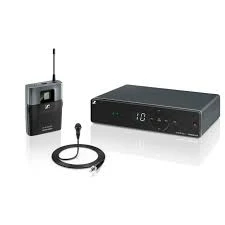
What's actually in the box, and what each part is for
The Presentation Set is a complete single-channel speech chain rather than a pile of components you then have to spec around. You get a rack-mount SL receiver with network connectivity, an SL Bodypack DW transmitter, the SL Headmic 1 headworn microphone, a rechargeable battery pack, antennas, rack hardware and power.
The important thing to understand is that these three pieces — receiver, bodypack, headmic — are designed as one system. The receiver knows the transmitter's battery state. The mic's frequency response is matched to the system's speech processing. You're not assembling a compromise; you're installing a designed outcome.
The SL Headmic 1 is a single-ear, lightweight headworn omnidirectional condenser. Single-ear matters more than people expect. Presenters who refuse to wear a dual-ear headset will usually accept a single-ear one, and the single-ear design sits far better with glasses, hearing aids, earrings and elaborate hairstyles. It's also visually discreet enough for filmed content.
The 1.9 GHz question — and why it's a bigger deal in Australia
This is the single most important thing to understand before you buy, because it's the decision that everything else hangs off.
SpeechLine Digital Wireless doesn't work in the UHF TV bands where most wireless microphones live. It operates in the 1.9 GHz DECT band — the same band used by cordless office phones. In practical terms for an Australian buyer, that means:
- No licence, no frequency coordination. The system finds a clean channel itself and moves if one goes bad. Nobody scans, nobody writes frequencies on masking tape.
- Insulation from spectrum repacks. Australian venues have already been through the pain of UHF reallocation once. Gear that lived in the 694–820 MHz range became landfill. The 1.9 GHz band is not on the same chopping block, which changes the ten-year cost picture considerably for a school or council venue.
- Immunity from the usual UHF chaos. Nearby broadcast transmitters, LED wall drivers and the eight other systems in the building simply aren't in this band.
The honest flip side: your office cordless phone fleet is in this band. DECT phone base stations, DECT headsets and DECT-based hearing assistance can all occupy the same spectrum. The system will negotiate around them and typically wins, but in a call centre or a large corporate floor with dozens of DECT handsets, the number of clean channels you can run simultaneously will be lower than the datasheet ideal. If you're putting this in an office building, walk the floor and ask facilities what the phone system is before you commit to a multi-channel plan.
Range is also a genuinely different animal at 1.9 GHz than at UHF. Line of sight is good — comfortably a large room or hall — but the signal doesn't punch through masonry, plant rooms and lift shafts the way UHF does. This is a room system, not a whole-campus system.
Check current pricing and stock on the SpeechLine SL Headmic Set DW-3 AU-R
Where this system genuinely shines
University lecture theatres and corporate training rooms
This is the system's home ground. A lecturer arrives, picks up the headmic, puts it on, starts talking. There's no gain to set, no frequency to select, no receiver to squint at. The automatic gain control handles the enormous variation between the softly-spoken statistics lecturer and the one who projects to the back wall — which is the single biggest reason speech systems in shared rooms sound bad.
Because the receiver sits on the network, a central AV team can see across a whole building: which rooms have a mic in use, which packs are running low, which link is struggling. In a university with forty teaching spaces, that visibility is the difference between fixing a problem before the 9am lecture and finding out about it from an angry email at 9:15.
Headworn, not handheld, also solves the lapel problem. Lapel mics on lecturers are a rolling disaster — jackets get removed, lanyards knock, the presenter turns their head and drops 6 dB. A headmic maintains constant distance to the mouth, which means constant level, which means far more usable gain before feedback in a room with ceiling speakers.
Boardrooms and hybrid meeting spaces
Since 2020, the brief for corporate rooms has changed permanently: whatever the room hears, the remote participants must hear equally well. A headworn mic is dramatically better for this than a ceiling array or a table boundary mic, because it delivers a close, dry, consistent signal with almost no room reverb — exactly what a video conferencing platform's noise suppression wants.
Typical scenario: an all-hands where the CEO presents to a hundred people in the room and four hundred on Teams. With this system, the CEO's voice hits the room PA and the conferencing bridge at the same consistent level for the full forty minutes. The digital transmission also means the audio arriving at your DSP is clean enough that you're doing tone shaping rather than damage control.
Houses of worship
Churches are one of the strongest use cases, for a reason that has nothing to do with audio: the operator is usually a volunteer, and often a different volunteer each week. Any system that requires someone to remember a frequency-coordination procedure will eventually be operated by someone who doesn't. Auto-linking and automatic frequency management remove that entire failure category.
The other fit is acoustic. Older Australian church buildings — brick, timber, high ceilings, hard surfaces — are reverberant nightmares with long RT60 times. A headworn mic at 2 cm from the mouth gets you far more gain before feedback than a lectern mic at 40 cm, which is often the difference between the back three rows understanding the sermon and politely pretending to.
School halls, assemblies and speech nights
The classic school hall scenario: the principal, three teachers and a rotating cast of students all need a mic across a two-hour presentation night. The licence-free, self-coordinating nature means a school can add channels over time without engaging an RF consultant. The rugged, simple bodypack survives being handed between people, and rechargeable batteries mean the school isn't buying AAs by the carton.
One honest note for schools: a headworn mic is a poor fit for a rapid handover between fifteen different student speakers. For that, a handheld from the same SpeechLine family makes far more sense. Use the headmic for the people who are on stage for a long block.
Group fitness, dance studios and gyms
Instructors need hands-free audio, high SPL competing with music, and gear that tolerates sweat and movement. The headmic set handles the first two very well. On the third, be realistic — this is a professional presentation mic, not a purpose-built waterproof fitness mic. In a high-sweat spin studio, budget for windscreens as consumables and consider whether a dedicated sweat-resistant option is a better long-term call. In a yoga or pilates studio, it's excellent.
Conference and AV production hire
For hire companies doing corporate conferences, the appeal is turnaround speed. A system that self-coordinates means the crew isn't spending the load-in doing an RF scan and coordination for a twelve-channel speech rig. It also means fewer support calls from the client's own staff on day two.
Where it isn't the right choice — honestly
Being clear about this matters more than another paragraph of praise.
- Live music and touring. The system is voiced and processed for the human voice. Its speech-optimised signal path is a feature in a lecture theatre and a liability on a lead vocal. For bands, look at Sennheiser's EW-D or EW-DX range instead.
- Large channel counts in a congested building. There's a hard ceiling on simultaneous channels, and it drops in DECT-heavy environments. If you need twenty-plus channels of speech in a busy CBD tower, a coordinated UHF or Dante-based system will scale further.
- Long distances or heavy structural obstruction. Outdoor events, marquees a hundred metres from the rack, or transmitting from a green room three walls away are all UHF territory.
- Budget-constrained single-room jobs. If you need one mic in one small hall and nobody is coordinating anything, this is more system than the problem requires. The value here is in the management, monitoring and reliability layer — if you won't use that layer, you're paying for it anyway.
- Anyone who won't wear a headset. Some presenters simply refuse. Know your talent before you spend.
Day-to-day realities you'll only discover after installing it
Battery routine beats battery specs. The rechargeable pack gets you comfortably through a full teaching or event day, but the real win is building a habit: the pack lives in the charger between sessions. Systems fail when packs live in drawers. If the rack is in a locked cupboard, put the charger where the presenter actually walks past.
Mic placement is the whole ballgame. The boom should sit at the corner of the mouth, roughly two finger-widths out, angled slightly down and away from the direct breath stream. Straight in front of the lips gets you plosives and breath noise; too far back down the jaw costs you 4–6 dB and reintroduces the feedback problem you bought the headmic to solve. Teach this once to every regular presenter and half your support tickets disappear.
Antenna position is not optional. Antennas inside a closed metal rack in a cupboard will underperform badly. Get them to the front of the rack or, better, remote them into the room. This is the most common installation mistake with 1.9 GHz systems, and it produces exactly the intermittent dropouts people then blame on the band.
Use the network monitoring. Sennheiser's Control Cockpit software is genuinely the reason to buy this over a cheaper system. If you install it and never connect the Ethernet port, you've bought a very good wireless mic and left the actual value on the table.
Which user are you?
The volunteer or non-technical operator: This is arguably the best system on the market for you, because it removes the decisions you don't want to make. Turn it on, put it on, talk.
The in-house AV coordinator managing multiple rooms: The network layer is your reason to buy. Being able to see every room's status from a desk is a workflow change, not a feature.
The integrator specifying a fit-out: The pitch to your client is total cost of ownership — no licensing, no coordination labour, no spectrum-repack obsolescence risk, and fewer callbacks. Verify the DECT environment during site survey and confirm your channel count with headroom.
The band or musician: Respectfully, this isn't for you. Look at EW-D instead.
How the alternatives stack up in the same rooms
Versus Sennheiser EW-D / EW-DX (UHF): EW-D scales to more channels and covers more distance, and handles music. It also requires you to think about frequencies, and its long-term spectrum position is less certain. Choose EW-D when you need range, channel count or musical performance. Choose SpeechLine when you need it to work without an operator.
Versus Shure Microflex Wireless (MXW): Similar 1.9 GHz, similar meeting-room philosophy, deeper integration with Shure's conferencing ecosystem. If the room is already all-Shure DSP and ceiling arrays, that's a real argument. If the room is a lecture theatre first and a meeting room second, SpeechLine's speech processing and headmic quality make a stronger case.
Versus Shure SLX-D or Audio-Technica 3000 (UHF): Both are excellent value and will cost less per channel. Both put frequency coordination back in your hands. The trade is upfront cost against ongoing management effort — which is a genuine choice, not a trick question. A single-room church with one dedicated tech may be better served by SLX-D. A twelve-room campus is not.
Versus a wired lectern mic: Don't dismiss this. If the presenter never moves, a good gooseneck is cheaper, more reliable and sounds fine. Buy wireless because presenters move, not because wireless is newer.
Mistakes that cost people money
- Skipping the DECT survey. Find out what's already in the 1.9 GHz band in your building before you plan channel counts.
- Assuming UHF-like range. Test from the furthest point the presenter will actually stand, including behind any structural columns.
- Racking it and never networking it. The monitoring is the product.
- Buying one channel when the real requirement is two. The moment you have a presenter and a panel host, one channel becomes a handover problem. Work out your true worst-case simultaneous count.
- Never training the presenters on mic placement. Five minutes of coaching outperforms a lot of EQ.
- Treating windscreens as permanent. They're consumables. Buy spares with the system, not after the first one fails mid-conference.
Application FAQs
Do I need an ACMA licence to run this in Australia?
No — 1.9 GHz DECT operation is licence-exempt under the relevant class licence, which is one of the core reasons the system exists. That's a meaningful ongoing saving compared with licensed UHF operation.
Will my office Wi-Fi interfere with it?
No. Wi-Fi sits at 2.4 GHz and 5 GHz. Your DECT cordless phones are the ones to think about.
How many can I run in one venue?
The system supports a solid multi-channel count for a speech venue, but the real-world figure depends on your local DECT congestion. Plan conservatively and confirm the current channel-count specification for the AU variant on the product page before finalising a multi-room design.
Can I use it for recording video or podcasts?
Yes, and it's good at it — a close headworn omni is a flattering, consistent source. The visible headset is the only real consideration for on-camera work; the audio itself is broadcast-usable.
Can a different microphone be used with the bodypack?
The SL Bodypack accepts other compatible Sennheiser lavalier and headworn capsules, which is useful if you want a discreet lapel option for filmed panels alongside the headmic for stage work. Confirm connector compatibility for the specific capsule you're considering.
Is the latency a problem for live speech reinforcement?
No. Digital transmission introduces a small, fixed delay well within the range where speakers hear no distracting effect and lip-sync in recordings stays tight.
So — should you buy it?
Buy the SpeechLine SL Headmic Set DW-3 AU-R if your problem is operational rather than acoustic. If your rooms sound alright when everything works, but everything too often doesn't work — flat batteries, unknown frequencies, untrained operators, mystery dropouts — this system attacks exactly that problem, and it does so better than almost anything else at its level.
Universities, corporate campuses, houses of worship, schools and conference venues are all firmly in the sweet spot. Multi-room sites with a small AV team get the most value of all, because the network monitoring turns reactive firefighting into planned maintenance.
Look elsewhere if you need musical performance, long-range coverage, very high channel counts in congested spectrum, or if you're solving a genuinely single-microphone, single-room problem on a tight budget. There's no shame in a cheaper UHF system or a good gooseneck when that's what the room actually needs.
For everyone else — the people who just want the presenter to walk in, put a mic on, and be heard clearly without anyone crouching behind a rack — this is a very easy system to recommend.
View the full Sennheiser SpeechLine SL Headmic Set DW-3 AU-R specifications and availability
Not sure whether SpeechLine or a UHF system suits your venue better? Talk to the MusiconStage team about your room — the right answer genuinely depends on your building, your channel count and who's operating the system on a Tuesday morning.