
Sennheiser HD25 Light V2 DJ Headphones: Real-World Use Guide 2026
Sennheiser HD25 Light V2 DJ Headphones: Real-World Use Guide 2026
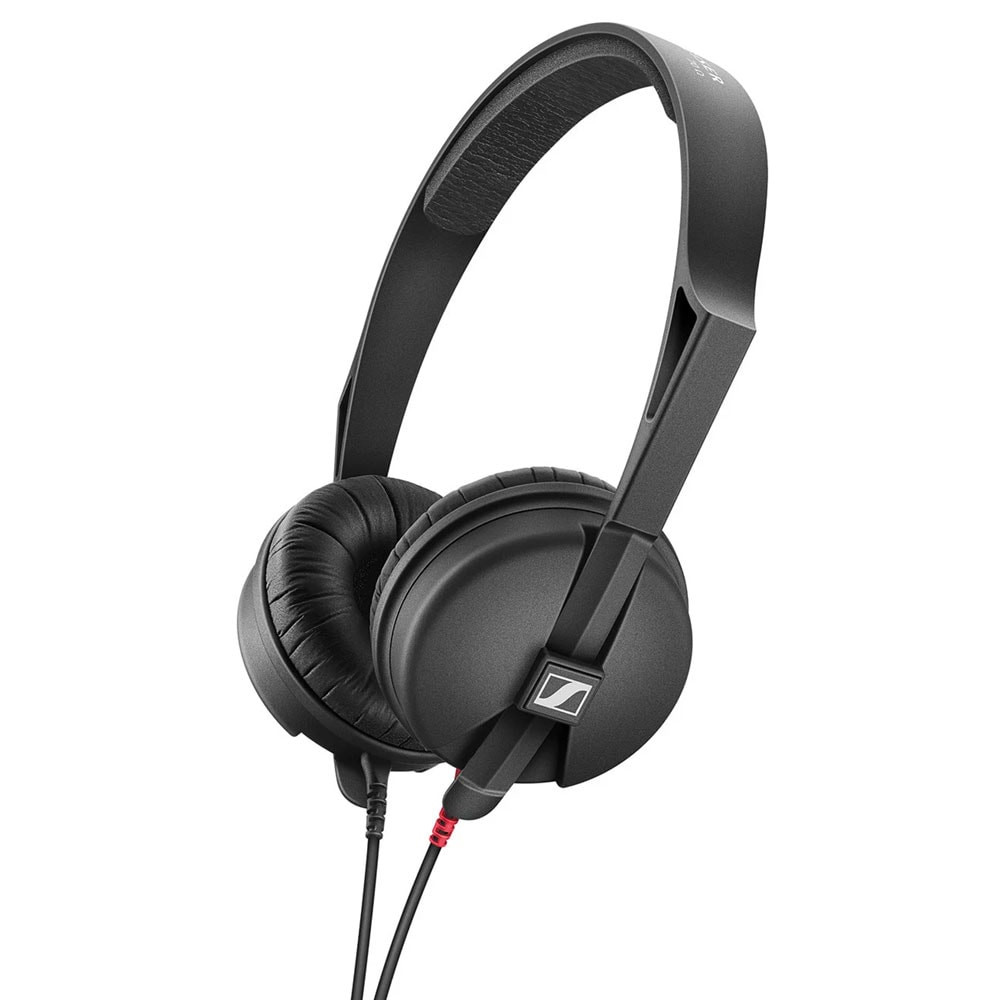
If you've spent any time in a DJ booth, a radio studio, or behind a camera rig in Australia, chances are you've spotted a pair of Sennheiser HD25s clamped to someone's ears. The HD25 Light V2 is the streamlined sibling of the legendary HD25 — same DNA, lighter build, friendlier price tag. But specs only tell half the story. What really matters is how these headphones hold up when you're three hours deep into a wedding gig at Werribee, mixing a peak-time set at a Brunswick warehouse party, or tracking vocals in a Sydney project studio at 2am.
This guide isn't another spec sheet rehash. We're going to look at the HD25 Light V2 through the lens of how you'll actually use them — the gigs, the rooms, the awkward moments where headphone choice genuinely changes the outcome. Whether you're a mobile DJ working pub gigs, a podcaster tracking from home, or a sound engineer who needs reliable monitoring without breaking the back of your neck, this is the practical breakdown.
Who Actually Uses the HD25 Light V2?
Before we get into the scenarios, it helps to understand who reaches for these. The HD25 family has been a staple in three distinct worlds for decades:
- Working DJs — club, mobile, wedding, festival. People who need to hear the cue mix clearly over a thumping monitor.
- Broadcast and ENG crews — radio jocks, news camera operators, OB-van engineers. Anywhere reliable, isolated monitoring matters more than audiophile sparkle.
- Project studio operators and podcasters — folks tracking vocals or doing rough mixes who want a closed-back can that doesn't bleed into the mic.
The "Light" V2 specifically targets people who loved the original HD25 but wanted something a touch easier on the head, with a more flexible cable and a lower buy-in. You give up a few features (no separable capsule, single-sided cable instead of the steel-cable original), but you gain comfort and value.
Real-World Application Scenarios
Scenario 1: The Mobile DJ Working Weddings and Functions
You're set up at a reception centre on the Mornington Peninsula. The room is loud — guests laughing, the venue's PA blasting, an MC walking around with a wireless mic. You need to cue your next track without losing your place in the current mix.
This is where the HD25 Light V2 shines. The closed-back design with high clamping force gives you genuine isolation — not the polite seal of a studio can, but the kind of grip that lets you hear a kick drum cue when the dance floor is going off. The 70Ω impedance plays nicely with most pioneer, Denon, and Allen & Heath controllers without needing a headphone amp.
The practical edge: you can do the classic one-ear-on, one-ear-off DJ pose without the cup flopping off your head. The single-sided cable means no tangle when you spin the headphone around to drape it on your shoulder.
Scenario 2: Peak-Time Club Monitoring
Different beast entirely. You're at a venue where the monitor wedge in the booth is pushing 105dB and the SPL on the dance floor is well past safe limits. You need to hear your cue clearly enough to beatmatch without cranking the headphone level to ear-damaging territory.
The HD25 Light V2's tight clamp and small-but-dense ear pads create a passive isolation that lets you actually monitor at sensible levels. Plenty of DJs report they can run these at a more conservative headphone volume than they would with looser-fitting alternatives — which matters when you're doing five nights a week and want to still be hearing in 2046.
Honest limitation: the clamp force is firm. If you have a larger head or wear glasses, the first hour can feel snug. Most users acclimatise, but if you're sensitive to pressure, try a pair in-store first.
Scenario 3: Radio and Podcast Production
You're recording a two-host podcast in a small Melbourne home studio. The mics are condensers, the room isn't perfectly treated, and you need closed-back headphones that don't leak into the mic.
The HD25 Light V2's isolation is genuinely useful here. Even at moderate monitoring levels, bleed into a cardioid condenser at typical podcast distance (15-20cm) is minimal. The relatively flat midrange means you can mix as you go without being misled by overhyped bass.
Where it excels: spoken word, vocal tracking, talkback applications. The clarity in the 1-4kHz range makes consonants and sibilance immediately obvious.
Where it's not the best choice: if you're mixing bass-heavy electronic music or doing critical mastering decisions, these aren't your reference can. The bass is punchy and pleasing but not perfectly accurate.
Scenario 4: ENG and Broadcast Field Work
Camera operators and field audio crews have used HD25s for decades for one simple reason: they survive. The Light V2 inherits the family's modular, repairable design philosophy. Bend the headband, swap the cable, replace the ear pads — everything is serviceable.
For an Australian docco crew working in the bush or a sports broadcast team setting up at the MCG, this matters. Tools that can be fixed in the field beat tools that need to be replaced.
Performance in Different Australian Environments
Outdoor Festivals and Daytime Events
Heat is the enemy of any closed-back headphone, and the HD25 Light V2 is no exception. After two hours of mixing in 32-degree Brisbane summer sun, your ears will get sweaty. That said, the small on-ear cup design actually breathes better than larger over-ear DJ headphones. The lightweight construction (around 140g) also means less fatigue across a long day.
Small Venues and Pub Gigs
The 70Ω impedance is forgiving with consumer-grade outputs. If you're DJing off a basic Pioneer DDJ at a Newtown pub, you won't need to push the headphone gain to maximum to get usable level. That's a real advantage over higher-impedance studio cans.
Recording Studios and Tracking Booths
For tracking vocals or acoustic instruments, the isolation prevents click track and backing bleed. The sound signature is energetic — slightly forward in the upper mids — which performers often prefer for hearing themselves clearly.
How It Compares for Specific Applications
Versus the Pioneer HDJ-X7 (Club DJ Application)
The Pioneer HDJ-X7 offers a larger over-ear design and a swivelling cup, which some DJs prefer for one-ear cueing. The HD25 Light V2 counters with significantly better passive isolation in loud environments and a more compact, gig-bag friendly form factor. For travelling DJs, the HD25 wins on portability and reliability. For long sit-down sets in cooler rooms, the Pioneer's larger pads can be more comfortable.
Versus the Audio-Technica ATH-M50x (Studio Application)
The M50x is a fantastic studio headphone — flatter response, more comfortable for long sessions, better for critical listening. But it's not built for the DJ booth. The HD25 Light V2 isolates better in loud rooms and survives more abuse. If you only do studio work, the M50x is probably the smarter pick. If you do both DJ and tracking work, the HD25 covers more bases.
Versus the Sennheiser HD25 (Original)
The original HD25 has the legendary steel cable, fully separable ear capsules, and a slightly more robust headband. It costs noticeably more. The Light V2 trades those serviceability extremes for a friendlier price and lighter feel. For most working users, the Light V2 covers 90% of the use case at a much better value.
Practical Buying Advice by User Type
For the Beginner Mobile DJ
If you're new to DJing and doing weekend gigs at family parties, school formals, and small functions, the HD25 Light V2 is arguably the smartest first "real" headphone purchase. You'll grow into them, not out of them. Plenty of touring pros still use this exact model after a decade.
For the Working Club or Festival DJ
You probably already know about the HD25 family. The Light V2 is the value-conscious choice — same sound signature, same isolation, slightly less robust cabling. If you DJ five nights a week and travel internationally, the original HD25 might be worth the upgrade for the modular capsule design. For most working DJs, the Light V2 is genuinely sufficient.
For Podcasters and Home Studio Operators
If your primary use is voice work and rough mixing in untreated rooms, the HD25 Light V2 punches well above its weight. Pair them with a flatter reference headphone (like an HD600 or a budget studio can) for the final mix decisions, and use the HD25 for tracking and editing.
For Broadcast and Field Audio Professionals
The case writes itself — the HD25 family has been the broadcast standard for 30 years. The Light V2 maintains that legacy at a price that suits crew-issue purchasing.
Check current Australian pricing and availability on the Sennheiser HD25 Light V2
Getting the Most From Your HD25 Light V2
Break-In and Comfort Tips
- The clamp will relax — give it a few weeks of regular use. If it's still painful, gently stretch the headband over a book or similar-sized object overnight.
- Replace the ear pads every 12-18 months — the velour pads compress and degrade with sweat. New pads transform the comfort.
- Position matters — the small cups need to sit properly on the ear, not in front of or behind it. Take 30 seconds to settle them correctly each time.
Common Application Mistakes
- Buying them for critical mixing — these are excellent monitoring headphones, but not flat reference. Use them for the tasks they're designed for.
- Cranking the level to overcome small ear bleed — if you're not getting a proper seal, fix the seal, don't fix it with volume.
- Treating the cable harshly — the V2's cable is durable but not indestructible. Coil properly, don't yank.
Application-Focused FAQ
Will they work with my DJ controller without a headphone amp?
Yes. The 70Ω impedance is well-matched to consumer and prosumer DJ gear. You'll get plenty of volume from any modern Pioneer, Denon, Roland, or Allen & Heath controller.
Are they suitable for long studio sessions?
For tracking and short to medium sessions, absolutely. For 8-hour mixing marathons, the clamp force may become tiring — many engineers swap to a larger over-ear can for extended deep listening.
How do they handle bass-heavy genres like drum and bass or house?
The bass is punchy and present, with good kick drum definition for cueing. It's not the extended, deep sub of some bass-tuned consumer headphones, but for monitoring purposes, the speed and clarity are exactly what you want.
Are they good for hearing protection in loud booths?
They're not hearing protection — they're DJ headphones. But the passive isolation means you can monitor at safer levels in loud environments, which is a meaningful benefit over poorly isolating alternatives.
How replaceable are the parts in Australia?
Sennheiser Australia maintains good spare-part availability for the HD25 family. Ear pads, headband cushions, and cables are typically in stock at authorised dealers.
Final Application-Based Recommendation
The Sennheiser HD25 Light V2 is not the most comfortable headphone you can buy. It's not the flattest. It's not the most stylish. What it is, is the most application-appropriate headphone in its class for DJs, broadcast operators, and tracking engineers who need reliable, isolating monitoring without compromise.
If your work involves:
- Loud environments where isolation matters more than soundstage
- One-ear cueing where compact cups beat large ones
- Repeated travel and rough handling
- Hours of use without needing critical reference accuracy
... then the HD25 Light V2 is almost certainly the right tool. Across thousands of Australian DJ booths, radio stations, and project studios, these are the headphones people quietly reach for when they actually need to get the job done.
View the Sennheiser HD25 Light V2 at MusiconStage with Australian shipping and warranty support