
Sennheiser HD 25 Professional DJ Headphones Review 2026
Sennheiser HD 25 Professional DJ Headphones: The Honest Australian Review for 2026
Few pieces of audio gear earn the kind of loyalty the Sennheiser HD 25 commands. Walk into any club booth, festival stage or broadcast truck in Australia and there's a good chance you'll spot that unmistakable split headband and those compact on-ear cups clamped firmly in place. The HD 25 has been a working professional's tool for decades, and it's still being specified today not out of nostalgia, but because it genuinely does the job.
But "industry legend" doesn't automatically mean "right for you." If you're weighing up the HD 25 for DJing, monitoring or critical listening, you deserve a clear-eyed look at what these headphones actually deliver, where they fall short, and whether the asking price makes sense for your situation. This guide covers all of that, with an Australian buyer's perspective on availability, warranty and value.
What the Sennheiser HD 25 Actually Is
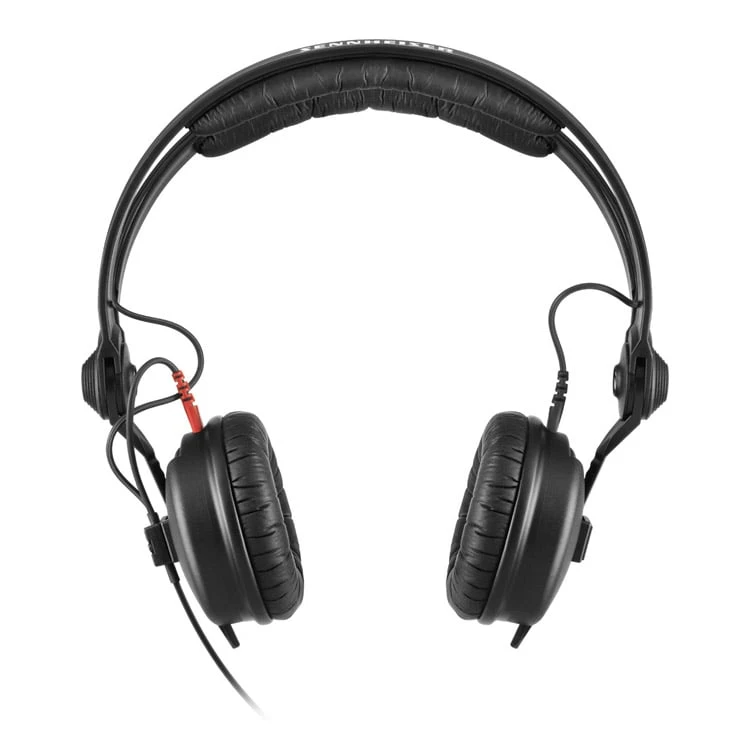
The HD 25 is a closed-back, on-ear (supra-aural) dynamic headphone designed first and foremost as a professional monitoring tool. Sennheiser originally engineered it for environments where ambient noise is brutal and accurate monitoring is non-negotiable: think broadcast camera operators, sound engineers on noisy stages, and DJs trying to cue a track in a room thumping at 100+ decibels.
It's a deliberately no-frills design. There's no Bluetooth, no active noise cancellation, no app, no fancy carry case theatre. What you get is a lightweight, rugged, passive headphone built around a clever lightweight diaphragm and aluminium voice coil that delivers high sound pressure levels with low distortion. In a category increasingly obsessed with features, the HD 25 stays stubbornly focused on doing one thing extremely well.
Key specifications at a glance
| Specification | Detail |
|---|---|
| Design | Closed-back, on-ear (supra-aural) |
| Driver type | Dynamic, neodymium magnet |
| Frequency response | 16 Hz – 22,000 Hz |
| Impedance | 70 ohms |
| Sound pressure level | Approx. 120 dB SPL |
| Cable | Single-sided, steel-reinforced (1.5 m straight) |
| Weight | Approx. 140 g (without cable) |
| Connector | 3.5 mm with screw-on 6.3 mm adapter |
That 70-ohm impedance is worth flagging early. It's high enough to behave well with proper DJ mixers and audio interfaces, but still efficient enough to get loud from a phone or laptop in a pinch, even if a dedicated headphone output will always sound better.
How They Sound: Punchy, Forward and Built for Cueing
Let's be honest about what the HD 25 is voiced for. This is not a neutral, reference-flat studio headphone in the vein of an open-back monitoring set. The HD 25 has a noticeably forward, energetic sound signature with a tight, emphasised bass response and crisp upper mids. That tuning isn't an accident — it's exactly what helps a DJ pick out a kick drum and beatmatch in a loud room.
Bass is fast and punchy rather than bloated. Kicks and basslines hit with authority and stay defined even at high volume, which is critical when you're trying to phrase-match two tracks in a noisy environment. The midrange is present and clear, making vocals and snares easy to isolate. Treble is detailed and a touch bright, which aids cueing precision but can feel fatiguing over very long sessions for some listeners.
For electronic music, hip-hop, house, techno and most club-oriented genres, this voicing is genuinely excellent. For someone wanting a perfectly flat reference for delicate mixing and mastering decisions, the HD 25 is not the ideal first choice — it colours the sound in ways that serve performance rather than analytical accuracy. Knowing that distinction up front will save you disappointment.
Sound Isolation: Where the HD 25 Earns Its Reputation
The HD 25's passive isolation is one of its standout real-world strengths. The closed-back design combined with firm clamping pressure blocks a meaningful amount of ambient noise without any active electronics. In a loud booth, this means you can hear your cue channel clearly without cranking the volume to dangerous, hearing-damaging levels.
That firm clamp is a deliberate design choice. The cups grip your ears securely so the headphones stay put when you're moving, headbanging behind the decks, or wearing them single-eared. The HD 25 famously lets you rotate one capsule away for one-ear monitoring — a feature DJs rely on constantly for blending the room sound against the cue.
The trade-off is comfort during the break-in period. New pairs clamp tightly, and on-ear pads sit directly on your ears rather than around them. Most users find the clamp eases over a few weeks of use, and many swap to aftermarket velour or larger pads for longer comfort. If you wear glasses or have particularly sensitive ears, factor a short adjustment period into your expectations.
Build Quality and the Genuinely Repairable Design
Here's where the HD 25 separates itself from most consumer headphones, and where its long-term value case is strongest. Almost every part is replaceable. The cable, ear pads, headband padding, capsules and even the steel headband components can be individually swapped out. Sennheiser and authorised dealers stock these spares, which means a worn or damaged HD 25 can be brought back to life for a fraction of replacement cost.
This modularity is why so many working professionals are still using HD 25s they bought many years ago. When the pads compress or a cable develops a fault from repeated coiling, you replace that single part rather than binning the whole headphone. In a throwaway gadget era, that repairability is both economically and environmentally meaningful, and it's a major reason the HD 25 holds its value on the second-hand market.
The construction itself is lightweight plastic over a steel-reinforced headband and cable. It doesn't feel premium in a heavy, metallic way — it feels practical, light and tough. The split headband distributes weight comfortably and contributes to the secure fit. These are tools designed to survive being stuffed into a record bag night after night.
Keen to get the genuine article? View the Sennheiser HD 25 specifications and pricing from an authorised Australian dealer with genuine-product assurance.
Who Should Buy the HD 25 (and Who Shouldn't)
The clearest way to decide is to match the headphone to your actual use case. Here's an honest breakdown.
Ideal for:
- DJs (mobile, club and bedroom): This is the headphone's home turf. Excellent isolation, punchy bass, secure fit and one-ear monitoring make it close to a default recommendation for DJing.
- Broadcast and live sound engineers: The isolation and durability suit noisy on-location work, which is exactly what the design was born from.
- Musicians tracking in loud environments: Drummers and players monitoring against loud backline benefit from the SPL handling and isolation.
- Anyone wanting a buy-once, repair-forever headphone: The replaceable-parts ecosystem makes long-term ownership genuinely cost-effective.
Look elsewhere if:
- You want flat reference monitoring for mixing/mastering: The forward, bass-emphasised tuning isn't designed for analytical neutrality.
- Comfort over long sessions is your top priority: The on-ear design and firm clamp suit purposeful work more than all-day casual listening.
- You want wireless or noise cancellation: The HD 25 is purely wired and passive by design.
- You primarily listen casually for pleasure: You'll likely find more comfortable, warmer-sounding options at similar prices.
HD 25 Variants: Clearing Up the Confusion
Sennheiser has released several HD 25 versions over the years, and the naming can genuinely confuse buyers. The standard HD 25 (sometimes called the HD 25 Plus in certain bundles) typically ships with extra accessories such as additional ear pads, a longer coiled cable and a carry pouch. The HD 25 Light uses a single (non-split) headband and slightly lighter clamping, trading a little isolation and grip for a touch more comfort at a lower price.
For most DJs and professionals, the standard split-headband HD 25 is the one to get — the dual headband and firmer clamp deliver the secure, isolating fit that built the model's reputation. If you found this page researching the professional model specifically, that's the version covered here. Just be sure you're comparing like-for-like when you shop, because the variants are not identical despite the shared name.
Australian Buying Considerations
If you're buying in Australia, a few practical points matter. First, buy from an authorised dealer. The HD 25's popularity makes it a target for grey-market and counterfeit units, and a fake will rarely deliver the genuine sound or build quality — and won't carry valid local warranty support. Genuine stock through an authorised Australian retailer protects both your investment and your warranty rights under Australian Consumer Law.
Second, factor in spare-parts availability. One of the HD 25's biggest long-term advantages is replaceable components, but that only helps if those spares are easy to source locally. Buying through an established Australian audio specialist makes ongoing pad and cable replacements straightforward rather than a frustrating import hunt.
Third, consider total cost of ownership rather than just sticker price. The HD 25 isn't the cheapest DJ headphone, but a unit that lasts a decade with cheap part swaps often works out more economical than replacing budget headphones every couple of years.
Ready to invest in a proven workhorse? Shop the Sennheiser HD 25 DJ headphones with genuine Australian stock and reliable after-sales support.
Honest Pros and Cons
The strengths
- Outstanding passive isolation for loud environments
- Punchy, defined bass and clear mids ideal for cueing and beatmatching
- Secure, stay-put fit with practical one-ear monitoring
- Lightweight despite rugged construction
- Almost fully repairable with widely available spare parts
- Excellent resale value and proven long-term reliability
The compromises
- Firm clamp and on-ear pads need a break-in period
- Forward, coloured sound isn't suited to flat reference work
- Treble can feel bright or fatiguing over very long sessions
- No wireless, no active noise cancellation
- Plastic construction won't feel "premium" to some buyers despite its toughness
Frequently Asked Questions
Are the HD 25 good for everyday music listening?
They can be enjoyable for genres with strong bass and rhythm, but the forward tuning and on-ear clamp make them better suited to purposeful monitoring than relaxed all-day listening. If casual comfort is your priority, an around-ear option may serve you better.
Do I need a headphone amp to drive them?
Not necessarily. At 70 ohms they're efficient enough to run loud from most DJ mixers, audio interfaces, laptops and even phones. A dedicated headphone output will give you cleaner, more controlled sound, but they're far from being amp-dependent.
How long do they last?
With replaceable parts, a well-cared-for HD 25 can realistically last many years of heavy use. Pads and cables are the usual wear items, and both are inexpensive to replace, which is a core part of the model's value story.
Are they good for studio mixing?
For tracking and monitoring in loud settings, yes. For critical mix and mastering decisions where flat accuracy matters, a dedicated reference headphone is the better tool — the HD 25 colours the sound by design.
The Verdict
The Sennheiser HD 25 has stayed relevant for one simple reason: it remains one of the best tools available for its intended job. If you're a DJ, broadcast professional, or anyone who needs reliable monitoring and strong isolation in a loud environment, the HD 25 is an easy recommendation. The punchy sound, secure fit and genuinely repairable design add up to a headphone you can depend on for years.
It isn't the right pick for everyone — flat-reference mixers and comfort-first casual listeners have better-suited options. But within its purpose, the HD 25 is about as close to a sure thing as professional audio gear gets. Buy genuine, expect a short break-in period, and you'll understand exactly why so many pros never bother switching.
Browse the Sennheiser HD 25 Professional DJ Headphones — genuine product from an authorised Australian dealer with dependable warranty and spare-parts support.