
Sennheiser HD 25 Plus vs Rivals: DJ Headphone Guide 2026
Sennheiser HD 25 Plus vs Rivals: DJ Headphone Guide 2026
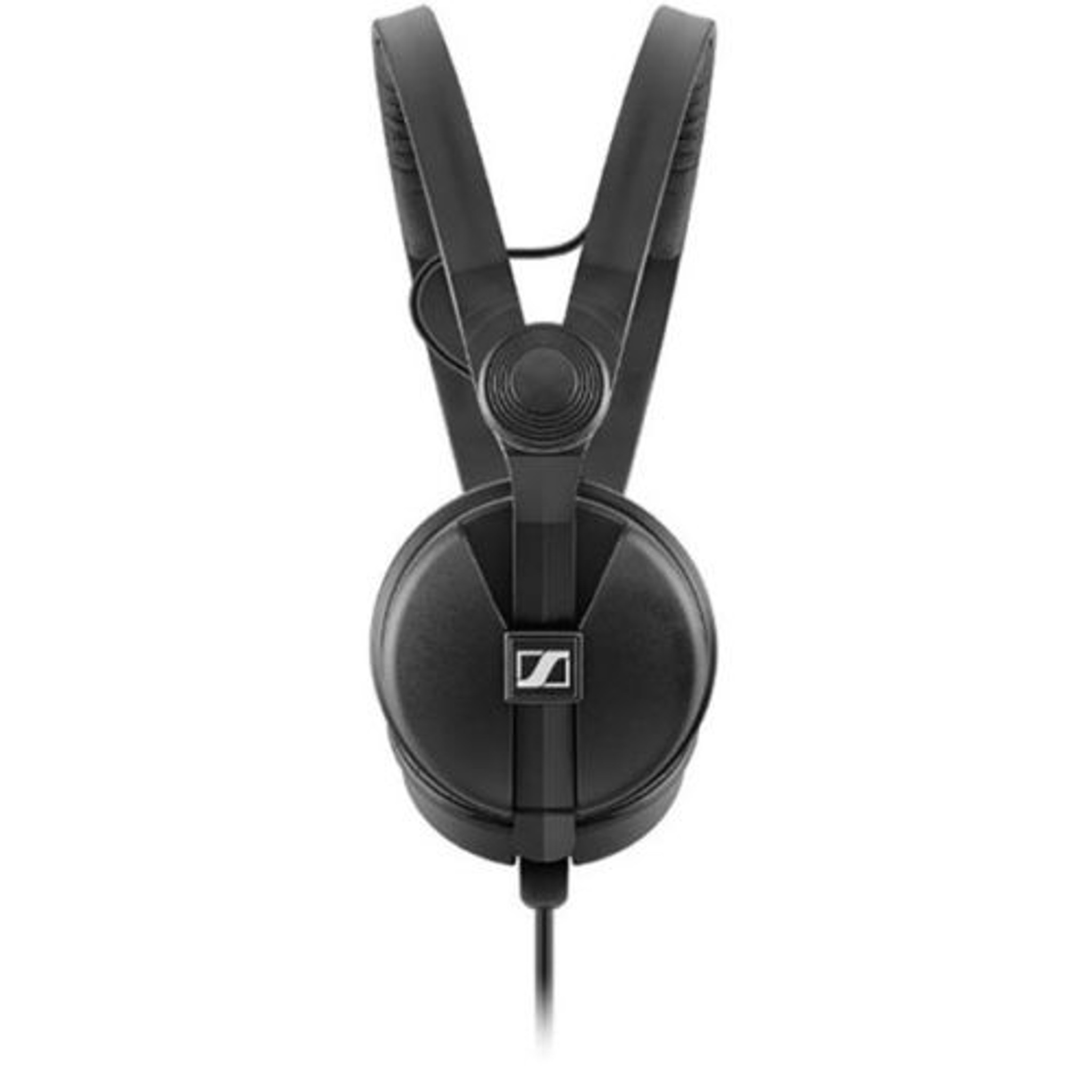
Walk into any club, festival tent, broadcast truck or live production office in Australia and you'll spot the same silhouette hanging off someone's neck: a small, unglamorous pair of black headphones with a split headband and one ear cup flipped sideways. The Sennheiser HD 25 has been in continuous production since 1988, and the HD 25 Plus is the bundled version that most working pros end up buying once they realise what the accessories are actually worth.
But "industry standard" isn't a good enough reason to spend your money in 2026. The competition has become genuinely excellent, and depending on what you actually do, a rival set might serve you better. This guide compares the HD 25 Plus fairly against the alternatives Australian buyers realistically shortlist, explains where it wins, where it loses outright, and how to work out which camp you fall into.
First: What the "Plus" Actually Buys You
This trips up a lot of first-time buyers. There are several HD 25 variants floating around the Australian market, and the price differences between them are not arbitrary. The Plus is not a different-sounding headphone — the drivers and housing are the same as the standard HD 25. What changes is the box contents.
| Variant | Cable Supplied | Earpads | Case | Best For |
|---|---|---|---|---|
| HD 25 (standard) | 1.5 m straight, single-sided | Pleather only | None | Buyers on the tightest budget who only need one use case |
| HD 25 Plus | 1.5 m straight and 3 m coiled, both detachable | Pleather and velour spare set | Soft carry pouch | Working DJs, engineers and anyone using them daily across venues |
| HD 25 Light | 1.5 m straight | Pleather, single headband | None | Casual use, lower clamp preference, budget-first buyers |
Buy the spare cable and velour pads separately and you'll typically spend more than the Plus premium — that's the whole value argument, and it's a legitimate one. The coiled 3 m cable in particular is the one DJs reach for at a booth, while the 1.5 m straight cable is what you want on a mixing desk or in a broadcast position. Having both means you're never taping a cable to your leg at a gig.
Check current Sennheiser HD 25 Plus pricing and availability
The Specs That Actually Matter
Spec sheets are mostly noise, but three numbers on the HD 25 genuinely explain its reputation.
| Specification | HD 25 Plus | Why It Matters |
|---|---|---|
| Impedance | 70 ohms | High enough to resist distortion when pushed hard, low enough to drive properly from a mixer's headphone out or a phone dongle |
| Max SPL | 120 dB (1 kHz, 1 Vrms) | Stays clean at levels most headphones turn to mush at — the key reason they survive loud stages |
| Frequency response | 16 Hz – 22 kHz | Full range on paper; the tuning, not the extension, is the real story |
| Design | Closed-back, supra-aural (on-ear) | Good isolation in a very small package — but sits on the ear, not around it |
| Weight | ~140 g without cable | Genuinely light for long shifts |
| Connection | Detachable single-sided, 3.5 mm with screw-on 6.3 mm adapter | Cable is the first thing to fail on any headphone — here you just replace it |
The 120 dB SPL figure is the underrated one. Plenty of headphones will play loud; far fewer stay coherent and non-fatiguing while doing it. If you've ever tried to beatmatch or check a mix next to a stack of subs and found your headphones smearing into noise, that's the specification that was failing you.
Head-to-Head: HD 25 Plus vs the Realistic Alternatives
These are the models Australian buyers most commonly cross-shop at or near the HD 25 Plus price point. Ratings below are considered judgements based on how each performs in the roles buyers actually use them for — not marketing claims.
| Model | Type | Isolation | Comfort (3hr+) | Loud-Environment Performance | Serviceable? | Best For |
|---|---|---|---|---|---|---|
| Sennheiser HD 25 Plus | On-ear, closed | Very good | Fair to good | Excellent | Fully — every part | DJs, live sound, broadcast, camera ops |
| Audio-Technica ATH-M50x | Over-ear, closed | Good | Very good | Good | Partly (cable, pads) | Studio tracking, home production, casual listening |
| Beyerdynamic DT 770 Pro | Over-ear, closed | Good | Excellent | Fair | Partly (pads, headband) | Long studio sessions, editing, mixing reference |
| Pioneer DJ HDJ-X7 | Over-ear, closed | Very good | Good | Very good | Partly (cable, pads) | Club DJs who prefer over-ear isolation |
| AIAIAI TMA-2 (modular) | Configurable | Varies by build | Good | Good | Fully modular | Buyers who want to spec their own sound and swap parts |
HD 25 Plus vs Audio-Technica ATH-M50x
This is the most common comparison, and the honest answer is that they're built for different jobs. The M50x is more comfortable over a three-hour session, has a wider, more "pleasant" soundstage, and is the better choice if you're tracking vocals in a bedroom studio or editing podcasts. It's also better value if you're primarily a listener.
The HD 25 wins decisively the moment there's real ambient noise. The M50x's over-ear cups seal well, but the HD 25's punchy, forward midrange cuts through a loud room in a way the M50x's smoother tuning doesn't. Add the one-ear monitoring design and the M50x simply can't compete for DJ or stage use.
Verdict: M50x for the studio, HD 25 Plus for the field. If you split your time evenly, buy for the harder environment — the HD 25 works acceptably in a studio, whereas the M50x struggles in a club.
HD 25 Plus vs Beyerdynamic DT 770 Pro
The DT 770 Pro is, by a comfortable margin, the more comfortable headphone. Velour pads, low clamp, plush headband — you can wear them for an eight-hour edit and forget they're there. Its treble is brighter and more detailed, which some engineers love for spotting problems and others find fatiguing.
Where it loses is portability and durability under abuse. The 770 is a large, semi-fragile studio tool. The HD 25 folds flat, survives being thrown in a gig bag, and can be fully rebuilt from spare parts. The 770's isolation is also weaker than its size suggests — the velour pads leak more than the HD 25's pleather.
Verdict: DT 770 Pro if the headphones live on a desk. HD 25 Plus if they live in a bag.
HD 25 Plus vs Pioneer DJ HDJ-X7
This is the closest fight. The HDJ-X7 is a proper DJ headphone built by a company that knows the booth, with strong isolation, a swivelling cup, and bass that flatters club material. Many DJs find the over-ear fit more comfortable than the HD 25's on-ear clamp, especially over a four-hour set.
The HD 25's advantages are weight, one-ear monitoring ergonomics, and the parts ecosystem. The HDJ-X7 is a bigger, heavier object on your head, and while Pioneer sells replacement pads and cables, you can't rebuild the whole headphone the way you can an HD 25. The HD 25's midrange presence also makes cueing kicks and vocals easier in a loud room, though the X7 arguably has more satisfying low end.
Verdict: Genuinely close. Choose the X7 if on-ear pressure bothers you or you value bass weight. Choose the HD 25 Plus if you want the lightest, most repairable, longest-lived option.
HD 25 Plus vs AIAIAI TMA-2
The TMA-2 modular system is the most interesting challenger philosophically — you build your headphone from speaker units, headbands, cables and pads, and swap any part later. It's a compelling answer to the same durability problem the HD 25 solves. In practice, a TMA-2 configured for DJ use lands close to HD 25 territory in price once you've specced it properly, and the ecosystem is smaller with fewer local stockists.
Verdict: TMA-2 if you enjoy tailoring your gear and want future flexibility. HD 25 Plus if you want a known quantity that every tech in the country can service.
An Honest Assessment of the Sound
Let's be direct: the HD 25 is not a neutral headphone and it is not a mastering tool. Its tuning is deliberately forward through the upper mids and lower treble, with tight but not especially deep bass. That's a monitoring decision, not an accident — it's tuned to let you identify transients, vocals and rhythmic elements in a room that's fighting you.
Strengths:
- Exceptional transient response — kick drums and snares land with real definition
- Midrange clarity that survives loud environments
- Bass that's fast and controlled rather than bloated
- Holds composure at extreme volumes where rivals compress and distort
Weaknesses:
- Narrow soundstage — it's a small closed on-ear, and it sounds like one
- Can be bright or fatiguing on harsh source material
- Sub-bass extension is modest compared to over-ear rivals
- Not the headphone for final mix decisions or critical stereo imaging
If your primary need is mixing music at home and you want a headphone that flatters your work, the HD 25 will be an unpleasant surprise. If you need to hear what's actually happening in a signal while standing beside a PA, nothing at this price does it better.
Comfort and the Clamping Force Question
Every honest HD 25 review has to address this. Out of the box, the clamp is firm — noticeably so. That pressure is what delivers the isolation and keeps them locked to your head when you're moving, but for some people it becomes uncomfortable after an hour or two, particularly if you wear glasses.
Two things worth knowing. First, they loosen with use; leaving them stretched over a box or a stack of books for a few days accelerates this considerably. Second, the velour pads included with the Plus meaningfully change the experience — they're softer against the ear and spread the pressure better, at the cost of slightly reduced isolation. Many owners run velour for studio and long broadcast days and pleather for club nights. That's exactly the flexibility the Plus bundle is there to give you.
If you already know that on-ear pressure is a dealbreaker for you personally, be honest about it and shortlist the HDJ-X7 or DT 770 Pro instead. No amount of reputation makes an uncomfortable headphone the right buy.
Serviceability: The Value Nobody Puts on a Spec Sheet
This is the strongest argument for the HD 25 and it rarely appears in comparison charts. Every single component is a user-replaceable spare part — headband, cable, capsules, pads, the lot. There are working engineers in Australia running HD 25s bought fifteen years ago that have been rebuilt piece by piece.
Run the arithmetic. A rival headphone at a similar price that dies at year three because the cable entry frayed costs you the full price again. An HD 25 with a frayed cable costs you a cable — and on the Plus, you already have a spare in the pouch. Over a five to ten year ownership window, that changes the value calculation entirely.
| Failure Point | HD 25 Plus Outcome | Typical Sealed Rival Outcome |
|---|---|---|
| Cable fails | Swap for included spare | Replace cable if detachable; replace headphone if not |
| Pads flatten or peel | Cheap replacement, second set included | Replacement pads, sometimes hard to source |
| Headband cracks | Replaceable part | Usually terminal |
| One driver dies | Replaceable capsule | Usually terminal |
Best For: Situation-Specific Recommendations
Best for club and mobile DJs
HD 25 Plus. The one-ear flip, the low weight, the coiled cable and the ability to cue accurately in a loud room make this the default for a reason. The Plus bundle is the right variant because you'll want both cable lengths across residencies, weddings and festival stages.
Best for live sound and monitor engineers
HD 25 Plus. Isolation plus high SPL handling means you can check a wedge or ring out a system without your headphones lying to you. The forward midrange helps enormously when hunting feedback.
Best for broadcast, ENG and camera operators
HD 25 Plus. Light enough for all-day wear, isolating enough to confirm dialogue on location, robust enough to live in a kit case. This is a large part of why they're a fixture in Australian broadcast.
Best for home studio recording and mixing
DT 770 Pro or ATH-M50x. Comfort and a wider stage matter more than SPL handling when you're sitting still in a quiet room. Buying an HD 25 purely for a bedroom studio is buying the wrong tool well.
Best for buyers on the tightest budget
Standard HD 25 or HD 25 Light. Same core sound, fewer accessories. Perfectly valid if you have one clear use case and don't need the second cable. Just know you'll likely buy the accessories eventually anyway.
Best value overall for a working professional
HD 25 Plus. Not the cheapest, not the most comfortable, but the lowest total cost of ownership for someone who will use these several times a week for years.
View the Sennheiser HD 25 Plus Professional at MusiconStage
How to Actually Make This Decision
Rather than comparing spec sheets, answer these four questions honestly. They'll narrow the field faster than any review.
- Where will these live — a desk or a bag? Desk-dwellers should prioritise comfort and soundstage. Bag-dwellers should prioritise durability, weight and repairability.
- How loud is the loudest room you'll use them in? If the answer involves a PA system, SPL handling and isolation move to the top of the list and the HD 25 leads.
- Do you need one-ear monitoring? If you cue, beatmatch, or need one ear on the room, the HD 25's rotatable cup is a genuine functional advantage, not a gimmick.
- What's your realistic ownership window? Buying for two years and buying for ten years produce different answers. Serviceability only pays off over time.
Common mistakes buyers make
- Buying a monitoring headphone for enjoyment. The HD 25 is a tool. If you want something to listen to albums on, there are far more musical options at the same money.
- Ignoring the variant differences. People buy the cheapest HD 25 listing they find, then spend the difference on the accessories the Plus already includes.
- Assuming over-ear always means more comfortable. A heavy over-ear with firm pads can be worse over four hours than a light on-ear that's broken in.
- Judging the sound in the first hour. Both the clamp and your ears adapt. Give any monitoring headphone a couple of weeks before deciding.
- Overlooking warranty and local support. Buying from an Australian retailer means local warranty handling and access to genuine spare parts — which is the entire point of a serviceable headphone.
The Verdict
The Sennheiser HD 25 Plus isn't the most comfortable headphone in this comparison, it doesn't have the widest soundstage, and it won't flatter your music. What it does is stay accurate and composed in environments that defeat almost everything else at the price, weigh next to nothing while doing it, and keep working for a decade because you can replace any part that fails.
If you're a DJ, live engineer, broadcast operator or anyone whose headphones need to work in a loud, moving, unforgiving environment, this is the safest purchase in the category and the Plus bundle is the variant to buy. If your work happens sitting at a desk in a quiet room, be honest with yourself and look at the DT 770 Pro or ATH-M50x instead — you'll be happier, and the HD 25's strengths will be wasted on you.
That's not a lukewarm recommendation. It's a specific one: right tool, clearly defined job, and one of the few pieces of audio gear where a thirty-eight-year-old design is still genuinely the answer.
Order the Sennheiser HD 25 Plus Professional with Australian warranty support
Frequently Asked Questions
Is the HD 25 Plus worth the extra over the standard HD 25?
For working professionals, yes — the second cable and spare velour pads generally cost more bought separately than the price gap. For someone with a single fixed use case who'll never need a coiled cable, the standard model is fine.
Can I drive the HD 25 Plus from a phone or laptop?
Yes. At 70 ohms it's more demanding than consumer headphones but well within reach of most phone dongles, audio interfaces and mixer headphone outputs. You'll get more headroom from a proper interface or DJ mixer.
Do the HD 25s loosen over time?
They do. The clamping force reduces noticeably over the first few months of regular use. Stretching them over a box overnight speeds this along if the initial pressure bothers you.
Are they suitable for mixing and mastering?
For rough mixes and checking arrangement, yes. For final mix or mastering decisions, no — the narrow soundstage and non-neutral tuning make them the wrong reference. Use them alongside a proper monitoring setup, not instead of one.
How long do they typically last?
With replacement pads and cables as needed, many Australian owners report a decade or more of professional use. That longevity is the core of the value argument.