
Sennheiser EW-D ME4 Set: Digital Wireless Lavalier Worth It in 2026?
Sennheiser EW-D ME4 Set: Digital Wireless Lavalier Worth It in 2026?
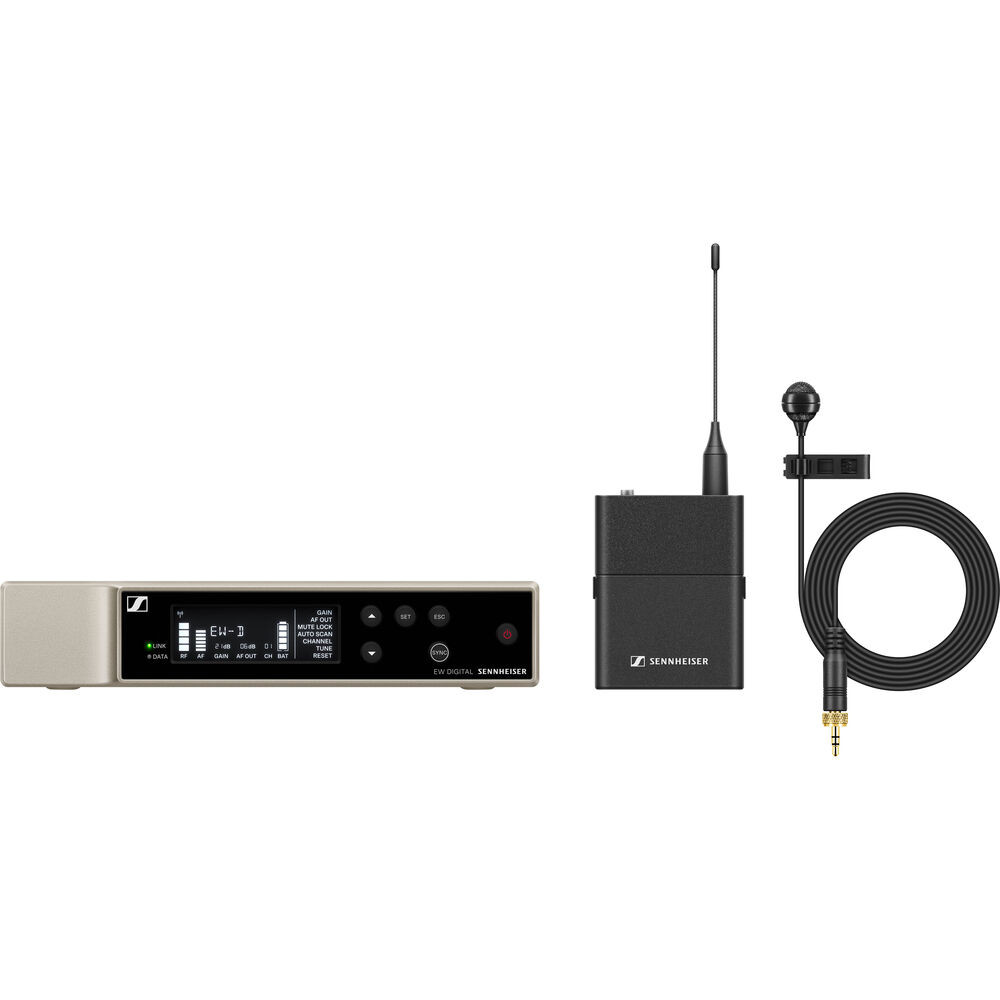
If you've spent any time researching wireless lavalier microphones for presentations, corporate video, houses of worship, or content creation, Sennheiser's name has almost certainly come up. The Sennheiser EW-D ME4 Set sits in a particularly interesting spot in the market — it's a fully digital wireless system at a price point that doesn't require a second mortgage, yet it borrows technology from Sennheiser's flagship Evolution Wireless Digital range. But does the reality match the spec sheet?
I've put together this deep dive to help you work out whether the EW-D ME4 is the right wireless lavalier system for your needs, your environment, and your budget here in Australia. We'll cover everything from the nuts and bolts of the hardware to how it actually performs in real-world scenarios — and where it might fall short.
Looking to jump straight in? View the Sennheiser EW-D ME4 Set with full specs and pricing at MusiconStage, with free shipping across Australia.
What Exactly Is the EW-D ME4 Set?
The Sennheiser EW-D ME4 Set is an all-in-one digital wireless lavalier microphone package. "All-in-one" means you get everything needed to go wireless out of the box: a bodypack transmitter (SK-EWD), a half-rack receiver (EM-EWD), and the ME4 omnidirectional lavalier microphone capsule, along with all the cables and mounting hardware you need.
This system operates in the Y13 frequency band (1785.000–1799.975 MHz), which is a critical detail for Australian buyers. The Y13 band is licence-free in Australia under ACMA regulations, meaning you can use it straight out of the box without applying for a frequency licence or paying ongoing fees. This is a genuine advantage over systems that operate in the UHF TV band, where spectrum availability keeps shrinking and interference from digital TV transmitters can be a real headache.
The "D" in EW-D stands for digital, and this is where the system distinguishes itself from Sennheiser's older EW 100 and EW 300 analogue series. Digital transmission brings some significant practical advantages that we'll dig into shortly.
Key Features and What They Actually Mean
Fully Digital Audio Transmission
Unlike analogue wireless systems that use companding (compressing audio at the transmitter and expanding it at the receiver), the EW-D uses uncompressed digital audio transmission. What does that mean in practice? You get a flatter, more transparent frequency response without the subtle pumping, breathing, or high-frequency dulling that even good analogue companders can introduce. For speech applications — which is exactly what a lavalier system like this is designed for — that translates to cleaner, more natural-sounding voice reproduction.
The system delivers 24-bit audio resolution with a frequency response of 20 Hz to 20 kHz and a dynamic range exceeding 120 dB. That dynamic range figure is particularly impressive and means you have enormous headroom. A presenter can whisper one moment and raise their voice the next without the system clipping or losing clarity. In practical terms, you spend less time riding gain and more time focusing on content.
Ultra-Low Latency
Digital wireless systems have historically suffered from latency — a delay between sound entering the microphone and exiting the receiver. Early digital wireless could have latency of 3-5 milliseconds or more, which caused issues when talent monitored their own audio through in-ear monitors. The EW-D system achieves latency of just 1.9 milliseconds, which is essentially imperceptible. Even when using in-ear monitoring, talent won't notice the delay. This is genuinely on par with what you'd expect from Sennheiser's much more expensive Digital 6000 series.
Automatic Frequency Management
One of the most genuinely useful features of the EW-D system is its auto frequency scan and coordination. The receiver scans the local RF environment, identifies clean frequencies, and can automatically assign them. If you're running multiple EW-D channels (up to 30 can be coordinated simultaneously in the 1.8 GHz band), the system will find non-interfering frequencies for each channel.
For users who aren't RF engineers — which is most of us — this is a massive time saver. Walk into a venue, power up, scan, and go. The system also features automatic frequency hopping that can shift to a backup frequency if interference is detected during operation, reducing the chance of dropouts during a live event.
The ME4 Capsule
The included ME4 is an omnidirectional condenser lavalier microphone. Omnidirectional is the standard choice for lavalier applications because it's less sensitive to positioning on the talent's clothing. You don't need to point it precisely at the mouth — it picks up sound relatively evenly from all directions, which means a presenter can turn their head without the audio level dropping off dramatically.
The ME4 is a solid, reliable capsule, but it's worth being honest here: it's not Sennheiser's top-tier lavalier. The ME2-II (included in some EW-D bundles) and the MKE series offer marginally better off-axis response and handling of wind noise. For indoor speech and presentation work, however, the ME4 performs admirably. Its frequency response is tailored for voice intelligibility, with a gentle presence lift that helps speech cut through without sounding harsh.
Build Quality and Design
Sennheiser has always been strong on build quality, and the EW-D doesn't disappoint. The SK-EWD bodypack transmitter has a robust plastic housing with a metal belt clip. It's compact and light enough that talent can clip it to a belt or waistband without complaint. The battery door is secure but easy to open, and the unit runs on two standard AA batteries (or rechargeable NiMH cells), giving you approximately 8 hours of operation. You can also use the optional Sennheiser BA 70 rechargeable battery pack for even longer runtime and USB-C charging convenience.
The EM-EWD receiver is a half-rack format, which means two units sit side by side in a standard 19-inch rack space. This is the industry standard for installed and touring wireless systems, and it means the EW-D integrates neatly into existing rack setups. The receiver features a clear OLED display showing channel, frequency, battery status, audio level, and RF signal strength at a glance. Balanced XLR and unbalanced 6.3mm jack outputs are provided on the rear panel.
Sennheiser Smart Assist App
The EW-D system can be configured and monitored via the Sennheiser Smart Assist app (available for iOS and Android) over Bluetooth. This is genuinely useful for installed systems where the receiver might be tucked away in a rack at the back of a room. You can adjust gain, monitor RF and audio levels, scan frequencies, and coordinate multiple channels — all from your phone or tablet. It's a thoughtful feature that adds real workflow value, particularly for smaller operations where a dedicated audio engineer isn't always on hand.
Who Is the EW-D ME4 Set Actually For?
Understanding who this system serves best (and who might want to look elsewhere) is crucial for making the right investment.
Ideal Users
- Corporate presenters and trainers: The clean digital audio, reliable performance, and easy setup make it excellent for conferences, training rooms, and boardroom presentations. The auto-frequency management means non-technical staff can set it up confidently.
- Houses of worship: Churches, mosques, and temples across Australia are a natural fit. The system handles the dynamic range of spoken sermons beautifully, and you can scale up to multiple channels as your needs grow.
- Education: Universities and schools benefit from the licence-free 1.8 GHz operation and straightforward setup. Lecturers can clip on the lavalier and forget about it.
- Content creators and videographers: If you're producing corporate video, interviews, or YouTube content, the EW-D delivers broadcast-quality audio without the complexity (or cost) of a high-end film audio kit.
- Small to medium live events: Community events, panel discussions, Q&A sessions — anywhere you need reliable wireless speech reinforcement without a dedicated RF coordinator.
Who Might Want Something Different
- Large-scale touring productions: If you're running 30+ channels of wireless in demanding RF environments, you'll likely want to step up to Sennheiser's EW-DX or Digital 6000 series for more advanced spectrum management, Dante integration, and higher channel counts.
- Instrument applications: The ME4 is a speech lavalier. If you need wireless for guitar, bass, or other instruments, look at the EW-D CI1 set or other instrument-specific configurations.
- Ultra-budget users: If you're looking for a sub-$500 wireless solution, the EW-D exceeds that budget. However, at this price point, you're getting genuine professional-grade performance that cheaper systems simply can't match in terms of reliability, audio quality, and RF performance.
EW-D vs. the Competition: How Does It Stack Up?
The digital wireless lavalier market has become genuinely competitive, so let's look at how the EW-D ME4 compares to the alternatives Australian buyers are most likely to be considering.
| Feature | Sennheiser EW-D ME4 | Shure BLX14/CVL | Rode Wireless PRO | Sennheiser EW-DX MKE2 |
|---|---|---|---|---|
| Transmission | Digital | Analogue | Digital (2.4 GHz) | Digital |
| Latency | 1.9 ms | N/A (analogue) | ~4 ms | 1.9 ms |
| Dynamic Range | 120+ dB | ~100 dB | Not specified | 134 dB |
| Frequency Band (AU) | 1.8 GHz (licence-free) | UHF (licence may be required) | 2.4 GHz (licence-free) | 1.8 GHz (licence-free) |
| Battery Life | ~8 hours (AA) | ~14 hours (AA) | ~7 hours (built-in) | ~12 hours (BA 70) |
| Receiver Format | Half-rack | Half-rack | Compact (on-camera) | Half-rack |
| App Control | Yes (Bluetooth) | No | Yes | Yes (Bluetooth + network) |
| Max Channels | Up to 30 | 12 compatible | Limited | Up to 146 |
| Price Range (AU) | $$ | $ | $$ | $$$ |
Against Analogue Systems (Shure BLX, Sennheiser EW 100)
Analogue systems like the Shure BLX14/CVL are cheaper and offer longer battery life, but they use companding that colours the audio, they operate in the increasingly congested UHF band (which may require licensing in Australia), and they lack the intelligent frequency management of the EW-D. If you're buying new in 2026, digital is the smarter long-term investment. The UHF spectrum isn't getting any less crowded.
Against 2.4 GHz Systems (Rode Wireless PRO, Hollyland)
Compact 2.4 GHz systems like the Rode Wireless PRO are brilliant for run-and-gun content creation, but they face limitations in environments with heavy Wi-Fi congestion (think conference centres, hotels, modern offices). The 1.8 GHz band the EW-D operates in has significantly less competition for spectrum. The EW-D's half-rack receiver also integrates properly into installed AV systems, which the compact Rode doesn't. However, if portability is your top priority and you're primarily working solo on video content, a compact system might suit better.
Against Higher-End Sennheiser (EW-DX)
The EW-DX series is the step-up from the EW-D, offering wider tuning bandwidth, more simultaneous channels, longer range, Dante/AES integration, and the superior MKE2 capsule. If you're outfitting a large venue or production company, the EW-DX is the better investment. But for most users — a single channel or a few channels in a fixed venue — the EW-D delivers 90% of the performance at a significantly lower cost.
Real-World Performance: What to Expect
Range and Reliability
Sennheiser rates the EW-D system at up to 100 metres line-of-sight range. In real-world indoor environments — with walls, bodies, and furniture absorbing and reflecting signals — you can reliably expect 50-70 metres in most venues. For the vast majority of lavalier applications (presentations, worship services, lectures), this is more than adequate. The presenter is rarely more than 20-30 metres from the receiver.
The 1.8 GHz band in Australia is relatively uncrowded compared to UHF or 2.4 GHz, which contributes to the system's excellent reliability. Dropouts should be extremely rare in normal operating conditions. The frequency-hopping backup adds an additional layer of protection.
Audio Quality in Practice
The audio quality from this system is genuinely excellent for speech. The digital transmission preserves the natural character of the ME4 capsule without the artefacts analogue companding can introduce. Voices sound clear, present, and natural. There's no audible hiss or noise floor to speak of — the 120+ dB dynamic range means the noise floor is well below anything your audience (or recording) will ever notice.
One practical tip: the ME4's omnidirectional pattern means it will pick up ambient room noise more than a cardioid lavalier would. In noisy environments, proper gain staging and placement (ideally 15-20 cm below the chin, centred on the chest) become more important. For most indoor speech applications, this isn't an issue, but it's worth being aware of if you're working in a particularly noisy space.
Setup and Daily Use
Setup is refreshingly straightforward. Mount the receiver, connect the XLR output to your mixer or amplifier, power on, run an auto frequency scan, and sync the bodypack. The entire process takes under five minutes, even if you've never used a wireless system before. The Smart Assist app makes it even easier, walking you through setup with a guided workflow.
Day-to-day operation is equally painless. Pop in fresh AAs (or charge the optional BA 70 battery), clip on the lavalier, and go. The bodypack has a simple one-button power and sync interface, with a small display showing essential status information. There's no complicated menu system to navigate — Sennheiser has kept the user interface sensibly minimal on the transmitter side.
The Y13 Band: Why It Matters for Australians
This is a point worth expanding on because it's genuinely important and often overlooked. The EW-D ME4 Set in the Y13 variant operates in the 1785–1800 MHz frequency range. In Australia, this band is allocated for wireless audio applications and is licence-free under ACMA Class Licence conditions.
This matters for several reasons:
- No ongoing licence costs: UHF wireless systems in some frequency ranges require paid licences in Australia. The 1.8 GHz band doesn't.
- Less interference: The 1.8 GHz band isn't shared with TV transmitters, mobile phones, or Wi-Fi, so the interference environment is much cleaner than UHF or 2.4 GHz.
- Future-proof: UHF spectrum is being progressively reallocated to mobile broadband. The 1.8 GHz allocation for wireless audio is more secure long-term.
- Legal compliance: Using the correct frequency variant for your country isn't optional. The Y13 variant is the correct choice for Australia — don't import a system designed for the US or European market, as it may operate on frequencies that are illegal to use here.
When purchasing, always verify you're getting the Y13 variant from an authorised Australian dealer. Grey-market imports with incorrect frequency bands can land you in legal trouble with ACMA and may interfere with licensed services.
Pros and Cons: The Honest Summary
What We Like
- Outstanding audio quality — clean digital transmission with no companding artefacts
- Ultra-low 1.9 ms latency — imperceptible, even with in-ear monitoring
- Licence-free 1.8 GHz operation in Australia with clean RF environment
- Intelligent auto frequency management — scan, assign, and go
- Smart Assist app for remote configuration and monitoring
- Scalable — coordinate up to 30 channels in the 1.8 GHz band
- Professional half-rack receiver integrates into standard AV racks
- Sennheiser build quality and reliability — this is genuinely well-made gear
- Standard AA batteries — available anywhere, no proprietary battery lock-in (though the optional BA 70 is a nice upgrade)
Where It Could Be Better
- Battery life (8 hours on AA) is adequate but not exceptional — some analogue systems last twice as long. For all-day events, pack spare batteries.
- The ME4 capsule is good, not great — users wanting the absolute best Sennheiser lavalier sound may prefer to upgrade to the ME2-II or MKE capsules (sold separately, compatible with the SK-EWD bodypack).
- 100-metre range is fine for most applications but won't cut it for large outdoor events or theatre productions with deep stages. Step up to EW-DX for those scenarios.
- No Dante or AES67 output — the receiver is analogue-only (XLR/TRS). If you need network audio integration, the EW-DX series is your option.
- Price is mid-range, not budget — it's a significant investment compared to entry-level systems, though the performance justifies the cost.
- Bluetooth-only app connectivity — for large multi-channel installations, wired network control (available on EW-DX) would be preferable.
Practical Buying Advice for Australian Users
What to Look for When Purchasing
- Verify the Y13 frequency band. This is non-negotiable for legal use in Australia. Only purchase from authorised Australian dealers who stock the correct variant.
- Consider your expansion needs. If you might need multiple wireless channels in the future, the EW-D's ability to coordinate up to 30 channels gives you room to grow.
- Budget for accessories. At minimum, consider a set of quality rechargeable AA batteries and a clip/mount for the receiver if rack-mounting. The optional BA 70 rechargeable battery pack is a worthwhile upgrade for frequent users.
- Think about your capsule needs. The included ME4 is solid for general speech. If you need better wind protection (outdoor use) or a more refined sound, you can always upgrade the capsule later without replacing the entire system.
Warranty and Support in Australia
Sennheiser products purchased through authorised Australian dealers come with a manufacturer's warranty and access to Sennheiser's Australian support network. This is one of the key advantages of buying locally rather than importing — if something goes wrong, you have local warranty service rather than shipping gear overseas. Sennheiser's Australian support is generally well-regarded in the pro audio community.
Ready to make a decision? Shop the Sennheiser EW-D ME4 Set at MusiconStage — authorised Australian dealer with free shipping and genuine warranty support.
Frequently Asked Questions
Do I need a licence to use the EW-D ME4 in Australia?
No. The Y13 variant operates in the 1.8 GHz band, which is licence-free for wireless audio use in Australia under ACMA Class Licence conditions. Just make sure you're purchasing the correct Y13 variant.
Can I use the EW-D system with other Sennheiser lavalier capsules?
Yes. The SK-EWD bodypack transmitter uses a standard Sennheiser 3.5mm locking connector, so you can swap the ME4 for other compatible capsules like the ME2-II, MKE 1, or MKE Essential. This gives you flexibility to upgrade your capsule without replacing the entire system.
How many EW-D channels can I run simultaneously?
In the 1.8 GHz Y13 band, you can coordinate up to approximately 30 channels simultaneously. The auto frequency scan and coordination handles the allocation, so you don't need to manually calculate intermodulation products.
Is the EW-D compatible with the EW-DX system?
The EW-D and EW-DX are separate product lines and their transmitters and receivers are not cross-compatible. However, they can operate alongside each other in the same venue, and the Smart Assist app can manage both systems. Capsules and accessories (lavalier mics, cables, batteries) are generally cross-compatible.
What's the actual battery life like?
On quality alkaline AA batteries, expect approximately 8 hours of continuous use. Rechargeable NiMH cells may give slightly less. The optional BA 70 lithium-ion battery pack offers extended runtime. For a full-day conference or event, carrying a spare set of batteries is good practice.
Can I use this for recording video content?
Absolutely. The receiver's XLR output connects to any camera, audio recorder, or mixer with an XLR input. For cameras with only a 3.5mm input, you'll need an XLR-to-3.5mm adapter cable (or a separate portable recorder). The 24-bit digital audio quality is more than sufficient for professional video production.
How does the 1.8 GHz band perform compared to UHF?
The 1.8 GHz band has slightly less ability to penetrate walls and obstacles compared to UHF frequencies, but in practice, the difference is minimal for typical indoor applications. The trade-off is a much cleaner RF environment with far less interference. For the vast majority of users, 1.8 GHz is the better choice in 2026.
The Bottom Line
The Sennheiser EW-D ME4 Set is a genuinely impressive digital wireless lavalier system that brings professional-grade performance to a mid-range price point. The combination of clean digital audio, ultra-low latency, intelligent frequency management, and licence-free 1.8 GHz operation makes it one of the smartest wireless investments you can make in Australia in 2026.
It's not the cheapest option, and it's not the most feature-rich in Sennheiser's lineup. But it hits a sweet spot of performance, reliability, and value that's hard to argue with. For corporate presenters, worship leaders, educators, content creators, and event organisers, the EW-D ME4 delivers the kind of audio quality and dependable wireless performance that used to cost significantly more.
If you need rock-solid wireless audio with minimal fuss and maximum quality, the EW-D ME4 Set deserves serious consideration. It's the kind of gear that just works — and in live audio, that's the highest compliment there is.
Browse the Sennheiser EW-D ME4 Set at MusiconStage — authorised Australian dealer with genuine Sennheiser products, free shipping, and hassle-free returns.