
Sennheiser EW 345 G3 Wireless Mic System: Honest Australian Review
Sennheiser EW 345 G3 Wireless Microphone System: What Australian Performers Actually Need to Know
If you've spent any time on Australian stages — whether running sound at a pub in Surry Hills, performing at a corporate event in Melbourne, or leading worship at a church in Brisbane — you've almost certainly encountered a Sennheiser Evolution wireless system. The Sennheiser EW 345 G3 sits in a sweet spot within the Evolution G3 range, pairing a professional-grade super cardioid capsule with Sennheiser's proven UHF wireless technology. But is it the right choice for your setup? Let's break it down properly.
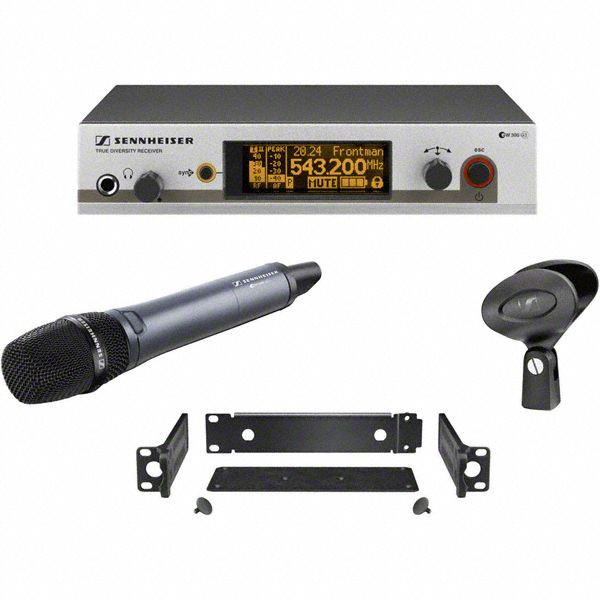
Looking for reliable wireless that just works? Check out the Sennheiser EW 345 G3 with free shipping across Australia.
Why the EW 345 G3 Stands Out From Other G3 Systems
Sennheiser's Evolution G3 range includes several wireless handheld configurations, and the model numbers can get confusing. Here's what makes the 345 different from, say, the EW 335 G3 or EW 365 G3: it's all about the capsule.
The EW 345 G3 uses the MD 845 super cardioid dynamic capsule. This is significant because the super cardioid polar pattern offers tighter pickup than a standard cardioid (like the e835 capsule on the 335 model), meaning it rejects more ambient noise and stage bleed. For performers working in loud environments — think pubs with PA systems at full tilt, outdoor festivals where wind and crowd noise compete, or conference rooms with dodgy acoustics — this tighter pattern translates to cleaner, more isolated vocal pickup.
The trade-off? Super cardioid patterns have a small rear lobe of sensitivity, which means monitor placement becomes slightly more critical. You'll want your foldback wedges positioned at about 120 degrees off-axis rather than directly behind, which is standard practice for super cardioid mics. Most experienced sound engineers already know this, but it's worth noting if you're transitioning from a cardioid wireless setup.
The Wireless System: UHF Reliability You Can Count On
The EW 345 G3 operates in the UHF frequency band, which remains the gold standard for professional wireless microphone systems. Here's what the G3 generation brings to the table:
- 1,680 tunable frequencies across a wide bandwidth — this is crucial in Australia where the RF spectrum can get crowded, especially at larger venues and festivals running multiple wireless systems simultaneously
- Automatic frequency scanning that identifies clean channels and sets up interference-free operation without you needing an RF engineering degree
- Up to 42 MHz switching bandwidth giving you plenty of room to find clean spectrum
- Pilot tone squelch that prevents the system from picking up interference when the transmitter is off — no more mysterious pops and crackles during set breaks
- Enhanced frequency bank system with up to 12 compatible channels per bank for multi-channel setups
The system uses Sennheiser's HDX compander, which is a noticeable step up from basic wireless systems. If you've used cheaper wireless mics and been frustrated by that slightly compressed, thin sound quality, the HDX compander delivers a more transparent audio path. It's not quite the same as their flagship Digital 6000 series (which would cost you several times more), but for the price point, the audio quality is genuinely impressive.
What's in the Box
The EW 345 G3 comes as a complete system, which is one of its practical advantages over piecing together components separately:
- SKM 345 G3 handheld transmitter with integrated MD 845 super cardioid capsule
- EM 300 G3 rackmountable receiver (half-rack width, 19" rack compatible with adapter)
- Rack mount kit for professional installation
- Power supply for the receiver
- 2x AA batteries for the transmitter
- Antenna cables and antennas
- Quick guide and documentation
Having the receiver, transmitter, and all accessories in one package eliminates compatibility guesswork. Everything is pre-synced and ready to go out of the box — you can literally be up and running within minutes.
Build Quality and Practical Design Details
The SKM 345 G3 handheld transmitter has that classic Sennheiser build quality — it's a solid metal housing that feels professional in hand without being uncomfortably heavy. It's well-balanced, which matters more than people realise during a two-hour gig. The matte finish resists fingerprints better than some glossy competitors.
The transmitter features a clear backlit display showing channel, frequency, battery status, and RF level. There's also a mute switch — a small detail that vocalists and presenters genuinely appreciate. Battery life sits at approximately 8 hours on standard AA batteries, which comfortably covers even marathon corporate events or double-header gigs. Some users opt for rechargeable NiMH batteries, which work well but typically deliver slightly less runtime (around 6-7 hours depending on the cells).
On the receiver side, the EM 300 G3 is a clean, professional unit. The front panel display shows RF signal strength, audio level, diversity channel status, and frequency information at a glance. Balanced XLR and unbalanced 6.3mm jack outputs cover your connection needs, and the inclusion of both means you can plug straight into a mixing desk via XLR or into a guitar amp or powered speaker via jack without adapters.
Frequency Setup in Australia
This is important: when purchasing the EW 345 G3 in Australia, you need the correct frequency band for Australian regulations. The ACMA (Australian Communications and Media Authority) regulates wireless microphone frequencies, and using the wrong band can result in interference issues or legal complications. Make sure you're purchasing a unit configured for Australian-approved frequency bands. Purchasing from an authorised Australian dealer like MusiconStage ensures you receive the correct variant.
Sound Quality: The MD 845 Capsule in Practice
Let's talk about what actually matters most — how it sounds. The MD 845 super cardioid capsule has a frequency response that's tailored for vocal clarity, with a presence peak in the upper midrange that helps vocals cut through a mix without sounding harsh. Compared to the e835 capsule (found in the EW 335 G3), the 845 delivers:
- More focused sound with less room ambience bleeding in
- Better feedback rejection before you hit the threshold where monitors start ringing
- A slightly more detailed midrange that suits both singing and speech
- Tighter low-end response with less proximity effect bass buildup when performers eat the mic
For vocalists who work the mic closely, the reduced proximity effect is a real benefit. You get a more consistent tone regardless of distance, which means your sound engineer isn't constantly riding the EQ to compensate. For speech applications — presentations, conferences, worship — the clarity and feedback rejection make the 345 a particularly strong choice.
The HDX compander maintains a wide dynamic range (rated at up to 120 dB), which means you're not fighting the wireless system's processing to get dynamics across. Whisper-to-shout transitions come through naturally, which is something cheaper wireless systems often struggle with.
Who Is This System Actually For?
The EW 345 G3 isn't the cheapest wireless option, and it's not the most expensive. Understanding where it fits helps you decide if it's right for your situation.
Ideal Use Cases
- Live vocalists performing in pubs, clubs, and mid-sized venues across Australia who need reliable wireless without the price tag of flagship systems
- Houses of worship where clear speech intelligibility and feedback rejection are critical, especially in reverberant church acoustics
- Corporate events and conferences where professional reliability is non-negotiable and the super cardioid pattern handles noisy environments well
- Hire and production companies who need dependable workhorse systems that touring artists can rely on
- Function and wedding bands who need consistent, set-and-forget wireless performance
When You Might Want Something Different
It's worth being honest about scenarios where the EW 345 G3 might not be the best fit:
- If you need condenser-quality detail — the EW 365 G3 with its e865 condenser capsule offers a brighter, more detailed sound, though it's more feedback-sensitive
- If you're running 20+ wireless channels — at that scale, digital systems like Sennheiser's own EW-D or Digital 6000 series handle spectrum more efficiently
- If budget is extremely tight — the EW 135 G3 or G4 with the e835 capsule costs less and still delivers solid performance for less demanding environments
- If you need the absolute latest technology — the G3 is the previous generation; the newer G4 series offers some improvements in display, build, and ease of use, though the core RF technology remains similar
EW 345 G3 vs Common Alternatives
| Feature | EW 345 G3 (MD 845) | EW 335 G3 (e835) | EW 365 G3 (e865) |
|---|---|---|---|
| Capsule Type | Super Cardioid Dynamic | Cardioid Dynamic | Super Cardioid Condenser |
| Polar Pattern | Super Cardioid | Cardioid | Super Cardioid |
| Feedback Rejection | Excellent | Good | Good (more sensitive) |
| Sound Character | Focused, clear mids | Warm, forgiving | Bright, detailed, airy |
| Best For | Loud stages, speech | General vocals | Studio-quality live vocals |
| Proximity Effect | Moderate | More pronounced | Minimal |
| Handling Noise | Low | Low | Slightly higher |
The 345 occupies a practical middle ground. It's more specialised than the 335's all-rounder approach, but less finicky than the 365's condenser capsule in high-SPL or feedback-prone environments.
Setting Up the EW 345 G3: Practical Tips
Getting the most from this system isn't complicated, but a few things make a real difference:
- Run the auto-scan first — always let the receiver scan for clean frequencies before assigning channels, especially at venues where other wireless systems might be operating
- Use the sync function — the infrared sync between receiver and transmitter eliminates manual frequency matching. Hold the transmitter near the receiver's IR window and press sync. Done.
- Position your receiver antennas properly — keep them visible and away from metal surfaces. If you're rack-mounting, use external antenna distribution. RF performance drops dramatically when antennas are buried in a rack surrounded by metal gear
- Set your gain structure correctly — the transmitter sensitivity should be set so that your loudest moments peak around -6dB to -3dB on the transmitter's meter. This maximises dynamic range without clipping
- Monitor battery levels — the receiver displays transmitter battery status, which is brilliant for keeping an eye on things during long events. Swap batteries when they hit the last bar, not when the system drops out mid-speech
Durability and Long-Term Reliability
One reason Sennheiser's Evolution series has become a staple in Australian hire companies and venues is simple: they last. The G3 series has been in service for years, and units that have been working weekly gigs for the better part of a decade are still performing reliably. The metal construction on both the transmitter and receiver handles the realities of Australian gigging — hot cars, dusty festival grounds, the occasional drop onto a pub floor.
Sennheiser's Australian service network also deserves mention. Having local warranty support and repair services matters when your wireless system is a critical part of your income. This isn't something you get with grey-market imports, which is why buying from an authorised Australian dealer is worth it.
Ready to invest in reliable wireless? View the Sennheiser EW 345 G3 with full specifications and pricing — free delivery Australia-wide.
Frequently Asked Questions
Can I swap the capsule on the SKM 345 G3 transmitter?
Yes — one of the practical benefits of Sennheiser's Evolution G3 handheld transmitters is the interchangeable capsule design. You can unscrew the MD 845 capsule and replace it with other compatible Sennheiser capsules (e835, e845, e865, e945, or MMD series) to suit different vocalists or applications. This makes the system incredibly versatile if your needs change over time.
What's the operating range?
Sennheiser rates the system for up to 100 metres line-of-sight, though real-world range depends on your environment. In a typical indoor venue with walls, people, and other equipment, expect reliable operation at 50-70 metres comfortably. For larger spaces, antenna distribution systems can extend coverage significantly.
Is the G3 still worth buying, or should I wait for newer models?
The G3 remains a genuinely capable system. While the G4 series offers incremental improvements (better display, slightly refined build, easier setup), the core RF technology and audio quality are very similar. If you find a G3 at a good price, it represents excellent value. The platform is mature and proven, which in professional audio is actually a selling point — you know exactly what you're getting.
How many EW 345 G3 systems can I run simultaneously?
Using Sennheiser's pre-programmed frequency banks, you can run up to 12 compatible systems in a single bank. With careful manual frequency coordination, you can potentially run more, though at higher channel counts you should consider using frequency coordination software (Sennheiser's WSM is free) and potentially dedicated antenna distribution.
Do I need a wireless licence in Australia?
Wireless microphones operating in ACMA-approved frequency bands are generally licence-exempt for standard use. However, this depends on the specific frequency band and power levels. Always verify your system operates within current Australian regulations, and be aware that spectrum allocations can change — another reason to buy from local authorised dealers who stay across these requirements.
The Bottom Line
The Sennheiser EW 345 G3 is a workhorse wireless microphone system that earns its reputation through reliability, sound quality, and practical design. The super cardioid MD 845 capsule gives it a genuine advantage in noisy, feedback-prone environments — making it particularly well-suited to the realities of Australian live sound, where you're often dealing with less-than-ideal acoustic spaces and high stage volumes.
It's not the newest system in Sennheiser's lineup, and it won't outperform their digital flagships. But for the vast majority of working musicians, houses of worship, corporate AV operators, and hire companies across Australia, it hits a sweet spot of performance, reliability, and value that's genuinely hard to beat.
If you prioritise feedback rejection and vocal clarity in challenging environments, the 345 is the pick over the more common 335. If you want the most detailed, studio-like sound and can manage the extra sensitivity, look at the 365. But for most real-world Australian applications, the EW 345 G3 is the practical choice that won't let you down.
Order the Sennheiser EW 345 G3 from MusiconStage — authorised Australian dealer with genuine Sennheiser warranty and free shipping nationwide.