
Sennheiser EW 345 G3 Wireless Handheld Mic System: Complete Australian Guide
Sennheiser EW 345 G3 Wireless Super Cardioid Handheld Microphone System: The Complete Australian Buyer's Guide
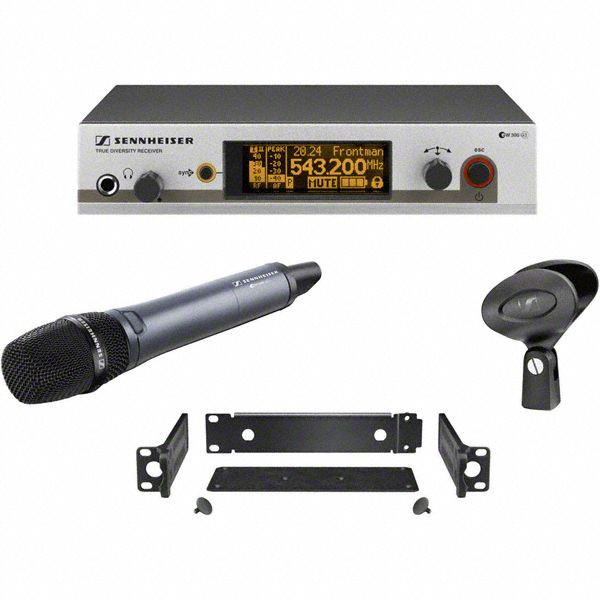
If you've spent any time around professional live sound in Australia, you've almost certainly encountered Sennheiser's Evolution Wireless series. The EW 345 G3 sits in a particularly interesting spot within this lineup—it's the system that pairs Sennheiser's rock-solid G3 wireless technology with a super cardioid capsule specifically designed for vocalists who need exceptional feedback rejection without sacrificing clarity.
This isn't just another wireless microphone. The EW 345 G3 represents Sennheiser's understanding that professional vocalists and sound engineers need a system that performs consistently across Australia's diverse venue landscape—from intimate jazz clubs in Melbourne to outdoor festivals in the Queensland heat. Let's break down exactly what this system offers and whether it's the right choice for your setup.
Looking for professional wireless vocal quality? Check out the Sennheiser EW 345 G3 system with free Australian shipping.
Understanding the EW 345 G3: What Makes This System Different
The Evolution Wireless G3 series has been a staple in professional audio for good reason. But within that series, the 345 variant stands apart due to its specific capsule choice—the super cardioid e 845 capsule. This isn't a random pairing; it's a deliberate engineering decision that addresses real-world vocal challenges.
Where standard cardioid patterns pick up sound in a relatively wide frontal arc, the super cardioid pattern on the EW 345 G3 narrows that pickup significantly. The practical result? Dramatically improved rejection of stage monitors, ambient noise, and that drummer who insists on playing at concert volume during soundcheck. For vocalists working in challenging acoustic environments, this can be the difference between a clean mix and a feedback-riddled nightmare.
The e 845 Capsule: Purpose-Built for Live Vocals
Sennheiser developed the e 845 capsule specifically for demanding live performance situations. Its frequency response is tailored with a subtle presence lift that helps vocals cut through dense mixes without sounding harsh. The super cardioid polar pattern provides approximately 5.7 dB of additional side rejection compared to standard cardioid designs—a significant advantage when you're working with loud stage volumes.
The capsule also features a shock-mounted design that minimises handling noise. This matters more than many people realise. A vocalist moving around stage, gesturing with the microphone, or simply adjusting their grip can generate low-frequency rumble that muddies the mix. The e 845's internal suspension system addresses this without requiring external accessories.
Technical Specifications That Actually Matter
Spec sheets can be overwhelming, so let's focus on the numbers that genuinely impact real-world performance:
Frequency Response and Sound Character
The EW 345 G3 system delivers a frequency response of 80 Hz to 18 kHz. That 80 Hz low-frequency rolloff is intentional—it reduces the pickup of stage rumble, foot stomps, and other low-frequency interference that can cloud a vocal mix. The 18 kHz upper limit captures the air and presence that gives vocals their clarity and intelligibility.
The audio bandwidth through the wireless link maintains the full fidelity of the capsule, which isn't always the case with budget wireless systems. You're not losing detail or compression artifacts in the transmission.
RF Performance and Reliability
This is where the G3 platform truly excels. The system operates on the UHF band with 1680 selectable frequencies across its tuning range. For Australian users, this means you can find clean spectrum even in RF-congested environments like convention centres, large churches, or venues near broadcast facilities.
The EM 300 G3 receiver includes an automatic frequency scanning function that identifies the cleanest available channels in your location. This isn't a gimmick—it's genuinely useful when you're setting up in an unfamiliar venue and need to get operational quickly.
Transmission range is rated at up to 100 metres line-of-sight, though real-world performance depends on your specific environment. In most Australian venues, you'll achieve reliable coverage throughout the stage area and often into the audience space. The system uses pilot tone squelch to prevent interference from external RF sources, maintaining clean audio even when operating near other wireless systems.
Power and Battery Life
The SK 300 G3 bodypack transmitter (integrated into the handheld) runs on two AA batteries, delivering approximately 8 hours of operation. That's enough for a full day of corporate presentations or an entire evening of live performance with margin to spare.
One practical note: the system includes a battery indicator on both the transmitter and receiver, so you're never caught off guard by dying batteries mid-performance. Experienced sound engineers know to change batteries before critical shows regardless, but having that real-time monitoring adds peace of mind.
Who Should Actually Buy the EW 345 G3?
Not every wireless system suits every application. The EW 345 G3 excels in specific scenarios:
Live Vocalists Working with Loud Stage Volumes
If you're performing with a rock band, playing in venues without proper acoustic treatment, or working with monitor wedges that need to be cranked to compete with stage volume, the super cardioid pattern offers tangible benefits. You'll get more level before feedback compared to standard cardioid wireless systems.
Houses of Worship
Many Australian churches deal with challenging acoustics—reverberant spaces, stone surfaces, and PA systems that weren't designed with speech intelligibility as the primary concern. The EW 345 G3's focused pickup pattern helps maintain clarity in these environments while its reliable RF performance handles the week-in, week-out demands of regular services.
Corporate Presenters and Lecturers
Conference venues often run multiple wireless systems simultaneously, and the G3's frequency agility helps you find clean spectrum. The super cardioid pattern also reduces pickup of audience noise and HVAC systems—common problems in corporate AV environments.
Theatre and Musical Productions
Productions requiring reliable wireless performance over extended rehearsal and performance schedules benefit from the G3's build quality and consistent RF performance. The system's ability to operate alongside multiple other wireless units (with proper frequency coordination) makes it suitable for productions running several wireless channels.
Ready to upgrade your wireless setup? View the Sennheiser EW 345 G3 specifications and current Australian pricing.
Honest Assessment: Pros and Cons
No product is perfect for every situation. Here's a balanced view of what the EW 345 G3 does well and where it has limitations:
Strengths
- Superior feedback rejection: The super cardioid pattern genuinely delivers more gain before feedback than standard cardioid wireless systems. This isn't marketing speak—it's measurable and audible in real applications.
- Build quality: The metal construction on both transmitter and receiver inspires confidence. These units handle the bumps and scrapes of touring life without complaint.
- Reliable RF performance: The G3 platform has earned its reputation through years of professional use. Dropouts are rare when the system is properly configured.
- Easy frequency coordination: The sync function and automatic scanning make setup straightforward, even for users without RF engineering backgrounds.
- Consistent Sennheiser sound: The e 845 capsule delivers that familiar Sennheiser vocal character—clear, present, and professional.
Limitations to Consider
- Super cardioid requires technique: The narrower pickup pattern means vocalists need to maintain good microphone technique. Singers who wander off-axis will experience more significant level drops than with wider patterns. This isn't a flaw—it's the trade-off for improved rejection—but it's worth understanding.
- Rear lobe pickup: Super cardioid patterns have a small rear lobe of sensitivity. In extreme situations, monitors positioned directly behind the vocalist can cause issues. Proper monitor placement addresses this.
- Price point: The EW 345 G3 isn't a budget option. You're paying for Sennheiser's professional-grade engineering and build quality. For users who don't need the super cardioid's specific advantages, the EW 335 G3 (standard cardioid) offers similar reliability at a lower price.
- Older platform: The G3 series has been superseded by the G4 range, which offers some additional features like improved display and enhanced RF performance in congested environments. However, the G3 remains a solid performer and often available at better prices.
How the EW 345 G3 Compares to Alternatives
Understanding where the EW 345 G3 sits in the market helps clarify whether it's the right choice for your needs:
Versus the Sennheiser EW 335 G3
The EW 335 G3 uses Sennheiser's e 835 cardioid capsule instead of the e 845 super cardioid. The 335 offers a wider pickup pattern that's more forgiving of microphone technique but provides less feedback rejection. Choose the 345 if feedback control is your primary concern; the 335 if you need a more forgiving pattern for less experienced vocalists.
Versus the Sennheiser EW 100 G4 Series
The G4 series represents Sennheiser's current Evolution Wireless generation. It offers improved display, enhanced reliability in congested RF environments, and some workflow improvements. The core audio quality is comparable. If you're buying new and can accommodate the higher price, G4 is worth considering. If you're budget-conscious or adding to an existing G3 infrastructure, the EW 345 G3 remains excellent value.
Versus Shure BLX24/SM58
Shure's BLX series competes at a similar price point. The SM58 capsule uses a standard cardioid pattern and has its own loyal following. Key differences: the G3 platform offers more selectable frequencies and generally better performance in RF-congested environments. The SM58's sound character differs from the e 845—neither is objectively better, but they suit different vocal styles. If you're specifically seeking super cardioid performance, the EW 345 G3 is the clear choice.
Versus Audio-Technica System 10
Audio-Technica's System 10 operates on 2.4 GHz rather than UHF, which offers some advantages in terms of avoiding TV broadcast interference but can face challenges with WiFi congestion. The EW 345 G3's UHF operation is generally more predictable in professional environments. The super cardioid option also isn't available in the System 10 range.
Setting Up and Using the EW 345 G3
Getting the most from this system requires understanding a few key practices:
Initial Frequency Configuration
When you first set up in a venue, use the receiver's scan function to find available frequencies. The EM 300 G3 receiver will display a list of clean channels. Select one, then use the sync function to transfer that frequency to the handheld transmitter—simply hold the transmitter near the receiver's infrared window and press the sync button. This process takes seconds and eliminates the tedious manual frequency matching required by older systems.
Antenna Positioning
The included antennas work well for most applications, but placement matters. Position the receiver where it has line-of-sight to the performance area whenever possible. Avoid placing the receiver inside metal racks or behind equipment that might block the RF signal. If you're experiencing dropouts, try moving the receiver or using external antennas on extension cables to improve coverage.
Gain Structure
The transmitter includes adjustable sensitivity to match different vocal levels. Set this so the transmitter's peak LED illuminates occasionally during the loudest passages but doesn't light constantly. Then adjust the receiver output to match your mixing console's input requirements. Proper gain staging prevents both noise (sensitivity too low) and distortion (sensitivity too high).
Microphone Technique for Super Cardioid
Coaches and sound engineers working with vocalists should understand that super cardioid patterns are less forgiving of off-axis singing. The microphone should be positioned directly in front of the vocalist's mouth, typically 2-10 centimetres away depending on the desired proximity effect. Moving off-axis will cause audible level drops—this is the pattern working as designed, but vocalists accustomed to wider patterns may need adjustment time.
Australian-Specific Considerations
Operating wireless microphones in Australia involves some regulatory awareness:
Frequency Bands and Licensing
The ACMA (Australian Communications and Media Authority) regulates wireless microphone use. The EW 345 G3 operates in frequency bands that are generally available for wireless microphone use in Australia, but specific frequencies can vary by region. Systems purchased from authorised Australian dealers like Music On Stage are configured for Australian frequency allocations.
Digital Dividend and TV White Space
Australia's ongoing digital TV transition has affected UHF spectrum availability. Some older wireless systems operate in frequencies now used for mobile broadband. The G3 series was designed with sufficient frequency agility to find usable spectrum in most situations, but awareness of local TV and mobile frequencies in your operating area helps avoid conflicts.
Climate Considerations
Australia's climate extremes can affect wireless equipment. The EW 345 G3 is rated for operation from 0°C to +50°C, covering most Australian conditions. However, leaving equipment in vehicles during extreme heat can exceed these specifications. Condensation when moving equipment between air-conditioned spaces and humid outdoor environments is also worth considering—allow equipment to acclimate before powering on.
Maintenance and Long-Term Reliability
Professional equipment deserves proper care to maintain performance:
Battery Management
Use quality alkaline batteries for reliable performance and accurate battery metering. Rechargeable batteries work but may not provide accurate remaining-time readings on the display. Never mix old and new batteries, and remove batteries during extended storage to prevent leakage.
Capsule Care
The e 845 capsule is robust but benefits from basic care. Store the handheld with a protective cap when not in use. Avoid dropping the microphone, which can damage the internal shock mount. Clean the grille periodically with a soft brush to remove debris. If the microphone is used by multiple vocalists, consider windscreen covers for hygiene.
Connector Maintenance
The XLR output on the receiver and the antenna connections should be kept clean and secure. Loose connections can cause noise or intermittent operation. Periodically check that all connections are firm and free of corrosion.
Frequently Asked Questions
Can I use multiple EW 345 G3 systems simultaneously?
Yes, with proper frequency coordination. The G3 platform includes features for coordinating multiple systems in the same frequency bank. Sennheiser's Wireless Systems Manager software helps calculate compatible frequencies when running large numbers of wireless channels.
Is the EW 345 G3 compatible with other Sennheiser capsule heads?
The handheld transmitter in the EW 345 G3 uses the same capsule interface as other Evolution Wireless handhelds. You can swap the e 845 capsule for other Sennheiser capsules (e 835, e 865, e 935, e 945) to change the sound character or polar pattern. This modularity adds long-term flexibility.
What's the difference between the A and B frequency variants?
Sennheiser produces the G3 series in different frequency variants for different regions. Australian-market units are configured for frequencies legal and practical for use here. When purchasing, verify the unit is the correct variant for Australian operation.
Do I need a wireless licence to use this in Australia?
For most wireless microphone use in authorised frequency bands, individual licensing is not required under ACMA's class licensing arrangements. However, specific professional applications or use of certain frequencies may have additional requirements. Consult ACMA resources or a knowledgeable dealer if you're uncertain about your specific situation.
How does the EW 345 G3 handle interference from other wireless systems?
The system includes pilot tone squelch, which helps the receiver distinguish between the correct transmitter signal and interference. Proper frequency coordination remains important when operating alongside other wireless systems, but the G3 platform's interference handling is robust when correctly configured.
The Bottom Line: Is the EW 345 G3 Right for You?
The Sennheiser EW 345 G3 occupies a specific niche—it's the professional-grade wireless system for vocalists who need the feedback rejection advantages of a super cardioid pattern combined with Sennheiser's proven wireless reliability.
If you're a vocalist or sound engineer dealing with challenging stage volumes, difficult acoustics, or feedback-prone environments, the EW 345 G3 directly addresses these problems. The investment in quality engineering pays dividends in consistent performance and reduced troubleshooting time.
For users who don't specifically need the super cardioid pattern's advantages, alternative systems—including Sennheiser's own cardioid-equipped options—may offer better value. And if you're operating in extremely RF-congested environments or need the latest features, the G4 series warrants consideration.
But for the specific application it's designed for—professional vocal wireless with exceptional feedback rejection—the EW 345 G3 remains a benchmark product that continues to earn its place in professional audio inventories across Australia.
Order the Sennheiser EW 345 G3 Wireless System from Music On Stage—authorised Australian dealer with free shipping, genuine warranty support, and expert advice for your wireless microphone needs.