
Sennheiser EW 345 G3 Wireless Handheld Mic System: Aussie Guide 2026
Sennheiser EW 345 G3 Wireless Super Cardioid Handheld Microphone System: The Complete Australian Guide for 2026
If you're searching for a professional wireless handheld microphone system that survives the brutal realities of live performance, the Sennheiser EW 345 G3 sits in a sweet spot that very few competitors manage to occupy. It's not the cheapest wireless mic on the market, and it's not the flagship Digital 6000 series either. Instead, it's the workhorse that touring vocalists, corporate AV techs, houses of worship, and Aussie pub musicians have been quietly relying on for years because it just works, gig after gig.
This guide is written for buyers who want more than marketing fluff. We'll dig into what the EW 345 G3 actually does well, where it sits in the broader Sennheiser Evolution Wireless lineup, who it's genuinely suited for, and the practical considerations that matter when you're spending real money on a wireless system in Australia.
Ready to upgrade your live vocal rig? View the Sennheiser EW 345 G3 specifications and pricing with delivery available across Australia.
What Is the Sennheiser EW 345 G3?
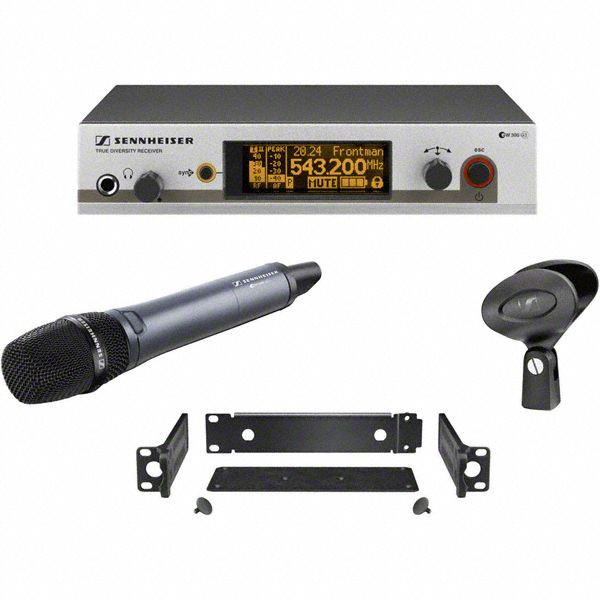
The EW 345 G3 is part of Sennheiser's Evolution Wireless G3 family, a generation of UHF wireless systems specifically engineered for performers and presenters who need rock-solid reliability without paying for digital transmission overkill. The "345" in the name signals a specific configuration: it bundles the EM 300 G3 rackmount receiver with the SKM 300-845 G3 handheld transmitter fitted with the MMD 845-1 dynamic super-cardioid capsule.
That capsule is the heart of this system. The MMD 845 is one of Sennheiser's most respected live vocal capsules, designed specifically for stages where bleed, feedback, and high-SPL handling separate professional gear from prosumer compromises. Pair it with a true-diversity receiver running on Sennheiser's UHF infrastructure, and you've got a system that's earned its reputation through thousands of nightly gigs around the world.
Who Should Actually Consider This System?
Wireless microphone systems aren't one-size-fits-all, and being honest about who the EW 345 G3 suits best is more useful than blanket recommendations.
Strong fit:
- Live vocalists in pubs, clubs, and theatre venues who need a tight pickup pattern to control feedback on loud stages
- Corporate and conference AV techs running multi-channel setups where reliability is non-negotiable
- Houses of worship wanting consistent vocal pickup with minimal room bleed
- Touring acts upgrading from entry-level wireless or replacing ageing G2 systems
- Function bands and wedding singers where the mic genuinely needs to work every single time
Probably not the right fit:
- Bedroom recording or podcast use — wired condensers offer better value here
- Buyers needing 32+ channels in dense RF environments — step up to digital systems like the EW-DX or Digital 6000
- Anyone in regions where the G3's UHF band is restricted — always confirm Australian frequency compliance before purchasing
The MMD 845 Capsule: Why It Matters
If you've ever used a wired Sennheiser e845 on stage, you already know roughly what to expect from the wireless version. The super-cardioid pattern provides tighter rear rejection than a standard cardioid, which translates to two practical benefits on stage: significantly improved feedback resistance, and cleaner isolation from drum kit bleed, monitor wash, and other vocalists nearby.
The capsule's frequency response is voiced for vocal clarity, with a controlled presence lift in the upper-midrange that helps a vocal cut through a dense band mix without sounding harsh. Bass response is tight rather than bloated, which keeps things clean when singers handle the mic close — a critical consideration for energetic frontpeople who tend to swallow the grille during choruses.
What separates this from cheaper handhelds is consistency. The 845 capsule maintains its character across SPL ranges, doesn't get nasty when pushed, and handles plosives more gracefully than budget alternatives. For working vocalists, that predictability is worth real money.
EM 300 G3 Receiver: The Workhorse Half of the Equation
The bundled EM 300 G3 is a half-rack true-diversity receiver — meaning it uses two separate antennas and tuners, automatically switching to whichever has the cleaner signal at any given moment. In practice, this dramatically reduces dropouts caused by reflections, body shielding, or the singer wandering behind a guitar cab.
Key receiver features worth knowing about:
- True diversity reception with automatic seamless switching between dual antennas
- 42 MHz of switching bandwidth with up to 1,680 tunable UHF frequencies
- Up to 12 compatible channels within a single frequency bank for multi-mic setups
- Pilot tone squelch to suppress interference and unwanted RF
- HDX compander for crystal-clear sound transmission and improved dynamic range
- Ethernet port for remote monitoring and control via Sennheiser's WSM software
- Easy frequency setup with automatic scan and sync to the transmitter via infrared
The auto-scan feature is genuinely useful in practice. Walk into an unfamiliar venue, hit scan, and the receiver finds clear frequencies for you — you then sync the transmitter via the IR window on the receiver's front panel and you're operating in under a minute. For Aussie venues where you might not know the local RF landscape ahead of time, this saves real grief.
SKM 300-845 G3 Handheld Transmitter
The transmitter half feels properly built. It's metal-bodied, balanced in the hand, and survives the kind of treatment that singers — let's be honest — routinely inflict on stage gear. Battery life runs to around 8 hours on two standard AA batteries, which comfortably covers most gigs with margin to spare.
The display shows battery status, frequency, and audio level, and the controls are mercifully hidden under a screw-off section so a vocalist can't accidentally bump them mid-set. Mute switch behaviour can be configured (RF mute or audio mute), which matters for presenters and worship use where dropping RF can disrupt monitoring.
Specifications Snapshot
| Specification | Detail |
|---|---|
| System Type | UHF analogue wireless, true diversity |
| Capsule | MMD 845-1 dynamic super-cardioid |
| Frequency Response (Audio) | 80 Hz - 18 kHz |
| Switching Bandwidth | 42 MHz |
| Tunable Frequencies | Up to 1,680 in 25 kHz steps |
| Compatible Channels | Up to 12 per frequency bank |
| THD | ≤ 0.9% |
| Signal-to-Noise Ratio | ≥ 110 dB(A) |
| Transmitter Battery Life | ~8 hours (2x AA) |
| Receiver Form Factor | Half-rack metal chassis |
| Audio Outputs | XLR (balanced) and 6.3mm jack (unbalanced) |
Real-World Performance: What to Expect
Strip away the marketing language and this is what the EW 345 G3 sounds and feels like in actual use. The audio quality is genuinely excellent for an analogue wireless system — the HDX compander minimises the noise and tonal artefacts that plagued earlier-generation wireless gear. Most listeners can't reliably distinguish a properly set up EW 345 G3 from a wired e845, which is the bar this kind of system needs to clear.
RF performance is the real story. True diversity reception combined with auto-scan and pilot tone squelch means the system reliably operates in environments that would frustrate cheaper wireless gear. You can run multiple channels in the same room without intermodulation problems, provided you let the receiver scan and select coordinated frequencies properly.
Latency is effectively imperceptible — analogue wireless beats digital systems here, and for vocalists who rely heavily on monitor mixes for pitch and timing reference, this matters more than spec sheets suggest.
Need a reliable wireless system for your next gig? Order the Sennheiser EW 345 G3 with fast Australian dispatch and authorised dealer support.
Honest Pros and Cons
Strengths:
- Excellent vocal-focused capsule with strong feedback rejection
- True diversity receiver delivers rock-solid reliability
- Easy frequency coordination via auto-scan and IR sync
- Robust metal construction on transmitter and receiver
- Long-running standard AA batteries (no proprietary packs)
- Up to 12 channels per bank for multi-mic setups
- Established Sennheiser support network in Australia
- Imperceptible latency — better than many digital systems
Limitations to Consider:
- Analogue transmission — newer Sennheiser EW-DX digital systems offer wider channel counts and AES-256 encryption if those features matter to you
- UHF spectrum availability varies by region — confirm Australian frequency compliance before purchasing
- No rechargeable battery system included; AAs are a long-term running cost
- Half-rack receiver requires either a rack ear kit or surface placement for permanent installs
- The G3 platform has been around for years — some buyers may prefer current-generation EW-D or EW-DX systems
EW 345 G3 vs Other Sennheiser Options
Sennheiser's wireless catalogue is broad, and choosing wisely means knowing what each tier actually delivers.
| System | Type | Best For | Relative Position |
|---|---|---|---|
| XS Wireless | Analogue | Entry-level, single performer | Budget |
| EW 100 G4 | Analogue | Working musicians, small venues | Mid-tier |
| EW 345 G3 | Analogue | Pro vocal use, multi-channel reliability | Pro analogue |
| EW-D | Digital | Modern simple digital deployments | New entry-pro digital |
| EW-DX | Digital | Touring, encrypted broadcast, dense RF | Pro digital |
| Digital 6000 | Digital | Broadcast, theatre, flagship use | Flagship |
The EW 345 G3 occupies a specific role: when proven analogue reliability with the 845 capsule's vocal character is exactly what you want, and you don't need encryption or huge channel counts, this remains a textbook professional choice.
Practical Buying Considerations for Australian Customers
Frequency Compliance
This is the single most important factor when buying any UHF wireless system in Australia. The Australian Communications and Media Authority (ACMA) regulates which UHF bands are legal for wireless microphone use, and using gear on incorrect frequencies — even unintentionally — is illegal and risks interference with licensed services. Always confirm with your retailer that the specific frequency variant being supplied is appropriate for Australian use, particularly the 520-694 MHz range commonly available for live audio.
Spare Channels and Coordination
If you're buying a single system today but anticipate adding more wireless channels later, plan ahead. Buying multiple EW 345 G3 systems in the same frequency bank is straightforward; mixing across banks or generations adds coordination complexity. For venues planning four or more wireless channels, professional frequency coordination at install time pays off long-term.
Batteries and Running Costs
The EW 345 G3 uses standard AA batteries. Over the lifespan of the system, that's a meaningful operating cost. Consider investing in a quality AA rechargeable system (Eneloop Pro batteries paired with a smart charger) — you'll cut running costs significantly while reducing waste.
Antennas and Range
The included whip antennas are fine for typical pub and small-venue use within line of sight. For larger venues, permanent installs, or situations where the receiver lives in a rack room some distance from the stage, factor in remote antennas and possibly an active antenna distribution system. This is a critical consideration that's sometimes overlooked at purchase time.
Setup Tips That Actually Matter
- Always run an auto-scan in the actual venue before sound check. RF conditions change throughout the day, especially in city centres where TV broadcast and other licensed services occupy adjacent spectrum.
- Sync the transmitter to the receiver via IR every show. It takes ten seconds and eliminates the most common cause of "no audio" panics.
- Set the audio gain at the transmitter properly. Singers vary enormously in projection — adjust the SKM's input sensitivity so your peak signal sits sensibly without compressing the front end.
- Position the receiver where antennas have line-of-sight to the performance area. Avoid burying receivers in metal racks or behind walls of gear.
- Use fresh batteries for every gig. The 8-hour rating assumes good batteries; cheap or partially-used cells produce frustrating mid-set dropouts.
Frequently Asked Questions
Is the Sennheiser EW 345 G3 still worth buying in 2026 given newer digital options?
Yes, for the right buyer. If your priority is proven analogue reliability with the excellent 845 capsule and you don't specifically need encryption or 32+ channel deployments, the G3 platform delivers exactly what you're paying for. Buyers wanting current-generation features should compare directly against the EW-D and EW-DX digital ranges before deciding.
Can I use the EW 345 G3 alongside other wireless systems?
Yes, with proper frequency coordination. Multiple EW 345 G3 systems coexist easily within a single bank. Mixing brands or generations requires careful coordination — your retailer or a wireless coordination tool can help plan compatible frequencies.
How does the super-cardioid pattern affect handling technique?
Super-cardioid capsules have a tighter on-axis pickup but also a small rear lobe of sensitivity. Practically, this means singers should aim the mic deliberately at their mouth (slight off-axis pickup drops more dramatically than with cardioids) and monitors should ideally be positioned slightly off-centre rather than directly behind the singer.
Does it include a rack mount kit?
The EM 300 G3 receiver is a half-rack chassis. A rack mount kit is sold separately and is well worth picking up for permanent installs or touring use where the receiver gets racked alongside other gear.
What's included in the box?
A standard EW 345 G3 system bundle typically includes the EM 300 G3 receiver, SKM 300-845 G3 handheld transmitter with the MMD 845-1 capsule fitted, antennas, power supply, mic clip, and batteries. Confirm exact contents with your retailer at purchase since regional bundles vary.
Is warranty support handled in Australia?
When purchased through an authorised Australian dealer, the system carries Sennheiser's manufacturer warranty with local support and parts availability — a real advantage over grey-import alternatives that can leave you stranded if something fails.
Final Verdict: Should You Buy It?
The Sennheiser EW 345 G3 has earned its reputation honestly. It's not the newest platform on the market, it's not encrypted digital, and it doesn't have rechargeable battery integration. What it does have is a battle-tested combination of one of the best live vocal capsules ever made, a true diversity receiver that simply works, and a deployment workflow that takes minutes rather than hours.
For working vocalists, function bands, theatre productions, houses of worship, and corporate AV teams who value proven reliability over feature-list novelty, this remains a smart professional choice. The questions that should drive your decision are practical: do you need encryption (no — look at EW-DX), do you need 32+ channels in dense RF (no — Digital 6000 territory), or do you need a wireless handheld that delivers the genuine 845 sound and works gig after gig (yes — this is your system).
If you fall into that final category, the EW 345 G3 deserves a serious look. Pair it with quality rechargeable AAs, plan your antenna placement properly, and you'll have a vocal wireless rig that earns its keep for years.
Browse the Sennheiser EW 345 G3 system at MusiconStage — authorised Australian dealer with genuine Sennheiser products, full manufacturer warranty, and dedicated local support.