
Rode Complete Studio Kit vs Rivals: Aussie Buyer's Guide 2026
Rode Complete Studio Kit vs the Rivals: Australian Buyer's Guide 2026
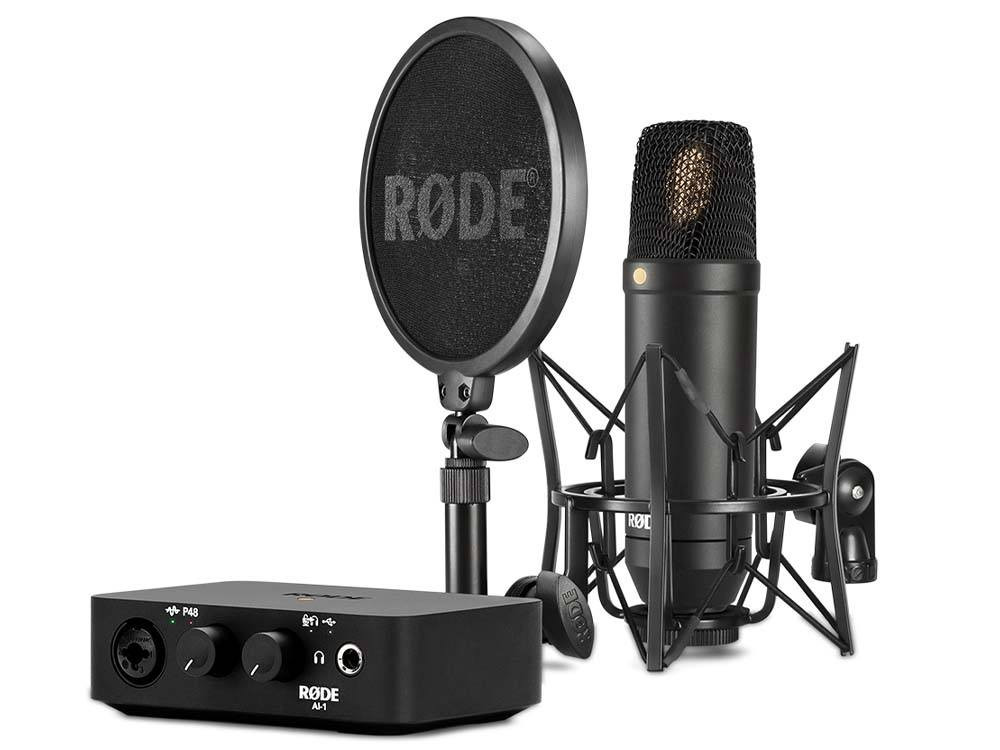
Choosing your first proper recording rig is one of those decisions that feels bigger than it should. Spend too little and you're back shopping in six months; spend too much on the wrong pieces and you've got gear that doesn't talk to each other. The Rode Complete Studio Kit — bundling the NT1 condenser microphone, the AI-1 USB audio interface, the SM6 shock mount and pop shield, plus XLR and USB cables — is Rode's answer to that headache: one box, everything matched, plug in and record.
But is a matched bundle actually the smartest way to spend your money in 2026, or are you paying a convenience tax for parts you could cherry-pick cheaper? This guide compares the Complete Studio Kit against the main alternatives Australian buyers are weighing up — rival all-in-one bundles, and the build-your-own-rig route — so you can decide with confidence.
What's Actually in the Box
Before comparing anything, it helps to know exactly what you're getting. Bundles vary wildly, and the value only makes sense once you see every component.
- Rode NT1 large-diaphragm condenser microphone — a studio cardioid condenser famous for being one of the quietest mics in its class (extremely low self-noise), with a smooth, slightly warm character that flatters vocals and acoustic instruments.
- Rode AI-1 single-channel USB audio interface — one combo XLR/quarter-inch input with phantom power, a headphone output, and class-compliant USB connectivity for Mac, Windows and most tablets.
- SM6 shock mount with integrated pop filter — isolates the mic from desk knocks and rumble while taming plosives.
- XLR cable — connects mic to interface, correct length and quality for the kit.
- USB cable — connects interface to computer.
The headline here is everything is matched and ready. There's no guesswork about whether the mic needs 48V (it does, and the AI-1 supplies it), whether the cable is the right type, or whether the shock mount fits the mic body. That matters more than beginners expect.
Market Landscape: Your Three Real Options
When Australian creators shop this price tier, the decision almost always comes down to three paths:
- The Rode Complete Studio Kit — a single-brand, single-channel bundle engineered as a system.
- A rival all-in-one bundle — typically a two-input interface paired with a dynamic broadcast mic (the podcast-first approach), or another brand's condenser starter pack.
- Building your own rig — buying a standalone interface, a separate mic, and accessories individually to hand-pick each piece.
None of these is universally "best". The right answer depends on what you're recording, how much you'll fiddle with settings, and whether you value simplicity or flexibility more. Let's compare them properly.
Head-to-Head Comparison
| Factor | Rode Complete Studio Kit | Rival Bundle (dynamic mic + 2-in interface) | Build-Your-Own Rig |
|---|---|---|---|
| Mic type | Large-diaphragm condenser (detailed, sensitive) | Usually dynamic (forgiving, room-tolerant) | Your choice |
| Inputs | 1 (single vocalist / instrument) | Often 2 (co-hosts, mic + guitar) | Whatever you buy |
| Setup effort | Minimal — matched and labelled | Low to moderate | High — you research compatibility |
| Best-suited room | Quiet, semi-treated spaces | Untreated or noisy rooms | Depends on mic chosen |
| Included accessories | Shock mount, pop filter, both cables | Varies — often mic clip only | Bought separately (adds cost) |
| Upgrade path | Add second interface channel later | Depends on bundle | Fully modular from day one |
| Value certainty | High — no surprise extra purchases | Moderate | Variable — easy to overspend |
Sound Quality: Condenser vs Dynamic
This is the single most important comparison, and it's where the Complete Studio Kit's character sits. The NT1 is a large-diaphragm condenser, which means it captures detail, air and nuance beautifully — the breathy top end of a vocal, the shimmer on an acoustic guitar, the subtlety in a spoken-word performance. Its exceptionally low self-noise is a genuine standout; recordings come back clean rather than hissy, which is rare at this price.
The trade-off is sensitivity. A condenser hears everything — the fridge compressor, the neighbour's lawnmower, room reflections off bare walls. In a quiet, lightly treated space it rewards you with professional results. In a hard, echoey room it will faithfully record that echo too.
Rival bundles built around a dynamic broadcast mic take the opposite approach: they reject room noise aggressively and are far more forgiving of poor acoustics, but they capture less high-end detail and generally need more clean gain. For pure spoken-word podcasting in an untreated spare room, that forgiveness can be worth more than outright fidelity.
The verdict: if your primary goal is sung vocals, acoustic instruments, voiceover or any content where detail and clarity matter — and you can control your recording space even a little — the condenser-based Complete Studio Kit is the stronger musical performer. If you're recording multiple people talking in an untreated room and want to think about acoustics as little as possible, a dynamic-mic rival bundle is the safer bet.
Interface & Connectivity
The AI-1 is deliberately simple: one high-quality input, phantom power, direct monitoring for latency-free tracking, and clean class-compliant USB that works without fussy drivers. That single-channel focus is a feature for solo creators — fewer knobs, fewer ways to get lost.
It's also, honestly, the main reason to look elsewhere. If you already know you'll be recording two sources at once — a podcast with a co-host, or singing while playing guitar into a separate mic — a single input becomes a hard ceiling. Rival two-input bundles solve that on day one. This is the clearest "know thyself" moment in the whole decision.
Situation-Specific Recommendations
Best for solo vocalists and singer-songwriters
Winner: Rode Complete Studio Kit. The condenser detail flatters vocals, the shock mount and pop filter are included (rivals often skip these), and one input is all a solo performer needs. This is the kit's home turf.
Best for voiceover, narration and audiobook work
Winner: Rode Complete Studio Kit, provided you have a reasonably quiet room. The low self-noise means long, quiet passages stay clean — critical for spoken-word delivery.
Best for multi-person podcasts
Winner: a two-input rival bundle. The single-channel AI-1 simply isn't built for two live mics, and dynamic mics tolerate untreated rooms and cross-talk better.
Best value overall
Winner: Rode Complete Studio Kit. Once you tally what you'd spend buying a comparable condenser, interface, shock mount, pop filter and two quality cables separately, the bundle's certainty is hard to beat — you avoid the classic beginner trap of forgetting the cable or the mount and paying shipping twice.
Best for maximum flexibility
Winner: build-your-own. If you have strong opinions and a bigger budget, hand-picking every component gives you exactly what you want — at the cost of research time and the real risk of overspending on features you never use.
Value Analysis: Is a Bundle Worth It?
The genuine value of the Complete Studio Kit isn't just the discount versus buying separately — it's the removal of decision risk. Beginners routinely underestimate the hidden costs of the build-your-own route: the wrong-length cable, the shock mount that doesn't fit the mic thread, the interface that turns out to lack phantom power. Each mistake costs money and, worse, momentum. A matched kit means the day it arrives, you record.
- Everything is compatible — no phantom-power or connector surprises.
- Accessories included — shock mount and pop filter are in the box, not an upsell.
- Single-brand support — one place to go if something needs sorting under warranty.
- Resale clarity — Rode holds its value well on the Australian second-hand market.
Common Mistakes to Avoid
- Buying a condenser for a noisy, untreated room. The NT1 is superb, but it will capture your environment. Budget a little for basic acoustic treatment, or choose a dynamic-mic rival if treatment isn't happening.
- Ignoring your channel count. If there's any chance you'll record two people or two sources simultaneously, a single-input interface will frustrate you fast.
- Forgetting the accessories in a cheaper deal. A bare mic that looks cheaper often isn't once you add a mount, filter and cables.
- Over-buying. A multi-input pro interface is wasted money if you only ever record one voice.
Questions to Ask Before You Buy
- How many sources will I record at the same time — now and within a year?
- Can I make my recording space reasonably quiet, or is it fixed and noisy?
- Is my content detail-driven (music, voiceover) or conversation-driven (multi-host podcast)?
- Do I want to plug in and create, or do I enjoy tinkering with gear choices?
Your answers point cleanly to one of the three paths. If you're a solo creator recording vocals, instruments or narration in a controllable room and you value simplicity, the Rode Complete Studio Kit is squarely aimed at you.
Honest Final Recommendation
For the largest group of buyers in this tier — solo singers, songwriters, voiceover artists and single-mic content creators working in a room they can keep reasonably quiet — the Rode Complete Studio Kit represents the best combination of sound quality, value certainty and out-of-the-box readiness in 2026. The NT1's clean, detailed capture punches above its price, and the fact that the shock mount, pop filter and both cables are included removes the death-by-a-thousand-extras that plagues the build-your-own approach.
Be honest with yourself on two points only: you need one input to be enough, and you need to manage your room noise. If both hold true, this kit is an easy recommendation and a rig you won't outgrow quickly. If you need two simultaneous inputs or you're recording in an acoustically hostile space, a dynamic-mic, two-channel rival bundle is the smarter buy — and that's exactly the kind of trade-off worth getting right before you spend.
Ready to start recording with a matched, no-guesswork setup? View the Rode Complete Studio Kit at MusiconStage and get everything you need in one box.