
Platinum Wedding DJ Equipment Package Hire: What You Actually Get in 2026
Platinum Wedding DJ Equipment Package Hire: Full Technical Breakdown for Australian Weddings in 2026
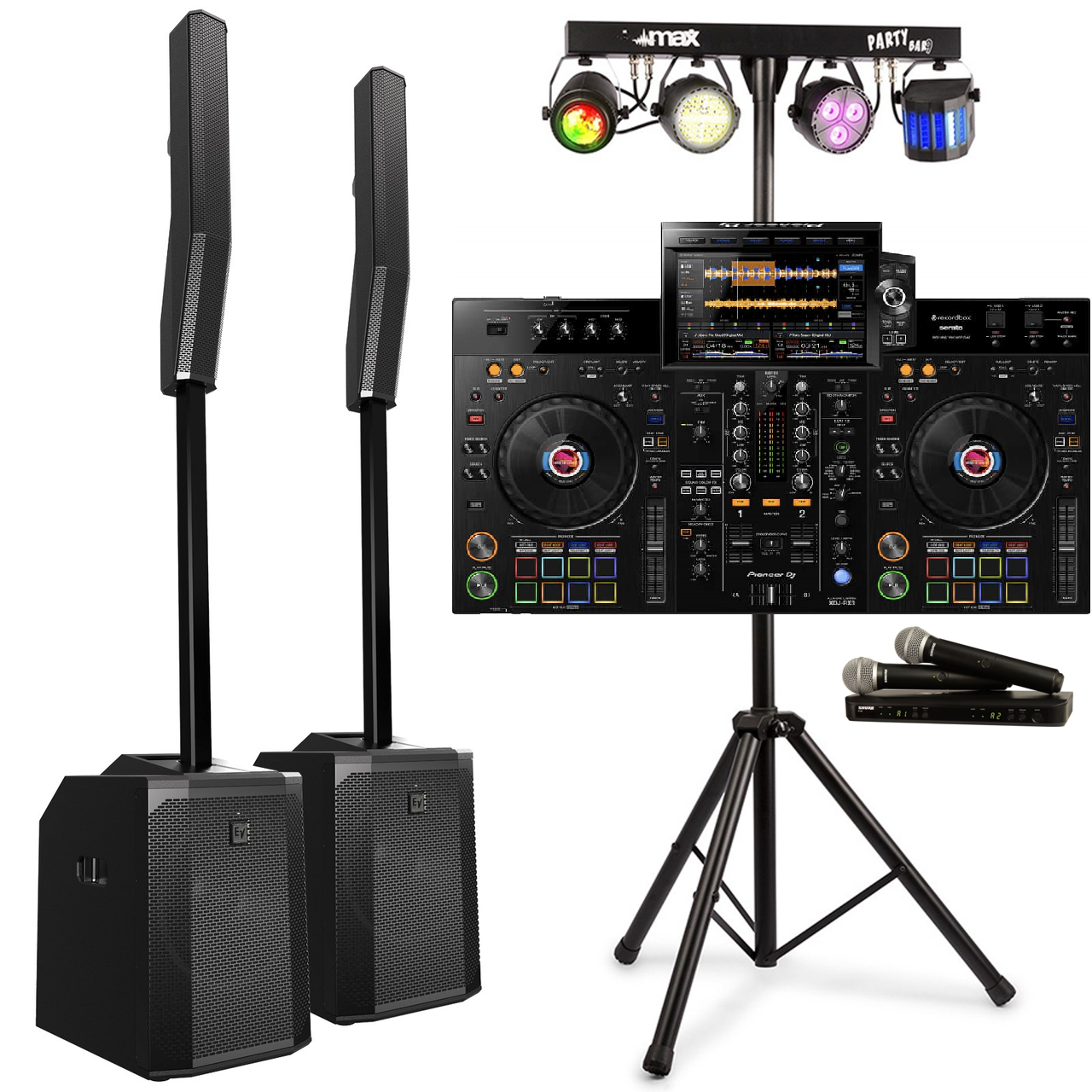
Hiring DJ equipment for a wedding is one of those decisions that sounds straightforward until you actually start looking at what's available. The difference between a basic speaker-on-a-stick setup and a properly specced platinum-tier package isn't just volume — it's coverage consistency, frequency response across a full venue, lighting integration, and whether your gear can handle eight hours of continuous operation without thermal throttling or signal degradation.
Music On Stage's Platinum Wedding DJ Equipment Package Hire sits at the top of their wedding hire range, and it's designed for couples (or DJs) who want professional-grade audio and lighting without the five-figure investment in owning the gear outright. But what does "platinum" actually mean in practical terms? Let's pull this package apart piece by piece.
Why Equipment Tier Matters More Than Most Couples Realise
Here's something that doesn't get discussed enough in wedding planning: the acoustic environment of most Australian wedding venues is genuinely hostile to good sound. Corrugated iron barn conversions, open-sided marquees on rural properties, heritage-listed halls with hard stone walls and zero acoustic treatment — these spaces demand equipment that can adapt.
A budget hire package with passive speakers and a basic amp will technically produce sound. But it won't produce even coverage across a 150-person reception space. You'll get a hot spot directly in front of the speakers where conversations are impossible, and dead zones at the back tables where the speeches are unintelligible. That's a physics problem, and it requires proper equipment to solve.
The Platinum tier exists precisely for this scenario. It's specced to handle the acoustic challenges that Australian wedding venues routinely present, with enough headroom and flexibility to adapt to spaces ranging from intimate courtyards to large function centres.
Audio System: What's in the Box
The centrepiece of any DJ equipment package is the PA system, and at the platinum level, you're looking at professional-grade active speakers with integrated amplification. This is a critical distinction from lower-tier packages that might use passive speakers with external amplifiers — active systems offer better signal-to-noise ratios, built-in DSP processing, and significantly simpler setup.
Main PA Speakers
A platinum-tier package typically includes premium column array or point-source speakers rated for large venue coverage. The key specifications to pay attention to include:
| Specification | What It Means for Your Wedding |
|---|---|
| SPL Output (Peak) | Determines maximum volume before distortion. For weddings of 100-200 guests, you need a system capable of 126+ dB peak SPL to maintain clean output at dance-floor levels with headroom to spare. |
| Frequency Response | A range of approximately 55 Hz – 20 kHz means the tops handle everything from kick drum fundamentals through vocal clarity to cymbal shimmer. Wider is better, but real-world usable range matters more than paper specs. |
| Dispersion Pattern | Column arrays offer a wide horizontal dispersion (up to 120°) with tight vertical control. This means more even coverage across the room without blasting the front row. Point-source speakers may offer 90° x 60° patterns that work brilliantly in longer, narrower spaces. |
| Built-in DSP | Onboard digital signal processing allows the speakers to adapt their output curve to the room. Some premium models include room correction presets for common venue types. |
Subwoofer System
This is where platinum packages separate themselves from gold or silver tiers most obviously. A proper subwoofer doesn't just add bass — it relieves the main speakers from trying to reproduce low frequencies, which in turn gives you cleaner mids and highs at higher volumes.
For a wedding reception, you want a sub that extends down to at least 40 Hz with authority, ideally with a variable crossover so you can dial in the transition point between sub and tops. A single 15" or 18" powered sub is typically sufficient for weddings up to 200 guests in an enclosed venue. Larger or open-air venues might warrant a pair.
The practical benefit? When "September" by Earth, Wind & Fire hits at 10:30 PM and every guest is on the dance floor, you'll feel the bassline in your chest without the vocals turning to mush. That's what proper low-frequency management delivers.
DJ Controller and Mixer
Platinum packages include a professional DJ controller — typically a unit with at least two channels, jog wheels, built-in effects, and software compatibility with industry-standard platforms like Serato DJ Pro or rekordbox. The mixer section should offer:
- 3-band EQ per channel — essential for on-the-fly tonal adjustment
- Multiple input types — RCA, 6.35mm, and XLR to accommodate everything from a phone aux cable to a professional wireless mic
- Headphone cue system — so the DJ can preview the next track without the audience hearing it
- Built-in effects — reverb, delay, and filter sweeps for professional transitions
If you're hiring a DJ to operate the equipment, the controller quality directly affects their ability to read the room and keep the energy right. A good controller with responsive jog wheels and low-latency audio processing is the difference between seamless transitions and awkward gaps between songs.
Wireless Microphone System
Speeches are non-negotiable at Australian weddings. The father of the bride, the best man, the maid of honour — they all need to be heard clearly by every guest, including Uncle Barry at the back table who's already three beers deep and talking over everyone.
A platinum package should include at least one professional wireless handheld microphone operating on UHF frequencies (typically in the 520-694 MHz range in Australia, noting that spectrum allocation has changed in recent years). Key specs to verify:
- Operating range: 30+ metres line-of-sight minimum
- Battery life: 8+ hours on fresh batteries (always carry spares)
- Frequency agility: Multiple selectable channels to avoid interference from other wireless devices at the venue
- Capsule quality: A condenser or dynamic capsule with a cardioid pickup pattern to reject ambient noise and feedback
Some platinum packages include a second microphone or a lapel/lavalier option for the celebrant during the ceremony — worth confirming when you book.
Lighting Package: Beyond the Disco Ball
Lighting at a wedding reception isn't just decoration — it's atmosphere engineering. The right lighting setup transforms a community hall into something genuinely magical, and a platinum-tier lighting package reflects that ambition.
LED Uplighting
Battery-powered LED uplights (typically RGBWA+UV) placed around the perimeter of the venue wash the walls in your chosen colour scheme. The technical advantage of units with amber and UV LEDs alongside standard RGB is colour rendering — pure RGB mixing produces a limited palette, while the addition of amber creates warmer, more natural tones that complement skin tones in photographs. UV adds that distinctive glow effect for the dance floor later in the evening.
A platinum package should include enough units to adequately light a standard function room — typically 8 to 16 fixtures depending on venue size. Look for units with:
- Wireless DMX capability for cable-free installation
- Battery operation with 10+ hour runtime
- Sound-active mode for automatic colour changes synced to the music
- Custom colour presets to match your wedding palette
Moving Heads and Effect Lighting
This is the show-stopper element. Professional moving head fixtures — whether wash, spot, or beam type — add dynamic, concert-quality lighting to the dance floor. Modern LED moving heads can produce millions of colour combinations with motorised pan/tilt movement, gobos (projected patterns), and prism effects.
For weddings, wash-type moving heads are generally more appropriate than sharp beam fixtures. They create broad swathes of colour that sweep across the dance floor and ceiling without the harsh, nightclub-like intensity of beam fixtures. That said, a pair of compact beam movers can create stunning aerial effects in venues with high ceilings — those dramatic shafts of light cutting through a light haze look absolutely spectacular in photos and video.
DJ Booth Lighting and Facade
A detail that separates premium packages from the rest: the DJ booth itself. A platinum package typically includes a professional DJ facade (booth front) with integrated LED panels or starcloth, creating a polished focal point rather than a bare table with visible cables and equipment cases. This might seem purely aesthetic, but it also serves a practical purpose — it hides the cable management and equipment backs that would otherwise look untidy in your venue photos.
Setup, Technical Specifications, and Logistics
Power Requirements
This is a detail that trips up a surprising number of wedding planners. A full platinum DJ package draws significant power — typically 15-25 amps across all audio and lighting components. Most standard Australian domestic power outlets supply 10 amps per circuit, which means:
| Component | Typical Power Draw |
|---|---|
| Main PA Speakers (pair) | 4-8 amps total |
| Subwoofer | 3-6 amps |
| DJ Controller/Mixer | 0.5-1 amp |
| Moving Head Lights (pair) | 2-4 amps total |
| LED Uplights (8-16 units) | Battery-powered (0 amps during event) |
| DJ Booth Facade Lighting | 1-2 amps |
| Total Estimated Draw | 10-21 amps |
You'll need access to at least two separate power circuits at the venue. Daisy-chaining everything off a single powerpoint is a recipe for tripped breakers mid-first-dance. When booking your hire, confirm with the venue what power is available at the DJ position — this is the kind of logistical detail that platinum-level service providers will handle for you during their site assessment.
Setup and Pack-Down Times
A full platinum package requires approximately 2-3 hours for professional setup, including speaker positioning, acoustic testing, lighting programming, and cable management. Pack-down is typically faster at 1-1.5 hours. Factor this into your venue access schedule — if your ceremony finishes at 4 PM and reception starts at 6 PM, that's a tight window for a full platinum installation.
Transport and Handling
The total weight of a platinum package can exceed 200 kg across all cases and components. This isn't something you throw in the back of a Hilux — it requires a properly equipped van or trailer, professional road cases for protection, and ideally two people minimum for load-in. Most professional hire services include delivery, setup, and collection in their platinum pricing, and this is genuinely worth paying for.
Platinum vs. Gold and Silver Packages: What's the Real Difference?
Understanding what you gain (and what you can live without) at each tier helps you make a genuinely informed decision rather than just defaulting to the most expensive option.
| Feature | Silver | Gold | Platinum |
|---|---|---|---|
| PA System | Basic active speakers, no sub | Quality active speakers + sub | Premium speakers + sub with DSP |
| Coverage | Up to 80 guests | Up to 150 guests | 200+ guests |
| Wireless Mic | 1 basic handheld | 1 professional UHF | 1-2 professional UHF with backup |
| Lighting | Basic LED par cans | LED uplights + effect lights | Uplights + moving heads + facade |
| DJ Equipment | Basic controller | Mid-range controller | Professional controller with full mixer |
| Setup Service | Self-setup or basic | Professional setup included | Full setup, testing, and breakdown |
The honest assessment: if your wedding is under 80 guests in a small, acoustically friendly room, you probably don't need platinum. Save the money for the honeymoon. But if you're looking at 120+ guests in a barn, marquee, or large function space, and lighting atmosphere is important to you, the platinum tier earns its premium through better coverage, more headroom, and significantly more impressive visual production.
Technical Considerations Specific to Australian Weddings
Outdoor and Semi-Outdoor Venues
Australia's love affair with outdoor weddings creates unique technical challenges. Without walls to contain and reflect sound, you lose approximately 6 dB of perceived volume for every doubling of distance from the speakers. In practical terms, this means an outdoor setup needs roughly four times the acoustic power of an equivalent indoor setup to achieve the same coverage.
A platinum package's higher-powered speakers and subwoofer become genuinely necessary in these environments, not a luxury. The directional control of premium speakers also helps focus sound toward the audience rather than wasting energy radiating into the neighbouring paddock.
Heat and Humidity
Australian summers push electronic equipment hard. Amplifiers in active speakers generate significant heat, and ambient temperatures of 35°C+ can push thermal management systems to their limits. Professional-grade equipment in a platinum package is designed with better thermal headroom than budget alternatives, with larger heatsinks, more efficient Class D amplification, and thermal protection circuits that reduce output gracefully rather than shutting down completely.
Humidity is the silent killer of audio equipment. Coastal venues from the Gold Coast to the Great Ocean Road can see humidity levels above 80%, which affects speaker cone response and can cause condensation in electronic components. Premium equipment uses moisture-resistant materials and sealed electronics that handle these conditions without issue.
Noise Regulations
Most Australian councils enforce noise restrictions at venues, particularly in residential areas. Common limits range from 85 dB(A) to 95 dB(A) measured at the property boundary. A platinum package's DSP-equipped speakers allow you to set a hard limiter that prevents the system from exceeding a specified output level — essential for compliance and for avoiding that uncomfortable conversation with the venue coordinator at 11 PM.
What to Ask Before You Book
Whether you're hiring through Music On Stage's Platinum Wedding DJ Package or comparing alternatives, these are the technical questions that separate informed hirers from those who end up disappointed:
- What specific speaker models are included? Brand and model matter. "Professional speakers" is marketing. "Electro-Voice Evolve 50M" or "JBL PRX One" is a specification you can research.
- Is a site visit or consultation included? Premium hire services will assess your venue's acoustics, power availability, and layout before the event — not just show up on the day.
- What happens if equipment fails? Ask about backup equipment policy. At the platinum tier, you should expect either on-site spares or rapid replacement guarantees.
- Who handles setup and operation? Confirm whether the package includes a technician or operator, or if you're expected to self-operate. If self-operating, ask what training or support is provided.
- What's the insurance situation? Professional hire equipment is expensive. Understand your liability for damage and whether the hirer's insurance covers accidental damage during normal use.
- Can the package be customised? Perhaps you need extra uplights for a larger venue, or you want to add a second sub for outdoor use. Flexibility is a hallmark of quality hire services.
Setting Up for Success: Practical Tips
Even with platinum-grade equipment, setup decisions make or break the audio and lighting experience. A few technical tips from years of seeing what works at Australian weddings:
- Speaker placement: Position main speakers on either side of the dance floor, angled inward at approximately 30 degrees. This creates a coverage overlap zone on the dance floor while extending reach to side tables. Never place both speakers on the same side of the room.
- Subwoofer positioning: Place the sub on the ground, ideally against a wall. The wall acts as a boundary, effectively doubling the sub's low-frequency output through boundary coupling. Corner placement adds another 3 dB but can make bass boomy in smaller rooms.
- Lighting timing: Programme uplights to shift colour temperature as the evening progresses — warm amber during dinner, transitioning to your feature colours for the dance floor. This subtle shift mirrors natural lighting changes and creates an unconscious sense of progression through the evening.
- Cable runs: Route all cables along walls and under cable covers. This isn't just aesthetics — it's an OH&S requirement. A guest tripping over a speaker cable at a wedding is a liability nightmare.
Is the Platinum Package Worth It? An Honest Technical Assessment
The short answer: it depends entirely on your venue and expectations.
If you're hosting 150+ guests in a large or acoustically challenging space, and you want lighting that genuinely transforms the room rather than just adding a few coloured spots, the platinum tier delivers measurably better results than lower packages. The superior speaker coverage, dedicated subwoofer, professional lighting rig, and comprehensive setup service solve real problems that cheaper packages simply can't address.
If your reception is an intimate 60-person affair in a well-appointed function room with decent acoustics and its own mood lighting, you'd be paying for capability you won't use. In that scenario, a gold-tier package delivers everything you need.
The sweet spot for the Platinum Wedding DJ Equipment Package is the 120-250 guest wedding in a venue that needs both sonic authority and visual transformation — which, honestly, describes the majority of Australian wedding receptions outside of dedicated function centres.
Ready to see exactly what's included and check availability? View the full Platinum Wedding DJ Equipment Package details at Music On Stage and get a quote for your date.