
Pioneer DJM-450 DJ Mixer: Real-World Uses for Aussie DJs in 2026
Pioneer DJM-450 DJ Mixer: How Aussie DJs Actually Use This 2-Channel Workhorse in 2026
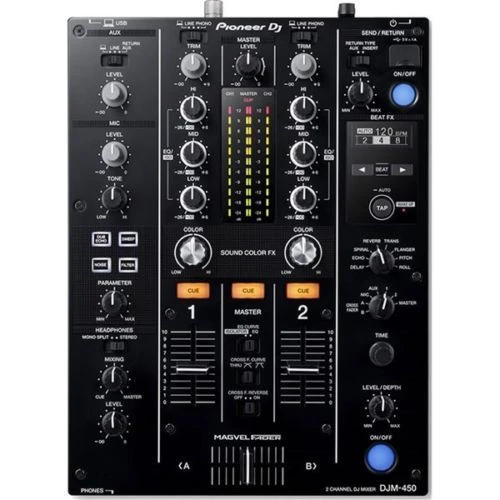
There's a moment every DJ hits — usually around the time you've outgrown your controller but aren't ready to drop serious coin on a DJM-900NXS2 — where the Pioneer DJM-450 starts making a lot of sense. It's the mixer that sits squarely in that sweet spot between "I'm getting serious about this" and "I don't need to remortgage the house."
But here's what most product pages won't tell you: the DJM-450 isn't just a budget alternative. For a surprisingly large number of Australian DJs, it's genuinely the right mixer for what they're doing. Whether you're running bar gigs around Sydney, streaming sets from your bedroom in Melbourne, or practising your scratch game in a garage in Brisbane, this thing has a specific job — and it does it remarkably well.
Let's break down exactly how this mixer performs in the situations you'll actually use it in.
What You're Actually Getting With the DJM-450
Before we get into use cases, let's quickly cover what makes this mixer tick. The DJM-450 is a 2-channel mixer built on Pioneer's club-standard architecture. It borrows its sound engine from the flagship DJM-900NXS2, which means the EQs, filters, and overall audio quality punch well above what you'd expect at this price point.
The headline feature is the bundled Rekordbox DJ and DVS licence. That's not a trial or a stripped-back version — it's the full software, ready to go. For DJs who've been eyeing the cost of a Rekordbox licence on top of hardware, this is a genuine money-saver. You're essentially getting hundreds of dollars worth of software included in the box.
Key specs that matter in practice:
- 2 channels with full 3-band EQ and channel faders
- Magvel crossfader — the same technology found in Pioneer's top-tier mixers
- Beat FX including Echo, Delay, Reverb, Trans, Flanger, and more
- Sound Colour FX — Filter, Crush, Noise, and Dub Echo per channel
- USB audio interface built in (24-bit/96kHz)
- Send/Return for external effects routing
- Rekordbox DJ and DVS licence bundled
Now, let's talk about where all of that actually matters.
Use Case 1: The Bedroom DJ Getting Serious
This is probably the most common scenario for the DJM-450 in Australia, and honestly, it's where the mixer absolutely shines.
If you've been mixing on a DDJ-400 or DDJ-FLX4 and you're ready to move to a proper mixer-and-turntable or mixer-and-CDJ setup, the DJM-450 is the logical step. It teaches you the workflow you'll encounter on club-standard gear without the intimidating price tag of a DJM-900NXS2.
What works brilliantly here: The built-in USB sound card means your laptop connects directly — no external audio interface needed. Fire up Rekordbox, and you've got a proper DVS setup running through timecode vinyl or CDJs. The signal path is clean, latency is low, and the whole experience feels professional.
The Beat FX section is a genuine learning tool at this stage. You get the same layout and feel as the bigger DJM models, so when you eventually walk into a club booth, the muscle memory's already there. The Dub Echo on the Sound Colour FX knob is particularly useful — it's become such a staple of modern DJ sets that having it on a per-channel knob rather than buried in software makes a real difference to how you perform.
Where it gets honest: With only 2 channels, you won't be doing the kind of three-deck layering that some genres demand. If you're heavily into progressive house or trance where you want a third deck for acapellas and loops, you'll feel that limitation. But for house, techno, hip-hop, drum and bass, and most genres where you're primarily working between two sources, it's more than enough.
Use Case 2: Small Bar and Club Gigs Around Australia
Here's where the DJM-450 earns its keep for working DJs. If you're doing regular gigs at bars, small clubs, and private events across Australia, carrying your own mixer gives you consistency — and the DJM-450 is compact and light enough to throw in a bag without thinking twice.
The reality of gigging in Australia's smaller venues is that you often rock up to find anything from a knackered old Behringer to literally nothing in the booth. Having your own reliable mixer means your set sounds the same whether you're playing at a laneway bar in Melbourne or a beach club on the Gold Coast.
Practical gigging advantages:
- The Magvel crossfader is properly smooth and responsive — essential for open-format sets where you're cutting between genres
- Send/Return loop means you can patch in external pedals or effects units if that's part of your sound
- The master output is balanced XLR, so you're feeding clean signal to whatever PA system the venue has
- Booth monitor output lets you set your own level independent of the room — surprisingly useful in venues where the DJ booth is an afterthought
- It's compact — genuinely fits in a backpack alongside your laptop and headphones
A real scenario: You're doing a Friday night at a bar in Surry Hills. The venue has a pair of powered speakers and a mic input on the wall. You set up the DJM-450, plug your laptop into USB, connect the XLR outs to the speakers, and you're running a professional-grade setup in under five minutes. No dodgy venue mixer, no ground loop hum, no drama.
For DJs who regularly play venues without installed DJ gear, this mixer is genuinely a business tool.
Use Case 3: DVS and Turntablism Practice
This is an underrated use case for the DJM-450, but it's a cracker. The bundled Rekordbox DVS licence means you can run timecode vinyl through turntables and control your digital library with a proper vinyl feel.
For scratch DJs and turntablists in Australia, this is significant. A DVS-capable setup used to mean buying a mixer, then buying a separate DVS licence, then possibly buying a separate audio interface. The DJM-450 rolls all of that into one unit.
The Magvel crossfader is worth highlighting again here. It's not quite the same as the DJM-S series crossfaders designed specifically for battle DJs, but it's adjustable and responsive enough for solid scratch practice and performance. You can adjust the crossfader curve to suit your style — from a smooth blend curve right through to a sharp cut.
Who this suits: If you're a turntablist who wants a reliable practice setup at home and a portable rig for events, the DJM-450 ticks both boxes. It's not a dedicated battle mixer, but it handles scratching, juggling, and beat-juggling well enough for most skill levels. If you're competing at DMC-level scratch battles, you'd want a dedicated scratch mixer. For everything else, this does the job.
Use Case 4: Live Streaming and Content Creation
This one's grown massively since 2020, and in 2026, streaming DJ sets is a genuine income stream for Australian DJs. The DJM-450's built-in USB audio interface makes it a surprisingly capable streaming tool.
The audio feeds directly from the mixer to your computer at 24-bit/96kHz quality. That means your OBS, Streamlabs, or whatever streaming software you're using gets a clean, high-quality audio feed without any extra hardware. The master output goes to your speakers for monitoring, the USB output goes to your stream — simple.
For DJs creating content on YouTube, Twitch, or Mixcloud, this workflow is hard to beat at this price. You can run your set, capture the audio in studio quality, and the whole signal chain stays clean and noise-free.
Pro tip for streamers: Use the headphone cue output as a secondary monitoring path. You can monitor what's going to the stream while simultaneously cueing your next track — a workflow that becomes second nature after a few sessions.
Use Case 5: The Backup Mixer for Working Pros
Here's a scenario that doesn't get talked about enough: the DJM-450 as a professional's backup. Even if your main rig is a DJM-900NXS2 or a DJM-V10, having a reliable, compact mixer you can throw in a flight case as insurance is genuinely valuable.
Australian touring DJs know the drill — you arrive at a regional venue and the installed gear is either broken, missing, or some brand you've never seen before. Having a DJM-450 as your emergency backup means you can always deliver a professional set, regardless of what the venue provides.
Because it shares the same sound engine philosophy as Pioneer's flagship mixers, the transition between your main mixer and the DJM-450 doesn't feel jarring. The EQ curves respond similarly, the effects are laid out the same way, and the overall signal quality is close enough that your audience won't notice the difference.
How the DJM-450 Stacks Up Against Alternatives
DJM-450 vs Pioneer DJM-250MK2
The DJM-250MK2 is cheaper, but it cuts corners that matter. The DJM-450 adds the Magvel crossfader (the 250MK2 uses a standard fader), Sound Colour FX, a full Beat FX section, and the DVS licence. If you're choosing between the two, the DJM-450's extras represent genuine workflow improvements, not just marketing upgrades. The Sound Colour FX alone — having that per-channel filter and effect knob — changes how you mix.
DJM-450 vs Pioneer DJM-S5
The DJM-S5 is Pioneer's 2-channel scratch-focused mixer. If turntablism is your primary focus, the S5's dedicated Magvel fader Pro and performance pads give you more scratch-specific tools. But if you need a versatile mixer that handles blending, effects-heavy sets, and scratching, the DJM-450 is the more well-rounded choice.
DJM-450 vs Allen & Heath Xone:23
The Xone:23 is beloved by techno and house DJs for its legendary filters. If your entire world is long, smooth blends and filter-driven transitions, the Xone series has a character that's hard to replicate. But the DJM-450 wins on features — DVS capability, built-in effects, USB audio interface, and Rekordbox integration give it far more versatility. For DJs who play across multiple genres or need that Pioneer ecosystem compatibility, the DJM-450 is the practical choice.
DJM-450 vs Going Straight to a DJM-900NXS2
Look, if you can afford the 900NXS2 and you know you need 4 channels, go for it. But be honest about your actual needs. Plenty of professional DJs — including some doing very well on the Australian circuit — work exclusively with 2 channels. The DJM-450 gives you 80% of the DJM-900's sound quality and workflow for roughly a third of the price. That's not a compromise for most DJs; it's smart spending.
Who Should Buy the Pioneer DJM-450 (And Who Shouldn't)
This mixer is ideal if you:
- Are stepping up from a controller to a dedicated mixer setup
- Want Rekordbox DVS without paying separately for the licence
- Gig at small-to-medium venues and want a portable, reliable mixer
- Need a quality 2-channel mixer for home practice and occasional gigs
- Stream DJ sets and need a clean USB audio path
- Primarily mix between two sources (turntables, CDJs, or a combination)
- Want to learn on gear that mirrors club-standard Pioneer workflow
Look elsewhere if you:
- Need 4 channels for multi-deck mixing or back-to-back sets
- Are a competitive scratch DJ who needs a dedicated battle mixer
- Want standalone capability without a laptop (the mixer itself doesn't play tracks)
- Need built-in sampling or performance pad features
- Exclusively use Serato DJ (you'd want the DJM-S series instead)
Practical Tips for Getting the Most From Your DJM-450
- Update the firmware first. Pioneer regularly releases firmware updates that improve stability and occasionally add features. Before your first session, check the Pioneer DJ website for the latest version.
- Set your crossfader curve to match your style. Blend DJs should keep it smooth; scratch DJs should tighten it up. It takes 30 seconds to adjust and makes a massive difference to how the mixer feels.
- Use the Sound Colour FX creatively. The Dub Echo isn't just a transition tool — try using it subtly during builds to add depth. The Noise generator is brilliant for building tension in techno sets.
- Set up your Rekordbox DVS properly. Take 20 minutes to calibrate your timecode vinyl or CDs when you first set up. Proper calibration means rock-solid tracking during sets.
- Use the Send/Return for external gear. If you've got a guitar pedal, a Kaoss Pad, or any external effect, patching it through the Send/Return loop integrates it seamlessly into your signal chain.
Buying the Pioneer DJM-450 in Australia
The DJM-450 is well-stocked by Australian DJ retailers, and MusiconStage carries the DJM-450 with full Australian warranty. Buying from an authorised Australian dealer means you get local warranty support — which matters when you rely on your gear for gigs.
Given that the bundled Rekordbox DJ and DVS licence would cost you a significant amount separately, factor that into your value calculation. When you compare the total cost of ownership — mixer plus software — the DJM-450 actually represents exceptional value compared to buying a cheaper mixer and then adding a DVS licence on top.
Frequently Asked Questions
Can I use the DJM-450 with Serato DJ?
The DJM-450 is designed and licensed for Rekordbox DJ and DVS. It doesn't natively support Serato. If you're committed to the Serato ecosystem, Pioneer's DJM-S series is the way to go. However, if you're flexible on software, Rekordbox has matured significantly and is a genuinely excellent platform in 2026.
Is the DJM-450 good enough for professional gigs?
Absolutely. The audio quality, build quality, and feature set are professional-grade. Many working DJs across Australia use 2-channel mixers for regular paid work. The sound engine is derived from Pioneer's flagship models, so front-of-house quality is not an issue.
Can I connect CDJ-2000NXS2s or CDJ-3000s to it?
Yes. The DJM-450 has standard line/phono inputs that work with any CDJ, turntable, or media player. You can also connect CDJs via USB through the mixer's digital inputs for enhanced integration with Rekordbox.
How does the build quality hold up over time?
Pioneer's DJM series is known for durability, and the DJM-450 follows that tradition. The Magvel crossfader is rated for an extremely long lifespan, and the overall construction is solid metal and quality components. For gigging DJs, it handles the reality of being packed, transported, and set up week after week.
Is 2 channels limiting?
It depends entirely on your style. For the vast majority of DJ genres and techniques, 2 channels is all you need. DJs have been rocking dancefloors with 2-channel setups for decades. You only genuinely need more channels if you're regularly layering three or more sources simultaneously, or playing back-to-back where both DJs need their own channels.
The Bottom Line
The Pioneer DJM-450 isn't trying to be everything to everyone, and that's precisely why it's so good at what it does. It's a focused, well-built 2-channel mixer that gives you professional-grade audio, genuine Pioneer workflow, and a complete Rekordbox DVS setup in a compact, portable package.
For Australian DJs who know they need two solid channels, reliable effects, and seamless Rekordbox integration, this is the mixer that makes the most sense in 2026. It bridges the gap between entry-level and flagship without feeling like a compromise — it feels like a deliberate, smart choice.
Check the current price of the Pioneer DJM-450 at MusiconStage and see why it's one of the most popular 2-channel mixers in the Australian DJ community.