
Pioneer DJ Opus Quad Review: Next-Gen All-in-One DJ System
Pioneer DJ Opus Quad: The All-in-One DJ System That's Rewriting the Rules
So Pioneer just went and dropped something massive. And honestly? The Pioneer DJ Opus Quad isn't just another all-in-one system – it's basically a full club setup squeezed into one ridiculously capable unit. If you've been eyeing the XDJ-XZ thinking that's peak integration, well, reckon again.
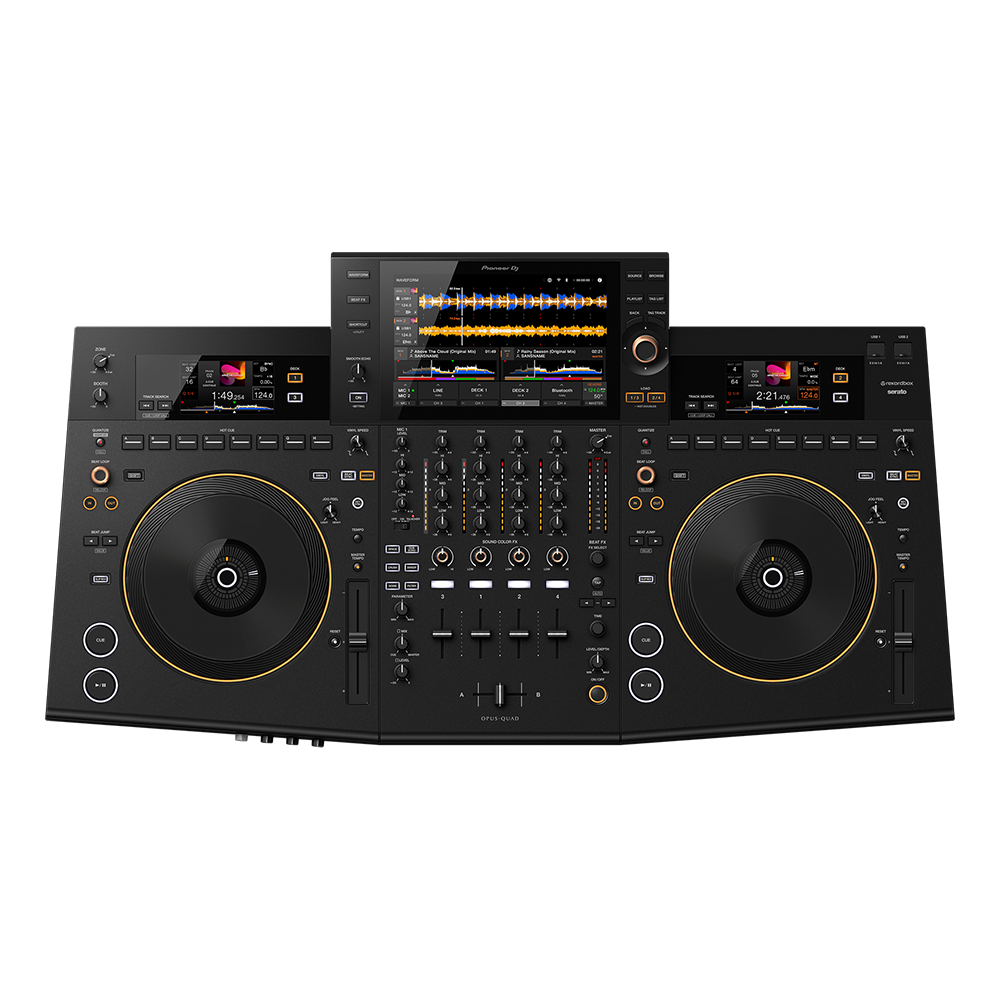
This thing's aimed squarely at pros who want club-grade performance without hauling separate CDJs and a mixer to every gig. But here's the kicker – it's also become the dream home setup for serious enthusiasts who don't want to compromise on quality.
Ready to experience pro-level performance? Check the Pioneer DJ Opus Quad availability with fast shipping across Sydney, Melbourne, Brisbane, and beyond.
What Makes the Opus Quad Different? (And Why It Matters)
First things first. This isn't a controller. It's a standalone system that operates without a laptop – though you can connect one if that's your workflow. Four channels. Dual screens. A mixer section that borrows DNA from the DJM-A9. Yeah, Pioneer went all-in on this one.
The layout feels immediately familiar if you've touched CDJ-3000s or the XDJ-XZ, but there's heaps more going on under the hood. You're getting:
- 10.1-inch touchscreens on each deck (proper HD displays, not those budget LCD jobs)
- Four-channel mixer with independent Sound Colour FX per channel
- Massive jog wheels with HD displays showing waveforms and track art
- Dual USB inputs for seamless DJ changeovers (absolute game-changer at gigs)
- rekordbox integration plus compatibility with other DJ software
- Pro-grade connectivity including XLR, RCA, booth outputs, and mic inputs
But specs only tell you so much, right? What's it actually like to play on?
Performance: Where the Opus Quad Actually Shines
Can't lie – the first time you fire this up, it's pretty bloody impressive. Those dual screens aren't just for show. They give you proper visual feedback that makes beat matching intuitive, especially in dimly lit booths where squinting at tiny displays gets old fast.
The jog wheel response is exceptional. Pioneer nailed the tension and latency here, so scratching and nudging feels natural. There's this tactile feedback that cheaper systems just can't replicate. If you've played on CDJ-3000s, you'll feel right at home. Actually, maybe even more comfortable – everything's closer together.
Sound Quality & FX Engine
Here's where things get interesting. The onboard sound processing is studio-grade clean. We're talking 32-bit audio processing with a signal-to-noise ratio that'll satisfy even the pickiest sound engineers. Your tracks come through crisp with excellent separation across frequencies.
And those Sound Colour FX? They're not just gimmicky filters. You've got proper creative tools here – Space, Dub Echo, Sweep, Noise, Crush. Each one sounds professional and can genuinely enhance your sets when used thoughtfully. Plus, with independent FX per channel, you can layer effects in ways that'd normally require external processors.
The beat FX section gives you classics like Echo, Reverb, and Delay, plus some newer additions. Everything's easily accessible without diving through menus. Because nobody wants to kill their flow hunting for a simple reverb, yeah?
Workflow & Usability
This is where the Opus Quad kind of leaves competitors behind. The dual-screen setup means you can browse tracks on one deck while the other's playing without any awkward deck-switching. Seems obvious, but you'd be surprised how many systems make this clunky.
Track browsing is fast. Like, genuinely fast. No lag, no stuttering when scrolling through massive libraries. The interface borrows heavily from rekordbox, so if you're already in that ecosystem, there's basically no learning curve.
Hot cues, loops, and beatjump controls are all exactly where your muscle memory expects them. And the performance pads? Responsive with just enough resistance. You can trigger samples and loops with confidence, even in the heat of a packed set.
Who's This Actually For? (Let's Be Real)
Okay, so here's the truth. The Opus Quad sits at a premium price point. It's not your first DJ setup. But if you're in any of these camps, it makes heaps of sense:
Mobile DJs who play proper venues: One unit replaces an entire CDJ + mixer rig. Easier transport, faster setup, fewer cables to worry about. The dual USB inputs mean client-provided music or guest DJs aren't an issue. Plus, you look pro as hell showing up with this.
Club residents wanting a home practice rig: You're used to playing on separated CDJs and mixers at the club. This gives you that exact same workflow at home without needing three separate units and a table the size of Queensland.
Producers who DJ and vice versa: The integration with production software and the ability to analyze tracks on the fly makes this brilliant for studio DJs who want their performance setup right next to their production desk.
On the flip side? If you're just starting out or mainly bedroom mix for fun, there are more budget-friendly options that'll serve you better. The Opus Quad is overkill unless you're genuinely pursuing professional gigs or have very specific workflow needs.
The Honest Pros and Cons
What Absolutely Works
- Build quality is exceptional – this feels like equipment that'll handle years of road work
- Sound reproduction is pristine – your mixes will sound exactly how you want them
- The screen real estate makes library navigation and visual mixing way easier
- Standalone operation means laptop crashes can't kill your set
- Industry-standard layout translates directly to club CDJ setups
- Future-proof with firmware updates and strong Pioneer support
Where It Falls Short
Honestly? Not much to complain about if you're in the target market. But let's nitpick:
- The price is steep – you're paying premium for premium features
- It's hefty – portable, yes, but you'll feel it after lugging it up stairs
- Requires USB drive prep for standalone mode (though most DJs already do this)
- The learning curve exists if you're coming from basic controllers
That said, these aren't really flaws. They're trade-offs that come with professional-grade equipment. You wouldn't expect a Ferrari to get Corolla fuel economy, yeah?
Convinced this is your next upgrade? Order your Pioneer DJ Opus Quad now with authorized dealer warranty and Aussie customer support. Limited stock – these move fast.
Buying the Opus Quad in Australia: What You Need to Know
So you're ready to pull the trigger. Here's the practical stuff:
Pricing and Availability
Expect to invest around the $4,500-$5,000 range through authorized Australian dealers. That's not pocket change, but compare it to buying separate CDJ-3000s (roughly $2,800 each) plus a DJM mixer ($2,000+), and suddenly it's looking pretty reasonable for what you're getting.
Where to buy: Stick with authorized Pioneer dealers. You want that proper Australian warranty and local support. Grey imports might save a few hundred bucks upfront, but you'll regret it if something goes wrong.
Warranty and Support
Authorized Australian units come with Pioneer's standard warranty. More importantly, you get access to local service centers if you need repairs or technical support. Given how much this unit costs and how crucial it might be for your gigs, that peace of mind is worth heaps.
Shipping and Setup
Most reputable dealers offer fast shipping across Australia. Expect 3-5 business days to major cities (Sydney, Melbourne, Brisbane, Perth). The unit arrives well-packaged – Pioneer knows these are headed to working DJs.
Setup is straightforward. Connect your speakers, plug in a USB drive with rekordbox-analyzed tracks, and you're basically ready. No driver installations or complicated configurations. Power on and play.
Frequently Asked Questions
Can the Opus Quad work without a laptop?
Absolutely. That's kind of the whole point. Load your rekordbox-analyzed tracks onto USB drives, and you're completely standalone. You can still connect a laptop if that's your preferred workflow, though.
How does it compare to the XDJ-XZ?
The Opus Quad is essentially the evolution. Better screens, improved sound processing, more professional mixer section. If you're choosing between them and budget allows, the Opus Quad is the better long-term investment.
Does it work with Serato or Traktor?
The Opus Quad is primarily designed for rekordbox in standalone mode. For controller mode with other software, you'll want to check Pioneer's compatibility updates – they do add support over time through firmware.
Is it worth it for mobile DJs?
If you're doing proper paid gigs regularly, yes. The convenience of one unit, faster setup times, and professional appearance will pay for itself. But if you're only DJing occasionally, it's probably overkill.
What's the learning curve like?
If you've used any Pioneer gear before, it's minimal. The layout follows their standard design language. Coming from basic controllers? Give yourself a few sessions to get comfortable with all the features, but the fundamentals are intuitive.
Final Verdict: Should You Buy the Pioneer DJ Opus Quad?
Look, here's the bottom line. The Pioneer DJ Opus Quad represents the current peak of all-in-one DJ systems. It delivers professional performance, exceptional build quality, and a workflow that genuinely makes you a better DJ by removing technical obstacles.
Is it expensive? Yeah, no getting around that. But it's not overpriced for what you're getting. You're paying for proven Pioneer reliability, industry-standard features, and equipment that won't need upgrading for years.
If you're a working DJ who values reliability and performance, or an enthusiast ready to invest in proper equipment, this is hands-down one of the best pieces of gear you can buy right now. The Opus Quad isn't just keeping up with where DJing is today – it's ready for where it's going.
Don't wait on this upgrade. Get your Pioneer DJ Opus Quad today from authorized Australian dealers. Fast dispatch, genuine warranty, and the pro sound you've been chasing. Your sets deserve this level of equipment.