
Pioneer CDJ-3000 Hire Australia: Single Unit Rental Guide 2026
Pioneer CDJ-3000 Single Unit Hire: The Complete Australian Rental Guide
If you're planning a gig, event, or production where you need professional-grade DJ equipment without the multi-thousand-dollar capital outlay, hiring a single Pioneer CDJ-3000 media player is one of the smartest moves you can make. The CDJ-3000 has become the industry standard at clubs, festivals and events worldwide since its 2020 launch, and for good reason — it represents Pioneer DJ's most significant generational leap in over a decade.
This guide is for anyone considering a single-unit CDJ-3000 hire in Australia. Whether you're a touring DJ needing a backup unit, an event producer assembling a custom rig, a venue trialling new equipment before purchase, or a hobbyist preparing for a one-off gig, we'll cover everything you need to make an informed rental decision.
Need a unit fast? Check availability for single CDJ-3000 hire with delivery options across Australia.
Why the CDJ-3000 Matters in 2026
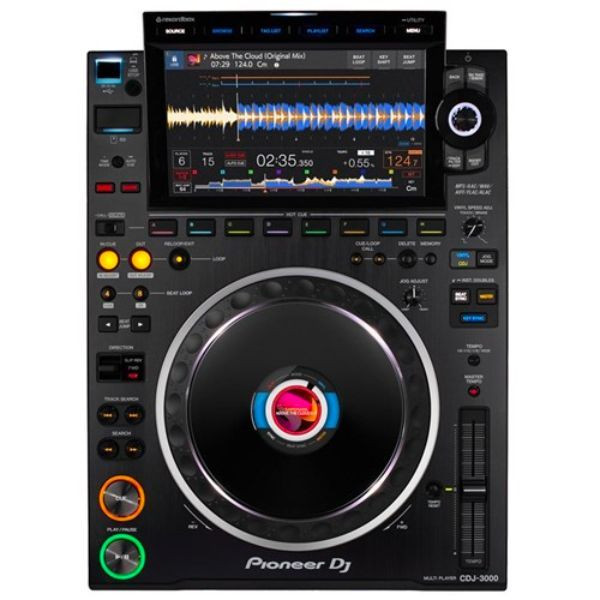
The CDJ-3000 isn't just another iteration of Pioneer's flagship media player — it's a fundamental redesign. The previous CDJ-2000NXS2 had a remarkable seven-year run as the club standard, but the 3000 brought genuinely new architecture: a brand-new MPU (Multi-Processing Unit), a 9-inch high-resolution touchscreen, eight performance pads, and the ability to read 24-bit/96kHz audio files natively. For Australian DJs and event producers, this means the gear behind the booth at major venues like Marquee, Chinese Laundry, Sub Club and most festival stages is the CDJ-3000.
When you hire a single CDJ-3000, you're getting access to what is genuinely the most capable standalone DJ media player ever produced. That matters whether you're preparing for a tour where every venue will have this exact unit, or whether you simply want the best possible playback engine for a one-night gig.
What You Actually Get with a Single Unit Hire
A common question we get is whether hiring just one CDJ-3000 makes sense. The honest answer: it depends entirely on your use case. Here's when a single unit hire is the right call:
- Pairing with existing equipment: You already own one CDJ but need a second matching unit for a specific gig
- Backup unit: Touring DJs needing a spare for redundancy at high-stakes shows
- Mixer-centric setups: Producers using the CDJ as a single deck alongside Ableton, Traktor or other software via Pro DJ Link
- Trial before purchase: Testing the workflow before committing to buying a unit (or a pair)
- Custom hybrid rigs: Live performers integrating one CDJ into a broader stage setup
- Replacement for venue's failed unit: Emergency hire when a club or event venue's existing CDJ goes down
- Practice and rehearsal: Preparing a set on the exact gear you'll be playing on
If you're a working DJ doing a standard two-deck set with no existing gear, you'll generally want to hire two CDJ-3000s plus a DJM mixer. But for the scenarios above, a single-unit hire is genuinely the smart and economical choice.
Headline Features of the Pioneer CDJ-3000
9-Inch High-Resolution Touchscreen
The screen alone is a massive upgrade over previous CDJ models. The 9-inch touchscreen displays multiple types of useful information simultaneously — waveforms, beat grids, key information, hot cue locations, track lists, and your current performance pad assignments. It's responsive enough to feel like a proper smartphone-grade interface, which is critical when you're navigating tracks under low-light club conditions with limited time between mixes.
Native High-Resolution Audio Support
The CDJ-3000 plays 24-bit/96kHz FLAC and WAV files natively. For most club playback this is genuinely overkill (most venue sound systems can't differentiate beyond CD-quality), but for higher-end audiophile-focused events, festival stages with proper line-array systems, or studio-quality sessions, it makes a perceptible difference. The improved DAC (digital-to-analogue converter) also benefits standard 16-bit/44.1kHz files, giving everything you play a slightly cleaner output.
Eight Performance Pads
One of the most welcome additions in the CDJ-3000 is the row of eight RGB-illuminated performance pads beneath the screen. These give you immediate access to Hot Cues, Beat Jump, Beat Loop, and Sampler functions without needing to dive into menus. For DJs coming from the DDJ controller world or from software like Rekordbox and Serato, this brings a familiar workflow to the standalone player environment.
Track Filter and Improved Browsing
The new MPU enables genuinely useful track filtering — search by BPM range, key (Camelot or musical notation), rating, and other metadata in real time. For DJs with libraries containing tens of thousands of tracks, this is a workflow transformation. You can find a key-compatible track at the right tempo in seconds.
Pro DJ Link and Connectivity
The CDJ-3000 supports Pro DJ Link for syncing multiple units (and Rekordbox software) via standard ethernet. The unit also supports Pro DJ Link Bridge for connecting compatible software, USB drives, SD cards (yes — the SD slot is still here, despite rumours otherwise), and Rekordbox via USB MIDI.
Magnetised Tactile Jog Wheel
The jog wheel has been redesigned with magnetised tension adjustment. You can dial in exactly how much resistance you want for scratching, scrubbing or fine cueing. For purists who've always preferred the feel of vinyl decks, this is the closest a CDJ has ever come to that tactile experience.
Technical Specifications
| Specification | Detail |
|---|---|
| Display | 9-inch high-resolution touchscreen |
| Supported Audio Formats | MP3, AAC, WAV, AIFF, FLAC, Apple Lossless |
| Maximum Audio Quality | 24-bit / 96kHz |
| Storage Media | USB drives, SD cards, Pro DJ Link, Rekordbox |
| Performance Pads | 8 RGB-illuminated pads |
| Audio Output | Digital (S/PDIF), Analogue RCA |
| Connectivity | Ethernet (Pro DJ Link), USB-B, USB-A x2, SD card |
| Dimensions (W x H x D) | 329 x 118 x 453 mm |
| Weight | Approximately 6 kg |
| Power | AC 100-240V, 50/60 Hz |
Real-World Use Cases for Single CDJ-3000 Hire
The Touring DJ Backup Scenario
Imagine you're booked for a high-profile gig at a Sydney venue, but you know from experience that the venue's house gear has been unreliable lately. Hiring a single CDJ-3000 as a backup gives you peace of mind. If the venue's setup fails mid-set, you swap your unit in. For professional DJs whose reputation depends on flawless performance, this is cheap insurance.
The Festival Production Add-On
Festival stages often run three or four CDJs in series across multiple decks. If your production company owns two units but needs a third or fourth for a specific stage configuration, a single-unit hire fills the gap without forcing you to buy additional inventory you won't use year-round.
The Hybrid Performance Rig
Live electronic performers increasingly use a single CDJ alongside Ableton Live, hardware synthesisers and drum machines. The CDJ becomes the playback engine for prepared tracks, stems, or loops, while the rest of the rig handles live elements. A single unit hire suits this exact scenario perfectly.
The Wedding and Corporate Event
Mobile DJs working weddings, corporate functions, or private events often run laptop-based setups but want the prestige and reliability of a flagship CDJ visible in the booth. A single hire unit adds professional presentation without doubling the equipment footprint or transport cost.
Planning ahead? Book your Pioneer CDJ-3000 hire with full technical support and delivery across Australia.
What to Consider Before You Hire
Preparing Your Music Library
The CDJ-3000 reads music from USB drives, SD cards, and via Pro DJ Link from Rekordbox-prepared laptops. Before your hire date, you'll want to prepare your library in Rekordbox software (free from Pioneer's website) and export to a quality USB-C or USB-A drive. We strongly recommend SanDisk Extreme or Samsung BAR Plus drives — cheap USB sticks are a common cause of mid-set failures.
For best results, pre-analyse all tracks in Rekordbox before exporting. This gives you accurate beat grids, key detection, hot cues, and waveforms — all of which display on the CDJ-3000's screen.
Connecting to Your Mixer
The CDJ-3000 outputs both analogue (RCA) and digital (S/PDIF coaxial) audio. If your mixer supports digital input — most modern DJM units do — use the digital connection for the cleanest possible signal path. For older mixers, the RCA outputs deliver pristine analogue audio.
Power and Cable Requirements
The CDJ-3000 runs on standard Australian mains power (240V) via a kettle-style IEC cable. Your hire unit will come with a power cable, but verify you have a spare for safety. If you're integrating with other CDJs via Pro DJ Link, you'll need ethernet cables and a network switch (any unmanaged gigabit switch will do).
Transport and Handling
At around 6kg with a glass touchscreen, the CDJ-3000 needs careful handling. If you're transporting the unit yourself rather than having it delivered to the venue, use a proper flight case or padded bag. Drops onto hard surfaces will damage the touchscreen and potentially the jog wheel mechanism.
Honest Pros and Cons
What the CDJ-3000 Does Brilliantly
- Industry-standard layout means anyone who DJs professionally already knows the workflow
- Touchscreen genuinely improves browsing and track preparation
- Build quality is exceptional — these units survive years of heavy club use
- Pro DJ Link integration is rock-solid for multi-deck setups
- Audio quality is genuinely improved over previous CDJ generations
- Performance pads bring controller-style workflow to standalone playback
- Track filtering by key, BPM and rating saves time mid-set
Honest Limitations to Consider
- The unit is large — at 329mm wide, a pair takes considerable booth space
- Touchscreen requires clean fingers; greasy hands reduce responsiveness
- Some workflows still require menu diving despite the larger screen
- For pure scratch DJs, the jog wheel still doesn't replace a turntable
- If your music library isn't well-tagged in Rekordbox, you won't get the most from the filtering features
- Overkill for basic playback scenarios where a cheaper controller would suffice
Single Unit Hire vs Buying: The Economics
A new Pioneer CDJ-3000 retails for around $3,500-$4,000 AUD in Australia. If you're using the gear regularly — say, weekly residencies or frequent gigs — buying makes long-term sense. But for occasional use, single events, or testing the platform before investing, hiring is dramatically more economical.
Consider the maths: a single weekend hire typically costs a small fraction of purchase price, with zero ongoing costs for maintenance, firmware updates, transport between gigs, or eventual replacement. For event producers running gear that's used only occasionally, hire is almost always the financially sound choice.
Australian Hire Considerations
When hiring DJ equipment in Australia, there are a few specifics worth understanding:
- Insurance: Most reputable hire providers require some form of damage waiver or insurance. Check what's covered before signing
- Delivery vs collection: Major capitals (Sydney, Melbourne, Brisbane, Perth, Adelaide) often have delivery options. Regional areas may require courier shipping
- Hire duration: Standard hires are typically weekend, weekly, or longer periods. Multi-day weekend hire often offers the best value for events
- Bonds and deposits: Expect to provide a security bond, particularly for first-time hirers
- Technical support: Quality hire providers offer phone or email support throughout your hire period
- Damage policies: Understand exactly what's considered fair wear versus chargeable damage before pickup
Frequently Asked Questions
Can I use the CDJ-3000 with my laptop?
Yes — the CDJ-3000 connects to Rekordbox software via USB, allowing it to function as a controller for software-based mixing. It also supports Pro DJ Link Bridge for connecting compatible software.
Do I need a Pioneer mixer to use the CDJ-3000?
Not at all. The CDJ-3000 outputs standard analogue (RCA) and digital (S/PDIF) audio that connects to any mixer with line-level inputs. While DJM mixers integrate beautifully via Pro DJ Link, any quality mixer works fine.
What USB drives work best with the CDJ-3000?
Reliable, brand-name USB 3.0 or 3.1 drives. SanDisk Extreme, Samsung BAR Plus, and Kingston DataTraveler series are commonly recommended. Avoid generic, ultra-cheap drives — they're the leading cause of mid-set hardware issues across the industry.
Can I prepare my tracks on a Mac?
Absolutely. Rekordbox software is available for both Mac and Windows. Prepare your library, analyse tracks, set hot cues, and export to USB or SD — everything transfers to the CDJ-3000 perfectly.
What's included with a single unit hire?
Typically the CDJ-3000 unit, power cable, and basic documentation. Always confirm what's included with your specific hire provider — some include RCA cables and USB drives, others don't.
Is the CDJ-3000 compatible with older CDJ-2000NXS2 units?
Yes, via Pro DJ Link they integrate seamlessly. This makes hiring a single CDJ-3000 to pair with existing 2000NXS2 units a common and well-supported scenario.
Who Should Hire the CDJ-3000?
The single-unit hire suits a specific set of users best:
- Professional and semi-professional DJs needing a unit for specific gigs
- Event producers building custom audio rigs
- Venues testing new gear before committing to purchase
- Touring artists requiring backup or supplementary equipment
- Production companies servicing one-off events
- Hybrid live performers integrating CDJ with broader rigs
If you're a beginner just learning to mix, you'd likely be better served by an all-in-one controller like a DDJ-FLX4 or DDJ-1000. The CDJ-3000 is a professional tool that assumes you already understand DJ fundamentals.
Final Verdict: Is Single CDJ-3000 Hire Worth It?
For the right scenarios — professional gigs, event production, custom rigs, backup units, hybrid performance setups — hiring a single Pioneer CDJ-3000 is genuinely one of the best decisions you can make. You're getting access to the industry-standard professional media player without capital outlay, ongoing maintenance, or storage requirements.
The CDJ-3000 itself is a remarkable piece of equipment — a genuine generational leap from previous CDJs, with workflow improvements that make professional DJing easier, faster, and more creative. When you need this exact unit for a specific purpose, hiring beats every alternative.
Just make sure the single-unit scenario actually fits your use case. If you're a working DJ without any existing CDJ inventory needing to do a standard two-deck set, you'll want two units plus a mixer. But for everyone in the scenarios we've covered, the single-unit hire is the smart, economical, professional choice.
Reserve your single Pioneer CDJ-3000 hire today — authorised hire provider with delivery across Australia, technical support, and genuine Pioneer equipment.