
Mantis Leaf Retro Blinder: Infinite Rotation LED Effect Light 2026
Mantis Leaf Retro Light Effect Blinder with Infinite Rotation: Full Technical Breakdown for Australian Lighting Designers
Retro-style blinder effects have surged back into stage and event lighting design, and for good reason. There's something undeniably captivating about warm tungsten-toned washes combined with modern LED technology. The Mantis Leaf Retro Light Effect Blinder with Infinite Rotation from Music On Stage sits right at this intersection — delivering vintage aesthetics with thoroughly modern capabilities, including continuous 360-degree rotation that opens up creative possibilities older fixtures simply couldn't achieve.
But does it actually deliver the goods for Australian stages, venues, and production companies? Let's pull this fixture apart technically and work out exactly where it fits in your lighting rig.
Understanding the Retro Blinder Effect Category
Before diving into the specifics of this fixture, it's worth understanding what makes retro-style blinder effects so popular right now. Traditional blinders — think the classic 2-lite or 4-lite PAR fixtures — were workhorses for decades. They threw massive amounts of warm light directly into audiences, creating that iconic concert atmosphere. The problem was always heat output, power consumption, and limited creative versatility.
Modern retro LED effects like the Mantis Leaf take that warm, punchy aesthetic and wrap it in a package that's cooler-running, more energy-efficient, and vastly more versatile. The addition of features like infinite rotation transforms what was traditionally a static fixture into a genuine effect light capable of dynamic, eye-catching movement patterns.
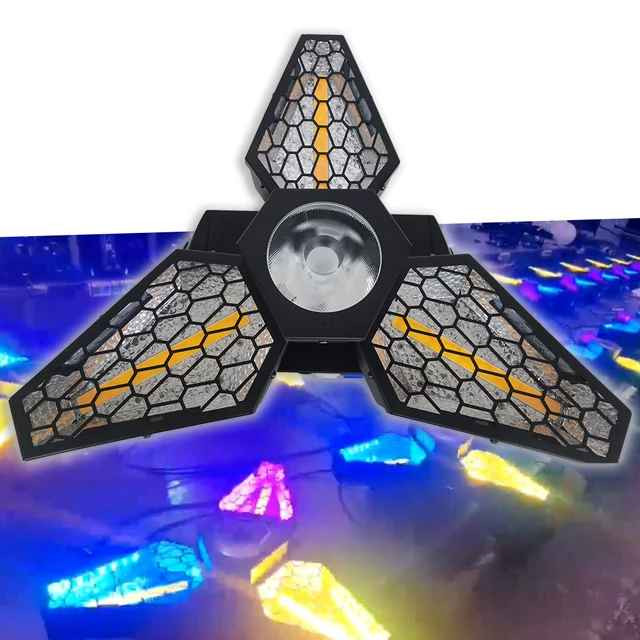
The "leaf" design element is key here — rather than presenting as a simple flat-faced blinder panel, the Mantis Leaf uses a multi-segment configuration where individual LED cells are arranged in a leaf or petal pattern. This creates visual depth and allows for more complex chase patterns and pixel-mapping effects compared to a standard linear blinder.
Key Technical Features Explained
Infinite Rotation Mechanism
The headline feature of this fixture is its infinite (continuous) rotation capability. Unlike fixtures limited to a set pan/tilt range (typically 540° pan and 270° tilt on most moving heads), infinite rotation means the fixture's effect head can spin continuously in either direction without needing to reverse.
This is achieved through a slip-ring or similar continuous electrical connection that allows data and power to pass through the rotating joint without cable wrap limitations. From a practical standpoint, this means you can programme smooth, uninterrupted spinning effects that create mesmerising retro-modern visual patterns — particularly effective when combined with the warm-toned LED array.
For lighting designers, infinite rotation opens up a range of creative possibilities:
- Continuous spin effects for high-energy musical moments
- Slow rotation washes that sweep warm light across stages and audiences
- Variable speed dynamics synchronised to music via DMX or sound-active modes
- Asymmetric rotation patterns when combining multiple fixtures at different speeds
Retro LED Technology
The term "retro" in LED lighting specifically refers to warm-white LEDs engineered to replicate the colour temperature and visual character of traditional tungsten or halogen lamps — typically sitting in the 2200K-2700K range. This is fundamentally different from standard warm-white LEDs (around 3000K-3200K) or the cooler whites common in wash fixtures.
What makes retro-style LEDs particularly appealing for stage use is their colour rendering behaviour. They produce that rich, amber-heavy warmth that audiences instinctively associate with live music atmosphere. When dimmed, quality retro LEDs should shift even warmer (mimicking the "dim-to-warm" behaviour of incandescent sources), maintaining that organic, filament-like character that cool LEDs simply cannot replicate.
The Mantis Leaf uses high-output LED cells arranged in its distinctive leaf pattern, providing both blinder-intensity output and effect-light versatility. Each cell functions as an individually addressable pixel, enabling complex chase patterns, dimmer effects, and pixel-mapped content across the fixture face.
Blinder Functionality
At its core, this fixture needs to work as a proper blinder — that means raw optical power directed at the audience or stage area to create dramatic lighting moments. Key blinder performance factors include:
- Output intensity — sufficient lux at typical throw distances (3-8 metres for audience blinding, further for stage wash)
- Beam spread — wide enough for effective coverage without requiring excessive fixture counts
- Instant strobe response — fast switching for strobe effects without visible fade lag
- Smooth dimming curve — clean fade-to-black without visible stepping at the bottom end
The Mantis Leaf is designed to handle all of these roles while adding the creative dimension of rotation and multi-cell pixel effects that standard blinder panels lack.
Performance Analysis: Where This Fixture Excels
Live Music and Concert Production
This is the natural habitat for retro blinder effects. The Mantis Leaf's combination of warm output and infinite rotation makes it particularly suited to:
- Rock, indie, and alternative acts where vintage-inspired lighting aesthetics complement the musical style
- Festival stages where fixtures need to create impact from distance and work effectively in both daylight fade and full darkness
- Club installations where continuous movement effects enhance the energy of DJ sets
- Corporate events seeking sophisticated warm-toned lighting with dynamic movement capability
In a typical live music context, you'd deploy these fixtures either in a rear-stage array (behind the performers for silhouette and backlight effects) or in audience-facing positions for classic blinder moments. The infinite rotation adds a dimension that makes even a small fixture count visually engaging — four of these spinning at offset speeds creates significantly more visual complexity than four static blinder panels.
Integration with Existing Lighting Rigs
From a practical integration standpoint, a fixture like the Mantis Leaf needs to play nicely with the rest of your rig. DMX control is standard, and depending on the channel mode configuration, you'll typically get control over:
- Master dimmer
- Individual cell/pixel dimming
- Rotation speed and direction
- Strobe speed and effects
- Built-in macros and chase patterns
- Sound-active sensitivity
For Australian hire companies and venue installations, the fixture's power requirements and rigging compatibility are crucial considerations. LED retro effects typically draw significantly less current than their halogen predecessors — where a traditional 4-lite blinder might pull 2400W (4x 650W DWE lamps), a comparable LED retro effect typically sits under 300W while delivering visually comparable impact at typical audience distances.
Technical Comparison: Retro Blinder Market Position
The retro LED blinder category has expanded significantly over the past two years. Understanding where the Mantis Leaf sits helps inform purchasing decisions.
| Feature | Mantis Leaf | Standard Retro Panel | Premium Moving Retro |
|---|---|---|---|
| Infinite Rotation | Yes | No | Yes |
| Pixel Control | Individual cells | Zone-based | Individual cells |
| Blinder Capability | Full intensity | Full intensity | Full intensity |
| Movement Effects | Rotation + chases | Chase patterns only | Full pan/tilt + rotation |
| Price Position | Mid-range | Entry-level | Premium |
| Versatility | High | Moderate | Very High |
The Mantis Leaf occupies an interesting middle ground. It's significantly more versatile than static retro panels thanks to its infinite rotation, but it doesn't carry the complexity or cost of full moving-head retro fixtures. For many Australian production companies — particularly those servicing mid-scale events, regional touring, and venue installations — this sweet spot makes it a compelling option.
Practical Deployment Considerations for Australian Users
Power and Electrical Planning
Australian venues and outdoor events run on 240V/50Hz mains power, and LED fixtures like the Mantis Leaf are generally designed with universal power supplies accepting 100-240V input. This means no voltage compatibility concerns, but you'll still want to confirm the fixture's actual power draw when planning your distribution.
With LED retro effects drawing substantially less than their halogen equivalents, you can typically run more fixtures per circuit. A rack of eight LED retro blinders might draw what two traditional halogen blinders used to consume — that's a meaningful practical advantage when you're loading into venues with limited power infrastructure, which describes a good chunk of Australia's regional touring circuit.
Rigging and Weight
LED retro effects are considerably lighter than traditional blinder units with their heavy transformers and lamp assemblies. However, fixtures with rotation mechanisms do tend to be heavier than static LED panels due to the motor assembly and slip-ring components. Factor this into your truss loading calculations.
The rotation mechanism also means you need to consider the fixture's operational clearance — ensure nothing in the immediate vicinity will interfere with the rotation path when the fixture is spinning at full speed. Standard clamp mounting should work, but always verify the fixture's mounting requirements and recommended orientation.
Heat Management in Australian Conditions
This is where Australian users need to pay particular attention. While LEDs run dramatically cooler than tungsten sources, Australian outdoor events regularly see ambient temperatures above 35°C, and enclosed festival tents or small venues can push operational temperatures higher still.
LED output and lifespan are directly affected by thermal management. Look for fixtures with effective heat-sink designs and, ideally, fan-assisted cooling (noting the potential noise implications for quieter events). In high-temperature environments, ensure adequate airflow around your fixtures and avoid packing them too tightly in truss configurations where heat can accumulate.
DMX Programming Tips
Getting the most out of a fixture like the Mantis Leaf requires thoughtful programming. Here are some approaches that work particularly well with rotation-capable retro effects:
- Layer your rotation speeds: If running multiple fixtures, programme different rotation speeds (e.g., two slow, two medium) to create organic, non-repetitive visual patterns
- Use dimmer chases with rotation: Combine pixel-level dimmer chases with slow rotation for a complex, hypnotic effect that looks far more sophisticated than either effect alone
- Programme rotation speed bumps: Tie rotation acceleration to musical accents via MIDI or timecode for dynamic, music-responsive looks
- Contrast with static moments: The rotation is most impactful when you also use the fixture statically — programme moments where all rotation stops and you hit a full-intensity blinder look, then transition back to movement
- Sound-active mode for smaller gigs: For events without dedicated lighting operators, sound-active mode with rotation creates an engaging, dynamic show without manual intervention
Who Should Buy This Fixture?
Ideal For:
- Mobile DJs and entertainers wanting versatile, eye-catching effects without investing in full moving heads
- Small-to-medium hire companies building inventory that serves multiple event types
- Bands and touring acts carrying their own lighting packages who need compact, multi-purpose fixtures
- Venue installations where warm-toned dynamic lighting enhances the permanent atmosphere
- Production companies seeking cost-effective alternatives to premium retro moving heads
Consider Alternatives If:
- You need precise beam control and tight spot capability (look at retro moving heads instead)
- Your primary need is pure audience blinding without movement effects (static retro panels are more cost-effective)
- You require full RGBW colour mixing (retro fixtures are warm-white focused by design)
- Silent operation is essential (rotation mechanisms introduce some mechanical noise)
Maintenance and Longevity Considerations
Rotation mechanisms introduce moving parts that static fixtures don't have, which means maintenance becomes a consideration. The slip-ring or rotating electrical connection is typically the component that requires attention over time. Quality fixtures use precision-engineered slip-rings rated for millions of rotations, but dust and debris can affect performance — particularly relevant in Australia's often dusty outdoor event environments.
Regular maintenance should include:
- Cleaning the fixture exterior and any ventilation openings after outdoor events
- Checking rotation smoothness periodically — any grinding or inconsistency suggests bearing or slip-ring wear
- Inspecting DMX connections, as rotation can stress cabling over time
- Verifying all mounting hardware remains tight, as vibration from rotation can loosen fasteners gradually
LED source life should comfortably exceed 30,000 hours in most quality fixtures of this type, meaning the mechanical components will typically need attention well before the LEDs require replacement.
Final Technical Verdict
The Mantis Leaf Retro Light Effect Blinder with Infinite Rotation represents a genuinely useful category of fixture — one that bridges the gap between simple retro blinder panels and complex (and expensive) retro moving heads. The infinite rotation capability transforms what could be a one-trick blinder into a versatile effect light that earns its place in a wide range of production scenarios.
For Australian lighting professionals and serious enthusiasts, it addresses a real gap in many inventories. The warm retro aesthetic continues to be enormously popular across live music, corporate events, and venue design, and having a fixture that delivers that look with genuine movement capability is valuable.
The key technical advantages — individual pixel control, continuous rotation, and LED efficiency — combine to create a fixture that's significantly more capable than the sum of its specifications might suggest. When multiple units are deployed together and programmed thoughtfully, the visual results can genuinely rival fixtures costing substantially more.
Ready to add dynamic retro warmth to your lighting rig? Check the Mantis Leaf Retro Light Effect Blinder at Music On Stage for current Australian pricing and availability.
Frequently Asked Technical Questions
What does "infinite rotation" actually mean in practical terms?
Infinite (or continuous) rotation means the fixture's effect head can spin 360 degrees continuously in either direction without stopping to reverse. This is achieved through a slip-ring electrical connection that allows power and data to pass through the rotating joint. In practice, it means you can programme smooth, uninterrupted spinning effects at any speed — from barely perceptible slow rotation to full-speed spinning.
Can I use this fixture purely as a static blinder?
Absolutely. The rotation is a programmable feature, not a permanent state. You can run the Mantis Leaf as a conventional static blinder panel with pixel-level dimmer control, only bringing in rotation when your design calls for it. This dual-purpose capability is one of the fixture's strongest selling points.
How many DMX channels does a fixture like this typically use?
Retro rotation fixtures generally offer multiple DMX channel modes. A basic mode might use 4-8 channels (master dimmer, strobe, rotation speed/direction, and a few macro channels), while an extended pixel-control mode could use 15-30+ channels depending on the number of individually addressable LED cells. Check the fixture's specific DMX chart for exact channel counts.
Is the rotation mechanism noisy?
Modern rotation mechanisms using quality bearings and motors are generally quiet enough for most live production environments. However, they're not silent — in recording studio or theatre applications where near-silent operation is critical, you may notice some mechanical noise. For live music, DJ events, and corporate presentations with music, the noise is typically well below ambient levels and not a practical concern.
How does this compare to using a moving head with a retro wash?
A dedicated retro blinder effect like the Mantis Leaf is purpose-built for the wide, warm wash and blinder role. Moving heads with retro-style output exist, but they're typically more expensive, more complex to programme, and the beam characteristics are different (narrower, more focused). The Mantis Leaf's wide output pattern and leaf-shaped pixel configuration create a visual effect that's distinct from what a moving head produces. Think of them as complementary rather than competing fixture types.
View the Mantis Leaf Retro Blinder at Music On Stage — your Australian source for professional lighting solutions.