
Mackie ProFX12v3 vs Top 12-Channel Mixers: Aussie Buyer's Guide 2026
Mackie ProFX12v3 vs Top 12-Channel Mixers: The Complete Australian Buyer's Guide 2026
Choosing a 12-channel mixer in 2026 is genuinely harder than it used to be. The market is packed with capable units from Mackie, Allen & Heath, Yamaha, Soundcraft and Behringer, and on paper, many of them look remarkably similar. Twelve channels, USB recording, onboard effects, decent preamps — tick, tick, tick. But once you actually plug them in at a pub gig in Brisbane, a church in Adelaide, or a small home studio in Melbourne, the differences become very real, very quickly.
This buyer's guide takes an honest look at the Mackie ProFX12v3 and stacks it fairly against the alternatives Australian buyers are most likely to consider. Whether you're a gigging musician, a small venue operator, a podcaster, or a worship tech volunteer, the goal here is simple: help you understand which 12-channel mixer genuinely suits your needs — and why.
The 12-Channel Mixer Market in 2026: Where the ProFX12v3 Sits
Twelve-channel analogue mixers occupy a sweet spot in the market. They're large enough to handle a full band (drums, bass, guitars, keys, and a few vocals) yet compact enough to fit in the back of a hatchback. In Australia, the typical price range for a quality 12-channel USB mixer in 2026 sits between roughly AU$549 and AU$1,499, depending on brand, build, and feature depth.
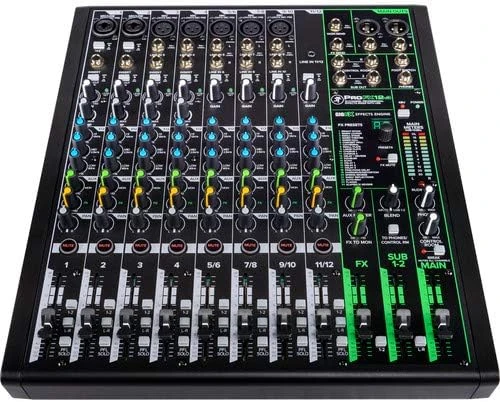
The Mackie ProFX12v3 is positioned squarely in the upper-mid tier of this category — not the cheapest, not the most expensive, but built to deliver pro-grade sound at a price working musicians can actually justify. It targets users who want premium Onyx mic preamps, GigFX effects, and a multi-track USB interface without stepping up to a digital console.
Who This Comparison Is For
- Gigging bands needing reliable live front-of-house mixing
- Small venues, cafes, function rooms, and rehearsal studios
- Worship and community groups upgrading from entry-level mixers
- Home recording musicians who want live mixing plus multi-track capture
- Podcasters and content creators producing professional audio
Quick Comparison Table: Mackie ProFX12v3 vs The Main Contenders
| Feature | Mackie ProFX12v3 | Allen & Heath ZED-12FX | Yamaha MG12XU | Soundcraft Signature 12 MTK | Behringer Xenyx QX1222USB |
|---|---|---|---|---|---|
| Mic Preamps | 6x Onyx | 6x GSPre | 6x D-PRE | 4x Ghost | 4x Xenyx |
| Onboard Effects | 24x GigFX | 16x SX | 24x SPX | Lexicon | Klark Teknik FX |
| USB Recording | 2x4 / 24-bit | 2x2 / 16-bit | 2x2 / 24-bit | 14x12 multi-track | 2x2 / 16-bit |
| Aux Sends | 2 (1 pre/post) | 3 | 2 | 4 | 2 |
| Bluetooth | No | No | No | No | Yes |
| Build Quality | Steel chassis | Steel chassis | Metal chassis | Steel chassis | Plastic-heavy |
| Approx AU$ Price | $899–$999 | $1,099–$1,199 | $849–$949 | $1,299–$1,499 | $549–$649 |
Prices are indicative only and vary by retailer and bundle. Always confirm current Australian RRP before purchase.
The Mackie ProFX12v3 in Detail
Before we compare, let's be clear about what the ProFX12v3 actually offers. Mackie redesigned the ProFX line for the v3 generation, and the upgrades are meaningful.
Key Specifications
- 12 channels with 6 Onyx mic preamps featuring +60dB of clean gain
- 3-band EQ with sweepable mids on mono channels
- 24 GigFX effects including reverbs, delays, choruses and modulation
- 2x4 USB recording interface at 24-bit/192kHz with separate Main and FX bus capture
- 60mm faders with smooth resistance for accurate mixing
- Built-in 100W amplifier-grade power supply for reliable performance
- Headphone output, control room outs, and dedicated FX-to-monitor send
Strengths
- Onyx preamps are arguably the best in this price tier — clean, transparent, and quiet
- The 2x4 USB interface lets you capture the FX bus separately, ideal for podcasting and post-production
- GigFX effects sound musical and usable, not gimmicky
- Solid steel chassis built for life on the road
Limitations
- Only 2 aux sends — limiting for complex monitor setups
- No Bluetooth input (unlike some Behringer models)
- Not multi-track USB — you can't capture every channel individually
Detailed Comparative Analysis
1. Mackie ProFX12v3 vs Allen & Heath ZED-12FX
This is the most common cross-shop in Australia. The Allen & Heath ZED-12FX has a loyal following thanks to its musical EQ and three aux sends, which makes it more flexible for live monitor mixing. Its GSPre preamps are clean and warm, but they don't quite match the Onyx preamps for headroom and transparency.
The ProFX12v3 wins on USB capability (2x4 vs 2x2) and effects depth (24 vs 16). The ZED-12FX wins on aux flexibility and arguably edges out for purely analogue mixing tasks.
Choose the ProFX12v3 if: you want better recording, more effects, and slightly cleaner preamps.
Choose the ZED-12FX if: you need the third aux for monitors and prioritise analogue-first workflows.
2. Mackie ProFX12v3 vs Yamaha MG12XU
Yamaha's MG12XU is the steady, reliable workhorse choice. The D-PRE preamps are studio-quality and the SPX effects engine is a known quantity in the industry. Build quality is excellent.
However, the MG12XU's USB is only 2x2, and it lacks the FX-bus separate recording feature of the ProFX12v3. The Mackie is also slightly more modern in feel and offers better value if recording matters to you.
Choose the ProFX12v3 if: you record regularly or want richer onboard effects.
Choose the MG12XU if: you primarily mix live and value Yamaha's bulletproof reputation.
3. Mackie ProFX12v3 vs Soundcraft Signature 12 MTK
The Signature 12 MTK is the heavyweight here, offering true multi-track USB recording (14x12) and Lexicon effects. It's a fantastic option for bands that want to capture full live performances for later mixing.
But it's also $300–$500 more expensive in Australia, lacks Mackie's intuitive layout, and is overkill if you don't need every channel recorded individually.
Choose the ProFX12v3 if: stereo USB recording and live mixing are your priorities.
Choose the Signature 12 MTK if: you specifically need multi-track recording for studio-grade live capture.
4. Mackie ProFX12v3 vs Behringer Xenyx QX1222USB
The Behringer is the budget option, and credit where it's due — it's remarkable value at well under $700 in Australia. It includes Bluetooth input, decent Klark Teknik effects, and basic USB recording.
However, the build quality, preamp headroom, and overall sonic clarity simply don't match the ProFX12v3. For occasional weekend use it's fine; for regular professional gigging, you'll feel the difference quickly.
Choose the ProFX12v3 if: you're a working musician or run frequent events.
Choose the Behringer if: you're on a tight budget or need Bluetooth playback for background music.
Ready to see the Mackie option in detail? View the Mackie ProFX12v3 at MusiconStage.
Situation-Specific Recommendations
Best for Gigging Bands
Winner: Mackie ProFX12v3. The combination of Onyx preamps, 24 GigFX effects, and rugged build makes it ideal for pubs, clubs, and small festivals. The 2x4 USB also means you can record your own gigs for review or release.
Best for Worship and Community Venues
Winner: Allen & Heath ZED-12FX. The third aux send is invaluable for in-ear monitor feeds and a separate confidence monitor. However, the ProFX12v3 is a strong second choice if budget is tight.
Best for Home Studio & Podcast Hybrid Use
Winner: Mackie ProFX12v3. The ability to record the main mix and FX bus separately via USB is unique in this tier and incredibly useful for podcasters who want isolated effects-free vocal tracks.
Best for Pure Live Sound Without Recording
Winner: Yamaha MG12XU. If you'll never use the USB and just want bulletproof live performance, Yamaha's heritage is hard to beat. Just know you're paying for that reliability premium.
Best Premium Investment
Winner: Soundcraft Signature 12 MTK. If you have the budget and need true multi-track recording, this is the most capable option of the group.
Best Budget Option
Winner: Behringer Xenyx QX1222USB. Genuinely good value for hobbyists, weekend warriors, and tight-budget setups — just understand the trade-offs in build and preamp quality.
Value Analysis: What Are You Really Paying For?
The price difference between the cheapest and most expensive mixer in this comparison is roughly AU$900. That's a meaningful gap, so let's break down where that money actually goes.
- Preamp quality (~$150–$250 of the price gap): Onyx, D-PRE, GSPre, and Ghost preamps all deliver more headroom and clarity than entry-level designs.
- Build durability (~$100–$200): Steel chassis vs plastic-heavy budget builds. This shows up after 12 months of gigging.
- USB capability (~$100–$300): Going from 2x2 to 2x4 to 14x12 multi-track is a significant jump in recording flexibility.
- Effects engine (~$50–$150): GigFX, Lexicon, SPX, and SX effects vary widely in musical usefulness.
- Brand reliability and warranty support (~$50–$100): Australian distribution networks and after-sales service have real value.
The ProFX12v3 sits in the middle of this value curve and delivers strong performance across every category — it's not the absolute best at any single thing, but it's the most balanced overall package for working musicians.
Decision-Making Framework: How to Choose Confidently
Step 1: Define Your Primary Use Case
Are you mainly mixing live? Recording? Both? The honest answer dramatically narrows your shortlist. The ProFX12v3 is one of the few options genuinely strong at both.
Step 2: Count Your Real Channel Needs
Don't overspecify. If you only use 8 channels at most gigs, a 12-channel mixer with 6 mic inputs is plenty. If you regularly run 8+ mics, look at 16-channel options instead.
Step 3: Decide on Aux Send Requirements
Two auxes are fine for one monitor mix and one effect send. Three or more auxes matter when you have multiple performers each wanting their own monitor mix.
Step 4: Evaluate Recording Needs Honestly
Stereo USB (2x2) is fine for capturing the main mix. The ProFX12v3's 2x4 adds isolated FX recording. Multi-track (14x12 on Soundcraft) is for serious post-production work.
Step 5: Test Build and Layout if Possible
Visit a store and put your hands on the units. Knob feel, fader smoothness, and panel layout matter more than spec sheets suggest, especially during fast-paced live gigs.
Common Decision Mistakes to Avoid
- Buying purely on price: The cheapest mixer often costs more long-term in repairs and replacements.
- Overbuying channels you'll never use: A clean, well-utilised 12-channel beats a cluttered 16-channel for most users.
- Ignoring USB specs: 2x2 vs 2x4 vs multi-track is a huge functional difference.
- Underestimating preamp quality: This is the foundation of your sound. Don't compromise here.
- Forgetting about service and warranty: Buy from authorised Australian dealers for proper support.
Honest Final Recommendation
If you're a gigging musician, small venue, or hybrid live/recording user looking at the AU$800–$1,000 range, the Mackie ProFX12v3 is the best all-round 12-channel mixer in the Australian market in 2026. It's not the absolute leader in any single category, but it's the most balanced, capable, and versatile option for the price.
Choose the Allen & Heath ZED-12FX if you specifically need three auxes. Step up to the Soundcraft Signature 12 MTK if multi-track is essential. Drop down to the Behringer if budget is the absolute priority. But for most Australian buyers comparing this category honestly, the ProFX12v3 will deliver the best long-term satisfaction.
To check current pricing and availability in Australia, view the Mackie ProFX12v3 at MusiconStage here. Their team can also help compare it directly against alternatives in stock.
Final Thoughts
Choosing a mixer is a long-term investment. The unit you buy in 2026 will likely sit at the heart of your sound rig for the next 5–10 years, so it pays to compare honestly rather than chase brand loyalty or marketing hype. The Mackie ProFX12v3 has earned its place in this comparison by quietly doing nearly everything well, with the kind of reliability and sound quality Australian working musicians actually need.
Whatever you choose, prioritise preamp quality, build durability, and a feature set that matches your real-world workflow — not your dream workflow. Get those right, and any mixer in this comparison will serve you well.