
LuminaMotion 1940 LED Moving Head: Technical Specs & Performance Guide 2026
LuminaMotion 1940 LED Moving Head: Full Technical Breakdown for Australian Lighting Professionals
If you've spent any time rigging wash fixtures in Australian venues, you know the frustration: most mid-range moving heads promise the world on paper but fall flat when it comes to actual output intensity, colour consistency across the zoom range, and reliable DMX response under show conditions. The LuminaMotion 1940 from Music On Stage positions itself squarely in the gap between budget wash movers and premium touring-grade fixtures — and having looked closely at what's under the hood, there's genuinely more going on here than the product name suggests.
Let's pull apart the specifications, talk about what actually matters for working lighting designers, and figure out where this fixture earns its place on an Australian lighting rig.
Core Specifications: What You're Actually Getting
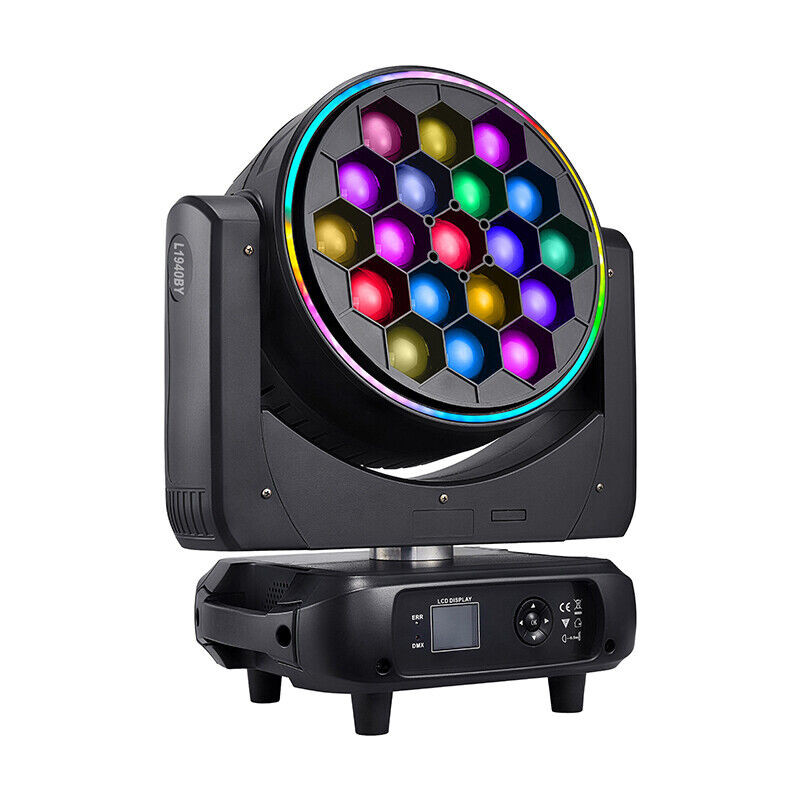
The headline figure is 19 x 40W high-intensity LEDs, which puts the total LED wattage at 760W. That's a serious amount of output from a single fixture, and it places the LuminaMotion 1940 firmly in the high-output wash/beam category. But raw wattage only tells part of the story — let's break down what these numbers mean in practice.
| Specification | LuminaMotion 1940 | Why It Matters |
|---|---|---|
| LED Source | 19 x 40W high-intensity LEDs | 760W total LED power; competitive with fixtures in the $3,000–$5,000 bracket |
| Operating Modes | Beam, Wash, LED Strip Effects | Triple functionality reduces fixture count on rigs |
| Colour Mixing | Dynamic colour mixing (broad spectrum) | Smooth transitions without visible stepping between hues |
| Pattern Control | Adjustable patterns for creative expression | Individual LED zone control enables pixel-mapping capabilities |
| LED Array Configuration | 19-LED matrix (likely hex arrangement) | Centre LED plus two concentric rings for zone-based effects |
The 19-LED Matrix: Why This Configuration Works
The 19-LED layout isn't arbitrary. This is one of the most common and technically elegant configurations in professional moving heads, and there's good reason for that. Nineteen LEDs arrange naturally into a hexagonal pattern: one centre LED, six in the first ring, and twelve in the outer ring. This geometry matters because it creates three independently controllable zones — and that's where the "LED strip effects" capability comes from.
When you hear "LED strip effects" in the context of a moving head wash, it means individual zone control that lets you create ring-based chases, colour splits between inner and outer zones, and pixel-style effects without needing a separate pixel fixture. In practical terms, a pair of LuminaMotion 1940s can replace what might otherwise require four fixtures: two wash movers plus two pixel effect panels.
For Australian venue installers working within tight budgets and limited rigging points — which, let's be honest, describes most club and mid-size venue installs across the country — that consolidation is genuinely valuable.
40W Per LED: Putting the Output in Context
At 40W per LED, each individual emitter in the LuminaMotion 1940 is producing output comparable to what the entire LED array managed in budget moving heads from just five years ago. Modern high-intensity LED packages at this wattage typically deliver between 800 and 1,200 lumens per emitter (depending on colour temperature and drive current), which puts the theoretical total fixture output somewhere in the range of 15,000 to 22,000 lumens.
To put that in perspective: a standard 7x40W wash mover — the kind you'll find in most mid-tier hire stock — tops out around 6,000 to 8,000 lumens. The LuminaMotion 1940 roughly triples that, which means you're getting genuine throw distance for larger Australian venues, outdoor festival stages, and corporate events in convention centres where ambient light is the enemy.
Beam, Wash, and LED Strip: Understanding the Three Modes
Beam Mode
In beam mode, the fixture narrows its output to produce tight, concentrated beams. With 19 individual LED sources, this creates a distinctive multi-beam look that's become increasingly popular in Australian club installations and touring productions. The key advantage over single-source beam fixtures is that each of the 19 LEDs produces its own defined beam shaft, and when combined with haze, the visual impact is genuinely dramatic.
The practical consideration here is beam angle in narrow mode. Professional-grade 19x40W fixtures in this category typically achieve beam angles between 4° and 8° at their tightest. That's narrow enough for genuine beam effects but wide enough that you won't struggle with aiming precision during bumpy live shows — a real concern for fixtures mounted on truss that cops vibration from PA systems.
Wash Mode
Opening up to full wash, the LuminaMotion 1940 becomes a high-output colour wash fixture. The zoom range on fixtures in this class generally spans from around 8° to 50°, though some push to 60°. The wide end is where you'll use this for stage washes, audience blinders, and architectural lighting — and 19 LEDs at 40W means you're getting enough punch to wash a decent-sized stage even in wash mode.
The quality of the wash — how evenly the colour blends across the beam field — depends heavily on the optics. The hexagonal 19-LED arrangement actually helps here, because the geometric pattern fills the lens more evenly than rectangular arrays. Look for smooth, even coverage without hot spots in the centre.
LED Strip Effects
This is where things get interesting. The LED strip effect mode leverages individual zone control to create chase patterns, colour splits, and pixel-mapped effects directly on the fixture face. Think of it as having a small LED panel built into your moving head.
For touring LDs who work across Australian regional circuits — where truck space is always at a premium — this dual-purpose capability is a genuine space saver. You're getting wash and effect from one fixture position, which simplifies rigging and reduces the total fixture count.
Dynamic Colour Mixing: What to Expect
The LuminaMotion 1940 features dynamic colour mixing across a broad spectrum. In the context of high-intensity LED moving heads, this almost certainly means RGBW colour mixing (Red, Green, Blue, White), which is the current standard for professional wash fixtures. The white LED element is critical — it's what lets you produce clean, usable whites and pastels that pure RGB mixing struggles with.
Here's what experienced lighting designers should look for when evaluating the colour mixing:
- White quality: Can the fixture produce a clean, neutral white without visible colour fringing? RGBW fixtures should be able to hit somewhere around 5600K–6500K daylight white convincingly.
- Pastel reproduction: Light pinks, lavenders, and ambers are where cheap colour mixing falls apart. The 40W LED packages in this fixture should have enough dynamic range to produce subtle pastels without flickering or stepping.
- Colour consistency across zoom: The toughest test for any wash mover. Colours should remain consistent whether you're zoomed tight for beam effects or wide open for washes. This is a function of optics quality as much as LED quality.
- Smooth dimming to zero: LED fixtures at this power level can sometimes show visible stepping at the very bottom of the dimmer curve. Look for smooth, flicker-free dimming below 10%.
The "broad spectrum of hues" claim is standard for RGBW fixtures, and realistically, you should expect full 360° colour wheel capability with smooth transitions between any two colours. The quality of those transitions — whether they pass through muddy mid-tones or maintain saturation throughout — is what separates good fixtures from great ones.
DMX Configuration and Control Considerations
Professional fixtures in this category typically offer multiple DMX channel modes. For the LuminaMotion 1940, you should expect something in the range of:
| Channel Mode | Typical Channel Count | Best Used For |
|---|---|---|
| Basic Mode | 16–20 channels | Simple wash use, smaller consoles, busking |
| Standard Mode | 24–32 channels | Full feature access without individual pixel control |
| Extended/Pixel Mode | 50–80+ channels | Individual LED zone control for strip effects and pixel mapping |
The extended mode is where you'll access those LED strip effects, and it's worth noting that pixel-mapped control of 19 LEDs with RGBW channels could require upwards of 76 DMX channels per fixture. That's a significant chunk of a DMX universe (512 channels total), so plan your universes accordingly if you're running multiple units.
For Australian hire companies running these on Artnet or sACN networks, channel count isn't really a constraint. But if you're working with simpler consoles or a single-universe setup, you'll want to stick with basic or standard modes and use the built-in macros for strip effects rather than full pixel control.
How the LuminaMotion 1940 Compares to Alternatives
Let's be direct about where this fixture sits in the market. The 19x40W category has become one of the most competitive segments in professional LED moving heads, and Australian buyers have several options to consider.
| Feature | Budget 19x15W | LuminaMotion 1940 (19x40W) | Premium Touring Grade |
|---|---|---|---|
| Total LED Power | 285W | 760W | 760W–1140W |
| Output (estimated lumens) | 4,000–6,000 | 15,000–22,000 | 20,000–35,000 |
| Colour Mixing | RGB or RGBW | RGBW Dynamic | RGBW + CTO or RGBAL |
| Zone Control | Limited (1–3 zones) | Multi-zone + strip effects | Full individual pixel |
| Build Quality | Basic housing, plastic components | Professional housing | Touring-rated, IP-rated options |
| Price Range (AUD) | $400–$800 | Mid-range | $4,000–$10,000+ |
The LuminaMotion 1940 occupies a practical sweet spot. It significantly outperforms the budget 19x15W fixtures that flood online marketplaces (and frankly, most of those are disposable after a season of gigging). At the same time, it doesn't carry the price tag of flagship touring fixtures from the major European manufacturers.
For Australian hire companies building or expanding their wash fixture stock, that middle ground is exactly where the best value lives. You're getting genuine output capability without the capital outlay that can cripple a growing business.
Real-World Applications Across Australian Venues
Live Music Venues (200–1,000 capacity)
This is arguably where the LuminaMotion 1940 will see the most use across Australia. Venues in this size range — your typical metro live rooms, regional theatres, and RSL clubs — need fixtures that can both wash a stage convincingly and produce eye-catching effects for DJ nights and corporate functions. A rig of four to eight LuminaMotion 1940s can handle both roles without swapping fixtures between gigs.
The 19x40W output means you've got enough punch to work against modest house lighting, which is a constant battle in multi-purpose venues where the house lights never quite go all the way down.
Outdoor Festivals and Events
Outdoor work in Australia means dealing with ambient light conditions that range from harsh afternoon sun (if you're running day-stage production) to total darkness in regional settings. The high output of the LuminaMotion 1940 gives you a fighting chance in twilight conditions where lower-powered fixtures become invisible.
One consideration for outdoor use: check the IP rating and operating temperature range. Australian summer festivals can see ambient temperatures well above 40°C, and LED fixtures at this power level generate significant heat. Adequate ventilation and shade for your fixtures aren't optional — they're essential for reliable operation.
Corporate Events and Conferences
The wash and colour mixing capabilities make this fixture well-suited to corporate work, where consistent, clean colour washes in brand-specific colours are non-negotiable. The ability to produce accurate pastels and subtle colour temperatures sets this apart from cheaper alternatives that can only do saturated primaries convincingly.
Houses of Worship
The Australian church production scene has grown enormously, and many houses of worship now run lighting rigs that rival mid-size concert venues. The LuminaMotion 1940's combination of wash capability and built-in effects makes it particularly appealing for installations where volunteer operators need impressive results without complex programming.
Technical Considerations Before You Buy
Before adding the LuminaMotion 1940 to your rig, here are the technical factors that experienced Australian lighting professionals should evaluate:
- Power requirements: A 760W LED fixture will draw significantly more than a 7x15W wash mover. Factor in actual power draw (which includes motor and electronics overhead — expect total fixture consumption around 850–950W) when planning your power distribution. If you're running eight of these, you're looking at around 7–8kW just for the wash fixtures.
- Weight and rigging: 19x40W fixtures in this class typically weigh between 12 and 18kg. Multiply that across your rig and ensure your truss and rigging hardware is rated accordingly. Australian WHS requirements are non-negotiable here — always use appropriately rated safety chains or bonds.
- Cooling and noise: High-output LED fixtures need active cooling, which means fans. The noise level matters enormously for theatre and corporate work where ambient noise needs to stay low. Check the dB rating at one metre if available, and test in a quiet room before committing to a theatre install.
- Warranty and local support: Buying from an Australian-based supplier like Music On Stage means you have local warranty support and don't need to ship fixtures internationally for repairs. That's genuinely worth a price premium for working professionals.
- Firmware and updates: Check whether the fixture supports firmware updates and what the process involves. Manufacturers that actively update firmware (fixing DMX bugs, adding new effects, improving colour calibration) show commitment to long-term product support.
Specification Interpretation: What Actually Matters
If you're comparing the LuminaMotion 1940 against other fixtures, here's a quick guide to which specifications genuinely impact performance and which are marketing noise:
Specifications that matter most:
- LED wattage per emitter (40W is professional-grade territory)
- Colour mixing type (RGBW minimum for professional use)
- Zoom range (wider is more versatile)
- DMX channel modes (more options = more flexibility)
- Pan/tilt range and speed (540°/270° is standard; look for smooth, precise movement)
- Individual LED zone control (essential for modern effects work)
Specifications that matter less than you'd think:
- Total lumen count (varies wildly based on measurement methodology; compare fixtures in person)
- "Millions of colours" claims (any RGBW fixture can technically produce millions of colours; it's the quality that varies)
- Number of built-in macros (you'll programme your own anyway)
Who Should Buy the LuminaMotion 1940?
This fixture makes the most sense for:
- Growing hire companies building serious wash fixture stock without the capital outlay of flagship European brands
- Venue installations where multi-purpose capability (wash + beam + effects) reduces total fixture count
- Production companies that need reliable, high-output wash movers for mid-to-large scale events
- Churches and community venues wanting professional-grade lighting that volunteer operators can manage
It's less suited for:
- Major touring productions with existing brand-standard rider requirements (where specific manufacturer fixtures are specified)
- Permanent outdoor installations without adequate weather protection (unless IP-rated)
- Ultra-quiet theatre environments where fan noise from high-power LEDs could be an issue (test first)
Frequently Asked Technical Questions
Can the LuminaMotion 1940 replace my current 7x15W wash movers?
In terms of output, absolutely — the jump from 7x15W (105W total) to 19x40W (760W total) is enormous. You'll get roughly three to four times the output. However, the 1940 is physically larger and heavier, so check your rigging capacity and clamp sizes.
How many LuminaMotion 1940s do I need for a typical stage wash?
For a standard 10m x 8m stage, four units (two per side on front truss) will provide solid, even coverage in wash mode. For more dynamic looks with individual colour zones, six to eight units give you creative flexibility.
Is 19x40W overkill for a small venue?
Not necessarily. Higher-output fixtures give you more headroom, which means you can run them at lower intensities (better for LED longevity) while still having punch when you need it. That said, if your venue is under 150 capacity, you might be over-investing compared to a 19x15W or 19x25W alternative.
What console do I need to control the pixel effects?
Any DMX console that supports enough channels will work, but to take full advantage of the pixel mapping capabilities, you'll want a console with built-in pixel mapping or effects engine. Popular choices in Australian hire include GrandMA, ChamSys, and Avolites — even mid-range models from these manufacturers handle pixel-mapped fixtures comfortably.
Final Technical Assessment
The LuminaMotion 1940 brings genuine high-output capability to the accessible end of the professional lighting market. The 19x40W LED array delivers the kind of punch that previously required significantly higher investment, and the triple-mode beam/wash/strip functionality means each fixture does the work of two or three single-purpose units.
For Australian lighting professionals, hire companies, and venue operators, the technical proposition is sound: you're getting professional-grade output, versatile control options, and multi-mode functionality in a single fixture. The key is matching the fixture's capabilities to your actual use case — and based on the specifications, the LuminaMotion 1940 covers a remarkably broad range of real-world applications.
Ready to see how the LuminaMotion 1940 fits your lighting rig? View full product details and pricing at Music On Stage — Australia's source for professional stage lighting equipment.