
Lumina Wave 5000 Moving Head: Australian Buyer's Guide 2026
Lumina Wave 5000 Moving Head: Australian Buyer's Guide 2026
Choosing a moving head fixture for live gigs, mobile DJ rigs, or a small-to-mid venue install is rarely a one-product decision. You're weighing beam punch against wash coverage, build quality against budget, and feature count against how much you'll realistically use on a Friday night. The Lumina Wave 5000 5pcs 40W LED Beam Strobe Moving Head from Music On Stage sits squarely in the value-packed multi-head category, and this guide walks through exactly where it fits, who it suits, and how it stacks up against the alternatives Australian buyers actually consider.
We'll keep this balanced. No fixture is perfect for every situation, and the goal here is to help you decide whether this particular unit is the right call for your needs — or whether you'd be better served spending more (or less) elsewhere.
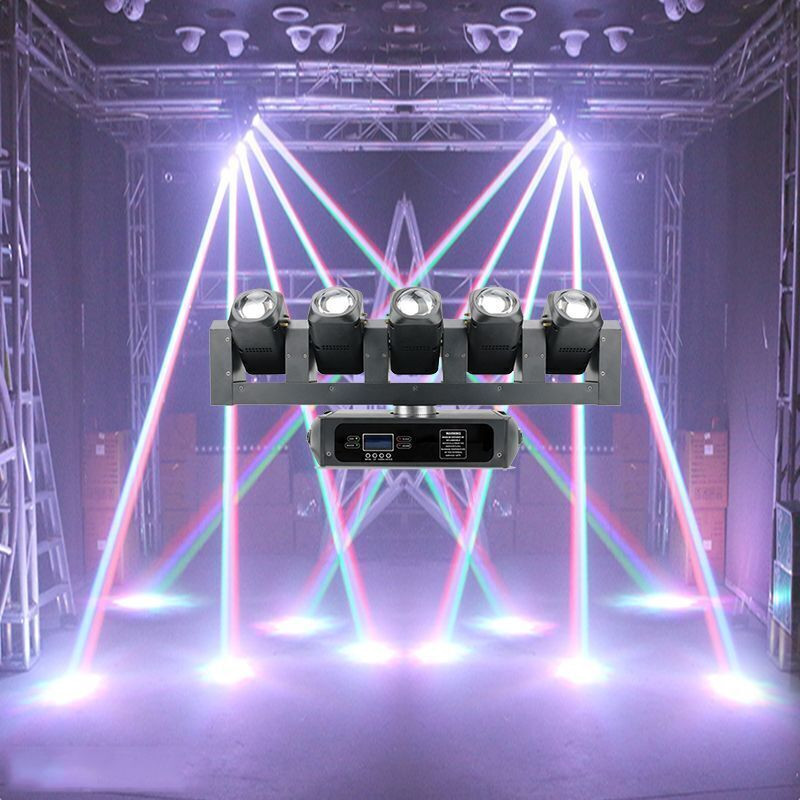
Understanding the Multi-Head Beam Category
Before comparing specific units, it helps to understand where the Lumina Wave 5000 sits in the broader lighting market. Moving head fixtures generally fall into three camps:
- Single large-source beam/spot heads — one powerful LED (typically 100W–300W) for long-throw beams and gobo projection. Great for big rooms, expensive, and heavier to rig.
- Wash moving heads — multiple LEDs designed for broad colour coverage rather than tight beams. Ideal for stage washes and backdrops.
- Multi-source beam bars and cluster heads — fixtures like the Lumina Wave 5000, which pack several smaller LEDs (here, 5 x 40W) onto a single moving head to create layered beam effects, sweeping arrays, and built-in strobe punch.
The 5-source cluster approach is popular with mobile DJs, function bands, and hire companies because it delivers a lot of visual movement and aerial effect from a single, relatively affordable fixture. You get multiple beams fanning and sweeping rather than one static shaft of light, which photographs and films far better for the kind of events most Aussie operators run.
Lumina Wave 5000 at a Glance
The headline specs tell you most of what you need to know about its intended use:
| Specification | Lumina Wave 5000 |
|---|---|
| LED Configuration | 5 x 40W LEDs (200W total source) |
| Primary Effects | Beam, strobe, sweeping array |
| Movement | Pan and tilt moving head |
| Best Use | Mobile DJ, bands, small-mid venues, hire |
| Brand | Music On Stage |
The 5 x 40W layout is the defining feature. Rather than chasing raw single-source brightness, this fixture is built for movement and texture — multiple independently striking beams that can chase, fan, and strobe together. That makes it a genuine effect fixture rather than a workhorse spotlight, and it's important to match that intent to your needs.
Detailed Comparison: How It Stacks Up
Versus Single High-Power Beam Heads
A 150W or 230W single-source beam head will out-punch the Lumina Wave 5000 on raw throw distance and tight, defined mid-air beams — especially in larger, darker rooms with haze. If your priority is one dramatic, knife-sharp beam reaching the back of a 500-capacity venue, a single high-power head wins.
However, the trade-off is visual variety. A single beam does one thing very well; the 5-source cluster does several things at once. For weddings, corporate functions, and pub gigs where you want energy and movement rather than one intense shaft, the multi-source approach typically reads as more dynamic and "busy" — which is usually what clients are paying for.
- Choose a single high-power head if: long throw, gobo projection, and tight aerial beams in big rooms are the priority.
- Choose the Lumina Wave 5000 if: you want layered movement, fan effects, and built-in strobe from one affordable fixture.
Versus Wash Moving Heads
Wash heads are about flooding a stage or backdrop with even colour. The Lumina Wave 5000 is the opposite philosophy — it's about defined, separate points of light that sweep and pulse. They're complementary rather than competing tools. Many working rigs run both: wash heads for colour fields, cluster beams like this for the high-energy moments and strobe hits.
If you can only buy one fixture type and your work leans toward upbeat, party-style events, a beam/strobe cluster generally delivers more perceived impact per dollar than a wash head. If your work is more theatrical or presentation-focused, a wash may serve you better.
Versus Static LED Beam Bars
Fixed beam bars (non-moving) are cheaper and lighter, but they can't sweep. The Lumina Wave 5000's moving head capability is the key upgrade — pan and tilt movement transforms a static array into a dynamic effect that fills a room. For operators who've outgrown fixed bars and want that next level of motion without jumping to expensive single-source heads, this fixture is a natural step up.
Price vs Value Analysis
The strongest argument for the Lumina Wave 5000 is value density. You're getting five separately strobing, beaming LED sources plus full moving-head movement in a single chassis. To replicate that effect with single-source fixtures, you'd typically need to buy and rig multiple units, multiplying both cost and setup time.
Here's how the value tiers generally break down in the Australian market:
| Tier | Typical Use | Where the Lumina Wave 5000 Fits |
|---|---|---|
| Entry | Static bars, basic effects | A clear step above |
| Value / Working Pro | Mobile DJ, bands, hire | Squarely here — its sweet spot |
| Premium | Large installs, touring | Below this tier on raw power |
For a working mobile operator or hire company building out a flexible, reliable inventory, fixtures in this value tier are where the smart money goes — you recoup the cost across events quickly and the effect is crowd-pleasing without the premium price tag.
View the Lumina Wave 5000 at Music On Stage
Pros and Cons: An Honest Look
Strengths
- Multi-source impact: five 40W LEDs deliver layered beams and fan effects from one fixture.
- Built-in strobe: no need for a separate strobe unit for high-energy moments.
- Moving head versatility: pan/tilt movement adds genuine dynamism over static bars.
- Value for money: strong effect-per-dollar for working operators.
- Mobile-friendly: a lot of show in a single, transportable unit.
Trade-offs
- Not a long-throw specialist: 40W sources won't match a single 200W+ beam for reach in very large rooms.
- Effect-focused: this is about movement and texture, not gobo projection or precise spotlighting.
- Best with haze: like all beam fixtures, aerial effects shine most with a hazer in the room.
Situation-Specific Recommendations
Best for Mobile DJs
This is arguably the fixture's ideal home. One or two units on T-bars or tripods give a mobile DJ instant high-energy movement, strobe hits for drops, and a professional look that scales from 50-person birthdays to 200-person weddings. The single-fixture convenience matters when you're loading in and out solo.
Best for Function and Cover Bands
Bands wanting stage energy without a lighting tech will appreciate the set-and-forget effect. Run them in sound-active or simple DMX chase mode and you've got movement that lifts every up-tempo number.
Best for Hire Companies
Durable, crowd-pleasing, and affordable enough to buy in multiples — exactly what dry-hire and event-production inventories need. The broad appeal across event types means high utilisation.
When to Look Elsewhere
If you're lighting a large theatre, need gobo projection, or require long-throw beams in a big dark room, invest in single high-power heads instead. And if you only need static colour wash, a dedicated wash fixture is the better-targeted buy.
Your Decision-Making Framework
Before committing to any moving head, work through these questions:
- What room sizes do you work? Small-to-mid favours multi-source clusters; large rooms favour high-power single heads.
- Effect or utility? If you want energy and movement, the cluster wins. If you want precise spotlighting, it doesn't.
- How many fixtures can you transport and rig? One Lumina Wave 5000 replaces the effect of several smaller units.
- Do you run haze? Beam fixtures reward a hazer — factor that into your kit.
- What's your client base paying for? Most social events reward visible movement and strobe energy over technical precision.
The most common mistake buyers make is over-indexing on raw wattage. A bigger single number doesn't automatically mean a better show — for the events most Australian operators actually run, layered movement from a multi-source fixture often delivers more perceived value than one powerful beam.
Final Recommendation
The Lumina Wave 5000 5pcs 40W LED Beam Strobe Moving Head earns its place as a value-tier effect fixture for mobile DJs, function bands, and hire companies. It won't replace a high-power single-source head for long-throw work, and it's not a wash light — but within its intended lane of dynamic, multi-beam movement and built-in strobe, it offers genuinely strong impact for the money.
If your work centres on lively, social events where energy and movement matter more than long-throw precision, this fixture is an easy recommendation. If you need it for large-format installs or theatrical projection, look to a more specialised — and pricier — fixture instead.
For working Australian operators wanting maximum show from a single, transportable, affordable unit, the Lumina Wave 5000 is a smart, well-targeted choice. Check current pricing and availability at Music On Stage to see if it fits your rig.