
Lumina Wave 5000 LED Beam Strobe Moving Head: Full Tech Review 2026
Lumina Wave 5000 LED Beam Strobe Moving Head: Complete Technical Breakdown for Australian Stage Pros 2026
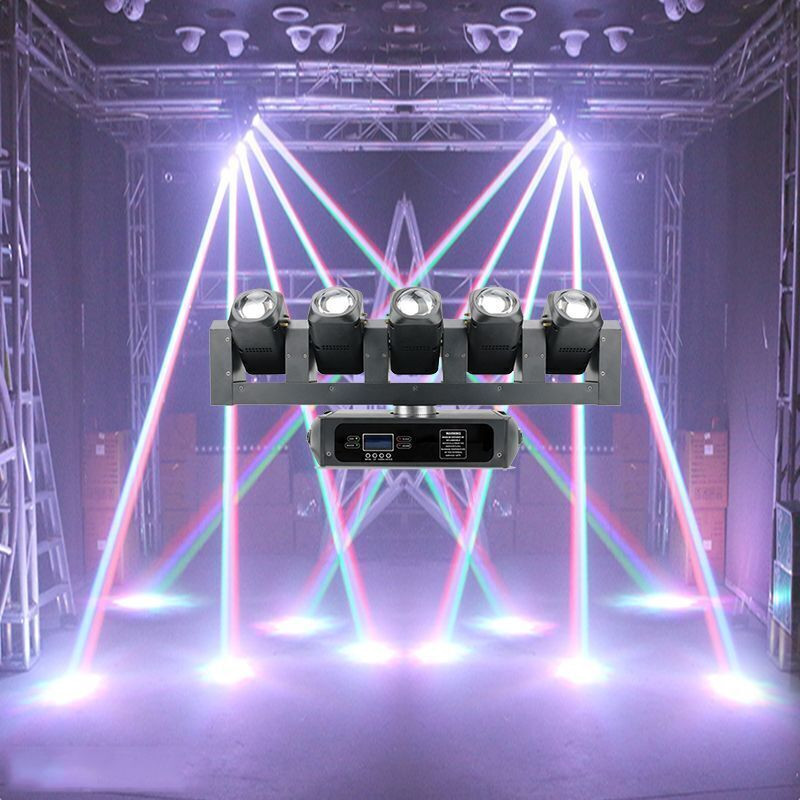
If you've spent any time rigging lights for Australian venues — pubs, theatres, corporate events, churches, or touring shows — you'll know the game has shifted dramatically toward multi-function LED fixtures. The days of hauling separate beam lights, strobes, and wash fixtures are fading fast. The Lumina Wave 5000 sits squarely in this new reality: a 5-piece 40W LED array that combines beam, strobe, and moving head functionality in a single compact unit.
But does it actually deliver on that promise, or is it another multi-function fixture that does everything averagely and nothing brilliantly? Let's pull apart the specifications and see what this fixture genuinely offers Australian lighting operators.
Understanding the 5x40W LED Array Architecture
The core of the Lumina Wave 5000 is its five individually controllable 40W LED emitters, giving you a total system power of 200W across the array. This is a fundamentally different design philosophy compared to single-source moving heads, and it's worth understanding why that matters for your shows.
Each 40W LED operates as an independent light source, which means you're not just getting one beam — you're getting five discrete beams that can work together or create complex multi-beam effects from a single fixture. Think of it as a miniature beam array packed into a moving head housing. This architecture opens up pixel-mapping possibilities, individual beam control, and chase effects that simply aren't possible with traditional single-source designs.
The 40W-per-emitter specification places each LED in a sweet spot for beam work. It's enough power to cut through haze and atmospheric effects convincingly, while keeping thermal management achievable without industrial-grade cooling systems. For context, many budget beam fixtures use 10W or 20W emitters — the 40W rating here represents a meaningful step up in raw output per source.
Beam Characteristics and Optical Performance
With five emitters arranged in the head unit, the Lumina Wave 5000 produces tight, punchy beam effects that are particularly effective in medium-sized venues — your typical 200-to-800-capacity Australian rooms. The beam angle on fixtures of this class typically sits around 3-5 degrees per emitter, creating those sharp aerial effects that look spectacular through haze.
The real visual impact comes from running all five beams simultaneously while the head moves. You get a fan effect, parallel beam arrays, and converging beam patterns that would normally require multiple individual fixtures. For touring acts playing RSLs, clubs, and regional theatres across Australia, this means fewer fixtures on the rig for the same visual complexity.
Moving Head Mechanics: Pan, Tilt, and Speed
The moving head platform is where the Lumina Wave 5000 earns its keep as a professional fixture rather than a static effect light. Professional-grade pan and tilt ranges are essential for stage lighting that needs to cover wide areas and create dynamic movement effects.
| Specification | Detail | Why It Matters |
|---|---|---|
| LED Configuration | 5 x 40W LEDs | Multi-beam effects from single fixture |
| Total Power Output | 200W (optical array) | Strong output with manageable power draw |
| Fixture Type | Beam / Strobe / Moving Head | Three functions in one housing |
| Control Protocol | DMX512 | Industry-standard compatibility |
| Operating Modes | DMX / Auto / Sound-Active / Master-Slave | Flexible deployment for any skill level |
| Application | Professional Stage Lighting | Built for gigging and installation |
For Australian venues, the DMX512 control protocol is non-negotiable — it's the universal language of stage lighting. The Lumina Wave 5000's DMX compatibility means it slots into any existing lighting rig running through consoles like the ChamSys QuickQ, MA Lighting dot2, or even basic DMX controllers. No proprietary software, no ecosystem lock-in.
Strobe Functionality: More Than a Gimmick
The strobe capability built into the Lumina Wave 5000 deserves genuine attention. Many multi-function fixtures treat strobe as an afterthought — a simple on/off flash at a fixed rate. The 40W LEDs in this fixture have the instant-on characteristic that LED technology naturally provides, which makes them inherently better strobes than discharge lamp alternatives that need warm-up time.
With five independently controllable emitters, the strobe patterns available go well beyond basic full-fixture flashing. You can create:
- Sequential chases — emitters firing in sequence for a scanning strobe effect
- Random patterns — unpredictable, high-energy flashing across the array
- Segmented strobing — selected emitters strobe while others hold steady beams
- Variable-speed effects — from slow pulse to rapid-fire strobe via DMX control
- Synchronised multi-fixture patterns — master-slave mode links multiple units
For DJs, bands, and event companies working the Australian circuit, having reliable strobe functionality baked into your moving heads means one less fixture type to purchase, transport, and rig. That's a tangible cost saving when you're loading a van at 2 AM after a gig in Wollongong.
Real-World Performance: Where This Fixture Shines
Let's be straight about where the Lumina Wave 5000 performs best and where you might need to manage expectations.
Ideal Applications
Live music venues (200-800 capacity): This is the sweet spot. Australian pubs, clubs, and mid-size theatres benefit enormously from multi-beam moving heads. The five-beam array creates visual complexity that makes a four-fixture rig look like eight or more individual lights. Hang four Lumina Wave 5000 units across a truss and you've got 20 individually controllable beams with full pan/tilt movement — that's a serious light show from minimal fixtures.
Corporate events and conferences: The beam effects work brilliantly for reveals, entrances, and high-energy segments. The strobe function adds punch to product launches and award ceremonies. Australian event companies running corporate gigs at venues like the ICC Sydney, MCEC, or Brisbane Convention Centre will find these useful as accent fixtures.
DJ and electronic music events: This is arguably where the Lumina Wave 5000 looks most at home. The rapid beam movements, strobe integration, and multi-beam effects are exactly what electronic music lighting demands. Sound-active mode is genuinely useful here for mobile DJs who don't run a dedicated lighting console.
Houses of worship: Australian churches with contemporary services are increasingly investing in stage-quality lighting. The Lumina Wave 5000's beam effects add production value without requiring a massive rig or a dedicated lighting operator — auto and sound-active modes make it accessible for volunteer-run tech teams.
Limitations to Consider
Large outdoor festivals: At 200W total, the Lumina Wave 5000 isn't going to compete with 700W+ beam fixtures at major outdoor events. For festivals like Splendour, Falls, or Beyond the Valley, these would work as supplementary effects rather than primary beam fixtures.
Wash lighting replacement: Despite the multi-emitter design, this is fundamentally a beam and strobe fixture. If you need to wash a stage with even, blended colour, you'll still want dedicated wash fixtures. The Lumina Wave 5000 creates defined beams, not smooth washes.
Theatre spotlight applications: The beam angle and output characteristics are designed for effects, not front-of-house key lighting. Don't expect to use this as a follow spot or profile replacement.
Technical Comparison: How It Stacks Up
To give you proper context, here's how the Lumina Wave 5000 compares against common alternatives in the Australian market:
| Feature | Lumina Wave 5000 | Single 200W Beam MH | LED Bar Effect |
|---|---|---|---|
| LED Sources | 5 x 40W (independent) | 1 x 200W | Multiple (fixed position) |
| Beam Count | 5 per fixture | 1 per fixture | Multiple (static) |
| Pan/Tilt Movement | Full moving head | Full moving head | None or limited tilt |
| Strobe Function | Integrated (per emitter) | Basic full-fixture | Varies |
| Visual Complexity | High (multi-beam + motion) | Medium (single beam) | Medium (static array) |
| Fixtures Needed for Impact | 2-4 units | 6-8 units | 4-6 units |
The key advantage is clear: fewer fixtures for equivalent visual impact. When you factor in Australian freight costs for touring — whether you're running a van between Sydney and Melbourne or shipping a rig to Perth — reducing your fixture count while maintaining visual complexity is a legitimate financial benefit.
Operating Modes: Flexibility for Every Operator
The Lumina Wave 5000 offers four operating modes, each suited to different scenarios and skill levels. This flexibility is a genuine strength for Australian users who might deploy the same fixtures across vastly different situations.
DMX Control (Professional Use)
Full DMX512 control gives professional lighting designers complete command over every parameter. Each of the five emitters can be individually addressed, and pan/tilt, speed, strobe rate, and dimming are all accessible via standard DMX channels. This is the mode you'll use for programmed shows, theatre productions, and any situation where precise, repeatable lighting is required.
Master-Slave Mode
Link multiple Lumina Wave 5000 units together without a DMX controller. One master unit drives the programming, and all slave units follow. This is brilliantly practical for mobile DJs and small event companies who want synchronised effects without the cost and complexity of a full DMX setup. Cable the units together, set one as master, and you've got a coordinated light show.
Sound-Active Mode
The built-in microphone triggers effects in response to music. Sound-active modes on modern LED fixtures have improved dramatically from the erratic, overly sensitive implementations of a decade ago. For casual events, parties, and situations where nobody's operating a lighting desk, sound-active mode delivers decent results with zero effort.
Auto Mode
Pre-programmed patterns run continuously without any input. Useful for installations, set-and-forget applications, and situations where the fixtures need to look active without any operator intervention — think permanent installations in bars, nightclubs, or retail environments.
Installation and Rigging Considerations for Australian Venues
Before you buy, consider the practical realities of deploying the Lumina Wave 5000 in Australian conditions.
Power requirements: At 200W total draw per fixture, you're looking at manageable power consumption. Four units will draw around 800W — well within a single 10A circuit at Australian 240V mains. This makes them practical for venues without dedicated lighting power distribution, which covers a surprising number of Australian pubs and function rooms.
Rigging weight and clamp compatibility: Multi-emitter moving heads in this class typically weigh between 8-14kg per unit. Ensure your truss or rigging points are rated for the total weight plus safety factor. Australian workplace safety standards (Safe Work Australia guidelines) require secondary safety cables on all overhead fixtures — always use appropriately rated safety bonds.
Heat management: LED fixtures generate significantly less heat than traditional discharge lamp moving heads, but they still produce warmth. In Australian summer conditions — particularly in venues without adequate air conditioning — ensure adequate ventilation around the fixtures. LED life and performance degrade with excessive heat, and Australian summers can push ambient temperatures well above 35°C in non-climate-controlled spaces.
DMX cabling: Use proper DMX cable, not microphone cable. Yes, they both use XLR connectors, and yes, mic cable will technically work over short runs. But DMX operates at different impedance (110 ohm vs 50-75 ohm for mic cable), and using incorrect cable causes signal degradation, flickering, and random fixture behaviour — especially in longer daisy chains. Invest in proper DMX cable. It's cheap insurance.
Who Should Buy the Lumina Wave 5000?
Based on the technical specifications and market positioning, the Lumina Wave 5000 is best suited to:
- Mobile DJs and entertainment companies looking to maximise visual impact while minimising fixture count and transport weight
- Small-to-medium venue owners wanting a permanent lighting installation that offers beam, strobe, and movement effects without buying three separate fixture types
- Event hire companies building a versatile lighting inventory that covers multiple event types with fewer SKUs
- Churches and community venues needing professional-looking effects with simple operating modes for volunteer operators
- Cover bands and live acts carrying their own lighting who need maximum show from minimal rig
If you're an Australian lighting professional looking to add multi-beam moving head effects to your inventory without a premium price tag, the Lumina Wave 5000 deserves serious consideration. Check current pricing and availability at MusiconStage.
Specification Interpretation: What Actually Matters
For buyers who aren't lighting professionals, here's a quick guide to evaluating the specs that genuinely affect your experience:
LED wattage (40W per emitter): Higher wattage generally means brighter output, but optical design matters as much as raw power. A well-designed 40W emitter with quality optics will outperform a poorly designed 60W emitter. The 40W rating here is respectable for beam work in indoor venues.
Number of emitters (5): This directly multiplies your creative options. Five independent beams from one moving head means five times the visual complexity compared to a single-beam fixture. It's genuinely the standout specification of this fixture.
DMX channels: More channels mean more granular control. Multi-emitter fixtures with individual LED control will use more DMX channels per fixture — factor this into your DMX universe planning if you're running a large rig.
Movement speed: Fast pan/tilt speeds are essential for beam effects — slow-moving beams look sluggish and amateurish. Look for smooth acceleration and deceleration rather than just top speed, as jerky movement is more noticeable than maximum velocity.
Frequently Asked Technical Questions
Can the five beams create different colours simultaneously?
This depends on the specific colour mixing system employed. Multi-emitter beam fixtures in this class typically use colour wheels rather than RGBW mixing, which means all emitters may share the same colour at any given time. Check the DMX channel layout to confirm whether individual emitter colour control is available.
How many units do I need for a decent light show?
For a typical Australian pub or club stage (6-8 metre width), four units will create a comprehensive beam show with 20 total beams. Two units is the minimum for symmetrical effects. For larger venues or more complex shows, six to eight units give you serious firepower.
Will these work with my existing DMX controller?
Yes. DMX512 is a universal protocol. Any DMX controller — from a basic 192-channel desk to a full MA Lighting grandMA3 — will control these fixtures. You'll need to set the correct DMX start address on each fixture and load or create a fixture profile on your console.
What's the expected LED lifespan?
Quality LED emitters in this wattage class typically offer 20,000-50,000 hours of rated life. That's years of use even under heavy gigging schedules. Unlike discharge lamps, LEDs don't suddenly fail — they gradually dim over time, giving you plenty of warning before replacement is needed.
Are these suitable for outdoor use?
Unless specifically rated IP65 or higher, moving head fixtures should be considered indoor-only. Rain, dust, and moisture will damage motors, electronics, and optical components. For outdoor Australian events, use weather-rated fixtures or provide adequate overhead protection.
The Bottom Line: Technical Verdict
The Lumina Wave 5000 represents a practical approach to modern stage lighting — combining beam, strobe, and moving head functionality with a multi-emitter array that multiplies your creative options. The 5x40W LED configuration delivers genuine visual impact without excessive power draw, and the multiple operating modes make it accessible whether you're a seasoned LD or a volunteer running lights at your local church.
For Australian buyers, the practical benefits are clear: fewer fixtures to buy, transport, and rig, with more visual complexity per unit than traditional single-beam alternatives. The DMX512 compatibility ensures it integrates seamlessly with existing rigs, while master-slave and sound-active modes offer plug-and-play simplicity when a full DMX setup isn't practical.
It won't replace dedicated wash fixtures or compete with high-powered beam units at major festivals, but for the vast majority of Australian venues and events, the Lumina Wave 5000 hits a compelling balance of capability, versatility, and value.
Ready to upgrade your lighting rig? View full specifications and order the Lumina Wave 5000 from MusiconStage — Australia's specialist stage lighting retailer with nationwide delivery.