
LED Moving Head Lights Explained: Beginner's Guide to Stage Lighting 2025
LED Moving Head Lights Explained: A Complete Beginner's Guide to Stage Lighting in 2025
If you've ever watched a live concert, theatre production, or even a wedding DJ and wondered how they create those incredible sweeping light beams that dance across the room, you've been watching moving head lights in action. And if you're now considering getting into stage lighting yourself—whether for a band, venue, church, school, or mobile DJ business—you've probably realised there's a lot more to learn than you first expected.
Don't worry. This guide is specifically written for beginners who are new to professional stage lighting. We'll break down exactly what LED moving head lights are, how they work, what all those technical terms actually mean, and how to make a smart first purchase without getting overwhelmed.
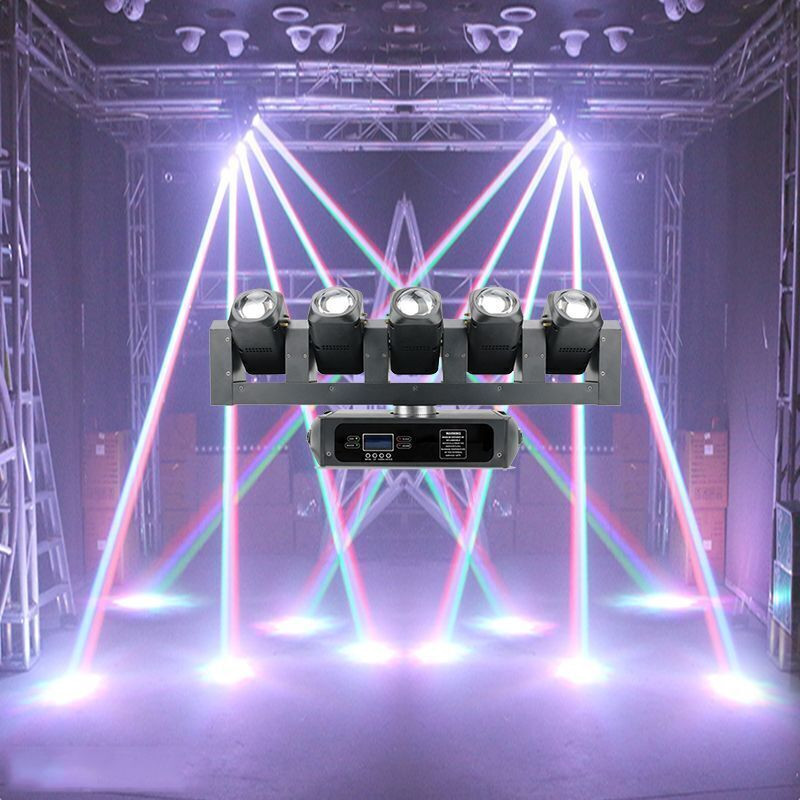
What Exactly Is a Moving Head Light?
Let's start with the basics. A moving head light is a stage lighting fixture where the entire light unit can move—it tilts up and down (called tilt) and rotates side to side (called pan). This is different from traditional stage lights that point in one fixed direction.
Think of it like the difference between a desk lamp that stays still versus a spotlight that a camera operator can swing around to follow action on stage. Moving head lights can be programmed to aim at different spots, sweep across a room, or create dynamic patterns—all controlled automatically or by a lighting operator.
Why "LED" Moving Heads?
The "LED" part refers to the light source inside. LED (Light Emitting Diode) technology has largely replaced older discharge lamp technology in modern stage lighting. Here's why that matters to you as a beginner:
- Lower power consumption – LED fixtures use significantly less electricity, which means lower running costs and less strain on your power circuits
- Less heat – Traditional discharge lamps get extremely hot; LEDs run much cooler, making them safer and more comfortable
- Longer lifespan – LED elements last tens of thousands of hours compared to discharge lamps that need regular replacement
- Instant on/off – No warm-up time required; they're ready when you are
- Better colour mixing – Many LED fixtures can create millions of colours by mixing red, green, blue, and other LED elements
Understanding Different Types of Moving Head Effects
Here's where beginners often get confused, because moving head lights come in several varieties that do quite different things. Let's clarify the main types:
Beam Moving Heads
A beam moving head produces a tight, concentrated shaft of light—like a laser pointer but much larger and brighter. These create those dramatic aerial effects you see at concerts where beams of light cut through haze and smoke. The light stays focused and doesn't spread out much, making it ideal for creating visible "light rays" in the air.
Spot Moving Heads
A spot moving head produces a more focused circle of light, typically with the ability to project patterns (called gobos—more on these shortly). These are excellent for highlighting performers, projecting logos, or creating textured lighting on surfaces.
Wash Moving Heads
A wash moving head spreads light over a wider area to "wash" a stage or surface with colour. Think of it as floodlighting that you can aim and move. Great for bathing a stage in colour or lighting up larger areas.
Hybrid Moving Heads
Some fixtures combine multiple functions. The Lumina Wave 5000, for example, combines beam and strobe functions, giving you more versatility in a single fixture. This is increasingly common and practical, especially when you're starting out and want maximum creative options without buying multiple fixture types.
Key Features Explained Simply
When shopping for moving head lights, you'll encounter various specifications. Here's what they actually mean in plain English:
Wattage (e.g., 40W)
Wattage tells you how much power the light source uses, which roughly correlates to brightness. A 40W LED is actually quite powerful—don't compare it directly to old incandescent bulbs. In LED terms, 40W produces substantial output suitable for small to medium venues.
Beginner tip: More watts doesn't always mean "better." For a small venue, church hall, or mobile DJ setup, fixtures in the 30-60W LED range are often plenty. Going too powerful can actually be problematic—blinding your audience isn't the goal!
Pan and Tilt Range
This describes how far the light can move. You might see specs like "540° pan, 270° tilt." This means the fixture can rotate one-and-a-half full circles horizontally and three-quarters of a circle vertically. Greater range means more flexibility in positioning and more dramatic sweeping movements.
DMX Channels
DMX is the standard control protocol for stage lighting. Think of it as a language that lighting controllers speak to communicate with fixtures. The number of "channels" indicates how many separate parameters you can control—things like pan position, tilt position, colour, brightness, speed, and effects.
More channels generally means more control options, but don't get intimidated. You don't need to understand DMX completely before buying—many modern fixtures also work in "sound active" mode where they react to music automatically, or with simple wireless controllers.
Strobe Function
A strobe creates rapid flashing effects, often used for high-energy moments in music. Good strobe functions allow you to control the flash rate from slow pulses to rapid-fire blasts.
Gobos
A gobo (short for "goes before optics" or "go-between") is a template or pattern placed in the light path to project shapes. Common gobos include circles, stars, geometric patterns, and custom designs like logos. Not all moving heads have gobos—beam lights typically don't, while spot lights usually do.
Colour Wheel vs. Colour Mixing
Some fixtures have a colour wheel—a rotating disc with different coloured filters. Others use RGB or RGBW colour mixing, combining red, green, blue (and sometimes white or amber) LEDs to create any colour. Colour mixing offers more flexibility; colour wheels are simpler but limited to preset colours.
What Makes a Good Beginner Moving Head Setup?
If you're just starting out, here's what actually matters versus what's marketing fluff:
What Beginners Should Prioritise
- Build quality and reliability – A light that fails mid-show is useless regardless of its features. Look for solid construction and reputable suppliers.
- Appropriate brightness for your venue – Match the fixture to your space. A pub DJ doesn't need arena-grade fixtures.
- Multiple control options – Sound-active mode, master/slave operation, and DMX control give you flexibility as you learn.
- Reasonable cooling and noise levels – Fan noise matters for quieter settings. Good thermal design means longer life.
- Value for capability – What effects can you actually create? A hybrid fixture that does beam and strobe gives you more options.
Common Beginner Mistakes to Avoid
- Buying just one fixture – Stage lighting works best in multiples. Two to four matching fixtures create symmetry and more impressive looks. Budget for pairs, not singles.
- Ignoring power requirements – Calculate total power draw before plugging everything into one circuit. LED fixtures help here, but it still matters.
- Forgetting mounting and rigging – You'll need stands, clamps, or truss to mount your lights. Budget for this.
- Skipping the haze machine – Beam effects are basically invisible without atmospheric haze or fog. If you want those dramatic aerial looks, you need something in the air for the light to catch.
- Over-complicating control – Start with sound-active or simple preset modes. Learn DMX programming gradually—don't feel pressured to master it immediately.
Understanding Multi-Head Fixtures
Some products, like the Lumina Wave 5000, feature multiple light elements in a single fixture—in this case, five 40W LED sources arranged together. This design approach offers several advantages for beginners:
- More visual impact from fewer fixtures – Instead of needing five separate moving heads, you get five independently controllable beams in one unit
- Simplified rigging – One mounting point instead of five
- Coordinated effects – The multiple heads can work together to create sweeping patterns and complex movements
- Better value proposition – Often more cost-effective than buying equivalent separate fixtures
This style of fixture has become increasingly popular for mobile entertainers and smaller venues because it delivers impressive visual density without the complexity of managing many individual lights.
Control Options for Beginners
You don't need an expensive DMX console to use moving head lights effectively. Here are your options from simplest to most advanced:
Sound-Active Mode
Most modern fixtures have built-in microphones that detect bass beats and trigger movement and effects automatically. This is perfect for starting out—just turn them on, play music, and let the lights do their thing.
Pros: Zero learning curve, no extra equipment needed
Cons: Less precise control, lights might not always match your vision
Master/Slave Mode
Connect multiple fixtures together (usually via DMX cables), set one as "master" and others as "slaves." The slave units copy whatever the master does, creating synchronised effects.
Pros: Coordinated looks without programming
Cons: All lights do the same thing simultaneously
Simple DMX Controllers
Entry-level DMX controllers range from small units with a handful of faders to more sophisticated touchscreen interfaces. These let you manually control fixture parameters and save preset looks.
Pros: Direct control over every function
Cons: Learning curve, requires some setup time
Software Control
Computer or tablet-based lighting software offers powerful control with visual interfaces. Some integrate with DJ software for music-synchronised shows.
Pros: Most flexibility and automation options
Cons: Steepest learning curve, needs computer/tablet plus DMX interface
What You'll Need Besides the Lights
Here's a realistic checklist for a beginner moving head setup:
- Moving head fixtures – At least 2, preferably 4 matching units
- Lighting stands or truss – T-bars on speaker stands work for mobile use; fixed venues often mount to ceiling truss
- Safety cables – Always use secondary safety attachments when overhead mounting
- DMX cables – For connecting fixtures together (if not using wireless DMX)
- Power cables and distribution – Sufficient power points in the right locations
- Haze or fog machine – Essential for visible beam effects
- Controller – Unless starting with sound-active only
- Cases or covers – To protect your investment during transport and storage
Setting Realistic Expectations
If you're completely new to stage lighting, here's what to honestly expect:
The Learning Curve
Basic sound-active operation: You can be up and running in minutes. Setting up master/slave mode: Give yourself an hour to read manuals and connect things properly. Learning DMX programming: This takes weeks to months depending on how deep you go and how complex your setup becomes.
The good news? Each step builds on the previous one. You don't need to master everything before your first show.
Common Frustrations (and How to Avoid Them)
- "Why can't I see the beams?" – You need haze. Always.
- "The lights are too bright/dim" – Most fixtures have adjustable dimmer curves and maximum output limits. Read your manual.
- "They're not moving how I want" – Movement speed and smoothness are adjustable parameters. Experiment with different settings.
- "DMX isn't working" – Check cable connections, ensure addresses aren't conflicting, and verify you're on the right DMX universe.
Why the Lumina Wave 5000 Suits Beginners
Looking at a practical example helps illustrate what to consider. The Lumina Wave 5000 with its 5-piece 40W LED array represents a thoughtful beginner-to-intermediate option for several reasons:
- Multi-head design – Five independently controllable beam sources create impressive density without complex multi-fixture rigging
- Combined beam and strobe – Hybrid functionality means more creative options from a single investment
- 40W LED sources – Powerful enough for serious impact while remaining energy-efficient
- Professional-grade features – DMX compatibility for when you're ready to grow into advanced control
This type of fixture represents the sweet spot where you get genuinely professional results without needing professional-level expertise or budget to get started.
Frequently Asked Questions from Beginners
How many moving heads do I need?
For a minimum effective setup, two matching fixtures work—but four is where things really start looking professional. The Lumina Wave 5000's five-head design effectively multiplies your impact, so even two of these fixtures give you ten beams to work with.
Can I use moving heads outdoors?
Most stage moving heads are designed for indoor use only. Using them outdoors exposes them to moisture and dust that will damage them. IP-rated outdoor fixtures exist but cost significantly more. If you must use standard fixtures outdoors, they need shelter from weather.
How loud are the cooling fans?
This varies significantly between fixtures. LED fixtures generally run cooler and quieter than discharge lamp alternatives. For theatre or quieter acoustic performances, check fan noise specifications. For DJ work in loud environments, fan noise is rarely noticeable.
Do I need a lighting technician?
Not for basic operation. Sound-active mode requires no operator at all. As you learn DMX programming, you can pre-program shows that run automatically or with simple cue buttons. Many working DJs and small venue operators run their own lighting successfully.
How do I maintain moving head lights?
Keep lenses clean, periodically blow out dust with compressed air (when unplugged and cool), check mounting points remain tight, and store them properly when not in use. LED fixtures require minimal maintenance compared to lamp-based alternatives.
Your Next Steps
If you're seriously considering getting into stage lighting, here's a practical path forward:
- Define your use case – Mobile DJ? Installed venue? Band? Theatre? Your needs differ significantly.
- Set a realistic budget – Include stands, cables, haze, and control in your calculations, not just the fixtures themselves.
- Start with versatile fixtures – Hybrid designs that combine beam, strobe, and wash functions give you more options as you learn what you actually use most.
- Begin with sound-active mode – Get familiar with your lights and how they look in your space before diving into DMX programming.
- Learn progressively – Master basic looks before attempting complex programming. YouTube tutorials and manufacturer guides are excellent free resources.
- Connect with the community – Online forums and local entertainment industry groups offer invaluable peer support and advice.
Stage lighting is genuinely learnable by enthusiastic beginners. The technology has become more accessible, more reliable, and more intuitive than ever. Whether you're lighting up local gigs, running mobile entertainment, or upgrading a venue, starting with well-chosen fixtures and building your skills progressively will serve you well.
Ready to explore professional LED moving head options for your setup? Check out the Lumina Wave 5000 and similar fixtures at MusiconStage to see what's possible within a sensible budget.