LED Dance Floor Hire Australia: Technical Specs & Pricing Guide 2026
LED Dance Floor Hire in Australia: Everything You Need to Know Before Booking in 2026
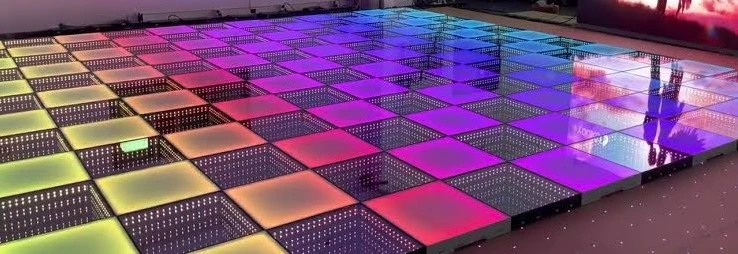
If you've ever walked into an event and seen that glowing, colour-shifting dance floor pulsing under the crowd's feet, you already know the impact a quality LED dance floor creates. It's not just a surface — it's the centrepiece that turns a good event into something people genuinely remember.
But here's the thing most event planners discover too late: not all LED dance floors are created equal, and the technical details matter far more than most suppliers let on. Panel resolution, load ratings, control protocols, weatherproofing — these specifications directly affect whether your floor looks spectacular or becomes an expensive disappointment.
At Music On Stage, LED dance floor hire starts from $129 per square metre, which puts professional-grade illuminated flooring within reach for weddings, corporate events, parties, and productions across Australia. Let's break down exactly what you're getting, what to look for, and how to make sure you're hiring the right floor for your event.
Understanding LED Dance Floor Technology
Before you start comparing quotes, it's worth understanding what's actually inside these panels. A modern LED dance floor consists of modular panels — typically 500mm x 500mm or 600mm x 600mm squares — each containing an array of RGB or RGBW LEDs beneath a tempered, load-bearing surface.
Panel Construction and Materials
Quality LED dance floor panels use a multi-layer construction:
- Top surface: Tempered acrylic or polycarbonate with anti-slip coating. This needs to handle stiletto heels, spilled drinks, and hundreds of kilograms of dynamic load without scratching, cracking, or becoming slippery.
- LED array layer: SMD (Surface Mount Device) LEDs arranged in a grid pattern. Higher-quality panels use SMD5050 or similar chips for better colour reproduction and brightness.
- Control PCB: The circuit board that receives DMX or proprietary signals and translates them into individual LED colour values.
- Base frame: Typically aluminium or steel with interlocking edge connectors for seamless panel-to-panel joining.
The difference between budget and professional-grade panels often comes down to the top surface material and the LED density. Cheap panels use thinner acrylic that yellows over time and fewer LEDs per panel, resulting in visible pixel gaps and uneven colour wash.
Key Technical Specifications to Understand
| Specification | What It Means | What to Look For |
|---|---|---|
| Pixel Pitch | Distance between LED centres — smaller = higher resolution | Under 50mm for crisp patterns; under 25mm for video-capable floors |
| Load Rating | Maximum weight per panel or per square metre | Minimum 750kg/sqm for events; 1000kg+ for heavy equipment or staging |
| IP Rating | Ingress Protection against dust and water | IP54 minimum for indoor use; IP65+ for outdoor or marquee events |
| Brightness | Measured in nits or candelas per square metre | 1500+ nits for venues with ambient lighting; 800+ nits for dark venues |
| Colour Depth | Number of colours the system can reproduce | 16.7 million colours (8-bit per channel) is standard |
| Control Protocol | How patterns and colours are controlled | DMX512 for professional integration; standalone controllers for simpler events |
| Panel Thickness | Total height from floor to surface | 60-100mm typical; thinner panels need ramped edges for safety |
Sizing Your LED Dance Floor: The Calculations That Actually Matter
This is where most event planners get it wrong. Either the floor is too small (creating an awkward bottleneck) or oversized (wasting budget on unused area). Here's how to get it right.
The Industry Formula
The standard approach for dance floor sizing is based on guest count and event type:
- Wedding receptions: Allow approximately 0.4–0.5 sqm per guest expected to dance (typically 50-70% of total guests)
- Corporate events: 0.3–0.4 sqm per guest (generally lower dance participation)
- Parties and celebrations: 0.5–0.6 sqm per guest (higher participation expected)
- Nightclub-style events: 0.3 sqm per guest (tighter spacing is expected and preferred)
Practical Sizing Examples
| Guest Count | Event Type | Recommended Floor Size | Approx. Panels (500x500mm) | Est. Cost from $129/sqm |
|---|---|---|---|---|
| 80 guests | Wedding | 3m x 3m (9 sqm) | 36 panels | From $1,161 |
| 120 guests | Wedding | 4m x 3.5m (14 sqm) | 56 panels | From $1,806 |
| 150 guests | Corporate | 4m x 4m (16 sqm) | 64 panels | From $2,064 |
| 200 guests | Party | 5m x 5m (25 sqm) | 100 panels | From $3,225 |
Pro tip: LED dance floor panels are modular, so you're not locked into perfect squares. L-shapes, rectangles, and even custom configurations are usually possible — just confirm with your supplier what edge finishing and ramping options are available for non-standard layouts.
What Separates a Good LED Dance Floor from a Great One
Having seen hundreds of LED floor installations across events of all sizes, there are a few technical differentiators that consistently separate impressive setups from forgettable ones.
1. Seamless Panel Joining
The biggest visual giveaway of a cheap LED floor is visible seam lines between panels. Quality panels use precision-machined interlocking edges that create a virtually seamless surface when assembled. Look for systems with less than 1mm gap between panels — anything more creates dark lines that break the illusion, especially during colour wash effects.
2. Colour Consistency Across Panels
LED bins (the manufacturing batches) can vary in colour temperature and brightness. Professional-grade systems use binned-matched LEDs across all panels, meaning a white displayed on panel one looks identical to white on panel fifty. Budget systems often show noticeable colour variation, with some panels appearing warmer or cooler than their neighbours.
3. Refresh Rate and Flicker
This is crucial for events with photography and videography. LED panels with low refresh rates (below 1000Hz) can produce visible banding or flicker in photos and video footage. Quality panels operate at 1920Hz or higher, ensuring smooth, flicker-free capture. If professional photography is part of your event, specifically ask about refresh rate — your photographer will thank you.
4. Edge Ramping and Safety
LED floor panels sit 60-100mm above the venue floor. Without proper edge ramping, you've got a trip hazard that would make any OH&S officer wince. Professional installations include bevelled aluminium ramps on all exposed edges, with anti-slip surfaces and clear visibility. This isn't just about compliance — it's about ensuring your guests can move freely between the dance floor and the rest of the venue without hesitation.
Control Options: From Simple to Spectacular
The visual capabilities of your LED dance floor depend heavily on the control system driving it. Here's what's typically available:
Standalone Controller
Pre-programmed patterns, colour sequences, and effects triggered via a simple control box. This suits most weddings and parties where you want attractive lighting effects without needing a dedicated technician. Typical capabilities include colour cycling, starfield effects, pulse-to-beat patterns, and static colour options.
DMX512 Integration
For events with professional lighting design, DMX integration allows the dance floor to be incorporated into the broader lighting rig. A lighting designer can synchronise floor patterns with overhead lighting, stage effects, and audio cues for a fully coordinated production. This is standard for corporate productions, concerts, and high-end events where a lighting technician is already on-site.
Video-Capable Systems
High-resolution panels (typically under 25mm pixel pitch) can display video content, logos, animated graphics, and interactive effects. These systems require a media server or dedicated video processor and are typically used for corporate branding, product launches, and broadcast events where the floor becomes an active display surface.
For most events in Australia — weddings, milestone birthdays, corporate dinners, school formals — the standalone controller option delivers excellent results. DMX integration is worth the additional cost when you're already investing in professional production lighting.
Venue and Installation Considerations
Before you finalise your LED dance floor hire, these technical considerations can make or break your installation:
Power Requirements
LED dance floors draw significant power — typically 100-200 watts per square metre at full brightness. A 16 sqm floor could draw up to 3.2kW, requiring dedicated circuits. Most venue ballrooms can handle this comfortably, but marquees, outdoor setups, and older buildings may need supplementary power. Always confirm power availability with your venue and your supplier.
Floor Surface Compatibility
- Flat concrete/tiles: Ideal. Panels sit level and stable with minimal adjustment.
- Carpet: Workable but requires additional base support to prevent panel movement and ensure level installation. Some systems include carpet-compatible feet.
- Grass/outdoor: Requires a flat sub-floor (typically plywood sheeting) to create a stable, level base. This adds time and cost to installation.
- Uneven surfaces: Adjustable panel feet can compensate for minor irregularities (typically up to 10-15mm variation).
Setup and Bump-In Time
Professional installation of a standard LED dance floor takes approximately 1.5-3 hours depending on size and venue conditions. Factor this into your venue hire timeline:
- Small floor (9-12 sqm): 1-1.5 hours setup
- Medium floor (12-20 sqm): 1.5-2.5 hours setup
- Large floor (20+ sqm): 2.5-4 hours setup
Bump-out is typically faster — roughly 60-70% of setup time. Make sure your venue access windows accommodate both installation and removal.
Ceiling Height
Often overlooked but important for visual impact. LED floors look most effective in rooms with ceiling heights of 3 metres or more. In lower-ceiling venues, the light wash from the floor can overpower the room and create excessive glare. In these situations, running the floor at reduced brightness or choosing cooler colour palettes can help.
LED Dance Floor Hire vs. Purchase: The Australian Market Reality
For anyone considering whether to hire or buy, here's a straightforward comparison:
| Factor | Hire | Purchase |
|---|---|---|
| Upfront Cost | From $129/sqm per event | $15,000-$40,000+ for a quality system |
| Maintenance | Supplier's responsibility | Your responsibility (panel replacements, cable management, storage) |
| Storage | None required | Significant — a 16 sqm floor fills multiple flight cases |
| Transport | Included in hire (typically) | Requires van/truck and careful handling |
| Technology Updates | Always access latest inventory | Locked into your purchase until you upgrade |
| Break-Even Point | N/A | Typically 30-50+ events for event companies |
For event planners, venues hiring floors occasionally, and one-off celebrations, hiring is the clear winner. Purchase makes sense for event production companies running LED floors multiple times per week.
What to Ask Your Supplier Before Booking
These questions separate informed buyers from those who end up with an underwhelming product:
- What's the actual pixel pitch of your panels? This tells you the visual resolution you're getting.
- Are the panels colour-matched across the entire inventory? Mismatched panels are immediately noticeable.
- What's the refresh rate? Critical if you're having professional photography or videography.
- What edge ramping is included? Safety compliance isn't optional.
- Is setup and bump-out included in the price? Some suppliers quote panel hire only, with installation as an additional cost.
- What happens if a panel fails during the event? Quality suppliers carry spare panels on-site or have rapid replacement protocols.
- What control options are available? Confirm that the control system matches your event's needs and technical capability.
- What's the IP rating? Essential for outdoor or marquee events where moisture is a concern.
Common Mistakes to Avoid
After years in the event production industry, these are the mistakes that keep coming up:
Sizing too small to save money. A cramped dance floor discourages dancing. If budget is tight, it's better to reduce the floor size slightly and invest in quality panels than to go cheap on a larger area. But don't go below 3m x 3m for any event over 60 guests.
Ignoring venue access logistics. LED floor panels come in heavy flight cases. If your venue has narrow doorways, stairs, or limited loading dock access, this needs to be communicated to your supplier well in advance. Installation crews can work around most obstacles, but surprises on the day cost time and stress.
Forgetting about the surrounding area. An LED dance floor looks most impressive when the lighting in the surrounding area complements it. Harsh overhead fluorescents washing out your beautiful LED floor is a tragedy that's entirely preventable with basic lighting design.
Not testing the floor during rehearsal or setup. Always insist on seeing the floor running before your event starts. This gives you time to adjust colours, brightness, and patterns to suit your venue's specific conditions.
Why Music On Stage for LED Dance Floor Hire
Music On Stage has built a reputation across Australia for providing professional-grade event production equipment with the technical support to match. Their LED dance floor hire starting from $129 per square metre includes access to well-maintained, modern panel systems with flexible sizing options.
What matters from a technical perspective is that you're hiring from a supplier who understands event production comprehensively — not just the floor itself, but how it integrates with sound, lighting, and staging. That holistic understanding translates to better installations and fewer technical surprises on event day.
Check Availability & Get a Quote from Music On Stage
Frequently Asked Technical Questions
Can LED dance floors be used outdoors?
Yes, but only panels rated IP65 or higher. Even with appropriate ratings, outdoor installations need a flat, stable sub-floor and weather protection for control equipment and power distribution. Marquee installations are generally straightforward; fully exposed outdoor setups require more planning.
How much power does an LED dance floor actually draw?
At full brightness with all-white display (maximum draw), expect 150-200W per square metre. During typical event use with colour patterns and effects, actual draw is closer to 80-120W per square metre. A standard 4m x 4m floor runs comfortably on a single 15-amp circuit during normal operation, but always confirm with your supplier.
Will the floor work with my DJ's lighting controller?
If the floor accepts DMX512 input and your DJ has a DMX-capable controller, yes. However, most DJ controllers don't include lighting control. For events with a DJ, the standalone controller option is typically the better fit — the DJ focuses on music while the floor runs its own programmed sequences.
Are LED dance floors slippery?
Quality panels include an anti-slip coating that meets or exceeds AS/NZS 4586 slip resistance standards. They're comparable to polished timber dance floors in terms of grip. That said, spilled liquids on any smooth surface create slip risk, so having staff maintain the floor surface during events is good practice.
Can the floor display custom logos or images?
This depends on the panel resolution. Standard LED dance floors with pixel pitches of 40-50mm can display simple patterns and colour effects but lack the resolution for detailed logos. Video-capable panels (under 25mm pixel pitch) can display logos, text, and video content. Video-capable systems typically come at a premium, so discuss this with your supplier if branding display is a requirement.
Making Your Decision
An LED dance floor is one of those event elements where the technical quality directly and visibly impacts your guests' experience. The difference between a well-specified, professionally installed floor and a budget alternative isn't subtle — it's the difference between "that was incredible" and "oh, they had a light-up floor."
At $129 per square metre, Music On Stage's LED dance floor hire puts the technology within reach for most event budgets. The key is getting the sizing right, asking the right technical questions, and ensuring your venue logistics are sorted well before the day.
Use the sizing guide and technical specifications in this article to have an informed conversation with your supplier. The more specific you can be about your event requirements, the better the outcome you'll get.