
KV2 VHD 3200 Amplifier: Technical Deep Dive for Australian Pro Audio 2026
KV2 VHD 3200 Amplifier: Technical Deep Dive for Australian Pro Audio 2026
There's a reason KV2 Audio doesn't chase spec-sheet wars. While most amplifier manufacturers are busy inflating wattage numbers and cramming features into ever-smaller chassis, KV2 takes a fundamentally different approach — one that Australian touring professionals and install engineers are increasingly gravitating toward. The KV2 VHD 3200 is the beating heart of KV2's VHD subwoofer ecosystem, and understanding what makes it tick requires looking well beyond the headline numbers.
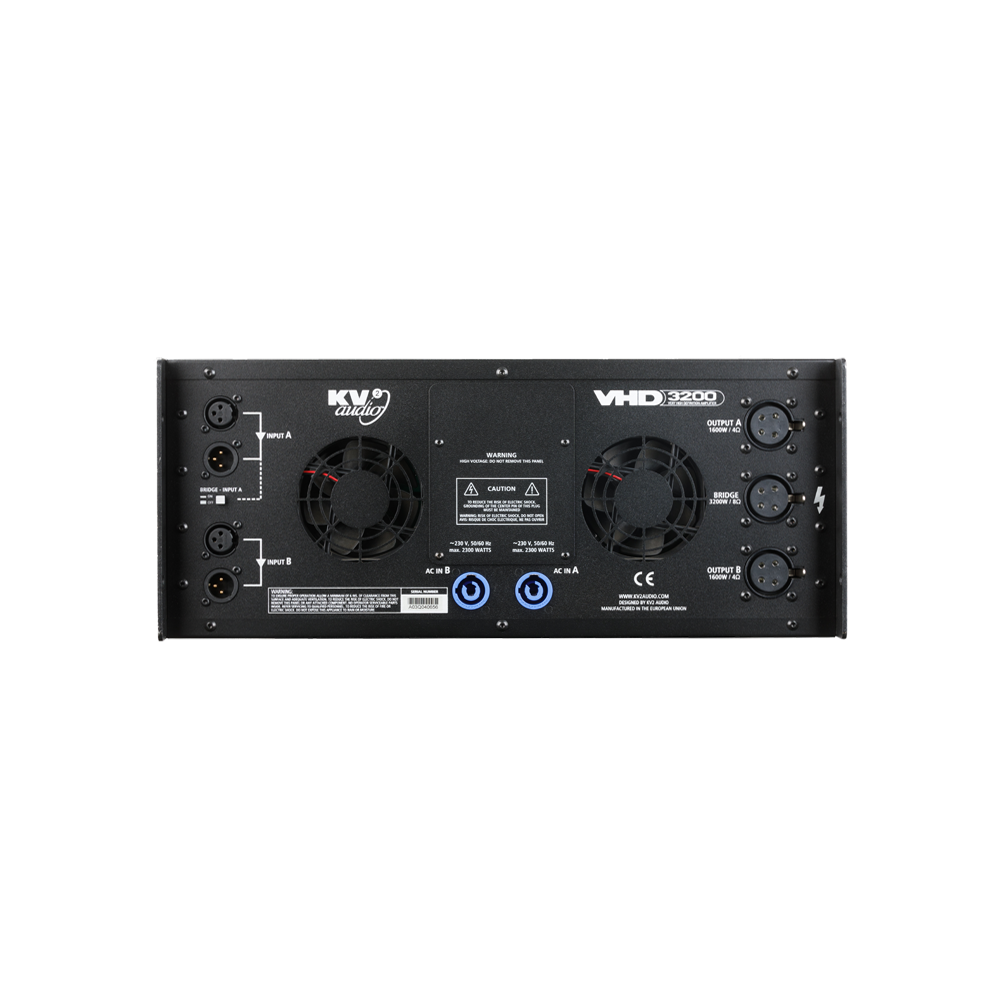
This isn't just another power amplifier that happens to drive subwoofers. The VHD 3200 is a purpose-built amplification system designed from the ground up to work as an inseparable component of the VHD subwoofer platform. If you're evaluating large-format subwoofer solutions for touring rigs, festivals, or permanent installations across Australia, this technical breakdown will give you the engineering context you actually need.
KV2's Design Philosophy: Why It Matters for the VHD 3200
Before diving into specifications, it's worth understanding what makes KV2's approach fundamentally different from brands like d&b, L-Acoustics, or JBL Professional. KV2 Audio, headquartered in the Czech Republic, builds their systems around a matched amplifier-to-driver philosophy. Every loudspeaker in their lineup has a dedicated amplifier controller designed exclusively for it — not a general-purpose amp with a preset loaded onto it.
The VHD 3200 embodies this principle completely. Its output stages, power supply architecture, DSP algorithms, and protection circuits were all developed alongside the VHD subwoofer cabinets. The amplifier and the drivers are treated as a single electromechanical system, not separate components bolted together after the fact.
For Australian engineers accustomed to the "pick your amp, pick your box" approach, this can feel restrictive. But the performance benefits are substantial — and measurable.
Core Technical Specifications
| Parameter | Specification |
|---|---|
| Amplifier Channels | 2 channels |
| Output Power | 2 x 1600W RMS |
| Total Power Output | 3200W combined |
| Amplifier Topology | Class H analogue |
| Integrated DSP | Yes — dedicated VHD subwoofer presets |
| Crossover | Integrated, optimised for VHD sub cabinets |
| Limiter/Protection | Multi-stage driver protection with thermal modelling |
| Rack Height | 2U (19" standard rack) |
| Compatible Cabinets | VHD2.0, VHD4.18 subwoofer systems |
| Cooling | Forced-air, variable-speed fans with front-to-rear airflow |
| Power Supply | Switch-mode with PFC |
| Connectors | XLR input, Speakon output |
Class H Topology: KV2's Analogue Conviction
Here's where the VHD 3200 diverges sharply from industry trends. While nearly every major pro audio amplifier released in the last decade has been Class D (switching topology), KV2 continues to use Class H analogue amplification across most of their product range, including the VHD 3200.
Class H is an evolution of Class AB that uses multiple power supply rails, switching between them based on signal demand. When the signal is small, the amplifier draws from a lower voltage rail, reducing heat dissipation. When the signal demands more headroom — as subwoofer content regularly does — the amplifier switches to higher rails to deliver full output.
Why Class H for Subwoofers?
KV2's argument for Class H in subwoofer applications centres on several technical points:
- Damping factor consistency: Analogue output stages typically maintain more consistent damping factor across the frequency range, which directly affects how tightly the amplifier controls driver cone excursion. For an 18-inch driver moving serious air, this matters.
- Transient response: Class H handles the large, asymmetric transients common in low-frequency programme material without the switching artefacts that can occur in some Class D designs under heavy load.
- Reactive load handling: Loudspeaker loads are reactive (inductive and capacitive), not purely resistive. Analogue output stages are inherently more tolerant of wildly varying impedance curves, which subwoofers at resonance certainly present.
- Phase coherence: No output filtering required (unlike Class D), eliminating potential phase shifts in the crossover region.
The trade-off is weight and efficiency. The VHD 3200 is heavier than an equivalent-rated Class D amplifier, and it generates more heat under sustained load. For Australian touring crews working in 40°C summer conditions, that thermal consideration is real and worth factoring into your rack ventilation planning.
Integrated DSP and System Management
Despite KV2's analogue amplification philosophy, the VHD 3200 does incorporate digital signal processing — but it's used very specifically. The DSP handles:
- Crossover filtering — precisely matched to the VHD subwoofer cabinet's acoustic roll-off characteristics
- Driver protection limiting — multi-stage limiters that model the thermal capacity and excursion limits of the specific drivers in VHD cabinets
- Alignment delay — for time-aligning subwoofers with the rest of the VHD system
- EQ presets — cabinet-specific equalisation that compensates for known driver and enclosure behaviours
What you won't find is user-adjustable parametric EQ, FIR filtering, or network-based remote control. This is deliberate. KV2's position is that the system is already optimised at the factory level, and providing user-adjustable DSP tools invites misconfiguration that degrades performance. It's a philosophy that polarises opinion — some engineers love the simplicity, others find it frustrating.
What This Means in Practice
When you connect a VHD subwoofer to the VHD 3200, you're getting a system that's been voiced, limited, and protected as a complete unit. There's no need to build crossover presets from scratch, calculate limiter thresholds, or worry about whether your amplifier settings might damage the drivers. The system simply works within its designed parameters.
For hire companies running mixed-skill crews across Australian festival season, this reliability has genuine operational value. The tech who sets up the sub rig at 6 AM doesn't need to be a system engineer to get it right.
The VHD Subwoofer Ecosystem
The VHD 3200 is designed to drive KV2's large-format VHD subwoofer cabinets. Understanding the amplifier means understanding the system it powers.
VHD2.0 Subwoofer
The VHD2.0 is KV2's flagship subwoofer — a large-format, high-output cabinet designed for concert touring and major installations. Each channel of the VHD 3200 delivers 1600W RMS to drive these cabinets with significant headroom for transient peaks.
VHD4.18 Subwoofer System
The VHD4.18 configuration uses quad 18-inch drivers in an arrangement optimised for maximum low-frequency output and pattern control. The VHD 3200's dual-channel architecture allows it to drive paired cabinets or individual cabinets depending on the deployment configuration.
In both cases, the amplifier's protection algorithms are loaded with the specific Thiele-Small parameters and thermal models for the drivers in each cabinet type. This level of integration means the system can be pushed harder and more safely than a generic amplifier driving the same cabinets would allow.
View the KV2 VHD 3200 at MusiconStage to check current Australian pricing and availability.
Performance Analysis: What to Expect in the Field
Raw wattage numbers only tell part of the story. Here's what the VHD 3200's specifications translate to in real-world deployment scenarios common across Australia.
Outdoor Festivals and Concert Touring
Australian outdoor events present unique challenges — extreme heat, long cable runs from generator-powered distros, and the need for sustained high-output operation over multi-hour sets. The VHD 3200's Class H topology handles sustained bass-heavy programme material well, though thermal management becomes critical when ambient temperatures exceed 35°C. Adequate rack ventilation and ideally a 1U space above and below the unit are recommended for Australian summer deployments.
The integrated limiting means you can confidently run the system at its rated output without worrying about driver damage during extended sets. This is particularly valuable for festival scenarios where different acts push varying levels of low-frequency content.
Permanent Installation
For Australian venues, houses of worship, and theatres investing in VHD systems, the VHD 3200 offers the reliability of a system that doesn't require ongoing DSP management. Once installed and commissioned, the amplifier's preset-based operation means venue operators can't accidentally misconfigure the subwoofer processing — a genuine advantage in spaces run by non-technical staff.
Power Consumption and Electrical Considerations
The switch-mode power supply with power factor correction (PFC) is an important detail for Australian installations. PFC ensures the amplifier presents a clean, resistive load to the mains supply, reducing harmonic distortion on the AC line and making power consumption more predictable. This matters when calculating generator sizing for touring or circuit loading for permanent installs — you won't see the exaggerated inrush currents that plague older transformer-based designs.
Technical Comparison: VHD 3200 vs Mainstream Alternatives
It's worth contextualising the VHD 3200 against the amplification approaches used by competing large-format subwoofer systems available in Australia.
| Feature | KV2 VHD 3200 | Typical Class D System Amp |
|---|---|---|
| Topology | Class H Analogue | Class D Switching |
| System Integration | Dedicated to VHD cabinets | Multi-cabinet presets |
| User DSP Access | Minimal (preset-based) | Full parametric EQ, FIR, delay |
| Network Control | Limited | Dante/AES67, full remote monitoring |
| Weight | Heavier (Class H penalty) | Significantly lighter |
| Efficiency | Moderate (~65-70%) | High (~85-95%) |
| Damping Factor | Very high, consistent | Varies with output filter design |
| Driver Protection | Cabinet-specific thermal modelling | Generic or preset-based |
The comparison isn't about one approach being universally better. It's about understanding the engineering trade-offs. If you value network control, lightweight racks, and DSP flexibility, the mainstream Class D approach has clear advantages. If you prioritise sonic character, driver control at the analogue level, and the confidence that comes from a truly integrated system, the VHD 3200 makes a compelling case.
Who Should Consider the KV2 VHD 3200?
This amplifier isn't for everyone, and being honest about that is important.
Ideal For:
- Operators already invested in or committing to the KV2 VHD ecosystem — the amplifier is purpose-built for these cabinets and there's no practical reason to use anything else with them
- Touring companies that value system reliability over configurability — preset-based operation reduces setup errors and crew training requirements
- Engineers who prioritise analogue amplification characteristics — particularly for music genres where low-frequency reproduction quality is a differentiator
- Venues seeking a commissioning-and-forget subwoofer solution — minimal ongoing technical management required
Consider Alternatives If:
- You need maximum DSP flexibility — the VHD 3200's locked presets will feel limiting if you want granular control
- Network monitoring and remote control are essential — competing platforms offer more comprehensive network integration
- Weight is a primary concern — Class D alternatives are meaningfully lighter for touring applications
- You're not using VHD subwoofer cabinets — this amplifier is specifically designed for KV2's VHD subs and isn't intended as a general-purpose power amp
Installation and Deployment Considerations for Australia
A few practical points specific to Australian deployments:
- Mains voltage: Ensure the unit is configured for 240V Australian mains. KV2 products are distributed through authorised channels in Australia, so units sourced locally will be correctly configured.
- Rack placement: The Class H topology generates more heat than equivalent Class D amplifiers. In Australian conditions, particularly for outdoor summer events, ensure adequate ventilation. Avoid sealed rack cases without forced cooling.
- Cable runs: The VHD 3200's output characteristics favour shorter speaker cable runs with adequate gauge. For large festival deployments where amp racks may sit at FOH, consider the cable loss over longer runs to subwoofer positions — ideally keep Speakon runs under 30 metres with 4mm² minimum conductor cross-section.
- Power distribution: Despite PFC, the combined draw of multiple VHD 3200 units should be calculated carefully for generator-powered events. Consult KV2's technical documentation for specific current draw figures under rated load.
Technical FAQs
Can I use the VHD 3200 with non-KV2 subwoofers?
Technically, it's a power amplifier and will output signal to any connected loudspeaker. However, the integrated DSP presets, crossover settings, and protection limiters are calibrated exclusively for VHD subwoofer cabinets. Using it with other manufacturers' cabinets means you're operating without correct processing and protection — it's not recommended and could result in driver damage to the connected cabinets.
Why doesn't KV2 use Class D like everyone else?
KV2 maintains that Class H analogue amplification provides superior damping characteristics and transient fidelity for their loudspeaker designs. Their engineers argue that the output filter required in Class D designs introduces phase shifts and impedance interactions that compromise the tight amplifier-to-driver coupling their systems are designed around. Whether this difference is audible in a subwoofer application is debated, but KV2's position is consistent across their entire product line.
What's the warranty and support situation in Australia?
KV2 products are distributed through authorised Australian dealers. Warranty terms and technical support are handled through the local distribution network. Given the specialised nature of the product, it's worth confirming service and support arrangements with your dealer before purchasing — particularly for touring companies that need rapid turnaround on any issues.
How does the VHD 3200 handle Australian power quality issues?
The switch-mode power supply with PFC is relatively tolerant of the voltage fluctuations and power quality issues common at Australian outdoor events running on generator power. However, as with any professional amplifier, clean, stable power through appropriate distribution is always recommended. A quality power conditioner is worthwhile insurance for any high-value amplification.
Expert Verdict: The KV2 VHD 3200 in Context
The VHD 3200 is not an amplifier you evaluate in isolation. It's a system component — arguably the most critical one — in KV2's VHD subwoofer platform. Judging it purely on specifications against a modern Class D touring amplifier misses the point entirely.
What KV2 offers with the VHD 3200 is a subwoofer amplification system where every parameter has been optimised for a specific set of drivers in specific enclosures. The Class H topology, the locked DSP presets, the integrated protection — these aren't limitations born from outdated thinking. They're deliberate engineering decisions that prioritise system performance and reliability over individual component flexibility.
For Australian hire companies and venues investing in the VHD platform, the VHD 3200 is the only amplifier that makes sense. For engineers evaluating whether to commit to the KV2 ecosystem in the first place, the amplifier's design philosophy tells you a lot about what you're buying into: a company that believes the best results come from controlling the entire signal chain, from input to acoustic output.
That conviction isn't for everyone. But for those who share it, the results speak through the cabinets.
Check Australian pricing and availability for the KV2 VHD 3200 at MusiconStage