
KV2 EX6 Active Speaker System: Technical Specs & Expert Review 2026
KV2 EX6 2-Way Active Speaker System: Complete Technical Analysis for Australian Buyers
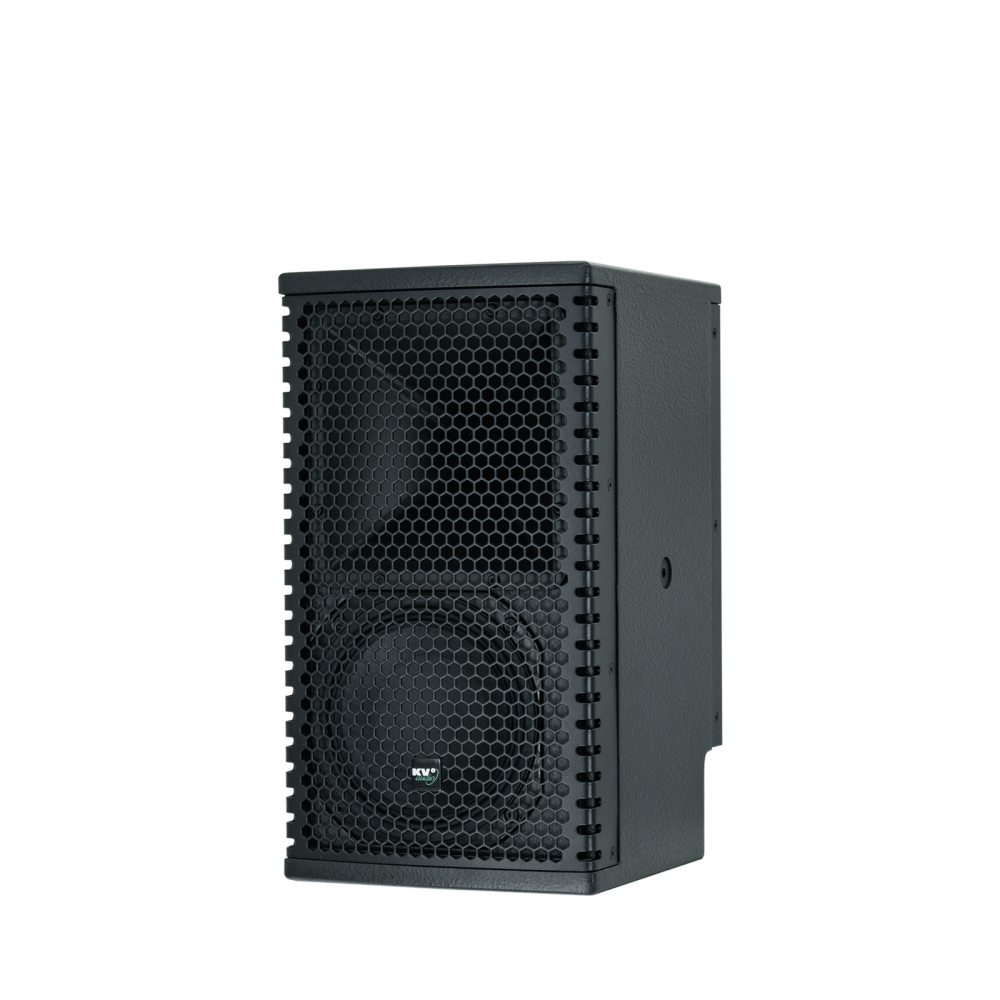
If you've spent any time around serious European touring rigs or high-end installed sound, you've probably encountered KV2 Audio — the Czech manufacturer with a reputation for doing things differently. The KV2 EX6 sits in their compact speaker range, and it's a fascinating piece of engineering that deserves a proper technical deep dive rather than the usual marketing fluff.
Here's what makes the EX6 genuinely interesting: KV2 doesn't follow the same design philosophy as most active speaker manufacturers. While the industry has largely converged on similar DSP-heavy approaches, KV2 takes a distinctly analogue-forward path that prioritises transient response and phase coherence. Whether that matters for your application — and whether it justifies the investment — is exactly what we're going to unpack.
Understanding KV2's Design Philosophy Before the Specs
Before we get into the numbers, it's worth understanding what makes KV2 tick as a manufacturer. Founded in the Czech Republic, KV2 Audio has built their entire product range around a few core principles that directly affect how the EX6 performs:
- Point source design — KV2 is committed to point source speaker configurations. The EX6 uses a true 2-way point source topology, meaning the sound originates from a single coherent source rather than multiple drivers spread across a baffle. This has measurable benefits for phase coherence and imaging, particularly at close to medium listening distances.
- Minimal DSP processing — Where most manufacturers lean heavily on DSP to correct driver behaviour, EQ the response flat, and apply limiting, KV2 uses carefully designed analogue circuitry for their crossover and signal path. Their argument is that excessive DSP processing introduces latency and alters transient response. Whether you agree philosophically, the audible result is distinctive.
- Active amplification matched to drivers — The EX6's internal amplification isn't an off-the-shelf module bolted in. KV2 designs their amplifier stages specifically for the driver complement, which means the amp-to-driver interface is optimised from the ground up.
This context matters because when you look at the EX6's specifications, some numbers might seem modest compared to competitors. The difference is in how those specifications translate to actual listening performance — and that's where KV2 consistently surprises people.
KV2 EX6 Technical Specifications Breakdown
Let's get into the detailed specifications and, more importantly, what they actually mean in practice.
| Specification | KV2 EX6 Detail | What It Means |
|---|---|---|
| Configuration | 2-way active | Dedicated LF and HF drivers with active crossover and individual amplification for each |
| Low Frequency Driver | 6.5-inch (165mm) neodymium | Compact yet capable LF transducer — neodymium magnet keeps overall weight manageable |
| High Frequency Driver | 1-inch (25mm) compression driver on horn | Horn-loaded for improved sensitivity and controlled dispersion in the HF range |
| Amplification | Built-in Class D amplification | Efficient, low-heat amplification matched specifically to the EX6 driver complement |
| Crossover | Active, internally set | Factory-optimised crossover point — no user adjustment needed or possible, ensuring consistent performance |
| Dispersion | Wide, controlled pattern | Designed for even coverage in compact venues and near-field applications |
| Enclosure | Multi-ply birch plywood | Superior resonance characteristics compared to MDF — adds cost but improves acoustic performance |
| Connectivity | XLR balanced input | Professional balanced connection for noise-free signal path |
| Mounting | Multiple rigging/mounting points | Versatile installation options for permanent and temporary deployments |
The 6.5-Inch Driver: Small But Purposeful
A 6.5-inch low-frequency driver might raise eyebrows if you're used to seeing 8-inch, 10-inch, or even 12-inch drivers in similarly positioned products. But here's where understanding KV2's approach pays off.
The EX6 isn't trying to be a bass-heavy PA speaker crammed into a small box. It's designed as a precision tool for applications where clarity, intelligibility, and transient accuracy matter more than raw low-frequency extension. Think corporate presentations, intimate venue monitoring, exhibition spaces, houses of worship with good acoustics, and high-end retail environments.
The neodymium motor structure on the LF driver provides several tangible benefits. Neodymium magnets deliver a stronger magnetic field relative to their weight, which translates to better transient response (the driver starts and stops more precisely) and reduced overall cabinet weight. For a speaker that might be pole-mounted, wall-mounted, or rigged overhead, that weight saving is genuinely practical — not just a spec-sheet talking point.
Horn-Loaded HF: Why It Matters
The 1-inch compression driver on a purpose-designed horn is where the EX6 starts to distinguish itself from the crowd. Most compact speakers in this size range use a direct-radiating dome tweeter. KV2's use of a compression driver and horn combination in a speaker this compact tells you something about their priorities.
A horn-loaded compression driver offers:
- Higher sensitivity — the horn acts as an acoustic transformer, coupling the driver more efficiently to the air. This means more output per watt, which translates to greater headroom before the amplifier works hard.
- Controlled dispersion — the horn's geometry defines a specific coverage pattern, so you get consistent frequency response across the listening area rather than the beaming and off-axis rolloff typical of dome tweeters.
- Better projection — horn-loaded systems throw sound further and more coherently, which is valuable even in smaller venues where you want the back of the room to hear the same tonal balance as the front.
The trade-off is typically size, but KV2 has managed to integrate this into a genuinely compact enclosure — which is no small engineering achievement.
Enclosure Construction: Where Budget Meets Performance
One specification that often gets overlooked but speaks volumes about a manufacturer's commitment to quality is enclosure material. The EX6 uses multi-ply birch plywood — the same material you'll find in high-end studio monitors and premium touring speakers.
Why does this matter? Compared to MDF (medium-density fibreboard), which is used in the vast majority of powered speakers at lower price points, birch plywood offers:
- Better stiffness-to-weight ratio — the enclosure resonates less, meaning more of what you hear is the drivers and less is the box colouring the sound
- Superior durability — plywood handles impacts, temperature changes, and humidity variation (hello, Australian climate) far better than MDF
- Improved screw and fastener retention — mounting hardware stays tight over years of use and transport
In the Australian context, this is particularly relevant. We deal with temperature extremes, humidity variation (especially in coastal venues versus inland), and the general rough handling that comes with equipment being loaded in and out of vans. MDF enclosures can swell, crack, and deteriorate in these conditions. Birch plywood handles it with considerably more grace.
Real-World Performance: Where the EX6 Excels
Technical specifications only tell part of the story. Here's where the EX6 genuinely shines in practice, based on the kind of performance characteristics KV2's design approach consistently delivers.
Speech Intelligibility
If your primary application involves spoken word — conferences, corporate events, houses of worship, exhibition halls — the EX6 is in its element. KV2's minimal-DSP approach and point source design result in exceptional transient response, which directly translates to speech clarity. Consonants are crisp, sibilants are natural rather than harsh, and intelligibility remains high even in acoustically challenging spaces.
This is measurable as well as audible. Systems built around speakers with good transient response consistently score higher on STI (Speech Transmission Index) measurements, which is why KV2 speakers turn up in parliamentary installations and courtrooms across Europe.
Music Reproduction Quality
For background music in retail, hospitality, or gallery environments, the EX6 delivers a level of fidelity that most compact speakers simply cannot match. The horn-loaded HF section produces detail and air in the upper registers without the fatigue-inducing brightness that plagues many compact active speakers. The midrange — arguably the most critical frequency band for musical engagement — benefits enormously from the point source design and minimal phase distortion.
For foreground music at moderate levels, the EX6 is genuinely impressive. You'll want to pair it with a dedicated subwoofer for full-range music at higher SPL, but from around 80-100Hz upward, the speaker performs well above what its physical size might suggest.
Monitoring Applications
In smaller venues, the EX6 works exceptionally well as a stage monitor or near-field reference for performers who need accuracy rather than raw volume. Musicians who've spent time with KV2 systems frequently comment on how natural the sound feels — there's a directness and lack of artificial processing character that experienced ears notice immediately.
Technical Comparisons: How the EX6 Stacks Up
Let's be honest about where the EX6 sits in the market. At KV2's price point, you're paying a premium over mass-market alternatives, and it's fair to ask what that premium buys you.
| Feature | KV2 EX6 | Typical Competitor (Similar Size) |
|---|---|---|
| HF Driver Type | 1" compression driver on horn | Usually dome tweeter or small format compression driver |
| Enclosure Material | Birch plywood | Typically MDF or injection-moulded plastic |
| Design Approach | Analogue-forward, minimal DSP | DSP-heavy with multiple correction layers |
| Phase Coherence | Excellent — point source design priority | Variable — often corrected via DSP delay alignment |
| Transient Response | Outstanding — minimal processing latency | Good but affected by DSP processing chain |
| Configurability | Minimal — factory-optimised | Often extensive DSP presets and EQ options |
| Build Quality | European manufacture, premium components | Variable — often Asian manufacture |
The Configurability Trade-Off
One area where the EX6 takes a deliberately different path is user configurability. Many competing active speakers offer onboard DSP with multiple presets, user-adjustable EQ, delay settings, and even network control. The EX6 is comparatively spartan in this regard — KV2's philosophy is that they've already optimised the speaker, and adding user-adjustable DSP introduces more opportunities to degrade the sound than improve it.
This is a philosophical divide in professional audio, and there's no universally correct answer. If you need extensive DSP control for complex installations with unusual acoustic challenges, you might find the EX6 limiting. If you value a speaker that sounds excellent out of the box and doesn't require hours of system tuning to perform well, KV2's approach is refreshingly effective.
For Australian integrators and sound engineers, this means the EX6 is faster to deploy and more consistently good across installations — but it requires that the acoustic environment and application genuinely suit the speaker's inherent characteristics.
Ideal Applications in the Australian Market
Understanding where the EX6 fits best helps you evaluate whether it's right for your specific needs.
Where the EX6 Excels
- Corporate AV installations — boardrooms, presentation spaces, and conference facilities where speech clarity is paramount
- Hospitality venues — restaurants, bars, and hotels requiring high-fidelity background music from a compact, visually unobtrusive speaker
- Retail environments — where sound quality directly impacts brand perception and customer experience
- Houses of worship — particularly smaller to medium venues where speech intelligibility and musical quality both matter
- Gallery and exhibition spaces — where audio quality needs to match the visual and experiential standard of the environment
- Small venue monitoring — near-field stage monitoring or front fill applications where accuracy trumps raw SPL
Where You Might Look Elsewhere
- High-SPL live sound — if you need to fill a large room at concert levels, the EX6's compact driver complement means it's not the right tool. Look at KV2's larger EX series or competing 10-12" active speakers.
- Budget-constrained multi-zone installations — if you're fitting out a 20-zone commercial space on a tight budget, the EX6's per-unit cost may push you toward more affordable alternatives. Though you'll likely use fewer EX6 units to achieve the same coverage quality.
- DJ monitoring — DJs typically want more low-end punch than a 6.5" driver can deliver without subwoofer support.
Installation and Practical Considerations
For Australian installers and end users, here are the practical details that matter.
Mounting Flexibility
The EX6's compact form factor and multiple mounting provisions make it versatile for installed applications. Whether you're pole-mounting on a speaker stand for portable use, wall-mounting in a permanent installation, or rigging from ceiling points, the speaker accommodates standard professional mounting hardware. The birch plywood enclosure means mounting points remain secure over time — a genuine concern with lesser materials.
Power and Signal Requirements
As an active speaker, the EX6 requires mains power at each speaker location — factor this into your installation planning. Signal input is via balanced XLR, which is the professional standard. You'll want to run quality balanced cable to each speaker, particularly in electrically noisy environments (which describes a surprising number of Australian commercial buildings with older wiring).
Climate Considerations
While the EX6 is designed for indoor use, the birch plywood construction and quality componentry handle temperature and humidity variation better than many alternatives. For venues in tropical Queensland or arid inland locations where environmental extremes are the norm, this durability has real long-term value. That said, direct outdoor exposure or permanently damp environments should be avoided — if you need weatherproof performance, look at dedicated outdoor-rated products.
Subwoofer Pairing
For full-range music reproduction or any application requiring solid low-frequency extension below 80Hz, you'll want to pair the EX6 with a suitable subwoofer. KV2 offers companion subwoofers designed to integrate seamlessly, and the improvement in the low end will be dramatic. The EX6 actually benefits from subwoofer support because relieving it of deep bass duties allows the 6.5" driver to focus on the midrange where it truly excels.
What Specifications Actually Tell You (and What They Don't)
Here's some honest guidance for technically-minded buyers evaluating the EX6 against alternatives:
Don't fixate on peak SPL numbers. Many manufacturers quote peak SPL figures that are achievable only at specific frequencies, with significant distortion, for very brief periods. Real-world usable SPL is typically 6-10dB below quoted peak figures. The EX6's output should be evaluated in the context of its intended applications — it's not designed to compete with 12" PA speakers on raw output.
Frequency response tells you range, not quality. Two speakers can both claim 65Hz-20kHz response and sound completely different. What matters is how flat the response is across that range, how it behaves off-axis, and how the phase response tracks across the crossover region. KV2's point source design gives them inherent advantages in phase coherence that don't show up in simple frequency response specifications.
Amplifier power isn't everything. A well-designed 100W amplifier matched precisely to its driver will outperform a generic 200W module driving an average driver, every time. KV2's integrated approach means their amplification is specifically voiced and optimised for the EX6's drivers — you can't evaluate it in isolation.
Listen before you buy. This applies to any speaker, but particularly to KV2 products. Their design approach produces a sound character that's distinctive and different from the DSP-processed norm. Most people who hear KV2 speakers in a proper demonstration are genuinely impressed, but personal preference and application suitability should always be confirmed with your own ears.
Value Proposition: Why Pay the KV2 Premium?
KV2 products are not budget gear, and the EX6 is priced accordingly. Here's the honest case for the investment:
- Longevity — birch plywood construction and quality components mean the EX6 will outlast cheaper alternatives by years, potentially decades. Calculate your cost per year of service, not just the purchase price.
- Reduced system complexity — the EX6's excellent out-of-box performance means less time (and expense) spent on system tuning, DSP programming, and ongoing adjustment.
- Client satisfaction — for integrators and installers, specifying KV2 means fewer callbacks and complaints about sound quality. Your clients hear the difference, even if they can't articulate why.
- Brand credibility — KV2's reputation in professional audio is earned through engineering excellence, not marketing spend. Specifying KV2 tells clients you prioritise performance over cost-cutting.
For Australian buyers, the landed cost of European-manufactured equipment is always going to be higher than Asian-manufactured alternatives. The question is whether the performance difference justifies that premium for your specific application — and in the applications where the EX6 is properly suited, the answer is almost always yes.
Frequently Asked Technical Questions
Can the EX6 be used as a standalone full-range speaker?
For speech and light background music, absolutely. For music-focused applications at moderate to high levels, you'll get significantly better results pairing it with a dedicated subwoofer to handle frequencies below 80-100Hz.
How does the EX6 compare to similarly-sized speakers with onboard DSP?
The EX6 will typically sound more natural, more detailed, and more dynamically responsive. Speakers with extensive DSP may offer more flexibility for acoustic correction in difficult rooms, but often at the expense of the qualities that make the EX6 special. It's a genuine trade-off that depends on your priorities.
Is the EX6 suitable for daisy-chaining in multi-speaker installations?
Check with your KV2 supplier regarding the specific output/link connectivity options on the EX6. For multi-zone installations, you'll typically want to run individual feeds from your mixer or DSP to each speaker or zone for maximum control.
What's the warranty situation for Australian buyers?
KV2 products sold through authorised Australian dealers carry the manufacturer's warranty backed by local distribution support. Always purchase through authorised channels to ensure warranty coverage and access to genuine service support.
Final Technical Assessment
The KV2 EX6 is a compact active speaker that punches significantly above its weight class in terms of audio quality, build integrity, and long-term reliability. It's not trying to be everything to everyone — it's a precision tool designed for applications where sound quality, speech intelligibility, and musical accuracy matter more than raw SPL output.
For Australian audio professionals, integrators, and venue operators who understand the value of genuine quality and are willing to invest in equipment that performs exceptionally for years, the EX6 represents a compelling proposition. It's the kind of speaker that makes you reassess what's possible from a compact 2-way enclosure.
Ready to hear the KV2 difference for yourself? View the KV2 EX6 2-Way Active Speaker System at MusiconStage — Australia's source for premium professional audio equipment. For specifications, pricing, and demonstration enquiries, the team at MusiconStage can connect you with the right solution for your application.