
KV2 EX26 Active Speaker System: Full Technical Breakdown for Aussie Pros 2026
KV2 EX26 2-Way Active Speaker System: Complete Technical Analysis for Australian Audio Professionals
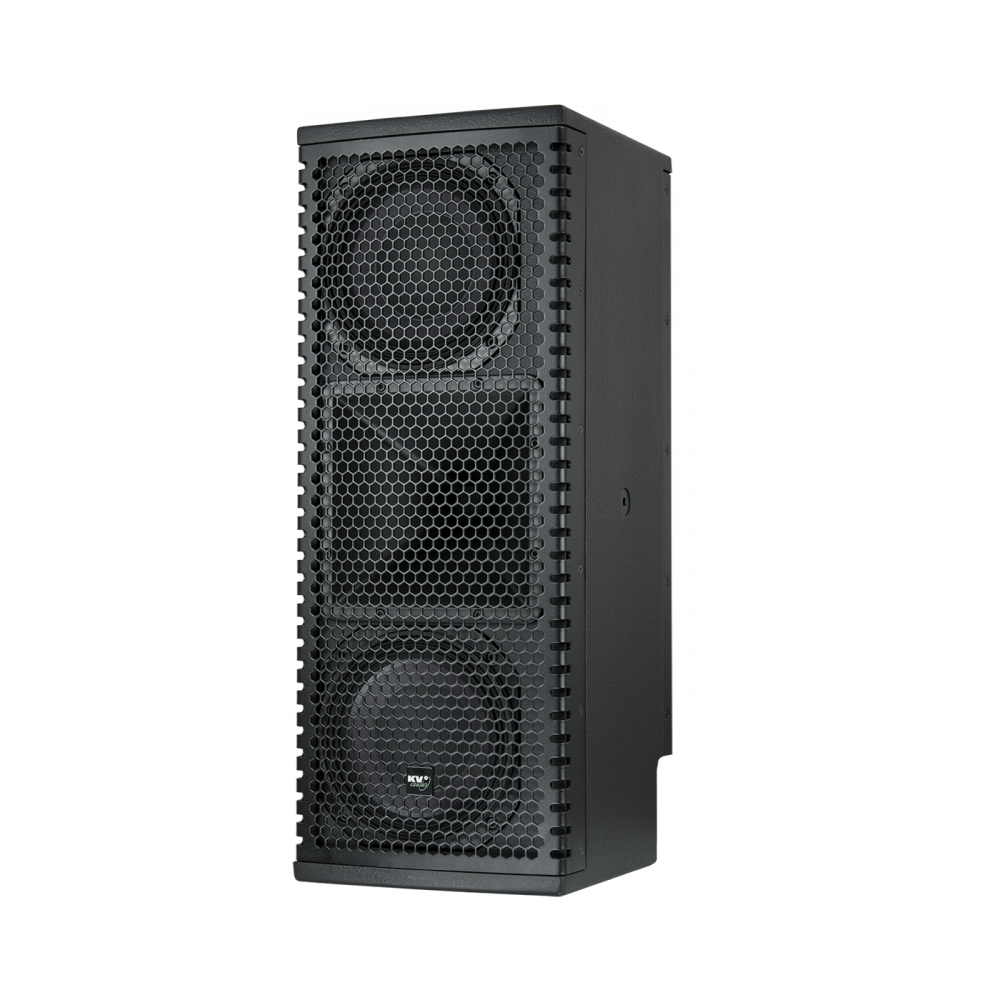
If you've spent any serious time around professional audio — touring rigs, high-end installs, critical listening environments — you've probably heard the name KV2 Audio spoken with a certain reverence. The Czech manufacturer has built a fiercely loyal following among engineers who prioritise sonic accuracy and transient response over raw SPL numbers. The KV2 EX26 sits within their EX Series as a versatile 2-way active loudspeaker designed for applications where audio quality genuinely matters more than spec-sheet bragging rights.
This isn't a speaker you'll find on festival main stages competing with line arrays for sheer throw distance. Instead, the EX26 occupies a space that's arguably more demanding: medium-format applications where every listener is close enough to hear exactly what the speaker is doing, warts and all. Let's break down what's actually going on inside this box and whether it deserves a place in your Australian venue, touring rig, or install project.
Understanding KV2's Design Philosophy Before the Specs
Before diving into the EX26's specifications, it's worth understanding why KV2 builds speakers the way they do — because it directly affects how you should evaluate this product against alternatives from brands like d&b audiotechnik, L-Acoustics, or QSC.
KV2 Audio is fundamentally committed to point-source design. While much of the professional audio world has moved toward line arrays for scalability and coverage consistency, KV2 argues — with considerable acoustic evidence — that a well-designed point source produces superior transient response, more natural imaging, and better phase coherence than arrayed systems. Whether you agree philosophically or not, the sonic results are difficult to argue with once you've heard a properly deployed KV2 system.
The company's SLA (Super Live Audio) approach focuses on preserving the natural dynamics and transient detail of live sound, rather than processing and limiting the signal into submission. This means KV2 amplifier modules and DSP are tuned for musicality and accuracy, not just protection and maximum output. It's a fundamentally different engineering priority, and the EX26 embodies this thinking from driver selection through to its onboard amplification.
KV2 EX26: Core Technical Specifications
| Specification | Detail |
|---|---|
| System Type | 2-way active, point source |
| Low Frequency Driver | 1 × 15" (380 mm) woofer |
| High Frequency Driver | 1 × 1.4" exit compression driver on rotatable horn |
| Nominal Dispersion | 60° × 40° (H × V), rotatable |
| Frequency Response | 55 Hz – 20 kHz (±3 dB) |
| Maximum SPL | 131 dB peak |
| Amplification | Onboard Class D, bi-amplified |
| Total Amplifier Power | 1000 W (combined LF/HF) |
| DSP | Integrated, with crossover, EQ, limiting, and delay |
| Inputs | XLR balanced analogue, link output |
| Enclosure | Baltic birch plywood, polyurea coated |
| Rigging | Integrated M10 rigging points, pole mount socket |
| Weight | Approximately 32 kg |
Driver Technology: What's Actually Moving the Air
The 15-Inch Low Frequency Section
KV2's choice of a 15" woofer in a 2-way configuration is deliberate and telling. Many competing active speakers in this class use 12" drivers, which can offer a slightly more compact enclosure but sacrifice low-frequency extension and cone area. The 15" driver in the EX26 provides meaningfully more displacement volume, which translates directly into fuller, more authoritative low-mid and bass reproduction — particularly noticeable on kick drums, bass guitars, and lower vocal registers.
The woofer uses a high-excursion design with a reinforced cone and substantial magnet assembly. KV2 doesn't chase ultra-lightweight cone materials the way some manufacturers do; they prioritise self-damping characteristics that reduce breakup modes and cone resonances. The practical result is a low-frequency response that sounds controlled and musical rather than boomy or one-note, even when you're pushing the system.
The 1.4" Compression Driver and Horn
The high-frequency section centres on a 1.4" exit compression driver coupled to a precision-moulded horn. The 60° × 40° dispersion pattern provides focused coverage that's ideal for throw distances in medium-sized venues — think 10 to 25 metres as the primary coverage zone. The rotatable horn is a genuinely useful feature that allows you to orient the speaker in either horizontal or vertical configurations without losing your dispersion pattern. For installs where the speaker needs to be mounted on its side, this is invaluable.
KV2's compression drivers are selected for smooth response through the critical 2–8 kHz range where human hearing is most sensitive and where poor compression drivers create harshness and listener fatigue. If you've ever mixed on a system where the high-mids become fatiguing after an hour, you know exactly why this matters.
Onboard Amplification and DSP: The Hidden Differentiator
The active electronics in the EX26 represent arguably the most significant part of KV2's value proposition — and where they diverge most meaningfully from competitors.
The bi-amplified Class D amplifier module delivers approximately 1000 watts of combined power, split between the LF and HF sections with optimised crossover frequencies managed by the internal DSP. Class D amplification keeps the weight manageable while providing the current delivery needed for dynamic transient peaks. However, KV2's implementation focuses less on raw wattage and more on the quality of the power supply and output stage design, which affects how the amplifier behaves under dynamic load conditions.
Here's where it gets interesting from a technical perspective: many powered speakers use aggressive DSP limiting to protect drivers and inflate maximum SPL specifications. KV2 takes a more conservative approach. Their DSP processing is designed to maintain the natural dynamics of the audio signal for as long as possible, only engaging protection limiting when genuinely necessary. The practical difference? The EX26 sounds louder and more dynamic at moderate levels than competing speakers with higher published SPL figures, because it isn't squashing transients and compressing dynamics just to stay within safe operating parameters.
The integrated DSP handles crossover duties, driver alignment, EQ contouring, and thermal protection. Importantly, KV2 does not typically provide user-accessible DSP presets or processing — the tuning is factory-optimised and designed to work as a complete system. If you're the sort of engineer who wants to load custom FIR filters and redesign the crossover, this isn't the platform for that. If you want a speaker that sounds right out of the box with minimal system processing required, this is exactly the approach you want.
Real-World Performance: What to Expect in the Field
Coverage and Throw
With a 60° × 40° dispersion pattern, the EX26 provides moderately tight coverage that favours quality over quantity. In practical terms, a pair of EX26 speakers on sticks will comfortably cover a room of 150–300 people with consistent SPL and frequency response throughout the audience area, depending on room geometry. The 15" woofer maintains pattern control further into the low-mid range than a 12" equivalent, reducing the common problem of "bass blooming" off-axis that plagues smaller-format speakers.
For larger rooms or events, you'll want to add KV2 subwoofers — the EX26 extends to around 55 Hz, which is respectable but won't deliver the sub-bass impact required for modern music production. A pair of EX26 tops with appropriate KV2 subs creates a system that punches well above its apparent size class.
Transient Response and Musicality
This is where the EX26 genuinely separates itself from most powered speakers in its price range. KV2's emphasis on transient preservation means that percussive instruments — snare hits, acoustic guitar attacks, piano transients — arrive with a speed and impact that many engineers describe as "hearing the speaker disappear." It's not adding anything; it's not smoothing anything out. The attack of a snare drum sounds like a snare drum, not like a speaker reproducing a snare drum.
For spoken word applications — conferences, corporate events, theatre — this translates to exceptional vocal intelligibility. The phase coherence of a true point source combined with KV2's transient-focused amplifier design means speech is clear and natural without requiring heavy-handed EQ or excessive level.
Handling Dynamic Range
The EX26's 131 dB peak SPL figure looks modest compared to some competitors claiming 135+ dB. However, KV2 measures their specifications more conservatively than many manufacturers, and the usable dynamic range of the EX26 is genuinely impressive. The system maintains its tonal character and transient accuracy up to surprisingly high output levels before limiting becomes audible. In practice, many engineers find they need less overall SPL because the perceived loudness — driven by dynamics rather than compression — is greater than the numbers suggest.
Build Quality and Practical Considerations for Australian Use
The EX26's enclosure is constructed from Baltic birch plywood with a polyurea coating. Baltic birch is the gold standard for professional loudspeaker enclosures — it's dimensionally stable, acoustically well-damped, and significantly more rigid than the MDF or cheaper plywood used in many powered speakers. The polyurea finish provides excellent resistance to impacts, scratches, and moisture, which is particularly relevant for Australian touring conditions where speakers routinely travel thousands of kilometres and face temperature extremes from coastal humidity to inland heat.
At approximately 32 kg, the EX26 is a substantial but manageable speaker. It's heavier than most 12" active speakers but lighter than many passive 15" cabinets with comparable performance. The weight reflects the solid construction and the mass of the amplifier module — this isn't a speaker that's been engineered to save grams at the expense of durability.
Integrated M10 rigging points and a standard 35 mm pole mount socket provide flexible deployment options. The rigging hardware is rated for permanent installation, making the EX26 suitable for both touring and fixed-install applications.
Ready to hear the KV2 difference for yourself? Check out the KV2 EX26 at MusiconStage — Australia's trusted source for professional audio.
Technical Comparison: How the EX26 Stacks Up
| Feature | KV2 EX26 | Typical 15" Active (Competitor) |
|---|---|---|
| Design Philosophy | Point source, transient-focused | SPL-focused, heavily processed |
| Enclosure Material | Baltic birch plywood | MDF or injection-moulded plastic |
| DSP Approach | Minimal processing, factory-optimised | Heavy limiting, user-adjustable presets |
| Dynamic Range Preservation | Excellent — late-engaging limiters | Moderate — aggressive limiting common |
| Transient Accuracy | Exceptional | Good to average |
| Rotatable Horn | Yes | Varies |
| Install Suitability | Full M10 rigging, permanent install rated | Often portable-focused only |
The honest comparison here isn't about raw specifications — on paper, several competitors will show higher SPL figures or lower weight. The differentiation is in how the EX26 sounds and how it performs over a full night of mixing. Engineers who switch to KV2 systems consistently report needing less system EQ, less compression on their outputs, and less overall volume to achieve the same perceived impact. That's the practical advantage of superior transient response and phase coherence.
Ideal Applications for the KV2 EX26 in Australia
- Live music venues (200–500 capacity): The EX26's musicality makes it ideal for venues that host diverse acts — from jazz trios to rock bands. The transient accuracy rewards good musicians and good mixing.
- Corporate AV and conferencing: Exceptional speech intelligibility makes the EX26 a premium choice for conference venues, hotels, and function centres where vocal clarity is paramount.
- Theatre and performing arts: The natural, uncoloured reproduction suits theatrical sound design where the speaker should be heard but not noticed.
- Houses of worship: Spoken word clarity combined with musical dynamics makes this speaker particularly well-suited to worship environments where both speech and music must be reproduced faithfully.
- Boutique touring rigs: For production companies that prioritise sound quality over maximum SPL, the EX26 offers a compact, high-performance solution that fits in smaller trucks while delivering premium results.
What You Should Consider Before Buying
The Investment Question
KV2 products sit at the premium end of the professional audio market. The EX26 will cost meaningfully more than a QSC K-Series or Yamaha DZR of similar format. The question you need to answer honestly is: does your application benefit from the sonic advantages KV2 offers? If you're running a nightclub where 90% of the content is heavily compressed electronic music at extreme SPL, the EX26's transient advantages won't be fully utilised. If you're running a live music venue, a theatre, or a premium corporate AV operation where sound quality directly affects client satisfaction, the investment makes considerably more sense.
System Ecosystem
KV2 systems work best within the KV2 ecosystem. Their subwoofers, amplification, and processing are designed to work together as integrated systems. While you can certainly pair an EX26 with a third-party subwoofer, you'll get the best results with KV2's matched sub options. Factor the full system cost into your budget rather than just the top price.
Support in Australia
KV2 has established distribution in Australia, but they're not as widely stocked as brands like JBL, QSC, or Yamaha. Purchasing through an authorised dealer like MusiconStage ensures you receive proper warranty support, technical backup, and access to spare parts. Given the EX26's premium positioning, having reliable dealer support is essential — this isn't a product you want to buy grey-market.
Weight and Logistics
At 32 kg, the EX26 is manageable for two-person load-in but not something you'll want to carry up three flights of stairs solo. If you're coming from lighter 12" active speakers, factor the weight difference into your crew and transport planning. The Baltic birch construction that gives the EX26 its acoustic advantages does add mass compared to plastic-enclosure competitors.
Frequently Asked Technical Questions
Can the EX26 work without a subwoofer?
For speech and acoustic music, absolutely — the 55 Hz low-frequency extension is adequate for many applications. For contemporary music with significant sub-bass content, you'll want to add subs. The EX26 actually benefits from being high-passed at 80–100 Hz when subs are present, as this frees up the 15" driver to focus on the mid-bass and midrange where it excels.
How does it handle outdoor applications?
The polyurea coating and sealed electronics module make the EX26 suitable for covered outdoor use. As with any professional speaker, direct exposure to rain is not recommended, but it will handle the humidity and temperature variations common to Australian outdoor events without issue. The focused 60° × 40° dispersion is an advantage outdoors where you want to direct sound at the audience rather than wasting energy into the sky.
Is user-accessible DSP available?
KV2's philosophy is factory-optimised tuning. The EX26 does not offer user-adjustable DSP presets or remote control software in the way that brands like d&b or L-Acoustics do. This is by design — KV2 believes their factory tuning delivers optimal results, and adding user DSP introduces the possibility of degrading the carefully engineered system performance. Most engineers who work with KV2 regularly come to appreciate this approach, as it dramatically simplifies system setup.
What amplifier topology does KV2 use?
The EX26 uses Class D amplification with KV2's proprietary power supply design. While some audiophile purists still favour Class AB, KV2's Class D implementation has been refined to deliver the transient performance and damping factor characteristics that their design philosophy demands. The efficiency benefits of Class D — less heat, lighter weight, lower power draw — make it the practical choice for active speakers without sacrificing audio quality at this level of engineering.
The Bottom Line: Who Should Buy the KV2 EX26?
The KV2 EX26 is not for everyone, and KV2 would be the first to tell you that. It's for audio professionals who have heard enough speakers to know what they're listening for — and who are willing to invest in a product that prioritises sonic accuracy over spec-sheet supremacy.
If you value transient response, phase coherence, and natural dynamics over raw maximum SPL, the EX26 delivers at a level that very few speakers in its format can match. If you're building a premium venue install, running a quality-focused production company, or outfitting a performance space where the sound system needs to be genuinely excellent, this speaker belongs on your shortlist.
The EX26 rewards good source material, good mixing, and good acoustics. It doesn't flatter poor recordings or mask bad room modes. It tells the truth, and for many Australian audio professionals, that's exactly what they want from their speakers.
Explore the full KV2 EX26 specifications and pricing at MusiconStage Australia.