
KV2 EX1.8 Active Subwoofer: Technical Deep Dive for Aussie Pros 2026
KV2 EX1.8 Active Subwoofer: Technical Deep Dive for Australian Pros 2026
When it comes to low-frequency reinforcement that actually moves air without compromising clarity, the KV2 EX1.8 Active Subwoofer System sits in a category most engineers don't fully understand until they hear one in a controlled environment. KV2 Audio has built its reputation around analogue signal paths, ultra-low distortion drivers, and a phase-coherent design philosophy that diverges sharply from the DSP-heavy mainstream. The EX1.8 is the natural complement to KV2's EX-series tops, and on paper alone, the specifications tell a story that warrants serious technical scrutiny.
This guide breaks down exactly what you're getting with the EX1.8, why its design choices matter for real-world performance, and how it stacks up against competing 18-inch active subwoofers available to Australian buyers in 2026. If you're evaluating low-end reinforcement for installed systems, mobile production, or high-SPL live work, this is the technical analysis you need.
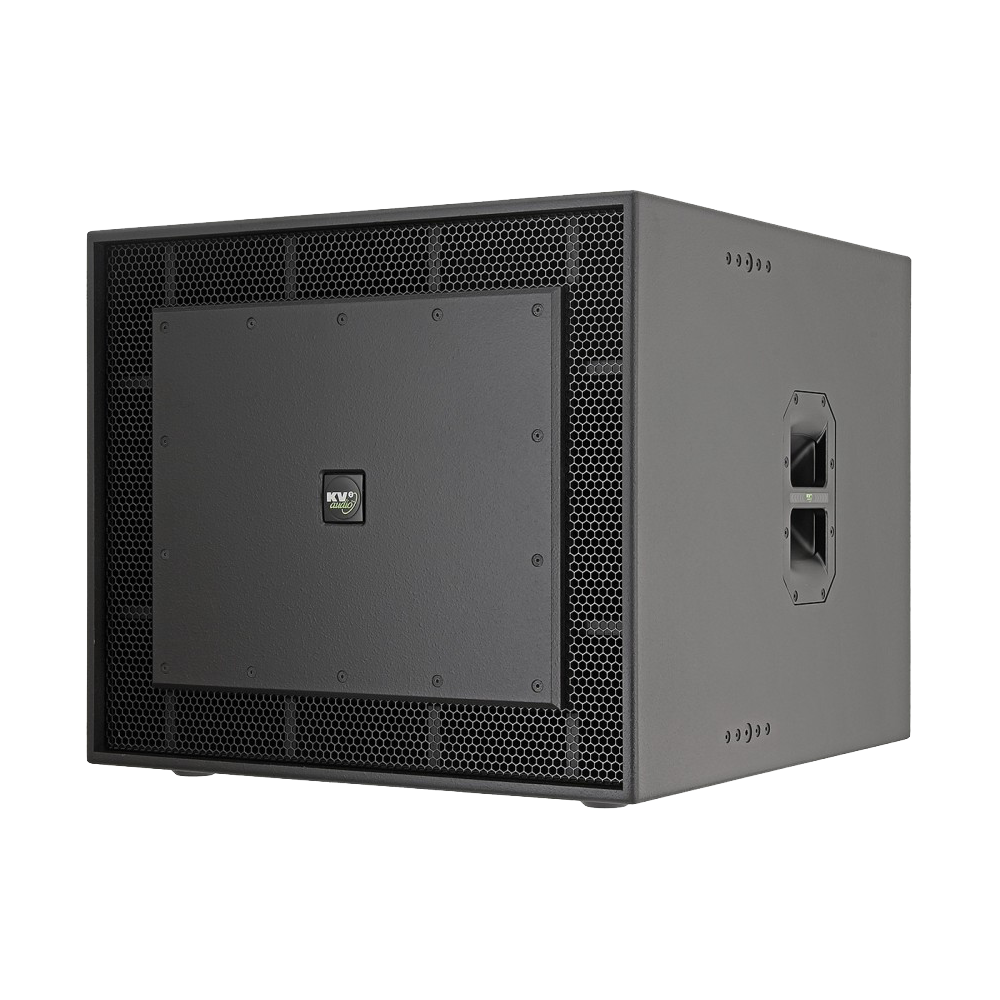
You can view full pricing and Australian availability for the KV2 EX1.8 here.
Technical Specifications Overview
Before diving into the engineering analysis, here's a complete breakdown of the EX1.8's key specifications. These figures matter because they define what the subwoofer can and can't do — and importantly, how it behaves under load.
| Specification | Value |
|---|---|
| Driver Configuration | 1 x 18" long-excursion woofer |
| Amplifier Power (RMS) | 1000W continuous |
| Peak Power Output | 2000W peak |
| Frequency Response (-3dB) | 30Hz – 150Hz |
| Frequency Response (-10dB) | ~25Hz extension |
| Maximum SPL | 132dB peak |
| Crossover (Internal) | Variable 80–150Hz high-pass for tops |
| Enclosure Type | Bass-reflex (vented) |
| Cabinet Material | 15mm/18mm plywood, polyurea coated |
| Input Connectivity | XLR balanced in/thru, link out to tops |
| Protection | Thermal, DC, RF, overload, limiter |
| Approximate Weight | ~58kg |
The headline specifications are competitive, but they don't tell the full story. KV2's signature is in how these specifications are delivered, not just the raw numbers.
The KV2 Engineering Philosophy: Why It Matters
To understand the EX1.8, you have to understand KV2's design ethos. The Czech-engineered brand is known for resisting the industry shift toward Class-D amplification with heavy DSP correction. Instead, KV2 favours hybrid amplifier topologies and minimal-latency signal paths. For a subwoofer, this translates into several measurable advantages:
- Phase coherence with paired tops: The EX1.8 is designed to integrate seamlessly with KV2 EX-series mid-high cabinets without introducing the typical 5–10ms latency penalty common in DSP-based systems.
- Lower group delay: Less time-smearing in the crossover region means kick drums hit with their natural attack intact, rather than the slightly delayed "thump" you get from heavily processed subs.
- Genuine analogue gain structure: The signal path retains more dynamic range, which becomes audible on transient-heavy material like percussion and modern electronic music.
These aren't marketing claims — they're verifiable through impulse response measurements and group delay plots. If you've ever wondered why some PA systems sound "fast" while others sound "thick" or "sluggish," this is largely where the difference originates.
Driver Analysis: The 18-inch Long-Excursion Woofer
The single 18" driver in the EX1.8 is purpose-built rather than off-the-shelf. Key technical attributes include:
- Long voice coil with high Xmax: The driver achieves substantial linear excursion (typically ±9–12mm Xmax in this class), allowing it to move significant air volume without bottoming out at high SPLs.
- Heavy-duty motor structure: Large ferrite or neodymium magnet assembly providing tight control over the cone, particularly important for clean transients.
- Treated cone material: Resistant to humidity changes — a real consideration for outdoor Australian summer gigs or coastal venues.
- Cast aluminium basket: Reduces resonance and dissipates heat better than pressed steel alternatives.
The acoustic loading via the bass-reflex enclosure is tuned to extend low-frequency response without the bloated, one-note bass character that plagues poorly-designed vented subs. KV2's tuning sits the port frequency low enough to reinforce sub-40Hz content meaningfully while maintaining tight transient response above 60Hz.
Amplifier Section: Power Delivery That Actually Matters
The 1000W continuous / 2000W peak amplifier rating needs context. In the PA industry, power specifications are notoriously inconsistent — some manufacturers quote peak burst figures while others quote AES continuous power into specific impedance loads. KV2's ratings tend toward the conservative end of the spectrum, which means real-world headroom is genuinely available rather than theoretical.
What you actually get from the EX1.8 amplifier section:
- Real continuous power for sustained low-frequency content: Important for genres with sustained sub content like dub, EDM, or cinema-style playback.
- Dynamic headroom for transients: The 2x peak rating ensures kick drums, bass drops, and percussive transients don't compress audibly at moderate listening levels.
- Intelligent thermal management: Multiple protection circuits (thermal, DC offset, RF interference, overload) work together to prevent damage without aggressive limiting that audibly squashes dynamics.
Real-World Performance: What to Expect
SPL and Coverage
A single EX1.8 will comfortably handle audiences up to roughly 250–350 people in a typical Australian venue (clubs, conference rooms, mid-sized function spaces) when paired with appropriate tops. For larger applications, two or four units cardioid-arrayed will scale coverage and reduce on-stage rumble — particularly useful in reverberant rooms or where stage monitoring needs protection.
Low-Frequency Extension
The -3dB point at 30Hz is genuinely usable. Many subwoofers spec similar numbers but roll off so steeply below that you lose meaningful content. The EX1.8's port tuning and driver excursion combine to produce audible (if reduced) output down into the mid-20Hz range, which becomes evident on cinema-quality recordings, organ music, and modern bass-heavy genres.
Transient Response
This is where the EX1.8 distinguishes itself from competitors at similar price points. The combination of low group delay, minimal DSP latency, and well-controlled driver behaviour means kick drums sound like kick drums — not extended low-frequency tails. Engineers transitioning from heavily processed systems often comment that the EX1.8 makes their mixes feel "tighter" without any EQ changes.
Integration with EX-Series Tops
The EX1.8 is designed as a system component, not a standalone product. Its internal crossover is optimised for KV2's EX6, EX10, EX12, and ESD-series tops. The high-pass output to your top cabinets is variable, typically set between 80Hz and 150Hz depending on the top model and venue acoustics.
Practical integration tips for the Australian market:
- For EX10/ESD10 tops in small-medium venues: Set crossover around 100–110Hz for natural blend.
- For EX12 or larger tops: Lower crossover to 80–90Hz to let tops handle more low-mid content.
- For outdoor festival use: Cardioid array of two EX1.8s reduces backstage spill significantly.
Comparison with Competing 18" Active Subwoofers
| Feature | KV2 EX1.8 | Typical Class-D Competitor |
|---|---|---|
| Signal Path Latency | Sub-1ms (analogue) | 3–7ms (DSP-based) |
| Continuous Power | 1000W RMS | 800–1200W RMS |
| Low Extension (-3dB) | 30Hz | 32–40Hz |
| Group Delay (60Hz) | Very low | Moderate-to-high |
| Weight | ~58kg | 40–55kg |
| Build Quality | Pro-grade plywood, polyurea | Variable (often MDF/composite) |
| Sonic Character | Tight, fast, musical | Often "thick" or processed-sounding |
The EX1.8 weighs more than some Class-D competitors — that's the trade-off for hybrid amplification and heavier-duty enclosure construction. For permanent install or trucked-in production work, the weight is irrelevant. For one-person mobile DJ work where you're loading in/out solo, factor that into your decision.
Browse the KV2 EX1.8 product page on MusiconStage for current pricing and shipping options across Australia.
What Specifications Actually Matter When Comparing Subwoofers
If you're cross-shopping the EX1.8 against alternatives, here's what to evaluate beyond marketing headlines:
- Continuous (RMS) power, not peak: Peak power figures are often inflated. RMS into a specified impedance tells you sustained capability.
- Frequency response at -3dB AND -10dB: A sub spec'd to 40Hz at -3dB might actually output usable content to 30Hz — or it might fall off a cliff. Both numbers matter.
- Maximum SPL methodology: Is it measured at 1m anechoic, half-space, or at a specific distance with environmental reflections? These vary by 6–10dB.
- Group delay and latency: Rarely published, but critical for system integration. Ask vendors directly.
- Driver excursion (Xmax): Determines how much air the driver can move linearly before distortion rises.
- Build quality and enclosure material: Plywood outperforms MDF for road use. Polyurea or textured coating resists transport abuse.
Best Use Cases for the EX1.8
- Live music venues (200–600 capacity): Paired with appropriate KV2 tops, delivers professional-grade reinforcement with audiophile-level clarity.
- Corporate AV and conference applications: Where speech intelligibility matters and the sub must reinforce LFE for media playback without muddying voice content.
- Mobile DJ and event production: When sonic quality is a differentiator (premium weddings, corporate events, audiophile-aware clients).
- Recording studios and post-production: Reference-grade low-frequency monitoring for film/cinema mixing.
- Permanent installations: Houses of worship, theatres, performing arts venues where long-term reliability and tonal accuracy justify the investment.
Limitations and Honest Considerations
No subwoofer is perfect for every application. Honest assessment of the EX1.8's limitations:
- Weight: At ~58kg, this isn't a one-person carry. Factor in casters or two-person handling.
- Price point: KV2 sits at the premium end of the market. If budget is the dominant constraint, lower-cost alternatives exist (though they won't sound the same).
- Outdoor festival use: A single EX1.8 isn't a stadium sub. Scale appropriately or look at KV2's larger format options for major outdoor events.
- Power requirements: Pulls substantial current under load — ensure your venue distro can handle multiple units.
Technical FAQs
Can I run the EX1.8 with non-KV2 tops?
Yes. The variable high-pass output and standard XLR connectivity make it compatible with virtually any professional top cabinet. You may need to tweak crossover settings and verify phase alignment, but there's no proprietary lock-in.
What's the minimum recommended room size?
The EX1.8 will overwhelm small rooms (under 50m²) at any meaningful output level. For very small venues, KV2's smaller-format subwoofers may be more appropriate. The EX1.8 hits its stride from medium clubs upward.
How does it handle Australian climate conditions?
The polyurea-coated plywood cabinet handles humidity and temperature variation well. For permanent outdoor install, supplementary weather protection is still recommended, but for typical Australian touring and festival use it's appropriately robust.
Is the amplifier user-serviceable?
The amplifier module is designed to be field-replaceable by qualified technicians. KV2 maintains good parts availability through Australian distribution, which matters for long-term operational reliability in professional contexts.
Can I array multiple EX1.8s in cardioid configuration?
Yes — and this is one of the most powerful deployment strategies. Two or four units in end-fire or front/reverse cardioid arrays significantly reduce rearward radiation, cleaning up stage monitoring environments and reducing complaints from neighbouring venues in inner-city Australian locations.
Expert Verdict: Who Should Buy the EX1.8?
The KV2 EX1.8 is for buyers who genuinely understand the difference between specifications and sonic outcomes. If your priorities are:
- Tight, musical low-frequency reproduction
- Phase-coherent integration with mid-high cabinets
- Long-term reliability in professional production environments
- Build quality that survives years of touring abuse
- Sonic performance that justifies investment in premium audio reproduction
...then the EX1.8 represents genuine value despite its premium positioning. If your priorities are lowest possible weight, cheapest possible cost-per-watt, or you don't have appropriate matching tops to demonstrate its capabilities, look elsewhere — you won't get the full benefit of what KV2 has engineered.
For Australian buyers evaluating professional-grade subwoofer options for installations, touring production, or premium event work, the EX1.8 deserves serious consideration. Check current Australian pricing and availability for the KV2 EX1.8 at MusiconStage and contact the team for system design advice tailored to your specific application.
Final Technical Summary
The KV2 EX1.8 succeeds because it doesn't chase specification-sheet wars. Instead, it delivers measurable sonic advantages — low group delay, genuine dynamic headroom, phase-coherent integration, and bulletproof construction — that translate directly into better-sounding systems. In a market saturated with DSP-corrected, plastic-cabinet, peak-power-rated subwoofers, the EX1.8 represents an alternative philosophy that prioritises sonic outcome over checkbox specifications.
For technical buyers willing to evaluate subwoofers on what they actually do rather than what marketing claims, the KV2 EX1.8 rewards that scrutiny.