
KV2 EX1.5 15-Inch Active Sub: Australian Buyer's Guide 2026
KV2 EX1.5 15-Inch Active Sub: Australian Buyer's Guide 2026
Choosing a powered subwoofer is one of those decisions that looks simple on paper and gets complicated the moment you start reading spec sheets. Every manufacturer quotes big wattage numbers. Every brochure promises "tight, musical bass". And yet two subs with nearly identical published figures can sound wildly different in a room — one feels fast and articulate under a kick drum, the other turns into a boomy mess by the third song.
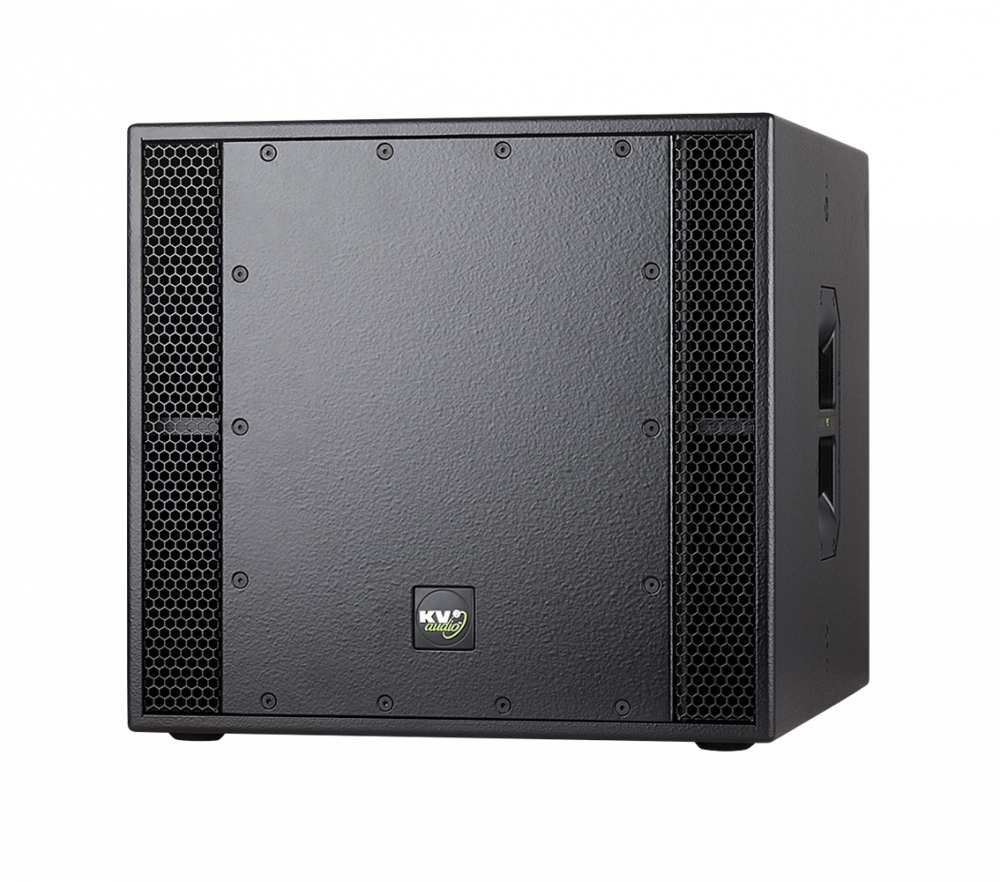
The KV2 EX1.5 sits in an interesting spot in that market. It's a 15-inch active subwoofer rated at 500 watts, built by a Czech manufacturer with a reputation for doing things differently to almost everyone else. It's not the cheapest 15" powered sub you can buy in Australia. It's not the loudest, either. What it offers is a specific engineering philosophy — and whether that philosophy is worth your money depends entirely on what you're doing with it.
This guide walks through where the EX1.5 fits, how it stacks up against the obvious alternatives at similar and lower price points, and — importantly — who should probably buy something else.
First, understand the market you're shopping in
The Australian powered-sub market splits fairly cleanly into three tiers, and knowing which tier you're actually shopping in saves a lot of wasted comparison.
Entry tier (roughly $900–$1,600)
Plastic or lightweight ply cabinets, generic Class-D amp modules, basic DSP presets. Brands like Behringer, Alto, and the budget end of RCF and dB Technologies live here. These will move air at a pub gig and they represent genuine value if you're pushing recorded music into a room and nobody's listening critically. Longevity and low-level detail are where the compromises show.
Working-pro tier (roughly $1,800–$3,500)
This is the bulk of the market and where most hire companies buy. Braced birch or quality ply cabinets, better drivers, more capable amplification, usable DSP. RCF SUB 705-AS II, dB Technologies SUB 618, EV ETX-15SP, QSC KS112 all compete here. The KV2 EX1.5 sits at the upper edge of this bracket, and its competition is fierce.
Premium / touring tier ($4,000+)
Cardioid arrays, high-excursion 18s and 21s, network control, rigging hardware. L-Acoustics, d&b, Meyer, and KV2's own larger ES and VHD systems. Different conversation entirely.
So: the EX1.5 asks working-pro money. The question is what you get for it that a comparably priced RCF or EV doesn't give you.
What makes KV2 different — and why it matters here
KV2 Audio was founded by engineers who previously worked on some very well-known touring systems, and the company built its identity around a fairly stubborn position: keep the signal path analogue and keep it short.
Most modern powered speakers run your signal through an A/D converter, a DSP chip handling crossover, EQ, limiting and driver protection, then a D/A converter, then the amp. That's enormously flexible — it's how manufacturers get flat response out of imperfect cabinets and how they offer twelve presets on a rear panel. The trade-off is latency (typically 1–4 milliseconds) and the sonic character of the conversion and processing stages.
KV2 largely avoids that. The EX Series uses analogue filtering and crossover networks with the amplification designed around the specific driver. The practical consequences:
- Effectively negligible latency. This matters more than people assume when you're combining a sub with tops from a different brand, or running in-ears, or when a drummer is standing a metre from the cabinet.
- Fast transient response. The commonly reported subjective quality of KV2 gear is that kick drums and bass guitar notes stop when they're supposed to stop. Less overhang, more articulation.
- Less protection headroom on paper. DSP limiters let manufacturers push drivers closer to the edge safely. Analogue designs are typically more conservative — which is partly why the 500W rating looks modest against competitors quoting 1,400W peak.
That last point deserves emphasis because it's the single biggest source of confusion for buyers comparing this sub. Wattage ratings between brands are close to meaningless. A conservative 500W continuous rating from a manufacturer that doesn't inflate figures can deliver comparable or better real-world SPL than a competitor's optimistic "1,400W peak". Judge by measured SPL and by listening, not by the number on the box.
KV2 EX1.5 at a glance
| Attribute | Detail |
|---|---|
| Driver | 15-inch long-excursion low frequency driver |
| Amplification | 500W integrated, analogue signal path |
| Enclosure | Ported, braced timber construction |
| Connectivity | XLR input, high-pass filtered XLR link out to tops |
| Crossover | Onboard, fixed/selectable analogue filtering |
| Pole socket | Yes — designed to carry EX Series tops directly |
| Best paired with | KV2 EX6, EX10, EX12 tops |
| Typical use | Corporate AV, wedding and function work, acoustic and jazz acts, small–mid venues |
Always confirm current published specifications, weight and dimensions with the retailer before purchase — manufacturers revise these between production runs, and freight and vehicle-fit decisions depend on accurate figures.
View full current specifications and Australian pricing for the KV2 EX1.5 →
Head-to-head: EX1.5 vs the realistic alternatives
Here's how the EX1.5 compares against the subs most Australian buyers cross-shop it against. Ratings are subjective assessments based on category positioning and typical use, not laboratory measurements.
| Model | Driver | Signal path | Strongest at | Weakest at |
|---|---|---|---|---|
| KV2 EX1.5 | 15" | Analogue | Articulation, transient speed, zero-latency integration | Raw SPL per dollar; no DSP presets or app control |
| RCF SUB 705-AS II | 15" | DSP | Output for money, wide dealer support | Slightly softer low-level detail |
| dB Technologies SUB 615 | 15" | DSP | Light weight, easy one-person handling | Cabinet feels less substantial under sustained load |
| EV ETX-15SP | 15" | DSP | Huge SPL, excellent DSP toolkit, cardioid mode | Heavy; DSP latency needs managing with non-EV tops |
| QSC KS112 | 12" | DSP | Very compact, deep extension for its size | Smaller driver limits sustained output |
| KV2 EX1.2 (sibling) | 12" | Analogue | Same KV2 character, lighter and smaller | Noticeably less low-end weight than the 15" |
Where the EX1.5 clearly wins
- Acoustic and dynamic material. Double bass, kick drum, cajón, bass guitar played with fingers rather than a pick — anything where the shape of the note matters more than its size. The EX1.5's transient behaviour is its headline feature.
- Speech-heavy corporate work. A sub that doesn't muddy the 80–150Hz region is worth real money in conference and presentation settings, where chest-frequency buildup destroys intelligibility.
- System integration. Because there's effectively no processing delay, pairing the EX1.5 with tops from another brand doesn't create the alignment headaches a DSP sub can. If you already own passive or analogue tops, this is a genuine practical advantage.
- Longevity. KV2 cabinets have a strong reputation for still working properly after years of hire-fleet abuse. If you amortise over ten years rather than three, the price gap closes considerably.
Where competitors clearly win
- Maximum SPL per dollar. If your job is to make a room shake at a DJ event, an EV ETX-15SP or a pair of budget 18s will do it for less money. That's simply what they're optimised for.
- Feature depth. No app control, no library of presets, no built-in delay alignment on the EX1.5. Some engineers find that liberating; others will genuinely miss it.
- Dealer and service density. RCF, EV, and dB Technologies have deep Australian distribution. KV2 support here is solid but the network is smaller — worth checking service turnaround before you commit a hire fleet to it.
- Weight for solo operators. A 15" timber sub is a two-hands-and-a-trolley item. Lighter composite alternatives exist if you're loading in alone up stairs every weekend.
Situation-specific recommendations
Best for the working duo, trio or acoustic act
The EX1.5 is a strong recommendation here. Paired with EX6 or EX10 tops, it gives you a compact system with genuinely high-fidelity character — the kind of rig that makes a solo singer with a loop pedal sound expensive. You're not chasing SPL; you're chasing quality. That's exactly this sub's brief.
Best for corporate AV and conference work
Also a strong recommendation. Clean, controlled low end that supports playback and video content without smearing speech is precisely what corporate clients want and rarely get. The absence of latency also simplifies integration with video systems and lip-sync management.
Best for weddings and function bands
Recommended with a caveat. The EX1.5 will handle a 150-person reception beautifully. Push past 250 people with a DJ set running late and you'll want a second sub, or you'll want to have bought something with more brute output. Budget for a pair if function work is your core business.
Best for mobile DJs and dance-focused events
Probably not the right choice — look elsewhere. If the brief is sustained, high-SPL sub-bass for four hours, an 18-inch sub or a pair of high-output 15s from EV, RCF or dB Technologies will serve you better per dollar. Buying the EX1.5 for this and then complaining it isn't loud enough is buying the wrong tool.
Best for the buyer building a long-term system
Recommended. KV2's EX range is designed as a coherent family. If you intend to add tops, add a second sub, and keep the rig for a decade, starting inside a well-designed ecosystem pays off in ways that a mixed-brand bargain rig never does.
The value analysis: is it worth the premium?
Let's be direct about the trade. Against a comparably sized RCF or dB Technologies sub, you're typically paying a premium for the KV2. What you're buying with that premium is sound character and build longevity, not specification.
That's a legitimate purchase if:
- You or your clients can actually hear the difference in the material you run.
- You keep gear for many years rather than trading every few seasons.
- You value predictable, no-menu-diving operation.
It's a poor purchase if:
- You measure success in SPL.
- You need DSP tools — delay, presets, cardioid steering — as part of your workflow.
- Your budget only stretches to one sub when the job really needs two.
That third point is worth sitting with. Two modest subs will almost always outperform one excellent sub in a real room, because you get more radiating area, better coupling, and more even coverage. If the choice is one EX1.5 versus two mid-tier 15s for the same money, and your work is output-driven, take the pair.
A decision framework: five questions before you buy
- What am I actually reinforcing? Acoustic and dynamic material rewards articulation. Programmed electronic music rewards raw output. Answer this honestly and half the decision is made.
- What tops will this live with? If they're DSP-based from another brand, you may need to manage alignment regardless. If they're KV2 EX tops, the EX1.5 is close to a default answer.
- How big is my biggest realistic room? Not your dream gig — your biggest regular gig. Size for that, plus a little headroom.
- Am I loading in alone? Weight is not a minor consideration over a hundred gigs. Factor trolleys, ramps and vehicle height into the real cost.
- What's my replacement horizon? A three-year horizon favours cheaper gear. A ten-year horizon favours build quality. Divide price by expected years of service and compare that number instead.
Common mistakes buyers make with powered subs
- Comparing wattage across brands. Already covered, but it bears repeating — it's the single most misleading number in the category.
- Buying one sub when the room needs two. Coverage and coupling beat single-box specs almost every time.
- Ignoring the crossover point. Running tops full-range alongside a sub causes cancellation and muddiness. Use the sub's high-pass output — that's what it's there for.
- Placing it in a corner without checking. Corner loading gives you free gain but often at the cost of a boomy resonance. Walk the room and listen before you commit the position.
- Forgetting polarity. A sub wired out of phase with your tops can lose you more low end than any spec difference between brands. Check it every time.
Honest final recommendation
The KV2 EX1.5 is not the sub to buy if you want the biggest number for the smallest price. It's a specialist choice with a clear identity: a fast, articulate, low-latency 15-inch subwoofer for people who care more about how bass sounds than how much of it there is.
For acoustic acts, corporate AV operators, small-to-mid venue installs, and anyone building a coherent KV2 EX system, it's an easy recommendation and one that tends to look better the longer you own it. For high-SPL dance work or tight budgets where quantity beats quality, the RCF and EV alternatives are the smarter buy, and there's no shame in saying so.
The best advice we can give any buyer in this bracket: listen before you commit. Subwoofer character is the hardest thing in audio to judge from a spec sheet and the easiest thing to judge in a room with your own material playing through it. If you can arrange a demo with the tops you intend to use, do it — twenty minutes of listening will tell you more than twenty hours of forum reading.
Check current availability and pricing on the KV2 EX1.5 →
Frequently asked questions
Can I use the EX1.5 with non-KV2 tops?
Yes. The high-pass filtered link output feeds any active tops, and the absence of processing latency actually makes cross-brand pairing easier than with most DSP subs. You'll still want to check polarity and, if your tops have their own DSP delay, consider that in your alignment.
Is 500 watts enough for a live band?
For a duo, trio, jazz group, acoustic act or corporate presentation in a small-to-mid room — comfortably. For a loud covers band or DJ event in a large room, one EX1.5 will be working hard and a second unit is the sensible answer.
How does it compare to the KV2 EX1.2?
Same design philosophy, smaller 12-inch driver. The EX1.2 is lighter and more portable; the EX1.5 gives you meaningfully more low-frequency weight and headroom. If portability is the deciding factor, take the 1.2. If output is, take the 1.5.
Does it need a separate processor or amp?
No. It's a fully active cabinet with integrated amplification and crossover. Feed it a line-level signal and take the filtered output to your tops.
Is it suitable for permanent installation?
Yes, and its clean low-mid behaviour makes it a good fit for restaurants, function rooms and houses of worship where speech clarity matters. Confirm mounting and access requirements with your installer, as it's designed primarily as a floor-standing portable cabinet.