
KV2 EX12 Active Speaker: Technical Deep Dive for Australian Pros 2026
KV2 EX12 Active Speaker: Technical Deep Dive for Australian Pros 2026
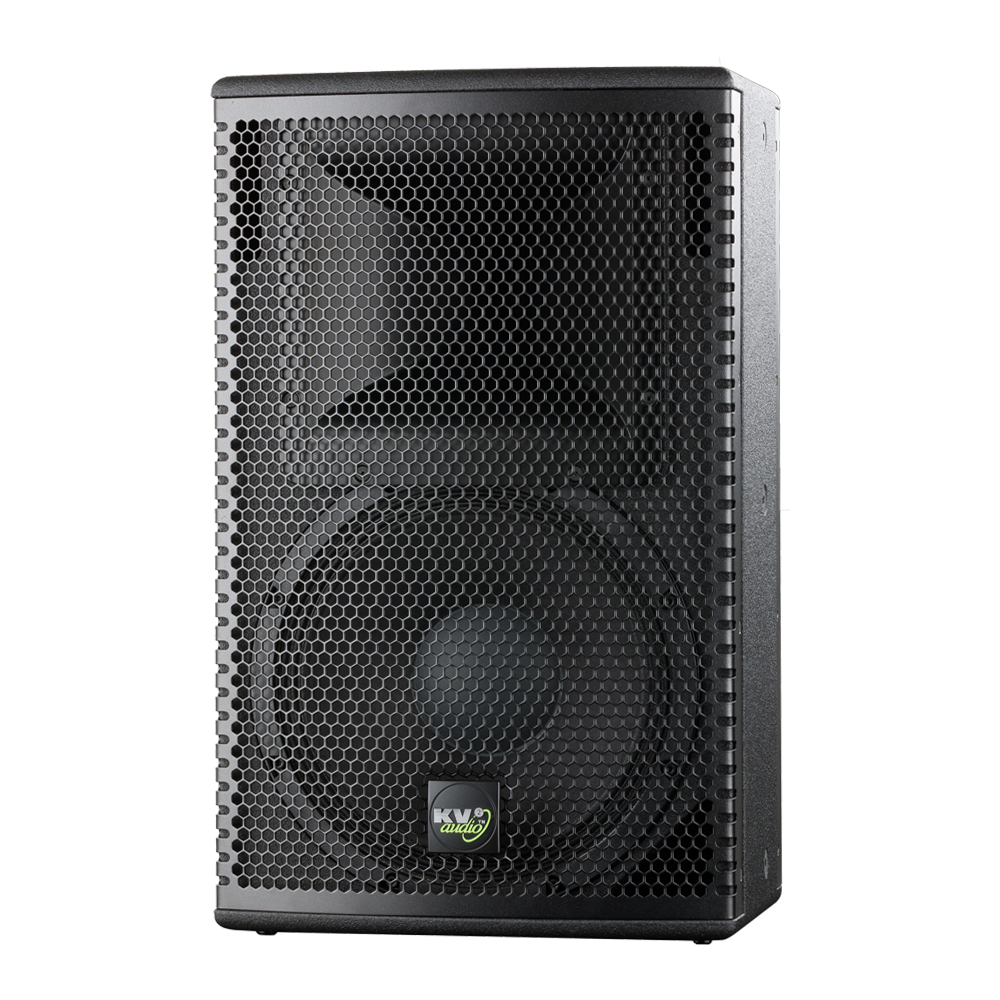
If you've spent any serious time behind a mixing desk, you've probably heard someone rave about KV2 Audio. They're the brand that veteran sound engineers mention in hushed, almost reverent tones — the kind of manufacturer that builds speakers the way a master luthier builds guitars. The KV2 EX12 2-Way Active Speaker System sits at the heart of their EX Series, and it represents everything the Czech company believes about how sound should actually be reproduced.
This isn't your run-of-the-mill powered speaker review. We're going to pull this thing apart spec by spec, explain why KV2's engineering philosophy produces such distinctive results, and help you work out whether the EX12 belongs in your rig — or whether you're better served elsewhere.
What Makes KV2 Different: SLA Technology Explained
Before we dive into the EX12's specifications, you need to understand what makes KV2 Audio fundamentally different from almost every other pro audio manufacturer on the planet. It comes down to their State of the Art Loudspeaker Architecture (SLA) philosophy, and it genuinely changes how their speakers behave in real-world environments.
Most modern speaker manufacturers — d&b audiotechnik, L-Acoustics, Meyer Sound — rely heavily on DSP to shape, correct, and optimise their loudspeaker output. The transducer does its thing, and then layers of digital signal processing fix the response curve, manage phase alignment, apply limiting, and handle crossover duties. It works. It works well, in fact. But KV2 argues it comes at a cost.
Every DSP operation introduces latency and phase artefacts. These are typically measured in microseconds, but KV2's position is that cumulative DSP processing "smears" transients — the sharp leading edge of sounds that our ears use to localise sources and perceive clarity. When you hear people describe KV2 systems as sounding "more natural" or "three-dimensional," this is largely why.
KV2's approach flips the script:
- Wideband transducer design — Each driver covers as wide a frequency range as mechanically possible, reducing the number of crossover points where phase anomalies occur
- Minimal DSP intervention — Problems are solved acoustically and mechanically at the design stage, rather than digitally after the fact
- Proprietary amplification — Amplifier modules designed in-house and matched precisely to each transducer, so the entire signal chain is optimised as a single system
- Transient accuracy as the primary design goal — Not maximum SPL, not flattest response curve on paper, but the most faithful reproduction of the original waveform's attack characteristics
This philosophy has real consequences. KV2 systems frequently outperform competitors using fewer boxes in direct A/B comparisons, particularly on speech intelligibility and acoustic instrument reproduction. The trade-off is that you can't simply plug in a laptop and reshape the speaker's personality with presets — the acoustic design does the heavy lifting.
KV2 EX12: Complete Technical Specifications
| Specification | Detail |
|---|---|
| Speaker Type | 2-way active loudspeaker (point source) |
| LF Driver | 12" (305 mm) neodymium woofer |
| HF Driver | 1.4" exit compression driver on rotatable horn |
| Frequency Response | 55 Hz – 20 kHz (-3 dB), usable to ~48 Hz (-10 dB) |
| Crossover Frequency | ~1.8 kHz (active, DSP-controlled) |
| Dispersion (H × V) | 65° × 45° (rotatable for portrait/landscape orientation) |
| Max SPL (Peak) | ~131 dB |
| Max SPL (Continuous) | ~125 dB |
| LF Amplifier | ~1000W (proprietary design) |
| HF Amplifier | ~250W |
| Input | XLR balanced input with XLR link/thru output |
| Cabinet Construction | Baltic birch plywood |
| Weight | ~22–25 kg |
| Dimensions (H × W × D) | ~590 × 380 × 370 mm |
| Pole Mount | 35 mm socket |
| Mounting Options | Pole mount, optional U-bracket, rigging points |
| Cooling | Convection-cooled (fanless) |
View the KV2 EX12 at MusiconStage Australia →
Breaking Down What These Specs Actually Mean
Frequency Response: 55 Hz – 20 kHz
A -3 dB point of 55 Hz from a 12-inch cabinet is genuinely impressive. For context, most competing 12-inch active speakers in this class roll off closer to 60–65 Hz at -3 dB. That extra low-end extension means the EX12 can handle a surprising amount of musical content without subwoofer support — think jazz combos, acoustic acts, spoken word, and corporate presentations where a sub would be impractical or unwanted.
Of course, if you're running electronic music, hip-hop, or any genre where sub-bass is essential, you'll still want to pair the EX12 with a dedicated subwoofer like the KV2 EX2.5 or EX1.8. But the point is that this speaker doesn't fall off a cliff below 80 Hz the way many compact boxes do.
Dispersion: 65° × 45° Rotatable Horn
The rotatable horn is a quiet but significant feature. In the default orientation (wider horizontal dispersion), the 65° × 45° pattern is ideal for ground-stacked or pole-mounted use where you want broad horizontal coverage with controlled vertical throw. Rotate the horn 90 degrees and you get 45° horizontal by 65° vertical — useful for side-fill applications, narrow rooms, or installations where you need tighter horizontal control to avoid wall reflections.
This kind of pattern control is what separates professional loudspeakers from consumer-grade gear. Consistent coverage across the dispersion angle means every seat in the venue gets essentially the same frequency response, rather than the off-axis listeners getting a dull, filtered version of what the centre seats hear.
Peak SPL: 131 dB
131 dB peak from a single 12-inch cabinet puts the EX12 firmly in professional territory. To put that in perspective, that's roughly equivalent to standing 30 metres from a jet engine. In practical terms, a pair of EX12s can comfortably serve as the main PA for venues seating 300–500 people, depending on the room acoustics and programme material.
But here's where KV2's philosophy really matters: the quality of those decibels is as important as the quantity. Because the EX12's amplifiers and transducers are designed as an integrated system with minimal DSP intervention, the speaker maintains its tonal character and clarity even when pushed hard. Many competing speakers start to sound compressed, harsh, or "processed" at high output levels as limiters and protection circuits engage. The EX12 tends to stay composed further up its output range.
Amplification: 1000W LF + 250W HF
KV2 designs their amplifier modules in-house, which is unusual in the industry. Most manufacturers — even premium ones — source amplifier modules from specialists like Powersoft or Hypex and then configure them via DSP. KV2's approach of building bespoke amplification matched to each transducer means the amp's damping factor, slew rate, and thermal characteristics are optimised specifically for that driver's mechanical and electrical properties.
The 1000W devoted to the 12-inch woofer provides ample headroom for transient peaks — kick drums, bass guitar attacks, and explosive consonants in speech — without compression. The 250W HF amplifier is more than sufficient for the compression driver, which is inherently more efficient than the woofer.
Fanless Convection Cooling
No fans means no fan noise. This might seem trivial until you've used the EX12 in a quiet theatre during a dramatic pause, or in a corporate boardroom where whisper-quiet operation is expected. Convection cooling also means no moving parts to fail, which improves long-term reliability — a genuine consideration for fixed installations and hire stock that needs to work flawlessly year after year.
Real-World Performance: Where the EX12 Excels
Theatre and Performing Arts
This is arguably the EX12's natural habitat. KV2 speakers are deployed in theatres across Europe and increasingly worldwide, and the reason is simple: speech intelligibility. The EX12's transient accuracy means consonants are crisp and clear, dialogue cuts through without harshness, and actors' voices retain their natural timbre rather than sounding "amplified." If you've ever walked into a venue and couldn't tell there was a PA running until someone pointed it out, there's a decent chance it was a KV2 system.
Live Music Venues
For small to medium venues — pubs, clubs, and function spaces — the EX12 offers an extraordinary balance of output capability and sonic refinement. A pair of EX12s on poles with a matched KV2 sub can deliver a full-range system that sounds significantly more expensive than it is. Acoustic acts, jazz, blues, and singer-songwriter performances particularly benefit from the EX12's natural voicing.
For louder genres, the EX12 still performs admirably, but you'll want to manage expectations. This isn't a speaker designed to compete with line arrays on raw output; it's designed to sound better within its output envelope than anything else in its class.
Houses of Worship
Churches and religious venues across Australia are increasingly turning to KV2 for a simple reason: the spoken word is paramount, and KV2 does spoken word better than almost anyone. The EX12's controlled dispersion also helps manage reverberant spaces — a common challenge in churches with hard, reflective surfaces.
Corporate AV and Conferencing
High-end corporate events and permanent installations in boardrooms, conference centres, and hotels benefit from the EX12's combination of clean aesthetics, silent operation, and exceptional speech clarity. The Baltic birch cabinet looks professional without being flashy, and the compact form factor fits where larger speakers can't.
How the EX12 Stacks Up: Technical Comparisons
| Feature | KV2 EX12 | d&b E12 | L-Acoustics X12 | Meyer UPA-1P |
|---|---|---|---|---|
| Configuration | 2-way active | 2-way passive/active | 2-way active coaxial | 2-way active |
| LF Driver | 12" neodymium | 12" neodymium | 12" coaxial | 12" |
| DSP Reliance | Minimal | Heavy (ArrayCalc) | Heavy (LA Network) | Heavy (Compass) |
| Peak SPL | ~131 dB | ~132 dB | ~137 dB | ~133 dB |
| Rotatable Horn | Yes | No (separate models) | Coaxial design | No |
| Cooling | Fanless | Varies | Fan-cooled | Convection |
| Key Strength | Transient accuracy, natural sound | System integration, predictability | Output per size, arrayability | Software ecosystem, predictability |
The comparison reveals an important truth: the EX12 doesn't win on raw SPL numbers. The L-Acoustics X12, for instance, produces significantly more peak output. But KV2's engineering philosophy means the perceived loudness and clarity of the EX12 often exceeds what the numbers suggest. In blind A/B tests, many experienced engineers report that KV2 systems "sound louder" than their SPL measurements indicate — a result of superior transient reproduction and minimal phase distortion creating a more impactful listening experience.
What Specifications Actually Matter When Choosing
If you're cross-shopping the EX12 against competitors, here's what to focus on — and what to ignore:
Pay Attention To:
- Dispersion pattern consistency — How even is the frequency response across the coverage angle? A speaker that measures flat on-axis but rolls off 6 dB at the edges of its rated dispersion is lying about its coverage. KV2's horn design maintains remarkably consistent response across the full 65° × 45° window.
- Phase coherence across the crossover region — The 1.8 kHz crossover point sits right in the critical speech intelligibility range. How the LF and HF drivers sum at this point directly impacts vocal clarity. KV2's minimal-DSP approach and matched amp/driver design produce exceptionally clean summation here.
- Behaviour under compression — Every speaker compresses at high output. The question is how gracefully. Ask for distortion measurements at rated output, not just maximum SPL figures.
- Impulse response — This tells you how accurately the speaker reproduces transients. It's the single best predictor of how "natural" a speaker will sound, and it's where KV2 consistently outperforms.
Take With a Grain of Salt:
- Peak SPL figures — These are often measured with pink noise in half-space conditions that don't reflect real-world use. A 2 dB difference in peak SPL between competing speakers is essentially meaningless in practice.
- Frequency response range — The numbers matter less than the curve shape. A speaker claiming 45 Hz – 20 kHz that's down 10 dB at both extremes is less useful than one claiming 55 Hz – 18 kHz with a flat, honest curve.
- Wattage figures — More watts doesn't mean better sound. It means the amplifier can deliver more power. The efficiency of the transducer and the quality of the amplifier's interaction with the driver matter far more.
Practical Considerations for Australian Buyers
Climate and Environment
Australia's climate throws unique challenges at pro audio gear. The EX12's fanless design means no air filters to clog with dust — a genuine advantage for outdoor events and dusty regional venues. The Baltic birch plywood cabinet is robust and handles humidity fluctuations better than MDF-based enclosures, though you'd still want to avoid prolonged outdoor exposure in tropical conditions without appropriate weather protection.
Power Requirements
With approximately 1250W total amplifier power, each EX12 draws meaningful current. For festival and outdoor gigs, ensure your generator or power distribution can handle multiple units plus subs without voltage sag. Clean, stable power is particularly important for KV2 systems because their minimal-DSP approach means the amplifiers are doing more of the work — and they're sensitive to power quality.
System Expandability
The EX12 sits within KV2's broader EX Series ecosystem. You can pair it with:
- EX2.5 — 2 × 15" subwoofer for serious low-end extension
- EX1.8 — Single 18" sub for a more compact system
- Additional EX12 units — For delay fills, side-fills, or increased coverage
The XLR link/thru output on the rear panel makes daisy-chaining straightforward for multi-box setups.
The Investment Perspective
KV2 products sit at a premium price point — comparable to d&b audiotechnik and L-Acoustics. However, KV2's "fewer boxes, better sound" philosophy means your total system cost may actually be lower. Where you might need four or six competing speakers to cover a room, two or three EX12s might achieve equal or better results. Factor in reduced trucking, faster setup, and lower ongoing maintenance (no fans to replace, fewer DSP updates to manage), and the long-term cost proposition becomes compelling.
Check current pricing on the KV2 EX12 at MusiconStage →
Who Should Buy the KV2 EX12 — And Who Shouldn't
The EX12 Is Ideal For:
- Theatre companies and performing arts centres where speech intelligibility is non-negotiable
- Venue owners and operators running spaces up to 500 capacity who want a permanent install that sounds exceptional
- Hire companies targeting the premium corporate and boutique event market
- Houses of worship prioritising natural, clear spoken word reproduction
- Sound engineers who've grown tired of over-processed, DSP-heavy speaker signatures and want something that sounds genuinely real
- Musicians who value accurate monitoring and stage sound for acoustic performances
Look Elsewhere If:
- You need maximum SPL per dollar — Brands like QSC, JBL, and Electro-Voice offer more output at lower price points, though with different sonic characteristics
- You need line array scalability — The EX12 is a point-source speaker. For large-scale touring or stadium events, purpose-built line arrays from L-Acoustics, d&b, or Martin Audio are more appropriate
- You rely heavily on DSP presets and remote management — KV2's minimal-DSP philosophy means less remote tweakability. If your workflow depends on network-managed speaker processors, this may feel limiting
- Budget is the primary concern — There are competent 12-inch active speakers available for a fraction of the EX12's price. They won't sound as refined, but they'll get the job done
Frequently Asked Technical Questions
Can the EX12 be used as a stage monitor?
While primarily designed as a FOH speaker, the EX12 can serve as a premium side-fill or drum-fill monitor. Its controlled dispersion pattern helps with stage volume management. For conventional wedge monitoring, KV2 offers dedicated monitor products that are better suited.
Does the EX12 need an external processor or controller?
No. The EX12 is a fully self-contained active system with integrated crossover, amplification, and protection. Just feed it a balanced line-level signal via XLR and it's ready to go. This simplicity is part of KV2's design philosophy — fewer boxes in the signal chain means fewer opportunities for degradation.
How does the EX12 handle outdoor events?
The Baltic birch cabinet and professional-grade components handle typical Australian outdoor conditions well. However, like all professional speakers, it should be protected from direct rain. The fanless design is a genuine advantage outdoors, as there are no air intakes to draw in dust, insects, or moisture.
What's the warranty situation in Australia?
KV2 products sold through authorised Australian dealers come with manufacturer warranty coverage. Contact your dealer for specific terms. Australian Consumer Law also provides statutory guarantees regardless of manufacturer warranty terms.
The Bottom Line
The KV2 EX12 isn't for everyone, and KV2 would probably be the first to tell you that. It's a speaker built for people who care deeply about how amplified sound actually sounds — who notice the difference between a reproduced snare drum hit and one that makes you flinch because it sounds like a real snare drum hit. It's for engineers and venue owners who've reached the point where "loud enough" isn't the question anymore; "good enough" is.
If that's you — if you've been chasing that elusive quality where a PA system disappears and you're just left with the music — the EX12 deserves a serious audition. KV2's approach to loudspeaker design is genuinely different, and the results speak for themselves. Literally.