
KV2 EX12 Active Speaker Explained: Beginner's Guide 2026
KV2 EX12 2-Way Active Speaker Explained: A Beginner's Guide for 2026
If you've started researching serious sound systems and keep bumping into the name KV2 Audio, you're in the right place. The KV2 EX12 is a speaker that experienced sound engineers talk about with a lot of respect — but if you're new to live audio, the jargon around it can feel overwhelming. Terms like "point source", "active system", "Class A/B amplification" and "power module" get thrown around as though everyone already knows them.
This guide is written for newcomers. We'll explain, in plain Australian English, what the KV2 EX12 actually is, why people choose it, the features that genuinely matter, and how to decide whether it's the right first (or next) step for you. No condescension, no marketing fluff — just clear teaching so you can buy with confidence.
New to This? Start Here: What Is an "Active" Speaker?
Before we touch the EX12 specifically, let's define one core concept that trips up almost every beginner: active versus passive speakers.
- Passive speaker: Just the box and the drivers (the round cones and tweeters that make sound). It has no power of its own. You must connect it to a separate amplifier to make any noise. Think of it like a kettle with no element — it needs an external heat source.
- Active speaker: The amplification and processing are built into the system, purpose-matched to the drivers. You feed it a signal (from a mixer, for example) and it does the rest. It's the difference between buying ingredients and buying a ready-to-cook meal kit designed to work together perfectly.
The KV2 EX12 belongs to the active camp. That's important because it means the amplifier and the speaker were engineered as a single matched system, rather than you having to guess which amp pairs well with which box. For a beginner, that removes one of the biggest sources of confusion and mismatched gear.
So What Exactly Is the KV2 EX12?
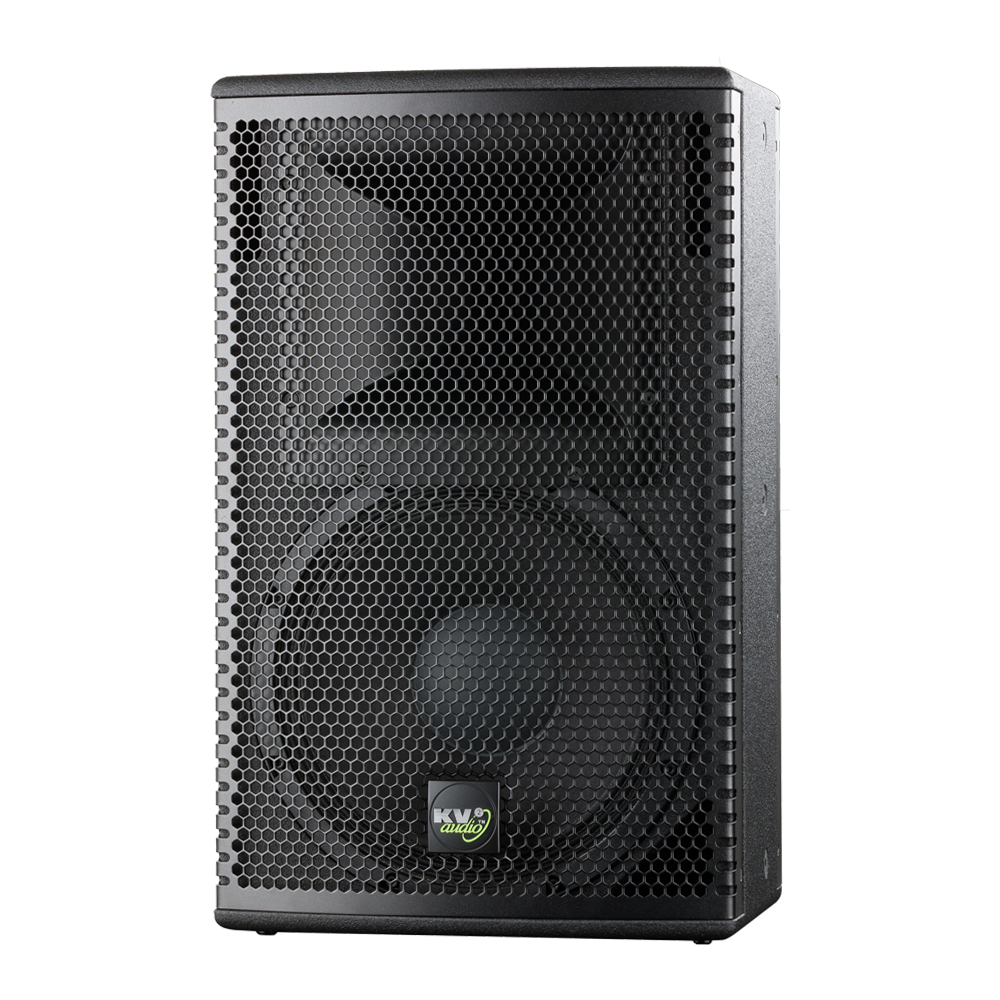
The KV2 EX12 is a professional 2-way active loudspeaker built around a 12-inch woofer. Let's unpack that name piece by piece, because every part tells you something:
- "EX": This is KV2's EX (Extreme) series — a range designed to deliver remarkable clarity and output from compact, road-friendly cabinets.
- "12": Refers to the 12-inch low-frequency driver. In speaker world, the woofer size is a rough guide to how much low-end and overall volume a box can produce. A 12" is a popular "do-everything" size — bigger and louder than a 10", but more portable than a 15".
- "2-Way": The speaker splits sound into two bands — lows/mids handled by the 12" woofer, and highs handled by a separate high-frequency compression driver. Splitting the work this way lets each driver specialise, which generally means cleaner, more detailed sound.
KV2 Audio is a brand with a particular philosophy: rather than chasing raw, distorted loudness, they obsess over clarity, low distortion and a natural, lifelike sound. The EX12 is a flagship example of that thinking in a portable format.
The "Point Source" Idea — Why It Matters
One term you'll see attached to KV2 is point source. Here's the simple version: a point source speaker is designed so that all the sound appears to come from a single, unified spot. The benefit is that the audio stays coherent and natural as it travels — vocals sound like vocals, not a smeared blur — and the listening experience is consistent whether you're up close or further back. For a beginner, you don't need to memorise the physics; just know that KV2's point-source approach is a big part of why their speakers sound so clean and "real".
Understanding the Key Features (Without the Jargon)
Here are the features that genuinely matter on a speaker like the EX12, and — just as importantly — why they matter to you.
1. KV2's Analogue Amplification
Many modern active speakers use Class-D digital amplifiers because they're light and efficient. KV2 is famous for favouring high-quality analogue (Class A/B style) amplification in much of its range, which fans describe as having a warmer, more transparent and more dynamic sound. Why it matters: if your priority is sound quality over saving every last gram of weight, this is a meaningful point of difference.
2. Built-In Processing and Driver Protection
Active systems include onboard processing — essentially a smart internal manager that shapes the sound and protects the drivers from being pushed too hard. Why it matters: as a beginner, this safety net dramatically reduces the chance of accidentally damaging an expensive speaker by overdriving it.
3. Compact, Tour-Grade Cabinet
The EX series is engineered to pack a professional-grade punch into a relatively manageable enclosure. Why it matters: you get a serious sound without needing a truck and a crew to move it. For solo operators, duos, AV hire and installs, that portability is gold.
4. Wide, Even Coverage
A well-designed 2-way like the EX12 spreads sound evenly across an audience rather than blasting a narrow hot-spot. Why it matters: more of your crowd hears clear, balanced audio, and you spend less time fighting the room.
5. Versatile Mounting and Deployment
Speakers in this class are typically built to sit on a tripod stand, act as a stage monitor on the floor, or fly in a fixed install. Why it matters: one speaker, many jobs — which is exactly what you want when you're starting out and don't want to buy separate gear for every scenario.
Beginner Buying Guide: What to Prioritise
When you're choosing your first high-end active speaker, it's easy to fixate on the wrong numbers. Here's where a newcomer's attention is best spent.
Prioritise These
- Intended use: Be honest about your gigs. Acoustic duos, corporate speeches and DJ sets all have different demands. The EX12 is a strong all-rounder, but matching the tool to the task is step one.
- Coverage and audience size: A single 12" 2-way like the EX12 comfortably handles small-to-medium rooms and crowds. Bigger events may need a pair, plus a subwoofer for deep bass.
- Sound quality vs raw volume: KV2's whole appeal is clarity. If you value an audience hearing every word and note cleanly, that's the EX12's strength.
- System configuration: Because KV2's active systems can involve dedicated power and processing modules, always confirm with the retailer exactly what's included in your purchase so your setup is complete out of the box.
Common Beginner Mistakes to Avoid
- Buying on woofer size alone: A 15" isn't automatically "better" than a 12". Design, amplification and tuning matter far more than the headline number.
- Forgetting the subwoofer question: A 2-way speaker reproduces lows well, but for bass-heavy music (DJ, electronic, hip-hop) you'll eventually want a sub to take the strain off your tops.
- Ignoring the room: Even the best speaker can sound harsh in a reflective, hard-walled room. Placement and a little EQ matter.
- Under-buying to save money short-term: Cheaper speakers often get re-sold within a year when their limits become obvious. Buying quality like KV2 once can be cheaper in the long run.
Is the EX12 a Good Choice for Beginners?
Let's be honest and balanced here, because that's what builds trust.
It's an excellent choice if: you're a newcomer who has decided you want professional-grade sound from the outset and you're willing to invest accordingly. Plenty of musicians, AV operators and small hire companies buy into KV2 early precisely because they don't want to upgrade twice. The active design also means fewer compatibility headaches than a passive-plus-amp setup.
It may be more than you need if: you're after a budget, throw-it-in-the-car battery speaker for casual backyard use. The EX12 is a premium professional tool, and its price reflects the engineering inside. There's no shame in starting smaller — but if your ambitions (and ears) are serious, the EX12 rewards the investment.
View the KV2 EX12 2-Way Active Speaker System at MusiconStage to check current Australian pricing and availability.
Common Questions From Beginners
Do I need a separate amplifier?
Because the EX12 is an active system, the amplification is part of the package rather than something you bolt on yourself, as you would with a passive speaker. KV2's active systems can use a dedicated power/processing module, so the key is simply to confirm with the retailer that your purchase is a complete, ready-to-run configuration. Once you understand what's in the box, setup is straightforward.
What do I plug into it?
Typically your audio source — a mixer, an interface, or even directly from some instruments/devices — feeds the speaker's input. From there the system handles amplification and processing internally.
How many do I need?
For mono speech, presentations or a small acoustic act, a single EX12 can be plenty. For music with a proper left/right stereo image, or to cover a wider crowd, two is the natural choice. Add a subwoofer when you want serious low-end weight.
Is it hard to learn?
The basics — power on, plug in your source, set a sensible level — are beginner-friendly. The deeper skills (EQ, placement, feedback control) are universal to all live sound and come with a little practice. The EX12's onboard protection makes it a forgiving system to learn on.
Will it sound good in a small venue?
Yes — KV2's clarity actually shines in smaller, intimate rooms where every detail is exposed. Just mind your placement and don't crank it beyond what the space needs.
Getting Started: What to Expect After Purchase
Here's a realistic picture of your first few sessions with a speaker like the EX12:
- Day one: Unbox, confirm all included components, and do a quiet living-room test. Get familiar with the inputs and controls before any real event.
- First gig: Arrive early, position the speaker(s) on stands above head height where possible, run a soundcheck, and resist the urge to push the volume to maximum. Clean and loud beats distorted and louder every time.
- First month: You'll start to learn the speaker's character and how different rooms respond. This is normal — every sound system has a learning curve, and the EX12's transparency makes it easy to hear what your adjustments are doing.
Your Growth Path
One of the nicest things about buying into a quality range early is room to grow. A common journey looks like: start with the EX12 as your mains, add a second for stereo, then introduce a matched subwoofer for bass-heavy work, and eventually scale into larger KV2 systems as your events grow. You're not buying a dead-end product — you're buying into an ecosystem.
Final Thoughts: Buy With Confidence
The KV2 EX12 isn't the cheapest way to make noise — and it was never meant to be. It's a clarity-first, professionally engineered active speaker for people who care about how their audience actually experiences the sound. For a beginner with serious intentions, it's a system you can grow into rather than out of.
If you've followed this guide, you now understand the language, the features that matter, and the honest trade-offs. That's exactly the foundation you need to make a smart, confident decision.
Ready to take the next step? Explore the KV2 EX12 2-Way Active Speaker System on MusiconStage, and don't hesitate to reach out to the team with your venue size and use case — getting tailored advice before you buy is always the beginner-smart move.