
KV2 ESD10 Passive 10-Inch: Real Venue Use Cases 2026
KV2 ESD10 Passive 10-Inch: Real Venue Use Cases 2026
Most people don't go looking for a passive 10-inch speaker by accident. If the KV2 ESD10 is on your shortlist, you've usually already worked out one of three things: you've got amplification (or you're about to buy some), you need boxes that live permanently on a bracket or a bar, or you've heard a KV2 rig somewhere and can't unhear how clean it was.
This guide isn't a spec sheet regurgitation. It's about where this box actually earns its keep in Australian venues, where it doesn't, and how to work out whether it suits the way you do sound.
First, what kind of speaker is this?
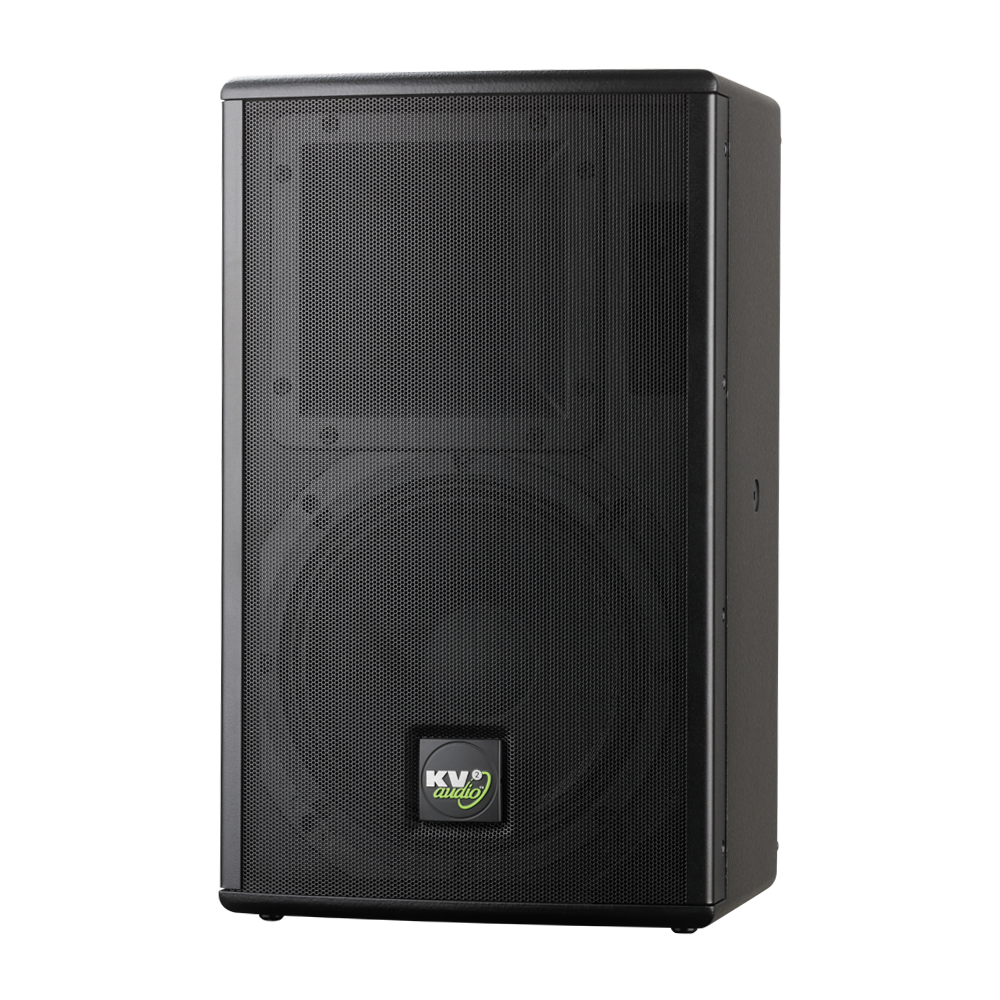
The ESD10 sits in KV2's ESD (Extreme Sound Definition) range — the company's compact, install-and-portable line. It's a two-way passive design built around a 10-inch low-frequency driver and a compression driver on a horn, in a moulded enclosure with pole mount and rigging points.
KV2's whole engineering identity is built around one obsession: reducing distortion and preserving the timing of the signal. Where a lot of manufacturers chase maximum SPL per dollar, KV2 chases intelligibility and low listener fatigue. In practice that means an ESD10 can sound noticeably more open and less "shouty" than a similarly sized box with a bigger number on the box, particularly on voice.
That single design choice explains almost every scenario below. Understand it and you'll know whether this speaker fits your life.
Scenario 1: The 80–200 person pub, club or function room
This is the ESD10's home turf. Think a suburban pub with a corner stage, a bowls club function room, a small live music room in Fitzroy or Newtown, a wedding reception in a barn out past the Hunter.
A pair of ESD10s on poles or brackets, driven properly, will comfortably cover a room of that size for a duo, a solo act, an acoustic trio, or a full band if you add subs. Vocals sit forward and clear without you having to push them, acoustic guitar keeps its body instead of turning into midrange mush, and — this is the part people notice — you can run the room loud enough without the sound getting harsh at the front tables.
The honest bit: a 10-inch driver is a 10-inch driver. It'll give you usable low mids and some genuine punch, but it is not going to reproduce a kick drum or a synth bass line with any authority on its own. For anything with programmed low end, you're pairing these with subs. Plan for that in your budget from day one rather than discovering it at your first gig.
Scenario 2: Corporate AV, conferences and presentations
If your work involves people talking into microphones in hotel ballrooms, this is where the ESD10 quietly outperforms boxes that cost more.
Speech reproduction is unforgiving. Every bit of horn honk, crossover smear or cabinet resonance shows up as "I can hear them but I can't quite understand them," especially for people at the back, people in the reflective corners, and anyone over 60 in the room. The ESD10's low-distortion character means presenters stay intelligible at moderate levels — which is exactly what you want, because corporate audio is almost never about volume.
- Breakout rooms: one or two boxes per room, driven from a small amp, is a tidy repeatable kit.
- Panel sessions: the clarity buys you gain-before-feedback headroom with lapel and headset mics, which are always the hardest thing in the room.
- Awards nights: speech during formalities, then add subs and it handles the DJ set afterwards.
- Hybrid events: cleaner room audio generally means cleaner audio into the stream and fewer complaints from remote attendees.
The passive design also matters here. No power at the speaker end means one less thing to run to a stand in the middle of a ballroom floor, and no fan noise or amplifier hum near a quiet audience.
Scenario 3: Houses of worship and community halls
Church audio in Australia is usually a mixed brief: spoken word for most of the service, contemporary music for part of it, an older congregation that needs clarity, and a building with hard surfaces that fights you the whole way.
The ESD10 handles that brief well because it does the speech job properly first. Mounted on wall brackets either side of a platform, aimed at the congregation rather than the ceiling, a pair covers a typical 150–250 seat room. Add a sub for the band, and you've got a system that serves both halves of the service without compromise in either direction.
The practical advantage in this setting is volunteer-proofing. Passive boxes on brackets, driven by a rack-mounted amp in a locked cupboard, means there's nothing on a stand for someone to knock over and nothing for a well-meaning volunteer to turn a knob on. That's not a small thing when a different person runs sound each week.
Scenario 4: Fixed install — restaurants, bars, gyms, retail
This is arguably the strongest practical argument for passive over powered. In a permanent install, centralising your amplification is just better engineering:
- One rack, one power feed, one place to service things
- Speakers that are lighter and shallower on the bracket
- No 240V run to every speaker position
- Zones handled at the amp and processor rather than at each box
- Failed amp channel? Swap the amp, not the speaker off a 4-metre wall
For a venue that wants genuinely good sound rather than "background music that's technically audible", the ESD10 is a step up from the generic ceiling-and-wall install boxes most fitouts default to. A wine bar in Adelaide or a boutique gym in Brisbane running these will sound distinctly better than the room next door, and the customers will feel it even if they never articulate why.
Check current pricing and availability on the KV2 ESD10
Scenario 5: Front fill, infill and delay on a larger system
Plenty of ESD10s never work as a main PA at all. On bigger productions they get used as:
- Front fills along the stage lip, covering the first few rows that the main hangs shoot straight over
- Infills filling the hole between left and right when the room is wide
- Delays under a balcony or down the back of a long, narrow room
- Foyer and green room feeds where you want the show audio to actually sound like the show
Fill duty is a demanding job precisely because it's subtle. A cheap fill speaker draws attention to itself — the audience hears a small harsh box instead of the main system. The ESD10's tonal character blends well enough that the fills disappear, which is the entire point. If you already own a larger KV2 system, the family voicing makes this even easier.
Scenario 6: Stage monitor and side fill duty
The multi-angle enclosure means these can lie down as wedges. It's a legitimate secondary use — the clarity that helps speech also helps a vocalist hear themselves without cranking the wedge into feedback. Two boxes that can be mains today and monitors tomorrow is genuinely useful for a small operator with limited storage.
That said, if monitoring is your primary need, a purpose-designed wedge with a lower profile and a more suitable dispersion pattern will usually serve you better. Treat this as a bonus, not a reason to buy.
Where the ESD10 struggles — read this before you buy
Being straight with you saves everyone a return:
- Large outdoor events. Open air eats SPL and there are no walls to help you. A pair of 10-inch tops will not cover a footy oval or a big outdoor festival stage. Wrong tool.
- Bass-heavy DJ work without subs. If your gigs are hip-hop, house, or 21sts where the brief is "make it thump", a top-only ESD10 rig will disappoint. Budget for subs or look elsewhere.
- You want plug-and-play simplicity. Passive means an amp, speaker cable, and some understanding of impedance and power matching. If you want to arrive, plug into power, and go, a powered box is the honest answer.
- Rock-bottom budgets. KV2 charges for its engineering, and once you add amplification the total system cost climbs. It's very good value per unit of sound quality, not per dollar of purchase price.
Passive vs powered: what it actually means for your week
The debate gets argued in absolutes online. In practice it comes down to how you work.
Passive suits you if: you do fixed installs, you own or plan to own amplification, you want lighter boxes on stands and brackets, you run multiple speakers from centralised racks, you want service and upgrades handled in one place, or you're regularly in venues where getting power to speaker positions is a hassle.
Powered suits you better if: you're a one-person operation doing different venues weekly, you value fewest-possible-cables setup, you don't want to think about amp matching, or you're building your first system with no existing rack.
There's no universally correct answer. There is a correct answer for your specific pattern of work, and it's usually obvious once you write down what your last ten gigs actually looked like.
Amplifier matching: getting this right matters
This is the part that trips up first-time passive buyers, so let's be practical about it.
- Match power sensibly. Aim for an amplifier that comfortably exceeds the speaker's continuous rating rather than sitting right on it. A slightly under-powered amp driven into clipping kills more compression drivers than a generously powered one used with restraint.
- Check impedance before you parallel anything. Two 8-ohm boxes on one channel is a 4-ohm load. Know what your amp is rated to drive and stay inside it.
- Use processing. A DSP with appropriate high-pass filtering and limiting protects the box and improves how it sounds. KV2's own amplification and processing is voiced for these cabinets and takes the guesswork out; quality third-party amps with DSP work fine if you set them up properly.
- Don't cheap out on the amp. A great speaker on a poor amplifier sounds like a mediocre speaker. You'd be undoing the exact thing you paid KV2 for.
How it compares in the same scenarios
Against budget passive 10-inch boxes: the ESD10 is in a different category. Cheaper boxes will get loud, but they get harsh under pressure and speech clarity falls apart in reflective rooms. If your gigs are all backyard parties, the cheaper box is fine and you'll save real money. If people are paying attention to what's coming out of the speaker, the difference is immediately audible.
Against a powered 10 or 12-inch: the powered box wins on convenience for mobile one-person operations, full stop. The ESD10 wins on install elegance, weight on the bracket, centralised servicing, and — with good amplification — on sonic refinement.
Against a passive 12 or 15-inch: the bigger boxes give you more low-mid weight and more raw output, which matters for full bands without subs. The ESD10 gives you a smaller footprint, easier placement, and a tighter, more articulate midrange. For speech-dominant and install work, the 10 is often the smarter choice; for band-dominant work without subs, size up.
Against column arrays: columns are brilliant for portability and even coverage in wide, shallow rooms. The ESD10 gives you more control over aiming, better throw down a long room, and more headroom for live bands.
Which user are you?
The beginner building a first system
Be honest about whether you want to learn amplifier and impedance basics. If yes, this is a system you'll grow into rather than out of, and the ESD10 will still be relevant in ten years. If the idea of amp matching makes you tired, start powered and come back to passive when your needs push you there.
The working sound operator
You'll appreciate what these do for speech and acoustic sources, and you'll appreciate not carrying amplifier weight up venue stairs. Buy in pairs, buy subs, buy decent speaker cable, and buy an amp with proper DSP.
The installer or venue owner
This is the ideal fit. Centralised amplification, discreet boxes on brackets, low listener fatigue for staff who are in the room eight hours a day, and a sound quality standard that genuinely differentiates a venue.
The AV hire company
A workhorse for breakouts, panels and mid-size corporate rooms. Standardise on one amp platform and these become a very repeatable, very low-drama kit item.
Five mistakes people make with this speaker
- Skipping subs and blaming the box. The most common complaint about any quality 10-inch top is that it "lacks bass". It isn't a bass speaker. Add a sub and the complaint disappears.
- Aiming them at the ceiling. Speakers on tall poles pointed straight ahead fire over the audience and into reflective surfaces. Tilt down toward ears. This one free adjustment fixes more bad-sounding rooms than any EQ.
- Running dodgy speaker cable. Thin, long, or damaged cable throws away amplifier damping and power. Use proper gauge speakon cable of appropriate length.
- No high-pass filter. Sending full-range content to a 10-inch box wastes excursion on frequencies it can't reproduce and muddies everything it can. Filter appropriately, especially when you're running subs.
- Buying one. Unless it's a genuine centre-fill or foldback application, buy the pair. Stereo coverage isn't a luxury in a room, it's how you get even coverage.
Getting the most out of them
- Position tops so the horn is roughly at or slightly above standing head height, then tilt down
- Keep them forward of your microphones wherever the stage allows
- Resist the urge to EQ heavily — these boxes generally need less correction than you're used to, and heavy EQ works against their strength
- Set limiters at the amp or DSP once, properly, and stop worrying about it
- In installs, spend the time on aiming during commissioning; it pays back every day for years
Frequently asked questions
Do I need a KV2 amplifier to use these?
No, but KV2's own amplification and processing is voiced specifically for these cabinets and removes the setup guesswork. Any quality amplifier with appropriate power, correct impedance handling and DSP will do the job well.
How big a room will a pair cover?
As a working rule, a pair handles rooms in the 100–250 person range for speech and acoustic work, and a similar size for bands once you add subs. Ceiling height, room shape and surface materials shift that either way more than the headcount does.
Can I use them outdoors?
For small outdoor functions — a garden ceremony, a backyard corporate event, a market stall stage — yes, with subs and realistic expectations. For anything large or open, you need a bigger system.
Is a 10-inch enough for a full band?
With subs, yes, for the room sizes described above. Without subs, no — kick and bass will be underwhelming.
Can they be flown or wall mounted?
Yes. The enclosure includes rigging provisions and the cabinet is compact enough for practical bracket mounting. As always, flying should be done by someone competent with hardware rated for the job.
Are they worth it over a cheaper 10-inch?
If your work is speech-heavy, install-based, or you're an operator who cares about how a room sounds after three hours rather than for the first three minutes — yes, clearly. If you need loud sound at the lowest possible cost for casual use, honestly, no.
The verdict, by use case
Buy it if you're installing sound into a venue, running corporate AV, doing worship audio, building a system around centralised amplification, or adding fills to a larger KV2 rig. In those applications it's excellent and you'll be glad you spent the money.
Think twice if you're a solo mobile operator who values fastest-possible-setup above all, your gigs demand serious low end and subs aren't in the budget, or you're covering large outdoor spaces.
The ESD10 is a specialist's choice that happens to also be a very sensible generalist's choice, provided you understand what passive means for your workflow. It rewards people who care about clarity and are willing to build a proper system around it.
View the KV2 ESD10 2-Way Passive Speaker at MusiconStage — and if you're unsure about amplifier matching or how many boxes your room needs, get in touch before you order. Working that out properly beforehand is the difference between a system you tolerate and one you're happy with for a decade.