
KV2 ES 2.5 Active Bass Module: Technical Guide 2026
KV2 ES 2.5 Active Driven Bass Module: The Complete Technical Guide for Australian Audio Professionals (2026)
If you've spent any time around high-end live sound in Australia, the KV2 name carries weight. The company built its reputation on a deceptively simple idea: that the cleanest, most natural-sounding low frequency comes not from brute amplifier wattage, but from the way energy is delivered to the driver. The KV2 ES 2.5 Active Driven Bass Module sits at the heart of that philosophy. It isn't a conventional powered subwoofer, and understanding why is the key to deciding whether it belongs in your rig.
This guide breaks down the engineering behind the ES 2.5, what its specifications actually mean in the real world, how it performs against more familiar sub designs, and who genuinely benefits from the investment. We'll keep the language accessible, but we won't shy away from the technical detail — because with KV2, the detail is the value proposition.
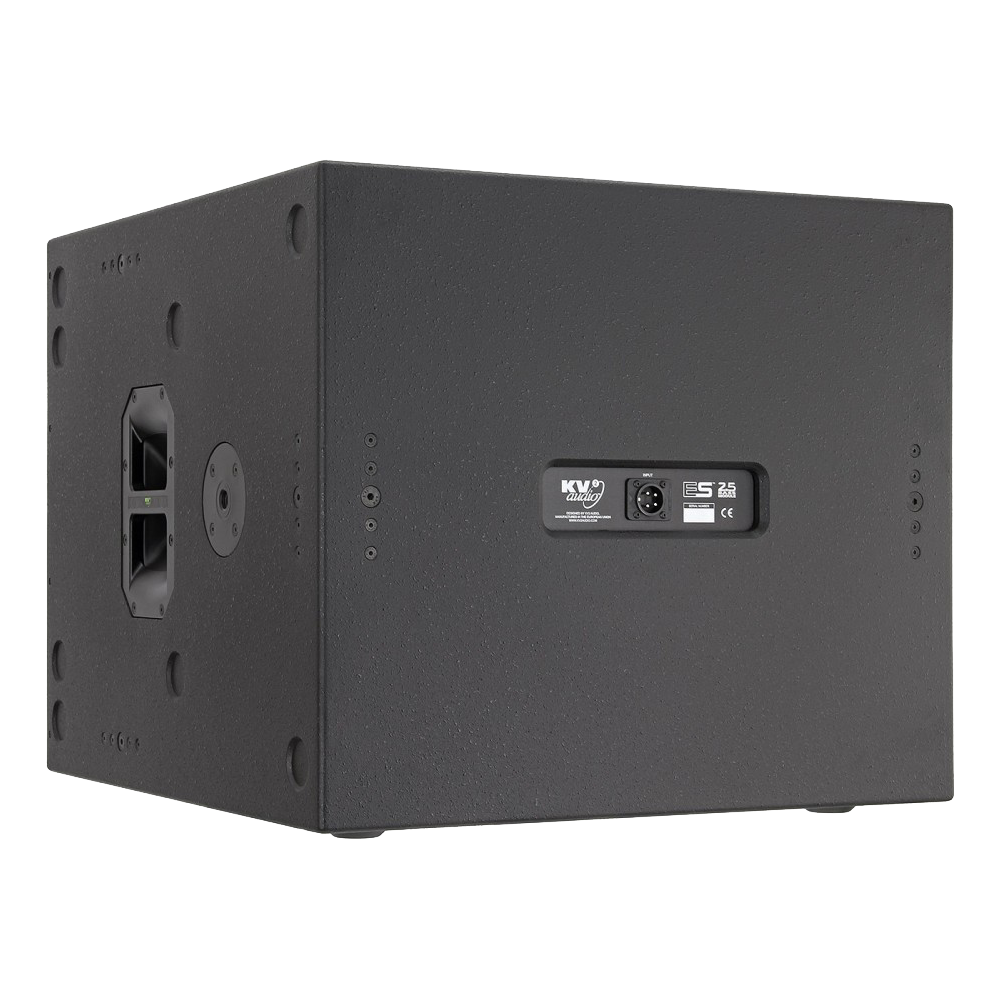
What "Active Driven" Actually Means
The single most misunderstood thing about the ES 2.5 is the phrase "active driven." Most people hear "active" and assume there's a Class-D amplifier module bolted to the back of the cabinet, the way a typical powered sub works. That is not what's happening here.
In the KV2 Energy System (ES) range, the bass modules are driven by a dedicated ESD (Energy System Digital) controller and external amplification, working as a tightly integrated front-to-back signal chain. KV2's approach uses what it describes as a high-current, low-impedance delivery topology — the goal is to give the cone instantaneous control over its movement, both pushing it and stopping it with authority. The term "active driven" refers to this active, controlled energy transfer rather than a self-powered enclosure.
Why does this matter? Because bass quality is overwhelmingly about transient control — how quickly and accurately a driver starts and, crucially, stops moving. A kick drum is not a sustained tone; it's a fast impulse followed by silence. A loosely controlled sub smears that impulse, adding overhang that muddies everything above it. KV2's active-driven model is engineered specifically to eliminate that overhang, which is why the brand is so often described as sounding "fast" and "tight" rather than simply "loud."
Core Specifications and What They Tell You
Below is a working specification overview for the ES 2.5. As always with professional touring gear, confirm exact figures against current KV2 documentation for your specific unit, as the manufacturer periodically revises driver and processing details.
| Specification | ES 2.5 (typical) | What It Means For You |
|---|---|---|
| Configuration | Dual driver, active-driven bass module | Two cones share the load, lowering distortion at high output |
| Driver complement | 2 x 10" long-excursion bass drivers | Faster, tighter response than larger 18" cones |
| System type | ESD controller + dedicated amplification | Processing and power are matched to the cabinet by design |
| Low-frequency extension | Deep, controlled sub-bass | Solid foundation for music and speech without boom |
| Enclosure | Braced timber, professional touring finish | Rigid cabinet minimises resonance and panel colouration |
| Intended role | Sub/bass extension within an ES system | Designed to integrate, not run as a standalone sub |
Why Dual 10" Instead of a Single 18"?
This is one of the most instructive design choices in the ES 2.5, and it tells you everything about KV2's priorities. The instinct in the wider PA market is "bigger cone equals bigger bass," which is why 18" and even 21" subs dominate the rental scene. KV2 deliberately goes the other way.
A 10" driver has substantially less moving mass than an 18". Less mass means the cone can accelerate and decelerate faster, which directly improves transient accuracy. By using two 10" drivers, KV2 recovers the cone surface area (and therefore the air displacement) needed for genuine low-end output, while keeping the speed advantage of the smaller driver. The result is a module that delivers depth and impact without the slow, lingering quality that larger single-driver subs can exhibit. For acoustic music, jazz, theatre, corporate speech, and high-fidelity playback, that distinction is enormous.
Performance in the Real World
Specifications only get you so far. Here's how the ES 2.5's engineering translates into what you'll actually hear and experience on a gig.
Definition Over Brute Force
The ES 2.5 is not designed to be the sub that rattles car windows in the car park. It's designed to make a double bass sound like a double bass and a kick drum sound like a foot hitting a pedal. Engineers who work with KV2 systems consistently report that they can run lower sub levels than they're used to, because the bass is so well-defined that it's present rather than merely loud. That's the active-driven topology doing its job.
System Integration Is Non-Negotiable
Here's the most important real-world consideration, and it's a potential red flag for the wrong buyer: the ES 2.5 is part of a system, not a plug-and-play sub. It is engineered to work with KV2's matched controller and amplification, and it delivers its full benefit when paired with the appropriate ES-series tops. If you're imagining buying one to slot under a pair of generic powered tops via a single XLR, this is not that product. The integration is the whole point — and it's also what guarantees the performance.
Headroom and Dynamic Behaviour
Because power delivery is matched to the drivers by design, the ES 2.5 tends to maintain its character at high output rather than collapsing into compression and distortion as it's pushed. Many subwoofers sound great at moderate levels and then turn to mush near their limit; KV2's design philosophy is built around preserving dynamic accuracy right up the output curve. In practice, that means transients stay sharp and the low end stays articulate even when the room is full and the system is working hard.
How the ES 2.5 Compares
To put the ES 2.5 in context, it helps to compare its design approach against the two reference points most Australian buyers will know: conventional powered 18" subs and other premium point-source bass solutions.
| Design Factor | KV2 ES 2.5 | Typical Powered 18" Sub | Why It Matters |
|---|---|---|---|
| Driver philosophy | Dual fast 10" cones | Single large 18" cone | Speed and definition vs. raw displacement |
| Amplification | External matched ESD system | Onboard Class-D module | Integrated control vs. convenience |
| Sonic signature | Tight, articulate, natural | Big, can be boomy near limit | Fidelity-first vs. impact-first |
| Setup | System-based, considered | Plug and play | Performance ceiling vs. ease |
| Best application | HiFi PA, acoustic, theatre, corporate | DJ, EDM, general hire | Match the tool to the music |
The honest takeaway: a conventional 18" sub will give you more visceral chest-thump per dollar, and for a club or DJ application that might be exactly what the job needs. The ES 2.5 is playing a different game. It's for the engineer who values accuracy, who works with acoustic or full-range musical material, and who wants the low end to disappear into the music rather than announce itself. View the KV2 ES 2.5 at MusiconStage to check current pricing and availability.
The Specifications That Actually Matter When Evaluating Bass Modules
If you're cross-shopping bass modules, here's how a technically minded buyer should read the spec sheet — and what to ignore.
- Transient response and group delay — far more important to perceived bass quality than headline SPL. This is where KV2's design genuinely separates from the pack.
- Driver excursion and control, not just diameter — a well-controlled 10" can outperform a loosely controlled 15" for musical accuracy.
- System matching — a module with amplification and DSP tuned specifically to its drivers will almost always outperform a generic amp-and-sub pairing.
- Enclosure rigidity — panel resonance adds colouration you can't EQ away. Listen for a dead, solid cabinet.
- Maximum continuous (not peak) output — peak SPL figures are marketing; continuous figures tell you how it behaves all night.
Red flags to watch for in any bass module: vague or peak-only output figures, no published low-frequency control data, and lightweight enclosures that flex under hand pressure. KV2's reputation in this category exists precisely because it doesn't cut corners on the things that don't show up in a quick spec-sheet glance.
Who Should Buy the ES 2.5?
Let's be direct about fit, because this is a premium, considered purchase rather than an impulse buy.
The ES 2.5 is an excellent choice if you are:
- Building or expanding a KV2 ES-series system and need matched bass extension
- Mixing acoustic, jazz, theatre, corporate, or high-fidelity musical content
- An engineer who prizes definition, naturalness and transient accuracy over sheer SPL
- Working in installed or premium hire environments where audio quality is the differentiator
Look elsewhere if you are:
- Primarily doing EDM, club, or DJ work where deep, sustained sub-pressure is the priority
- Wanting a single, self-powered, plug-and-play sub for a generic top-box setup
- Working strictly to a budget where conventional subs deliver more raw output per dollar
This honesty matters: the ES 2.5 is a superb product, but only when it's the right product. Matched to its intended application, it's among the finest bass modules you can put under a system in this country. Explore the full ES 2.5 specification on the product page.
Future-Proofing and Long-Term Value
One genuine advantage of KV2's system-based approach is longevity. Because the ES range is built around a coherent design philosophy rather than chasing the latest amplifier fad, ES systems tend to remain serviceable, supportable and sonically relevant for many years. The build quality is touring-grade, and the resale value of well-maintained KV2 gear in the Australian pro market reflects that durability. For an installed venue or a serious hire operation, that translates into a lower true cost of ownership than the sticker price suggests.
Technical FAQs
Is the ES 2.5 a powered subwoofer?
Not in the conventional sense. It's an active-driven bass module, meaning it's driven by KV2's dedicated controller and matched amplification as part of an integrated Energy System, rather than housing an onboard amp module like a typical powered sub.
Can I use it with non-KV2 tops?
It's engineered to perform as part of a KV2 ES system. While it physically produces low frequency regardless, you'll only realise its full design intent — the transient control and seamless integration — when it's matched with the appropriate KV2 components and processing.
Why does KV2 use 10" drivers instead of 18"?
Smaller, lighter cones accelerate and decelerate faster, producing tighter, more accurate bass. Using two of them recovers the output of a larger driver while keeping that speed advantage — a deliberate fidelity-first engineering decision.
Is it loud enough for live music?
Yes — but it expresses its capability through definition and controlled headroom rather than overwhelming sub-pressure. For acoustic, theatre, corporate and full-range music in appropriately sized rooms, it delivers more than enough impact while keeping the low end articulate.
Final Verdict
The KV2 ES 2.5 Active Driven Bass Module is a specialist's tool that rewards an understanding of what it sets out to do. It rejects the SPL arms race in favour of speed, control and musical honesty, and its dual-10" active-driven design is engineered to make low frequency sound natural rather than merely big. For Australian engineers and venues working with high-quality, full-range or acoustic material — and especially for anyone building a complete KV2 ES system — it's a genuinely outstanding choice that justifies its premium positioning through engineering, not marketing.
If accuracy and integration matter more to you than raw thump, the ES 2.5 deserves a serious audition. Check current ES 2.5 pricing and availability at MusiconStage and speak to the team about specifying it for your system.