
KV2 ES 2.5 Active Bass Module: Real-World Applications for Aussie Venues 2026
KV2 ES 2.5 Active Bass Module: Where It Actually Shines in Australian Venues
If you've spent any time around serious pro audio circles in Australia, you've probably heard the name KV2 mentioned with a kind of reverence that's usually reserved for vintage Neve consoles. The Czech manufacturer has built a reputation on a philosophy that runs counter to most of the industry: fewer boxes, better sound. And the KV2 ES 2.5 Active Driven Bass Module is a perfect example of that thinking in action.
But here's the thing — a bass module at this level isn't an impulse buy. It's a serious investment, and you need to know exactly how it's going to perform in your specific situation before you pull the trigger. So let's cut through the marketing and talk about where this unit genuinely excels, where it might not be the right fit, and how Australian sound professionals are actually putting it to work.
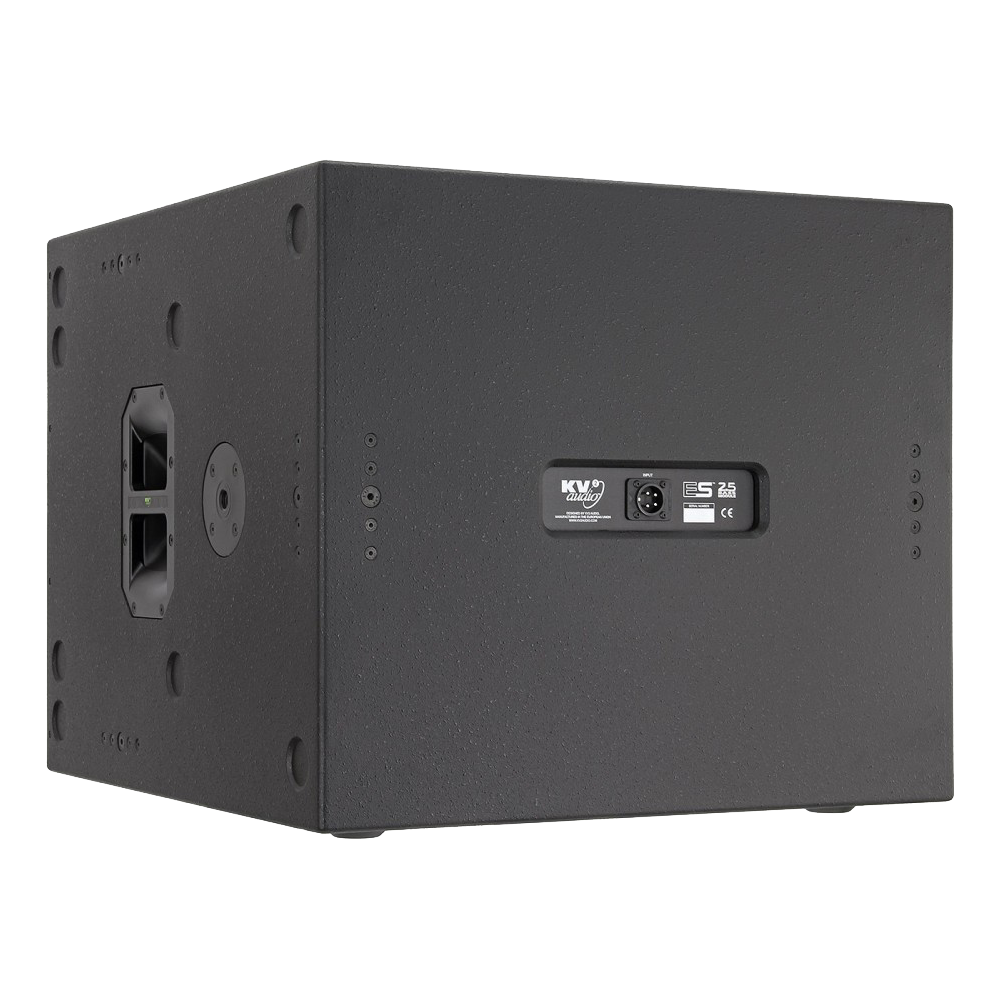
What Exactly Is the KV2 ES 2.5?
Before we get into applications, let's establish what we're working with. The ES 2.5 is an active driven bass module designed to extend the low-frequency output of KV2's ES system — particularly the ES 1.0 full-range cabinets. It's not a standalone subwoofer in the traditional sense. It's engineered as part of an integrated system where the amplification, processing, and transducers are all designed to work together as a single unit.
This is a critical distinction. Where most manufacturers sell you a passive or powered sub and leave you to sort out crossover points, EQ, and time alignment, KV2's approach bakes all of that into the system design. The ES 2.5 arrives ready to slot into the ES ecosystem with minimal fuss — and that's either a massive advantage or a limitation, depending on how you look at it.
Use Case #1: Small to Mid-Size Live Venues
This is where the ES 2.5 genuinely comes into its own. Think 200 to 600-capacity rooms — the pubs, clubs, theatres, and function spaces that make up the backbone of Australia's live entertainment scene.
In these environments, you're typically dealing with:
- Limited rigging points and floor space
- Rooms that weren't designed with acoustics in mind
- Neighbours who'll call the council if your low end leaks
- Audiences who expect clean, musical bass — not just raw SPL
The ES 2.5 handles all of these challenges remarkably well. Its compact footprint means you're not sacrificing half the stage to subwoofers. And because the amplification is built in and matched to the driver, you get tight, controlled bass extension that fills the room without the muddy, boomy nonsense that plagues so many small venue installs.
A sound tech running a 400-cap venue in Melbourne told me something that stuck: "I used to need four subs to get even coverage. Now I run two ES 2.5s and the bass is more even across the room than it ever was." That's not just about raw power — it's about pattern control and how the system manages low-frequency energy in a real room.
What to Expect in Practice
In a typical 300-seat venue, a pair of ES 2.5 modules paired with ES 1.0 tops will deliver clean, articulate bass down to the low registers without running out of headroom for most live music applications. You're not going to rattle windows at a death metal gig, but for jazz, folk, rock, pop, corporate events, and theatre — it's genuinely impressive how musical the low end sounds.
Use Case #2: Touring Productions and One-Off Events
Australian touring is brutal on gear. Long drives between regional towns, load-ins through narrow doorways, and the constant pack-unpack cycle mean your equipment needs to be road-tough and quick to deploy.
The ES 2.5's active design is a real advantage here. There's no separate amp rack to haul, no speaker cables to run between amps and subs, and no crossover settings to recall. You plug in power, plug in signal, and you're making noise. For a two-person crew doing regional touring — which is the reality for most Australian acts — that simplicity is worth its weight in gold.
The weight and dimensions also matter. When you're loading into a regional RSL or a winery function space, having a bass module that one person can reasonably manoeuvre on a trolley makes a genuine difference to your bump-in time.
A Word of Caution for Tourers
If you're touring into larger venues (800+ capacity) and need to supplement existing house systems, be aware that the ES 2.5 is optimised for the KV2 ecosystem. Mixing it with other manufacturers' subs and tops can be done, but you won't get the seamless integration that makes the system special. For supplementary sub duty with mixed rigs, you might find more flexibility elsewhere.
Use Case #3: Corporate AV and Conference Spaces
Here's a use case that doesn't get enough attention. Corporate AV in Australia is a massive market, and the requirements are specific: the system needs to sound excellent at moderate levels, look professional, and be invisible to the audience.
The ES 2.5 fits this brief perfectly. Corporate clients don't want thundering bass — they want warmth, presence, and intelligibility. A single ES 2.5 tucked under a stage skirt or behind a lectern provides the low-frequency foundation that makes speech sound full and natural, and makes walk-in music and video playback sound polished rather than thin.
For AV companies running conference and gala dinner circuits in Sydney, Melbourne, Brisbane, and Perth, the ES 2.5 offers:
- Clean, unobtrusive bass extension for speech reinforcement
- Enough output for background music and video playback
- Professional appearance that clients won't complain about
- Reliable active electronics — no separate amp racks cluttering the tech area
- Quick setup for tight bump-in windows at hotel ballrooms and convention centres
Use Case #4: Houses of Worship
Churches and worship spaces across Australia have been upgrading their sound systems steadily, and the challenges are unique. You're often dealing with reverberant spaces with hard surfaces, congregation members ranging from toddlers to elderly parishioners, and a music programme that might span everything from a solo acoustic guitar to a full contemporary worship band.
The ES 2.5's controlled dispersion and musical character make it a genuinely good fit here. Unlike conventional subs that can excite room modes and create boomy, undefined low end in reflective spaces, the ES 2.5's integrated approach tends to deliver bass that's felt without being overwhelming. That's exactly what most worship leaders are asking for.
A practical tip: in a typical church install, positioning the ES 2.5 on the floor near the front of the stage, coupled to the floor boundary, will give you the most efficient bass output. In longer, narrower church buildings — which are common in older Australian churches — a single unit centrally placed often outperforms two units placed either side.
Use Case #5: Permanent Install for Bars and Restaurants
Background music systems in hospitality venues are often an afterthought, but they shouldn't be. The difference between a well-designed system and a cheap ceiling speaker setup is the difference between a venue that feels right and one that feels like a waiting room.
The ES 2.5 is admittedly overkill for pure background music, but for venues that host live music on weekends, DJs on Friday nights, and need clean background audio during the week, it provides a versatile foundation that handles everything without complaint. The active design means there's no amp rack taking up space in an already-cramped bar area, and the build quality means you're installing it once and forgetting about it for years.
Who Should Think Twice
Honesty matters, so let's talk about where the ES 2.5 might not be your best bet:
- Large-scale festival and arena work: If you need to pressurise a field or an arena, you need dedicated high-output subwoofers — the ES 2.5 isn't designed for that role. KV2 has larger systems for those applications, but the ES 2.5 is purpose-built for small to mid-scale work.
- EDM and bass-heavy DJ events: If your primary application is electronic dance music where sub-bass below 40Hz is the main event, the ES 2.5's musical, controlled character might not deliver the visceral, chest-rattling impact that EDM audiences expect. It'll sound good, but it might not sound enough for dedicated club environments.
- Budget-constrained projects: KV2 is a premium brand. If your budget is tight and you need maximum SPL per dollar, there are more cost-effective options. But remember — you're not just buying a box, you're buying an integrated system with matched amplification and processing.
- Mixed-manufacturer rigs: As mentioned earlier, the ES 2.5 is optimised for the KV2 ecosystem. If you're running tops from another manufacturer, you'll lose much of the integration advantage that makes this system special.
How It Compares in Practice
Sound professionals in Australia often weigh the ES 2.5 against powered subs from the likes of QSC, JBL, d&b audiotechnik, and L-Acoustics. Here's the honest comparison from a use-case perspective:
Vs. Conventional Powered Subwoofers (QSC, JBL, etc.)
Mainstream powered subs give you more flexibility — they'll work with any tops, any processor, any signal chain. They're also generally cheaper per unit. But the ES 2.5's integrated system approach delivers a coherence and musicality that's genuinely difficult to achieve with mix-and-match components. If you're building a dedicated system rather than a flexible hire stock, the KV2 approach often wins on sonic quality.
Vs. Premium Install Subs (d&b, L-Acoustics)
At the premium end, you're comparing philosophies as much as products. d&b's SL-Subs and L-Acoustics' SB series are outstanding, but they're also designed for larger-scale applications and come with their own ecosystem requirements. For the 200-600 seat sweet spot, the ES 2.5 is right-sized in a way that those larger systems aren't.
Practical Setup Tips for Australian Conditions
A few things worth knowing if you're bringing the ES 2.5 into an Australian environment:
- Power supply considerations: Australian 240V mains can be inconsistent in regional areas and older venues. The active electronics in the ES 2.5 are robust, but a quality power conditioner is always good practice. Don't cheap out on this — a $200 power conditioner protects a multi-thousand-dollar investment.
- Heat management: Australian summers are harsh. If you're installing the ES 2.5 in a permanent position, ensure adequate ventilation around the amplifier module. Don't box it into an enclosed space under a stage without airflow — active electronics generate heat, and 45°C ambient temperatures in a tin-roofed venue are a real thing.
- Humidity in tropical regions: If you're in Far North Queensland or the Top End, the humidity can be punishing on electronics. Consider the storage and operating environment carefully, and factor in climate control for permanent installs.
- Floor coupling: The ES 2.5 benefits significantly from solid floor coupling. On the hollow timber stages common in many Australian pubs and clubs, you may experience unwanted stage resonance. Isolation pads between the module and the stage can help tighten things up considerably.
Getting the Most From Your Investment
If you do go ahead with the ES 2.5, here are some practical ways to maximise your return:
- Commit to the ecosystem: The ES 2.5 sounds good on its own, but it sounds exceptional as part of a complete KV2 ES system. Budget for the matching tops if you can — the whole-system integration is where the real magic happens.
- Take time with placement: Unlike conventional subs where you can somewhat compensate for poor placement with EQ and delay, the ES 2.5 rewards careful positioning. Spend an extra hour during install getting the placement right, and you'll be rewarded every single time you turn it on.
- Trust the processing: Resist the urge to add external processing between your console and the ES 2.5. The internal processing is designed to optimise the system's performance. Adding external EQ or limiting can actually degrade the sound rather than improve it.
- Train your team: If you're a hire company or venue, make sure everyone on your team understands how the KV2 system works. It's not complicated, but it is different from conventional sub-tops systems, and a tech who treats it like a generic powered sub won't get the best results.
Frequently Asked Questions
Can I use the ES 2.5 with non-KV2 tops?
Technically, yes. It will function as a powered bass module with any signal source. But you'll lose the system-level integration that's the entire point of the KV2 approach. If you're planning to mix brands, consider whether a conventional powered sub might serve you better.
How many ES 2.5 units do I need for my venue?
For venues up to about 200 capacity, a single ES 2.5 with a pair of ES 1.0 tops will generally suffice. For 200-500 capacity, a pair of ES 2.5 modules is the sweet spot. Beyond 500, you should be talking to a KV2 specialist about the larger ES system options or stacking additional units.
Is it worth the premium over mainstream powered subs?
If sonic quality and system coherence are your priorities — absolutely. If maximum SPL per dollar or brand-agnostic flexibility matter more, there are better-value options. It comes down to what you're optimising for.
What's the warranty and support situation in Australia?
KV2 has Australian distribution, so you'll have local warranty support and access to spare parts. For a product at this price point, that local support network matters — you don't want to be shipping a bass module back to Europe for service.
Can it handle outdoor events?
The ES 2.5 can be used outdoors for events, but it's not IP-rated for weather exposure. For outdoor use, ensure it's under cover and protected from rain. In typical Australian outdoor event scenarios — marquees, covered stages, festival tents — it performs well, though you may want additional units to compensate for the lack of room boundaries that help indoor bass propagation.
The Bottom Line: Is It Right for You?
The KV2 ES 2.5 Active Driven Bass Module isn't trying to be everything to everyone, and that's precisely its strength. It's a purpose-built, system-integrated bass solution that excels in small to mid-size applications where sound quality matters more than raw output.
If you're running a venue under 600 capacity, touring the regional circuit, kitting out corporate AV stock, or installing sound in a house of worship — and you care deeply about how your system sounds rather than just how loud it goes — the ES 2.5 deserves serious consideration.
It's not the cheapest option, and it's not the most flexible. But in its sweet spot, it delivers a quality of bass reproduction that genuinely surprises people who hear it for the first time. And in an industry drowning in "good enough" solutions, that counts for a lot.
Ready to hear the difference? Check out the KV2 ES 2.5 at MusiconStage — Australia's trusted source for professional audio equipment. Got questions about whether it's the right fit for your specific application? Get in touch with the MusiconStage team for expert advice tailored to your venue and requirements.