
KV2 ES 1.0 3-Way Active Speaker: Technical Deep Dive 2026
KV2 ES 1.0 3-Way Active Speaker: A Technical Deep Dive for Australian Audio Professionals
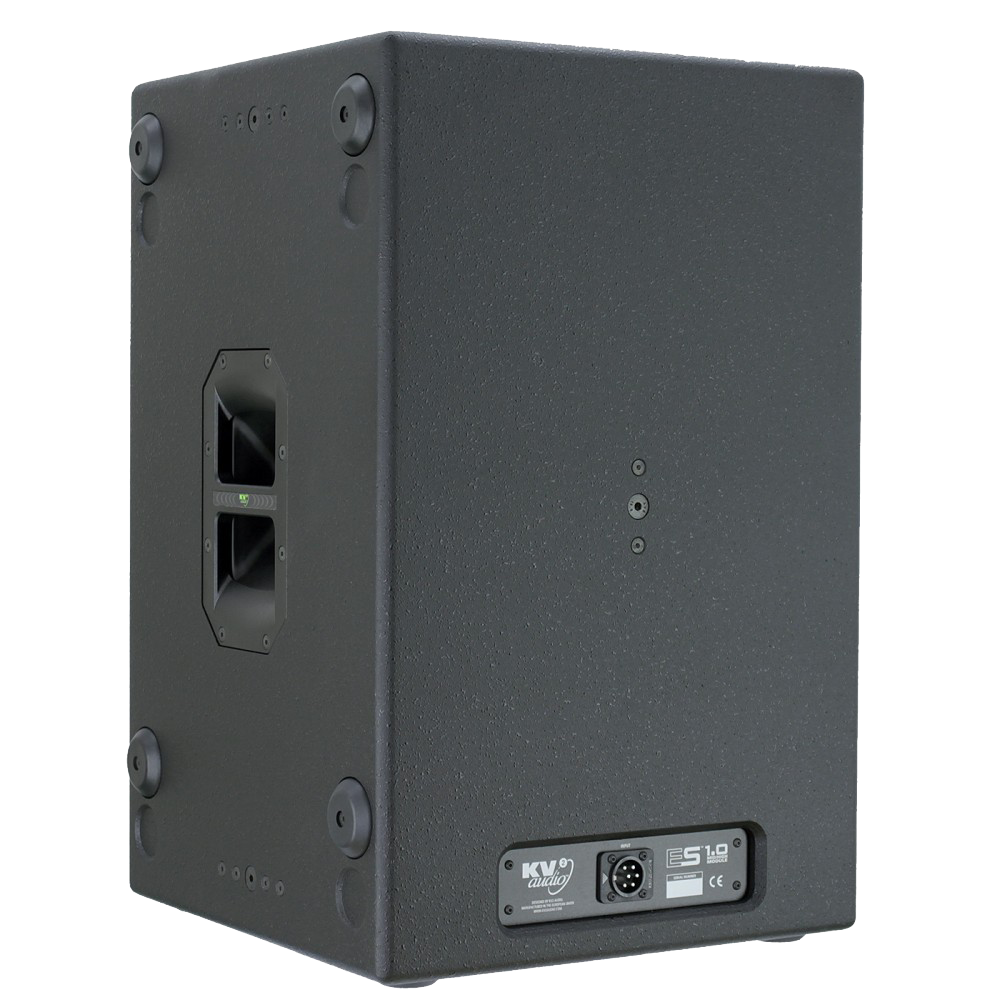
If you've spent any meaningful time around high-end professional sound reinforcement, you've likely heard the name KV2 Audio spoken with a certain reverence. The Czech manufacturer has built a devoted following among sound engineers who prioritise transient accuracy and tonal fidelity above raw SPL numbers. The KV2 ES 1.0 sits at the heart of their Entertainment Series — a 3-way active driven mid/high speaker that represents everything KV2 stands for in a format designed for fixed installations and serious portable applications.
This isn't your typical powered loudspeaker review. The ES 1.0 demands a deeper conversation about what actually matters in professional sound reproduction, and why KV2's engineering philosophy produces results that genuinely surprise even seasoned audio professionals.
Understanding KV2's Point-Source Philosophy
Before diving into the ES 1.0's specifications, it's worth understanding why KV2 Audio builds speakers the way they do — because it fundamentally shapes every design decision in this cabinet.
Most modern PA manufacturers have moved towards line array systems, which achieve coverage through vertical stacking of multiple identical elements. KV2 has deliberately resisted this trend, arguing that true point-source designs deliver superior transient response, phase coherency, and natural sound reproduction. Their position isn't merely contrarian; it's rooted in acoustic physics.
A point-source speaker radiates sound from a single apparent origin, meaning all frequencies arrive at the listener's ear with correct time alignment. Line arrays, by contrast, rely on constructive and destructive interference patterns to shape coverage — effective for throw distance, but introducing phase-related artefacts that colour the sound. The ES 1.0 is built entirely around this point-source principle, with its 3-way design carefully engineered to maintain coherent wavefront behaviour across the full frequency range.
For Australian venues — from intimate jazz clubs in Melbourne's laneways to mid-capacity live rooms across Sydney and Brisbane — this approach translates to a speaker that sounds remarkably natural and detailed, even at significant volume levels.
Technical Specifications & Architecture
The ES 1.0 is a 3-way active driven mid/high speaker, meaning it handles mid-range and high-frequency reproduction with dedicated transducers for each band, while relying on a companion subwoofer (typically the KV2 ES 1.8 or similar) for low-frequency extension. This is a critical design choice — by offloading bass duties, KV2 can optimise the ES 1.0's cabinet, drivers, and amplification purely for mid and high-frequency performance.
| Specification | Detail |
|---|---|
| Configuration | 3-way active (mid/high) |
| Low-Mid Driver | 12" cone driver |
| Mid Driver | 6.5" cone driver |
| High-Frequency Driver | 1.4" compression driver on proprietary horn |
| Amplification | Integrated multi-channel Class D with onboard DSP |
| Crossover | Active DSP-controlled, steep slopes with phase alignment |
| Coverage Pattern | Controlled dispersion horn with consistent off-axis response |
| Enclosure | Multi-ply birch plywood, Polyurea coating |
| Connectivity | Balanced XLR input, link output, network control |
| Rigging | Integrated fly points, optional mounting brackets |
The 3-Way Advantage: Why It Matters
The decision to use a 3-way configuration in a mid/high cabinet isn't arbitrary — it's one of the most significant engineering choices in the ES 1.0's design. Here's why this matters from a technical standpoint.
Dedicated Driver Optimisation
In a 2-way design, the low-mid driver must handle a very wide frequency range, often from a few hundred hertz up to 1.5–2 kHz before handing off to the compression driver. This forces the cone to reproduce frequencies well above its optimal operating range, leading to beaming (narrowing dispersion at higher frequencies) and increased distortion.
The ES 1.0's 3-way topology inserts a dedicated 6.5" mid-range driver that handles the critical vocal presence region — roughly 500 Hz to 4 kHz. This is arguably the most important frequency band in live sound and music reproduction. Having a purpose-built driver for this range means:
- Superior vocal clarity — the mid driver operates within its optimal piston range, producing lower distortion and better transient response
- More consistent dispersion — each driver only handles frequencies where its cone size provides appropriate directivity
- Reduced intermodulation distortion — the 12" driver isn't being asked to simultaneously reproduce bass transients and mid-range detail
- Lower crossover points for the compression driver — extending HF driver life and reducing the harsh artefacts that can occur when compression drivers are pushed too low
Crossover Design and Phase Coherency
Adding a third driver introduces additional crossover complexity, and this is where KV2's active DSP processing becomes essential. The onboard processing handles not just frequency division but precise time alignment between all three drivers, ensuring the acoustic centres are phase-aligned at the listening position.
KV2's approach to crossover design uses steep filter slopes with carefully calculated phase compensation. The result is a speaker that doesn't exhibit the characteristic "crossover hole" — that dip in energy and coherency around crossover frequencies that plagues many multi-way designs. In practice, this means you can listen to the ES 1.0 from various positions in a venue and the tonal balance remains remarkably consistent.
Amplification and DSP: The Hidden Advantage
One of KV2's strongest engineering arguments is that amplification shouldn't be an afterthought. The ES 1.0's integrated amplifiers are specifically matched to each driver, with power delivery, damping factor, and dynamic headroom optimised for the exact transducer they're driving.
This matters more than many people realise. When you pair a generic power amplifier with a passive speaker, you're relying on generalised amplifier characteristics to drive a specific mechanical load. The impedance curve of any loudspeaker driver is far from flat — it swings dramatically with frequency, and the amplifier's ability to control the driver's cone motion (damping factor) varies across this curve.
By building the amplification directly into the system, KV2 can:
- Match amplifier output impedance to each driver's specific characteristics — maximising damping and transient control
- Implement driver protection that responds to actual thermal and mechanical conditions — not just signal level
- Eliminate signal degradation from speaker cables — the amplifier-to-driver path is measured in centimetres, not metres
- Apply real-time DSP correction — compensating for driver non-linearities across the operating range
The practical result? The ES 1.0 maintains its tonal character across a remarkably wide dynamic range. Whether you're running it at conversation level for a corporate presentation or pushing it for a live band, the speaker doesn't fundamentally change character the way many active speakers do when they engage limiting circuits.
Check pricing and availability of the KV2 ES 1.0 at MusiconStage
Real-World Performance: What to Expect
Specifications tell part of the story, but what does the ES 1.0 actually sound like in practice? Based on the engineering principles and KV2's track record with the ES series, here's what experienced operators consistently report.
Transient Response
This is KV2's calling card, and the ES 1.0 delivers. The combination of purpose-matched amplification and high-quality drivers produces transient reproduction that's noticeably superior to most comparably sized active speakers. Drum attacks have genuine snap, vocal consonants are articulate without being harsh, and acoustic instruments retain their natural attack and decay characteristics.
For Australian venues hosting live jazz, acoustic acts, or spoken word, this transient accuracy is transformative. You'll find yourself reaching for EQ far less frequently because the speaker isn't smearing the detail that you'd otherwise be trying to restore.
Vocal Reproduction
The dedicated mid-range driver makes a profound difference here. Vocals sit in the mix with a presence and clarity that 2-way designs struggle to match. There's a naturalness to voice reproduction that makes the ES 1.0 particularly well-suited to venues where speech intelligibility is paramount — function spaces, houses of worship, theatres, and corporate event spaces.
Off-Axis Performance
KV2's horn design provides controlled, consistent dispersion that maintains tonal balance as you move off-axis. This is crucial for real-world installations where not every listener is sitting in the sweet spot. The coverage pattern transitions smoothly rather than exhibiting the abrupt high-frequency rolloff common in speakers with less sophisticated horn designs.
Headroom and Dynamic Range
As a mid/high speaker (designed to be paired with a dedicated subwoofer), the ES 1.0 doesn't waste amplifier power or driver excursion on deep bass reproduction. This means the available headroom is entirely dedicated to the frequency range the speaker is designed to handle, resulting in cleaner performance at higher output levels and greater dynamic range for transient peaks.
System Integration: The ES Series Ecosystem
The ES 1.0 is designed as part of KV2's Entertainment Series system, and understanding how it fits into the broader ecosystem is essential for proper deployment.
Subwoofer Pairing
The ES 1.0 is purpose-built to work with KV2's ES-series subwoofers. The crossover between the sub and mid/high unit is managed through the system's DSP, ensuring seamless frequency integration. This isn't a case of simply high-passing a full-range speaker and adding a sub underneath — the entire system is engineered as an integrated whole, with the ES 1.0's low-frequency response tailored to mate perfectly with the companion subwoofer's upper range.
Deployment Scenarios
| Application | Configuration | Notes |
|---|---|---|
| Intimate venue (100–200 cap) | 2x ES 1.0 + 1x sub | Exceptional clarity; often outperforms much larger conventional systems |
| Mid-size venue (200–500 cap) | 2x ES 1.0 + 2x subs | Sweet spot for the ES 1.0; full dynamic range with controlled coverage |
| Corporate / presentation | 2x ES 1.0 (sub optional) | Superior speech intelligibility; clean, professional sound |
| Theatre / performing arts | Multiple ES 1.0 + subs | Point-source design excels for theatrical sound design |
| House of worship | 2–4x ES 1.0 + subs | Natural vocal reproduction suits spoken word and music equally |
KV2 ES 1.0 vs the Competition: An Honest Technical Comparison
Let's address the elephant in the room. The KV2 ES 1.0 occupies a premium price bracket, and Australian buyers rightly want to understand what they're getting relative to more commonly seen alternatives.
Compared to Line Array Systems
For venues under 500 capacity, the ES 1.0 system offers several technical advantages over compact line arrays from brands like d&b, L-Acoustics, or JBL VTX. The point-source design eliminates the comb filtering artefacts inherent in arrayed systems, delivering more natural sound reproduction. You also avoid the complexity and cost of array rigging hardware, flying frames, and the need for detailed array prediction software.
However, line arrays maintain advantages for larger venues and outdoor events where long-throw capability and precise vertical coverage shaping are essential. The ES 1.0 isn't trying to compete in stadium-scale applications — it's designed to be the best solution for the venues where point-source architecture genuinely excels.
Compared to Conventional Powered Speakers
Against powered speakers from QSC, EV, or Yamaha in a similar size class, the ES 1.0 represents a fundamentally different engineering approach. Most powered speakers in the market use 2-way designs with off-the-shelf Class D amplifier modules and relatively basic DSP. The KV2's 3-way architecture, purpose-matched amplification, and sophisticated DSP processing place it in a different performance category entirely.
The difference is most apparent in three areas: transient accuracy (the KV2 is demonstrably faster and more controlled), mid-range clarity (the dedicated mid driver is a genuine advantage), and consistency at different output levels (KV2's limiting and protection algorithms are more transparent).
The Value Proposition
Is the ES 1.0 worth the premium? That depends entirely on your priorities. If absolute sound quality, natural reproduction, and long-term reliability are your primary concerns — and your application falls within the speaker's optimal use cases — the ES 1.0 represents genuinely excellent value despite its higher purchase price. The build quality and component selection suggest a working life measured in decades rather than years, and the sonic performance reduces the need for extensive system processing and EQ correction.
For Australian hire companies, the ES 1.0 can become a genuine differentiator. When clients hear the difference — and they will — it becomes a selling point that justifies premium hire rates.
Build Quality and Durability
KV2 constructs the ES 1.0's enclosure from multi-ply birch plywood — the gold standard for professional loudspeaker cabinets. Birch ply offers an excellent strength-to-weight ratio and superior acoustic damping compared to MDF or particle board alternatives used in lower-cost speakers.
The Polyurea coating provides robust protection against the inevitable knocks, scrapes, and environmental exposure that touring and installation speakers endure. This coating is significantly more durable than the spray-on paint finishes common on mid-range speakers, and it resists chipping, peeling, and UV degradation — particularly relevant for Australian outdoor applications where UV exposure is intense.
Hardware quality — rigging points, handles, connector panels — reflects KV2's professional-grade positioning. These are components designed for daily use by hire companies and production crews, not weekend warriors.
Installation Considerations for Australian Venues
If you're considering the ES 1.0 for a permanent installation in an Australian venue, several technical factors deserve attention.
Environmental Factors
Australia's climate presents unique challenges for installed audio equipment. The ES 1.0's active electronics include cooling systems designed for continuous operation, but installations in non-climate-controlled environments (outdoor amphitheatres, covered patios, warehouse-style venues) should account for adequate ventilation around the amplifier section. Summer temperatures in most Australian capital cities can exceed 40°C, and enclosed ceiling voids or tight mounting positions can push ambient temperatures even higher.
Power Requirements
As an active speaker, the ES 1.0 requires mains power at each cabinet location. For installations, this means running dedicated power circuits to each speaker position — factor this into your electrical planning and budget. Clean, stable power is essential for optimal performance; dedicated circuits with appropriate surge protection are strongly recommended.
Rigging and Mounting
The integrated fly points support various rigging configurations, and KV2 offers optional mounting brackets for permanent installations. All rigging must comply with Australian standards (AS 4991 for entertainment rigging) and should be certified by a qualified rigger. Given the speaker's weight, appropriate structural assessment of mounting points is essential.
Enquire about the KV2 ES 1.0 with MusiconStage for expert advice on system design
Who Should Consider the KV2 ES 1.0?
This speaker isn't for everyone, and being honest about that is part of providing genuinely helpful advice.
The ES 1.0 is ideal for:
- Venue owners who prioritise sound quality as a core part of their offering
- Production and hire companies seeking a premium tier of speaker inventory
- Houses of worship where natural vocal reproduction is essential
- Theatres and performing arts centres requiring articulate, phase-coherent sound
- Engineers who value transient accuracy and minimal system processing
- Applications where the speaker will remain in service for many years
It may not be the right choice for:
- Large-scale outdoor events requiring long-throw capability (consider line arrays)
- Budget-constrained installations where sound quality isn't the primary differentiator
- Applications requiring standalone full-range operation without a subwoofer
- Operators unfamiliar with system-level audio design (the ES series rewards knowledge)
Frequently Asked Technical Questions
Can the ES 1.0 be used without a subwoofer?
Technically yes, but you'd be significantly under-utilising the system. The ES 1.0 is engineered as a mid/high component designed to work with a companion sub. Running it full-range will produce sound, but you'll lack the low-frequency foundation that completes the system's intended response. For anything beyond background music or pure speech reinforcement, pair it with an appropriate KV2 subwoofer.
How does the active design affect reliability compared to passive speakers?
Active speakers introduce electronics that passive designs don't have — amplifiers, power supplies, DSP boards. However, KV2's integrated approach means these components are designed, tested, and warranted as a complete system. The elimination of external amplifier racks, speaker cables, and connector interfaces actually removes several common failure points. In practice, well-maintained active speakers from quality manufacturers like KV2 tend to be extremely reliable.
What about servicing in Australia?
This is a legitimate consideration for any European-manufactured professional audio product. Ensure your dealer — such as MusiconStage — can provide local support and access to spare parts. KV2's build quality means service intervals should be infrequent, but when you need support, having an Australian distributor relationship matters.
Is KV2's point-source approach actually better than line arrays?
Neither is universally "better" — they're different tools optimised for different applications. For venues under approximately 500 capacity, point-source systems like the ES 1.0 offer superior phase coherency and more natural sound reproduction. Above that capacity, or for applications requiring precise vertical coverage control, line arrays have genuine acoustic advantages. The best system is the one correctly matched to the application.
The Bottom Line: Technical Excellence with Purpose
The KV2 ES 1.0 is a loudspeaker that rewards technical understanding. It's not the cheapest option, it's not the loudest option, and it's not trying to be a universal solution. What it is, unambiguously, is one of the finest-sounding mid/high speakers available in its class — a speaker built by engineers who believe that accurate sound reproduction isn't a luxury but a fundamental requirement of professional audio.
For Australian venues and production companies willing to invest in genuinely superior sound quality, the ES 1.0 delivers performance that justifies its premium positioning. The 3-way active architecture, purpose-matched amplification, and KV2's uncompromising approach to transient accuracy produce a speaker that sounds demonstrably better than the powered boxes most people are accustomed to hearing.
If you're serious about sound quality and your application aligns with the ES 1.0's strengths, it deserves serious consideration. Arrange a demonstration through MusiconStage — because with a speaker like this, hearing truly is believing.