
Electro-Voice Everse 12 Technical Analysis: Battery-Powered PA Engineering 2025
Electro-Voice Everse 12 Technical Analysis: Battery-Powered PA Engineering 2025
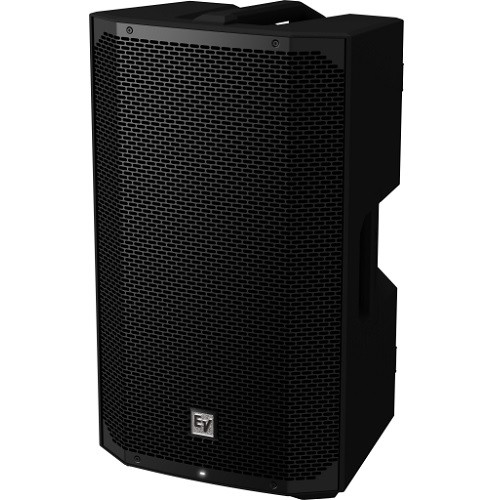
The Electro-Voice Everse 12 represents a fundamental shift in how battery-powered PA systems approach the intersection of portability and professional performance. After decades of compromise between runtime and output, EV's engineering team has delivered a 12-inch powered speaker that actually meets professional SPL requirements while running untethered for meaningful durations. This isn't just another Bluetooth speaker scaled up—it's a legitimate working tool that happens to run on batteries.
For Australian sound professionals, mobile entertainers, and venue operators dealing with outdoor events, pop-up installations, and locations where mains power is unreliable or unavailable, the Everse 12 solves problems that have traditionally required generators or creative cable routing. But the interesting technical question isn't whether it's battery-powered—it's whether the engineering trade-offs required to achieve that portability compromise the system's core performance as a professional loudspeaker.
Core Specifications and Acoustic Architecture
The Everse 12 centres around a 12-inch woofer paired with a 1.5-inch titanium compression driver on an optimised waveguide. The amplifier architecture delivers 1000W peak power (250W continuous RMS to the woofer, 100W to the compression driver), which puts it in legitimate small-to-medium venue territory rather than the underpowered category many portable systems occupy.
Maximum SPL output reaches 127 dB peak, measured at 1 metre. That's not battery-powered-speaker territory—that's real working headroom for live sound applications. For context, most battery-operated portable systems struggle to break 120 dB, and many sit closer to 115 dB, which simply doesn't cut through in challenging acoustic environments or at outdoor events.
| Specification | Everse 12 | Industry Context |
|---|---|---|
| LF Driver | 12-inch woofer | Standard for small-medium PA |
| HF Driver | 1.5" titanium compression | Professional-grade component |
| Peak Power | 1000W (250W LF + 100W HF RMS) | Comparable to mains-powered competitors |
| Max SPL | 127 dB peak @ 1m | Professional working headroom |
| Frequency Response | 44 Hz - 20 kHz (±3dB) | Full-range without sub required |
| Horizontal Coverage | 110° × 60° | Optimised for monitor or FOH |
| DSP Processing | 96 kHz, 32-bit | High-resolution signal path |
| Battery Type | Lithium-ion (removable) | Swappable during operation |
| Weight | 21.3 kg (with battery) | Single-person portable |
The frequency response extends down to 44 Hz, which is genuinely impressive for a 12-inch enclosure. Most comparable systems roll off around 55-60 Hz. This low-end extension means the Everse 12 functions as a true full-range system for speech and most music applications without requiring a subwoofer—a significant advantage when you're trying to keep your rig portable and battery-powered.
Battery Performance: Runtime Analysis and Real-World Expectations
The lithium-ion battery system is where the Everse 12's engineering gets particularly interesting. EV specifies up to 12 hours of runtime, but like all battery specifications, that number requires substantial context to be meaningful.
Runtime varies dramatically based on output level. At conversation-level background music volumes (roughly 85-90 dB SPL), you'll genuinely approach that 12-hour figure. Running speech reinforcement for a corporate event or quiet background music for a cafe outdoor area, the battery lasts all day. At moderate party volumes (95-100 dB), expect 6-8 hours. Push it hard for live band reinforcement or DJ applications where you're hitting 110+ dB peaks, and you're looking at 3-4 hours of realistic runtime.
What separates the Everse 12 from consumer-grade battery speakers is the removable, hot-swappable battery design. You can pull the depleted battery and slot in a fresh one without powering down the system or interrupting audio. For professional applications, this is transformative—buy two or three batteries, rotate them through, and you've got unlimited runtime. The batteries charge independently in approximately 2.5 hours using the dedicated charger.
The battery management system includes intelligent power monitoring through the QuickSmart Mobile app (more on that below), giving you real-time runtime estimates based on current draw. This eliminates the guesswork that plagues most battery-powered systems where you're never quite sure when you'll hit empty.
Battery Chemistry and Australian Climate Considerations
Lithium-ion performance degrades in extreme temperatures, which matters for Australian outdoor applications. EV specifies an operating range of 0°C to 40°C. In practical terms, the system will operate outside this range, but battery runtime decreases and long-term battery health suffers.
For summer outdoor events where the cabinet sits in direct sun, you'll notice reduced runtime—lithium-ion cells lose approximately 20% capacity at 40°C compared to 20°C. The inverse happens in winter, though Australian conditions rarely push into problematic cold territory except in alpine regions. The smart approach: keep spare batteries in shade or air-conditioned vehicles, swap them into the speaker as needed.
DSP Architecture and QuickSmart Mobile Integration
The Everse 12 runs a 96 kHz, 32-bit DSP engine—specifications that indicate serious signal processing capability. This isn't marketing puffery; the high sample rate and bit depth provide the headroom necessary for complex processing without degrading audio quality through quantization noise or aliasing.
The Everse 12's DSP capabilities include factory presets optimised for different applications: standard mode, speech mode, music mode, and custom user presets. But the real power comes through the QuickSmart Mobile app, which provides Bluetooth-based wireless control over every processing parameter.
What QuickSmart Mobile Actually Controls
- Parametric EQ: Full multi-band parametric equalisation with adjustable frequency, gain, and Q factor for precise room tuning
- Dynamic EQ: Frequency-dependent limiting that maintains tonal balance as you approach maximum output
- Subwoofer integration: Dedicated crossover settings when adding an Everse 8 sub, including variable crossover points and polarity control
- Input routing and mixing: Control over XLR/TRS input and Bluetooth audio, including level balance and input selection priority
- System monitoring: Real-time battery status, amplifier temperature, limiter activity, and predictive runtime estimates
- Preset management: Save venue-specific tunings and recall them instantly for repeat installations
The app eliminates the need for laptop-based system tuning, which is exactly the workflow improvement battery-powered portability demands. You can tune the system from the audience position using your phone, make adjustments during soundcheck without running back to the speaker, and verify settings across multiple Everse units when running distributed systems.
One technical limitation worth noting: the Bluetooth connection is for control data only, not audio streaming in the app itself. Audio Bluetooth is handled separately through the standard Bluetooth 5.0 audio receiver built into the speaker. This dual-Bluetooth architecture prevents control latency and bandwidth competition.
Connectivity and Input Architecture
The rear panel I/O reflects professional requirements rather than simplified consumer interfaces:
- XLR/TRS combo input: Mic/line switchable with dedicated gain control
- XLR link output: Passes audio to additional speakers for daisy-chaining (critical for stereo pairs or larger systems)
- Bluetooth 5.0 audio: High-quality wireless streaming with aptX support for lower latency
- USB charging port: 5V output for keeping phones or tablets charged during events
The mic/line switchable input handles everything from dynamic microphones (providing proper gain structure for low-output mics) to line-level sources from mixers or playback devices. The gain control provides sufficient range to properly match input sensitivity without requiring external preamps or DI boxes for most sources.
The link output is particularly important for professional applications. You can run XLR from your mixer to speaker one, then XLR from speaker one to speaker two (and additional speakers if needed), creating a complete system from a single mixer output. This daisy-chain architecture simplifies cabling dramatically compared to running individual feeds to each speaker—a real advantage when you're trying to maintain the cable-free aesthetic that battery power enables.
Physical Design and Deployment Flexibility
At 21.3 kg with battery installed, the Everse 12 sits at the upper limit of single-person portability. You're not carrying this around one-handed like an 8-inch portable speaker, but it's manageable for load-in and positioning by a single operator. The enclosure includes integrated handles positioned for balanced lifting.
The cabinet design incorporates multiple deployment options:
- Standard pole mount: 35mm socket for speaker stands
- Monitor wedge angle: Built-in angle for floor monitor applications
- Tilt-back stand mode: Integrated kickstand extends from the rear for optimal aiming when pole-mounting isn't practical
- M10 rigging points: Threaded mounting points for permanent installation or overhead rigging
The 110° × 60° coverage pattern is asymmetrical—wider than it is tall. This makes sense for both FOH applications (where you want wide horizontal coverage but controlled vertical dispersion to avoid ceiling reflections) and floor monitor use (where you need coverage across multiple performers but don't want energy washing into microphones above the cabinet).
The monitor angle is steeper than many competitors at approximately 50°, which means when you're standing directly in front of it, you're clearly on-axis to the high-frequency driver. Shallower monitor angles (common on general-purpose powered speakers) often leave performers hearing mostly off-axis response, resulting in the classic complaint that monitors sound dull. The Everse 12's geometry addresses this intelligently.
Performance Benchmarking: How It Compares to Mains-Powered Alternatives
The technical question that determines whether the Everse 12 is a professional tool or an expensive compromise: how does it perform against conventional mains-powered speakers in the same size class?
| Model | Power Source | Max SPL | Frequency Range | Weight |
|---|---|---|---|---|
| EV Everse 12 | Battery/Mains | 127 dB | 44 Hz - 20 kHz | 21.3 kg |
| EV ETX-12P | Mains only | 131 dB | 50 Hz - 20 kHz | 17.7 kg |
| QSC K12.2 | Mains only | 131 dB | 50 Hz - 20 kHz | 15.9 kg |
| JBL EON712 | Mains only | 126 dB | 49 Hz - 20 kHz | 14.3 kg |
The Everse 12 gives up approximately 4 dB of maximum output compared to dedicated mains-powered speakers like the ETX-12P or K12.2. In practical terms, 4 dB represents about 40% reduction in acoustic power—noticeable if you're pushing systems to their absolute limits, but not typically limiting for the applications where battery operation matters.
What's surprising is the low-frequency extension: the Everse 12 actually reaches deeper than its mains-powered competitors. That 44 Hz specification versus 49-50 Hz for others indicates EV tuned the ported enclosure specifically for maximum low-end extension, likely recognising that battery-powered systems often run without subs where that extra bottom octave matters.
The weight penalty for battery operation is roughly 5-7 kg compared to equivalent mains-powered speakers. That's the lithium-ion pack, reinforced internal structure to support it, and slightly heavier-duty thermal management for the amplifiers running on DC power. Not insignificant, but not absurd either.
Intelligent Power Management and Thermal Performance
Running 1000W peak power from battery creates significant thermal challenges. The Everse 12 addresses this through intelligent power management that monitors amplifier temperature, battery state of charge, and output demand continuously.
When battery charge drops below certain thresholds, the DSP automatically limits peak output to preserve runtime and prevent voltage sag that would cause distortion. This graduated limiting is transparent in most applications—you're not suddenly losing half your volume, but the system prevents you from drawing peak power that would drain the battery in minutes.
The thermal management system uses variable-speed cooling fans that adjust based on amplifier temperature. At low output levels, the system runs essentially silent. Push it hard, and you'll hear fan noise, but the acoustic output at those levels typically masks mechanical noise except in quiet passages or between songs.
One intelligent thermal feature: the system can operate on mains power with battery installed, simultaneously running audio and charging the battery. The thermal management prioritizes charging speed versus battery longevity based on current draw—if you're running hard on mains power, charging slows to prevent excessive heat buildup that degrades battery life. If you're running quiet on mains, charging accelerates.
Australian Use Cases: Where Battery Power Changes Everything
For Australian conditions and applications, the Everse 12 specifically solves several recurring problems:
Outdoor Events Without Reliable Power
Beachside ceremonies, park events, outdoor fitness classes, yacht clubs, vineyard functions—situations where power exists but requires 50+ metres of cable routing across public areas. Battery operation eliminates cable runs, the need for portable generators (and their noise/fuel logistics), and the safety issues of cables across walking paths.
Corporate and Conference Applications
Pop-up presentations in unusual spaces: hotel courtyards, rooftop venues, warehouse conversions. The ability to position speakers optimally without power access constraints means better audio quality and cleaner aesthetics. The USB charging port keeps presenter devices powered during multi-hour sessions.
Busking and Street Performance
The Everse 12 delivers genuine performance-level output for serious buskers and street performers. The 127 dB output cuts through urban noise in ways consumer battery speakers can't approach. Bluetooth connectivity allows backing track playback from phones, while the XLR input accepts proper microphones or instrument pickups.
Emergency and Backup Systems
Venues in areas with unreliable power or requiring emergency announcement capability. The Everse 12 can sit on standby power indefinitely, then switch to battery instantly if mains fails. Battery runtime of 6-12 hours covers extended outage scenarios.
Mobile DJ and Solo Performer Rigs
Wedding ceremonies (battery for ceremony, switch to mains for reception), park parties, mobile discos in non-traditional venues. The ability to run genuine 127 dB output untethered means professional performance in locations that previously required compromised equipment choices.
Technical Limitations and Design Trade-offs
No engineering solution is without compromise. The Everse 12's limitations are worth understanding:
Maximum output is 4 dB below comparable mains-powered systems. For applications where you're regularly hitting limiter thresholds and need absolute maximum SPL, dedicated mains-powered speakers deliver more. The Everse 12's 127 dB is professional and substantial, but it's not unlimited.
Weight is significant at 21.3 kg. This isn't a grab-and-go speaker you casually move around during events. It's portable in the sense that one person can load and position it, but it's not lightweight.
Battery runtime at high output is limited. Running full-tilt for live bands or club DJ applications, you're looking at 3-4 hours per battery. That's a full ceremony-to-reception timeline, or a standard corporate event, but it's not all-day at peak output. Budget for multiple batteries or plan power-down periods.
The single input channel limits mixer-free applications. If you need to run multiple wired sources simultaneously (two microphones, or mic plus instrument), you need an external mixer. The Bluetooth audio can run simultaneously with the XLR input, but for multiple wired sources, add a mixer to your signal chain.
Replacement battery cost is substantial. EV batteries aren't cheap consumables—they're several hundred dollars per unit. For professional applications running multiple batteries, that's significant capital investment beyond the speaker itself.
System Expansion: Building Multi-Speaker Arrays
The Everse 12 integrates into larger systems through several expansion approaches:
Stereo pairs: Two Everse 12 units provide true stereo with impressive coverage for small-to-medium venues. Total system output approaches 130 dB, covering 100-150 people comfortably.
Subwoofer augmentation: The Everse 8 battery-powered subwoofer integrates via dedicated DSP presets that implement proper crossover, time alignment, and system EQ. Adding a sub extends system response down to 37 Hz and offloads low-frequency demand from the Everse 12, significantly improving maximum output and reducing distortion.
Distributed systems: Multiple Everse 12 units can run as a distributed system for large areas or unusual spaces, using the link outputs to daisy-chain speakers. With QuickSmart Mobile, you can tune each speaker independently for its specific location while maintaining system coherence.
Integration with mains-powered systems: The Everse 12 works alongside conventional powered speakers. Use battery-powered Everse units for locations without power access, supplement with mains-powered speakers where power exists. Matching tonal character across EV's product line makes this integration seamless.
Value Proposition and Competitive Analysis
The Everse 12 occupies unique territory in the Australian market. Competing systems either compromise significantly on output capability (consumer battery speakers topping out at 115-120 dB) or require mains power (professional PA speakers with 4-5 dB more output but no battery option).
The closest competition comes from Bose S1 Pro+ (marginally less output, shorter runtime, but lighter), JBL EON ONE (similar concept but older battery technology), and various portable PA systems from consumer brands that lack professional I/O and DSP capability.
What justifies the Everse 12's professional pricing:
- Genuine 127 dB output that matches real working requirements
- Professional I/O including balanced XLR, mic/line switching, and link outputs
- 96 kHz DSP with comprehensive app-based control
- Hot-swappable battery design enabling unlimited runtime
- Integration into larger systems via proper system presets and expansion options
- Build quality designed for commercial use rather than occasional consumer deployment
For professionals whose work genuinely requires battery operation, the Everse 12 eliminates compromise. You're not settling for reduced capability to gain portability—you're getting professional performance that happens to run untethered.
Technical Verdict and Recommended Applications
The Everse 12 succeeds because Electro-Voice approached battery power as an engineering problem requiring professional solutions rather than a marketing feature requiring acceptable compromises. The result is a speaker that performs legitimately in the professional category while offering battery operation that actually works for real-world runtime requirements.
The technical execution—127 dB output, 44 Hz low-frequency extension, hot-swappable batteries, comprehensive DSP with wireless control, professional I/O architecture—demonstrates that battery-powered PA has evolved beyond the early compromised systems to become a legitimate alternative to mains-powered speakers for specific applications.
Best suited for:
- Mobile entertainers working outdoor venues, remote locations, and non-traditional spaces
- Corporate AV professionals requiring flexible system deployment without power constraints
- Venue operators needing backup systems with genuine performance capability
- Musicians and performers working locations where cable routing is impractical
- Installation professionals dealing with heritage buildings, outdoor areas, or spaces where power access is restricted
Less suitable for:
- Applications requiring absolute maximum SPL where mains-powered alternatives deliver 4+ dB more output
- Permanent installations with reliable power where battery capability adds cost without benefit
- Ultra-lightweight portability requirements where the 21.3 kg weight is prohibitive
- Budget-conscious applications where consumer battery speakers provide adequate performance
For Australian sound professionals whose work genuinely demands battery operation without compromising professional performance standards, the Everse 12 represents the current state-of-the-art in portable powered speakers. It's not cheap, but it solves problems that previously required significantly more complex and expensive solutions—or simply couldn't be solved at all.