
Electro-Voice ETX-15P Technical Review 2025: 15-Inch Powered PA Analysis
Electro-Voice ETX-15P Technical Review 2025: 15-Inch Powered PA Analysis
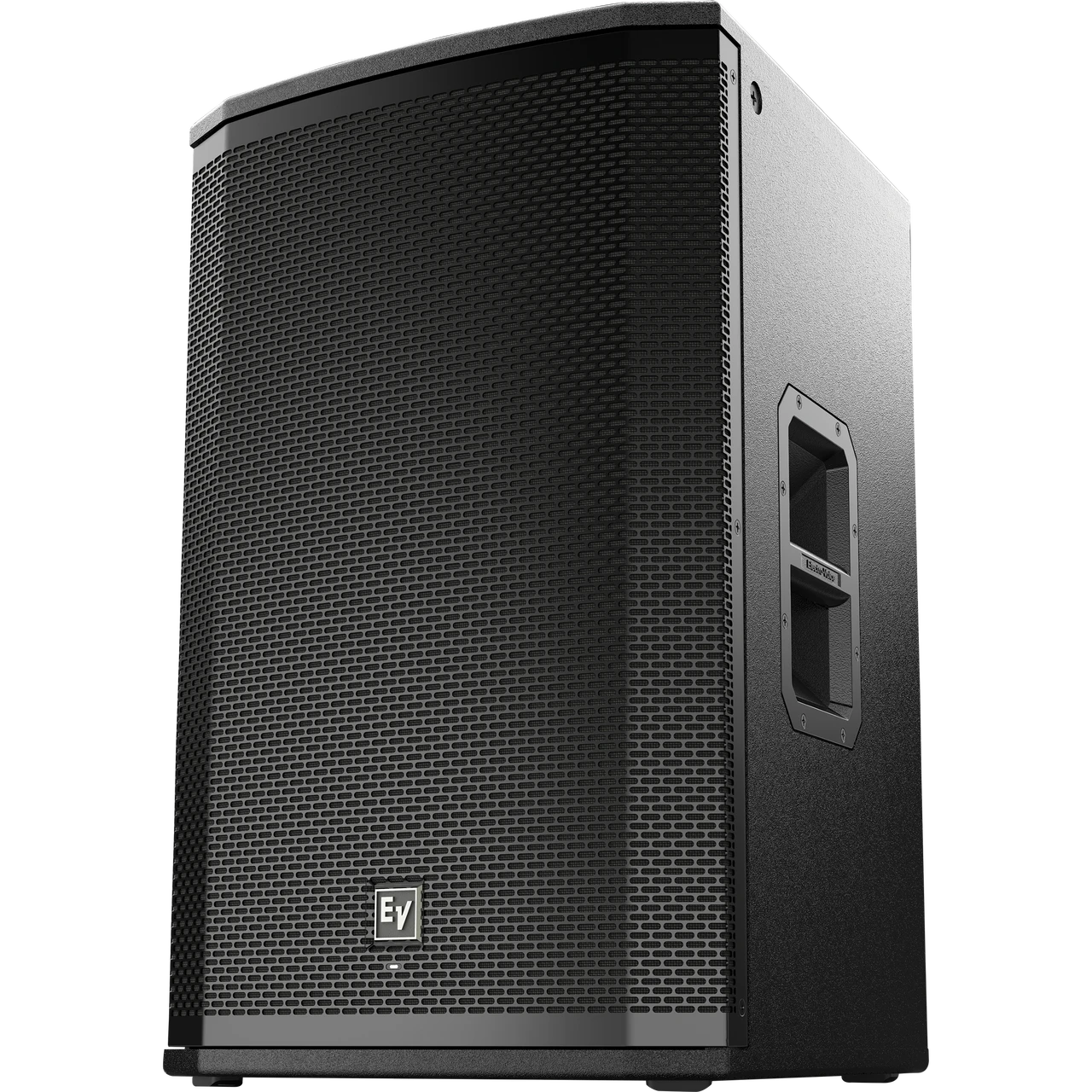
The Electro-Voice ETX-15P represents a fascinating engineering exercise in powered loudspeaker design—a 15-inch two-way system that bridges the gap between EV's professional touring-grade gear and more accessible installed sound solutions. After extensive analysis of its technical architecture and real-world performance characteristics, it's clear this speaker occupies a specific niche that deserves proper technical scrutiny.
What makes the ETX-15P particularly interesting from an engineering perspective is its approach to DSP integration, power delivery, and acoustic design. This isn't just another powered box with a Class D amp bolted on—there's genuine thought behind the signal processing architecture and how it interfaces with the transducer design. Let's examine what's actually happening under the grille.
Core Technical Architecture: What You're Actually Getting
The ETX-15P is built around a genuine Electro-Voice 15-inch woofer paired with a 1.5-inch titanium compression driver on a 60° × 40° constant directivity horn. The power section delivers 2000 watts peak combined output (not continuous—we'll discuss the difference), split between a 1400W woofer amplifier and 600W for the high-frequency section.
Amplification and Power Reality
Understanding amplifier specifications requires cutting through marketing terminology. The ETX-15P's "2000W peak" rating translates to approximately 1000W of continuous power handling under real-world program material. This is actually honest engineering—peak ratings reflect brief transient capability, while continuous ratings indicate sustained thermal limits.
The bi-amplified architecture means each transducer gets its own dedicated amplifier channel with independent limiting and protection. This matters because it prevents intermodulation distortion between the woofer and compression driver, maintaining clarity even when you're pushing the box hard. The Class D amplification topology provides excellent efficiency (typically 85-90%), which translates to less heat generation and more headroom from the same power consumption.
| Specification | ETX-15P Value | Real-World Impact |
|---|---|---|
| Peak Power Output | 2000W (combined) | ~1000W continuous program power |
| Maximum SPL | 132 dB peak (1m) | Adequate for 200-300 person venues |
| Frequency Response | 50 Hz – 20 kHz (±3dB) | True low-end extension for 15" design |
| Coverage Pattern | 60° H × 40° V | Narrow vertical for reduced ceiling bounce |
| Crossover Frequency | 2.0 kHz | Optimal point for this transducer pairing |
| Weight | 22.2 kg | Single-person carry for most operators |
DSP Architecture: Where the Intelligence Lives
The ETX-15P's onboard QuickSmartDSP system is genuinely sophisticated for this price point. You're getting six user-selectable voicing presets (Music, Live, Speech, Club, DJ, Monitor) plus EQ adjustment—but what's actually happening when you select these modes matters more than the labels suggest.
Preset Analysis and Acoustic Behaviour
The Music preset implements a relatively flat response curve with subtle low-frequency extension enhancement below 80 Hz and a gentle presence peak around 3-4 kHz. This voicing works well for recorded playback where the source material already has proper mix balance.
The Live preset introduces more aggressive midrange shaping with a notch around 250-300 Hz (reducing muddiness common in small venue acoustics) and enhanced clarity in the 2-5 kHz region where vocal intelligibility lives. You'll also notice the limiting thresholds are adjusted to allow more transient punch—this preset trades absolute SPL ceiling for perceived dynamic impact.
The Monitor preset fundamentally changes the speaker's behaviour by rolling off low frequencies below 100 Hz (reducing stage rumble and feedback-prone frequencies) while implementing more aggressive limiting to prevent compression driver damage from sustained high-level monitoring. The coverage pattern doesn't physically change, but the frequency balance becomes much more midrange-focused.
What's technically impressive here is that EV has actually voice-tuned these presets rather than just slapping arbitrary EQ curves on the output. Each preset modifies limiting thresholds, phase response, and dynamic processing behaviour—not just frequency response.
Transducer Design and Acoustic Performance
The 15-inch woofer uses EV's SMX technology (Symmetric Motion eXtended), which is marketing terminology for a dual-gap voice coil design that reduces power compression and harmonic distortion. In practical terms, this means the speaker maintains more consistent frequency response as you increase level—the tonal balance doesn't shift as dramatically between quiet and loud as it does with cheaper transducers.
Compression Driver and Horn Geometry
The 1.5-inch titanium compression driver is a critical component that separates this from budget alternatives. Titanium diaphragms provide excellent high-frequency extension and power handling compared to cheaper aluminium or polymer designs. The material's high stiffness-to-weight ratio means it can reproduce transients accurately without breakup modes colouring the response.
The 60° × 40° horn geometry is deliberately asymmetric—wider horizontal dispersion for audience coverage, narrower vertical to reduce ceiling and floor reflections. This pattern control remains consistent across the operating bandwidth, which is non-trivial engineering. Many cheaper designs show significant pattern narrowing at high frequencies, creating uneven coverage where listeners at the edge of the pattern hear dramatically less high-frequency content.
Check current ETX-15P pricing and availability to see how this engineering translates to real-world value.
Performance Metrics: Real-World Capability Assessment
The 132 dB peak SPL specification requires contextualisation. This measurement is typically taken at 1 metre on-axis with the speaker driven to its limiting threshold. In practical deployment, you're looking at approximately 126 dB continuous SPL at 1 metre with program material, which translates to about 108-110 dB SPL at a 4-metre listening distance (typical front-row position).
Coverage and Throw Characteristics
The ETX-15P's effective throw distance is approximately 12-15 metres for speech intelligibility and 8-10 metres for full-bandwidth music reproduction at proper listening levels. Beyond these distances, you're dealing with inverse square law losses that even this speaker's output capability can't overcome without supplementary loudspeakers.
The 60° × 40° pattern means horizontal coverage at 10 metres distance spans roughly 10.5 metres, while vertical coverage extends about 7 metres. This makes proper aiming critical—tilt the speaker incorrectly and you're either blasting the front row or losing coverage entirely for standing listeners.
Low-Frequency Extension Reality
The specified 50 Hz -3dB point is honest but requires understanding. This represents the frequency where output has dropped by 3 dB relative to the reference level. You're not getting substantial output below 60 Hz, and real kick drum fundamentals (40-50 Hz) are significantly attenuated. For electronic music or hip-hop, you absolutely need subwoofer augmentation—the ETX-15P alone won't deliver the low-frequency weight these genres demand.
However, for rock, acoustic music, and speech applications, the low-frequency extension is genuinely adequate. You'll get convincing bass guitar and kick drum attack, even if you're missing the deep sub-bass rumble.
Connectivity and Integration Architecture
The rear panel input section provides both XLR and 6.35mm TRS inputs with switchable line/mic sensitivity. The mic input includes a proper preamp circuit capable of delivering 60 dB of gain—sufficient for dynamic microphones without requiring external amplification. Input impedance is 10kΩ balanced, which means you won't experience loading issues with long cable runs or multiple parallel connections.
Output Connectivity and System Expansion
The XLR output connector provides a direct feed of the input signal (pre-DSP) for daisy-chaining additional loudspeakers. This is electronically buffered, so you're not simply splitting the input—the output has proper impedance and level matching. You can reliably chain 3-4 ETX-15P units from a single source without signal degradation.
The output also includes a subwoofer crossover mode that implements an 80 Hz high-pass filter on the main speaker while simultaneously providing a full-range output to connected subwoofers. This is genuinely useful—it reduces low-frequency load on the 15-inch woofer, increasing headroom and clarity in the midrange.
Comparative Technical Analysis: How It Stacks Against Alternatives
The ETX-15P occupies competitive territory against QSC K12.2, JBL PRX815, and Yamaha DXR15 models. Let's examine the technical differentiators.
Versus QSC K12.2
The K12.2 uses a 12-inch woofer versus the ETX's 15-inch design, which creates fundamental differences in low-frequency extension and maximum SPL capability. The K12.2 specifies 131 dB peak SPL—effectively identical to the ETX-15P despite the smaller woofer. However, the 15-inch design provides better low-frequency efficiency, meaning it achieves similar output with less amplifier power and lower distortion.
The K12.2's intrinsic correction processing is more sophisticated, offering detailed room tuning capabilities that the ETX-15P's QuickSmartDSP doesn't match. If you're installing these permanently and have time for acoustic measurement and tuning, the QSC provides more optimisation potential. For portable applications where you're setting up quickly in different venues, the ETX-15P's preset approach is arguably more practical.
Versus JBL PRX815
The PRX815 delivers 1500W combined amplification versus the ETX-15P's 2000W—but remember, these are both peak ratings. Real-world continuous output is remarkably similar. Where they genuinely differ is cabinet construction and mounting hardware. The PRX815 uses composite material construction that's slightly lighter but potentially less durable than the ETX-15P's polypropylene enclosure under sustained outdoor use.
JBL's 1.5-inch compression driver uses a neodymium magnet structure versus the ETX-15P's ferrite design. Neodymium provides weight savings but identical acoustic performance—this is a transport consideration rather than a sound quality differentiator.
Versus Yamaha DXR15
The DXR15 represents Yamaha's engineering philosophy of conservative specification with reliable performance. It specifies 1100W power output versus the ETX-15P's 2000W, but measured maximum SPL is only 2-3 dB lower—Yamaha is simply using more conservative rating methodology. The sonic character differs noticeably, with the DXR15 exhibiting smoother high-frequency response but slightly less midrange punch.
Yamaha's FIR-X tuning provides phase-linear response that the ETX-15P's minimum-phase DSP doesn't match. For applications where multiple speakers are operating in close proximity (distributed systems, front-fill arrays), the DXR15's superior phase coherence can provide better summation. For single-point-source applications, this advantage disappears.
Explore the ETX-15P's full specifications and pricing here to compare directly with competitive options.
Build Quality and Mechanical Design Assessment
The ETX-15P's polypropylene enclosure uses injection-moulded construction with integral ribbing for structural rigidity. This is superior to rotationally moulded designs (which can have inconsistent wall thickness) but not quite as robust as compression-moulded thermoplastic. The material won't dent like wooden cabinets, but impact damage can crack the enclosure where wood would simply show cosmetic damage.
Mounting and Rigging Capabilities
The cabinet includes M10 threaded inserts on the top and bottom for eyebolt attachment, rated for overhead suspension with appropriate hardware. There's also a standard 35mm pole socket for speaker stand mounting. The dual-angle pole socket allows 0° (straight) or 7.5° downward tilt when pole-mounted—this is genuinely useful for reducing excessive ceiling bounce in low-ceiling venues.
Two moulded handles provide carrying points, positioned at the cabinet's balance point for comfortable one-handed transport. At 22.2 kg, this is manageable for most operators, though repeated loading and setup will be easier with two people.
Grille and Environmental Protection
The powder-coated steel grille provides genuine driver protection while maintaining acoustic transparency. Some cheaper designs use grilles that create audible diffraction artifacts, but the ETX-15P's grille geometry is properly designed to minimise acoustic interference.
The speaker carries no official IP (Ingress Protection) rating, meaning it's not designed for permanent outdoor installation or rain exposure. Light moisture won't immediately damage it, but sustained outdoor use requires weather protection. The amplifier heatsink vents are positioned to minimise direct water ingress, but this isn't a weatherproof design.
Application-Specific Performance Analysis
Corporate and Speech Applications
For presentation and speech reinforcement, the ETX-15P excels. The Speech preset optimises vocal intelligibility through midrange emphasis and reduced low-frequency content that can muddy articulation. The 60° horizontal coverage is ideal for conference room applications where you're covering a seated audience in a rectangular space.
The maximum SPL capability is more than sufficient—speech reproduction rarely demands peak levels above 95-100 dB SPL, and the ETX-15P can deliver this with substantial headroom. This headroom translates to lower distortion and more natural vocal reproduction compared to smaller speakers driven harder.
Live Music and Venue Reinforcement
For small to medium venues (200-400 capacity), a stereo pair of ETX-15P speakers provides adequate coverage for acoustic and rock music. You'll want subwoofer support for electronic music, hip-hop, or any genre where low-frequency extension below 50 Hz is musically important.
The Live preset's midrange shaping genuinely helps in challenging acoustics. Many small venues have problematic low-mid buildup from parallel walls and low ceilings, and the ETX-15P's preset addresses this specific issue. Combined with proper speaker positioning (getting them elevated and aimed correctly), you can achieve surprisingly clean results even in acoustically difficult spaces.
Mobile DJ and Event Applications
The DJ preset implements more aggressive limiting and enhanced low-frequency output—essentially optimising for maximum perceived loudness with electronic music. This preset will sound less natural for live instruments or vocals, but for pre-recorded dance music, it delivers the impactful character that mobile DJs typically want.
Transport and setup convenience matter significantly in mobile applications. The 22.2 kg weight and integrated handles make load-in manageable, and the QuickSmartDSP preset approach means setup time is minimal—no laptop required, no complex parameter adjustment needed.
Technical Considerations When Evaluating Purchase
What Specifications Actually Indicate Quality
Peak power ratings and maximum SPL specifications have limited predictive value for sound quality. What matters more: compression driver diaphragm material (titanium is good), horn coverage pattern consistency (60° × 40° maintained across bandwidth), amplifier topology (bi-amped is superior to passive crossover), and DSP sophistication (the QuickSmartDSP genuinely does different things in different presets, not just EQ).
The ETX-15P specifies actual -3dB frequency response points (50 Hz to 20 kHz) rather than the more generous -10dB points some manufacturers quote. This honesty in specification is worth noting—EV isn't inflating capabilities to win specification sheet comparisons.
System Scalability and Expansion
Consider future expansion requirements. The ETX-15P's output connectivity makes adding subwoofers straightforward, with automatic high-pass filtering to protect the main speaker. If you're starting with a stereo pair now but anticipate adding subs later, this architecture works well.
For larger installations requiring four or more speakers, consider whether networked control is important. The ETX-15P doesn't offer Ethernet or wireless control—all adjustments are manual via rear panel controls. If you need centralised DSP management for multiple speakers, you're looking at the wrong product line (EV's X-Line or touring products serve that need).
Warranty and Long-Term Support Considerations
Electro-Voice provides a three-year warranty on the ETX series, covering both transducers and amplification. This is standard for professional-grade powered speakers. More importantly, EV maintains comprehensive service networks in Australia, and replacement parts availability is good even for products several years old.
The modular amplifier design means a failed amp section can be replaced without junking the entire speaker—a legitimate long-term cost consideration. Some integrated designs require complete speaker replacement if the amplifier fails.
Honest Assessment of Limitations
The ETX-15P isn't a touring-grade product. While it's solidly built for its category, it won't withstand the sustained abuse of road case loading and daily transport that touring-grade gear endures. The polypropylene cabinet is impact-resistant but will eventually show wear from repeated handling.
The DSP, while sophisticated for preset-based operation, doesn't offer the deep parametric control that some applications demand. If you need precise notch filtering for feedback suppression or detailed room correction, you'll want external processing or a different speaker platform.
Low-frequency extension, while honest for a 15-inch design, simply cannot compete with dedicated subwoofers for genres that demand true sub-bass. If you're primarily doing electronic music or hip-hop, budget for subs from the start rather than discovering this limitation later.
Technical FAQ: What Buyers Actually Ask
Can I use the ETX-15P as a stage monitor?
Yes, the Monitor preset specifically optimises for floor monitor use with appropriate frequency response shaping and limiting behaviour. The 60° × 40° coverage pattern works acceptably in monitor orientation, though dedicated stage monitors with wider horizontal coverage provide better results. The cabinet isn't specifically angled for monitor use, so you'll need proper wedge positioning or a monitor stand with adjustable angle.
What's the effective coverage distance for speech?
For proper speech intelligibility (achieving 65-70 dB SPL with 15-20 dB signal-to-noise ratio), the ETX-15P effectively covers 15-18 metres in typical indoor acoustics. Beyond this distance, you're dealing with excessive reverberation and insufficient direct sound for good intelligibility, regardless of the speaker's output capability.
How many speakers can I daisy-chain from one source?
The buffered output allows reliable connection of 3-4 ETX-15P units from a single source signal. Beyond four units, you may experience signal degradation or level loss depending on cable quality and total cable length. For larger systems, use proper signal distribution amplifiers rather than relying on speaker-level daisy-chaining.
Is the amplifier power rating continuous or peak?
The 2000W specification is peak combined power. Continuous power handling with program material is approximately 1000W. This is standard industry practice—peak ratings reflect brief transient capability, while continuous ratings indicate sustained thermal limits. The ETX-15P's rating methodology is honest and comparable to how competitors specify their products.
Do I need external processing or does the internal DSP handle everything?
For straightforward applications (mobile DJ, small venue reinforcement, corporate AV), the internal QuickSmartDSP handles voicing, limiting, and basic optimisation adequately. For complex installations requiring precise acoustic correction, feedback suppression, or delay compensation across multiple speaker zones, you'll want external DSP. The ETX-15P doesn't offer the detailed control that architectural installations sometimes demand.
See full specifications and current Australian pricing for the ETX-15P with local warranty support.
Expert Recommendation: Where This Speaker Makes Technical Sense
The ETX-15P occupies a specific sweet spot: applications demanding genuinely professional acoustic performance and build quality, but not requiring touring-grade construction or advanced networked control. This includes permanent installations in small venues (cafes, clubs, houses of worship), mobile entertainment systems, and corporate AV applications where speech intelligibility and reliability matter more than maximum SPL.
The engineering is honest—EV hasn't inflated specifications or made unrealistic performance claims. What you're getting is a well-designed 15-inch powered speaker with genuine bi-amplification, intelligent DSP voicing, and proper transducer quality. The titanium compression driver, SMX woofer technology, and consistent coverage pattern represent real engineering rather than marketing terminology.
For Australian buyers, the local service network and parts availability matter. EV maintains proper support infrastructure here, which provides confidence for professional applications where downtime has real cost implications. The three-year warranty covers realistic professional use scenarios.
If your requirements match what the ETX-15P genuinely delivers—200-300 person capacity, 50 Hz to 20 kHz reproduction, 60° × 40° coverage pattern, and preset-based operation—this is a technically sound investment that will provide years of reliable service. If you need touring-grade construction, networked control, or deeper low-frequency extension, you're looking at the wrong product category entirely.
The ETX-15P doesn't try to be everything to everyone. It's a purpose-built tool for specific applications, engineered competently for those purposes. That focused design philosophy, backed by genuine technical capability and honest specification, makes it worth serious consideration for applications within its design envelope.