
Electro-Voice EVID 40C Explained: Ceiling Speaker Basics 2026
Electro-Voice EVID 40C Explained: A Beginner's Guide to Ceiling Speakers in 2026
If you've ever walked into a cafe, retail shop or hotel foyer and noticed music playing evenly all around you — with no obvious source and no single loud speaker in the corner — you've experienced a well-designed install speaker system. The Electro-Voice EVID 40C is a compact loudspeaker built for exactly this kind of job, and if you're just starting to research background audio for a commercial or home space, it's a great example to learn from.
This guide is written for newcomers. We won't assume you know what "70-volt line" means or how a ceiling speaker differs from the ones on your desk. By the end, you'll understand what the EVID 40C does, why installers reach for speakers like it, and how to decide whether it suits your project.
What Is an "Install Speaker", and Why Is It Different?
Let's start with the basics. Most speakers people know fall into two camps: home hi-fi speakers and portable PA (public address) speakers you'd wheel out for a gig. Install speakers are a third category. They're designed to be permanently fitted into a building — mounted on a wall, tucked into a ceiling, or bracketed under an eave — and left there to do a quiet, reliable job for years.
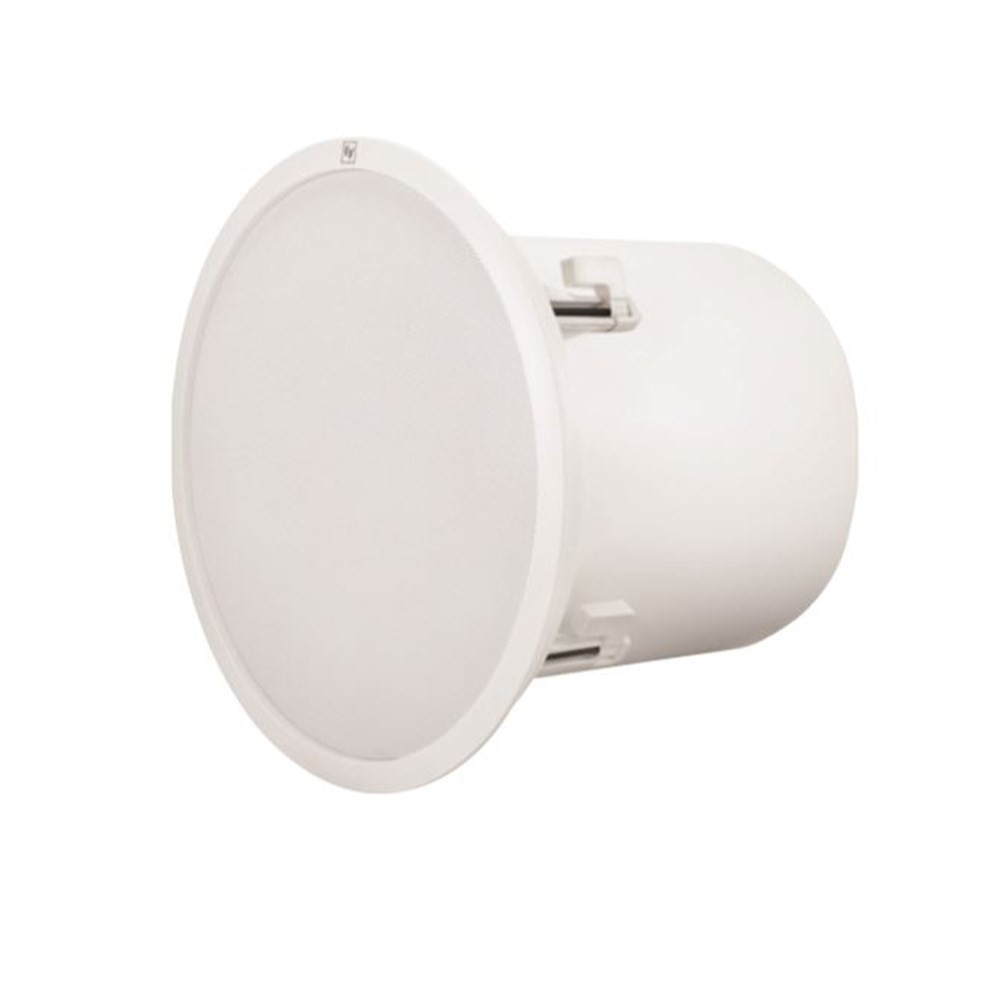
The Electro-Voice EVID 40C belongs to the EVID family, a well-regarded range of commercial install loudspeakers. "EVID" is simply the product-line name (think of it like a model family in a car brand). These speakers prioritise even, natural sound coverage over raw loudness. The goal isn't to make one spot thump — it's to spread clear, comfortable audio across a whole room so a conversation, an announcement or a playlist sounds good everywhere.
New to this? The simple mental model: a portable PA speaker is like a spotlight aimed at a stage, while install speakers like the EVID 40C are like the recessed downlights across a whole ceiling — many small, evenly spread sources instead of one big one.
Understanding the EVID 40C's Key Features (In Plain English)
Product spec sheets can be intimidating when you're new. Let's translate the features that actually matter for a compact install speaker like this.
Compact, Coaxial Design
The EVID 40C is a small-format speaker. "Compact" matters for install work because you often want the speaker to blend in visually — nobody wants a bulky black box dominating a boutique's ceiling. A coaxial design means the tweeter (which handles high frequencies like cymbals and speech clarity) sits in the centre of the woofer (which handles the fuller, lower tones). Why does this help? It makes the sound behave like it's coming from a single point, so no matter where you stand, the audio stays balanced and natural. For speech intelligibility — think announcements or a podcast playing in a waiting room — that's a real advantage.
Built for Permanent Installation
Everything about a speaker in this class is designed for a fixed home. That usually means an included mounting bracket or fitting, a discreet finish, and a build meant to survive years of continuous use rather than the knocks of being packed in and out of a van. If your space needs audio that's set up once and simply works, that's the design intent here.
Line-Voltage Ready (The Bit Everyone Finds Confusing)
Here's the concept that trips up almost every beginner, so we'll go slowly. Commercial install speakers are typically wired using a "70V" or "100V" line system (in Australia, 100V is common). This is a clever bit of engineering that lets you connect many speakers to a single amplifier using ordinary, thin cabling over long distances — perfect for spreading a dozen speakers across a big venue.
The alternative, "low impedance" (usually 8-ohm) wiring, is what your home stereo uses. It sounds great but only suits a small number of speakers over short cable runs. Speakers designed for install work often support both, giving you flexibility. The takeaway for a newcomer: you match the speaker's wiring mode to your amplifier. If you're covering a large area with lots of speakers, you're almost certainly in 100V-line territory; a small two-speaker setup can run low-impedance.
Don't worry about mastering this today — just know it exists, because it directly shapes which amplifier you'll buy alongside the speakers.
Where a Speaker Like the EVID 40C Shines
Understanding the ideal use case helps you judge whether it's right for you. Compact install speakers like this are typically chosen for:
- Background music in cafes, restaurants, bars and retail shops
- Paging and announcements in offices, clinics, gyms and reception areas
- Foreground audio in showrooms and hospitality venues where clear, pleasant sound sets the mood
- Multi-room home audio for those wanting a clean, built-in look rather than visible bookshelf speakers
What they're generally not for: high-energy dance floors, live band reinforcement, or anywhere you need serious volume and bass. That's a different tool — powered PA speakers and subwoofers. Being honest about this saves you money and disappointment.
If your project matches the list above, the EVID 40C is worth a close look. You can view the Electro-Voice EVID 40C and its full specifications here.
A Beginner's Buying Guide: What to Prioritise
When you're buying install speakers for the first time, it's easy to fixate on the speaker itself. But a good system is a package. Here's what actually deserves your attention, in order.
1. Coverage First, Speaker Second
The most common beginner mistake is asking "which speaker?" before asking "how many, and where?" A single speaker only covers so much area. Ceilings and rooms need speakers spaced so their coverage overlaps gently, avoiding loud spots and dead zones. As a rough rule of thumb, higher ceilings and larger rooms need either more speakers or wider-coverage models. If in doubt, ask a supplier to help you plan speaker count and spacing — it's the difference between "pleasant everywhere" and "too loud here, silent there".
2. Match the Amplifier to the System
Your speakers and amplifier are a team. If you're going the 100V-line route for a bigger space, you need a matching 100V-line amplifier, and you'll want its total power to comfortably exceed the combined "tap" settings of all your speakers. For a small low-impedance setup, a simpler integrated amp does the job. Budget for the amplifier from day one — it's not an optional extra.
3. Think About the Finish and Fit
Install speakers are seen every day by customers or guests. Check the colour and whether it suits your space, and confirm the mounting method works with your ceiling or wall construction. A speaker that looks wrong or won't fit your surface causes headaches later.
4. Plan for the Future
A sensible growth path: start with the zones that matter most (say, the main dining area), then expand to others (outdoor terrace, bathrooms, storeroom paging) later. Choosing a proven install range like EVID from the outset means additional speakers will match what you already have. Browse the EVID 40C to see how it fits into a wider system.
Common Questions From Newcomers
Do I need one speaker or several?
Almost always several. Install audio is about even coverage, and that means spreading modest volume across multiple points rather than blasting one speaker. Even a small cafe typically uses four or more.
Can I just plug it into my home stereo?
Sometimes, for a tiny low-impedance setup — but for anything larger you'll need a compatible commercial amplifier, especially if you're using a 100V-line system. Always confirm compatibility before buying.
Is installation a DIY job?
Mounting a speaker can be straightforward, but wiring multiple speakers to a line-voltage amplifier, running cable through ceilings and complying with building and electrical rules is often best handled by a professional installer in Australia. There's no shame in getting a qualified hand — it protects your investment and keeps things safe and compliant.
How loud does it get?
Compact install speakers are built for clear, comfortable levels — background and foreground music, speech and paging — not chest-thumping volume. If you need a party or performance system, look at active PA speakers instead.
Getting Started: What to Expect
Here's a realistic picture of the journey from decision to "music playing":
- Plan your zones and speaker count. Sketch your space and decide where sound is needed.
- Choose your wiring approach. Small setup? Low-impedance may do. Larger venue? Plan for a 100V line.
- Select a matching amplifier. Its type and power must suit your speakers and total system size.
- Arrange installation. DIY the simple parts if you're confident; call a professional for the cabling and amp connection if you're not.
- Set levels and enjoy. Once tuned, an install system like this is genuinely "set and forget".
The learning curve for the concepts is gentle — you've already covered the hardest idea (line-voltage systems) in this article. The physical install is where most people choose to bring in help, and that's a perfectly smart move.
Is the Electro-Voice EVID 40C Right for You?
If you're outfitting a cafe, shop, office, clinic or home with clean, even, unobtrusive background or foreground audio — and you value a trusted, professional-grade name in commercial sound — a compact install speaker from the EVID range is exactly the category to be shopping in. It rewards buyers who plan their coverage, match their amplifier and think of the system as a whole rather than a single box.
Take your time, ask questions, and don't be afraid to lean on a knowledgeable supplier. Great install audio isn't about the most expensive gear — it's about the right gear, sensibly planned. View full details and specifications for the Electro-Voice EVID 40C here, and you'll be well on your way to a confident, informed decision.