
Electro-Voice EVID 40C Ceiling Speaker: Real-World Uses in Australia 2026
Electro-Voice EVID 40C Ceiling Speaker: Where It Actually Shines in Australian Venues
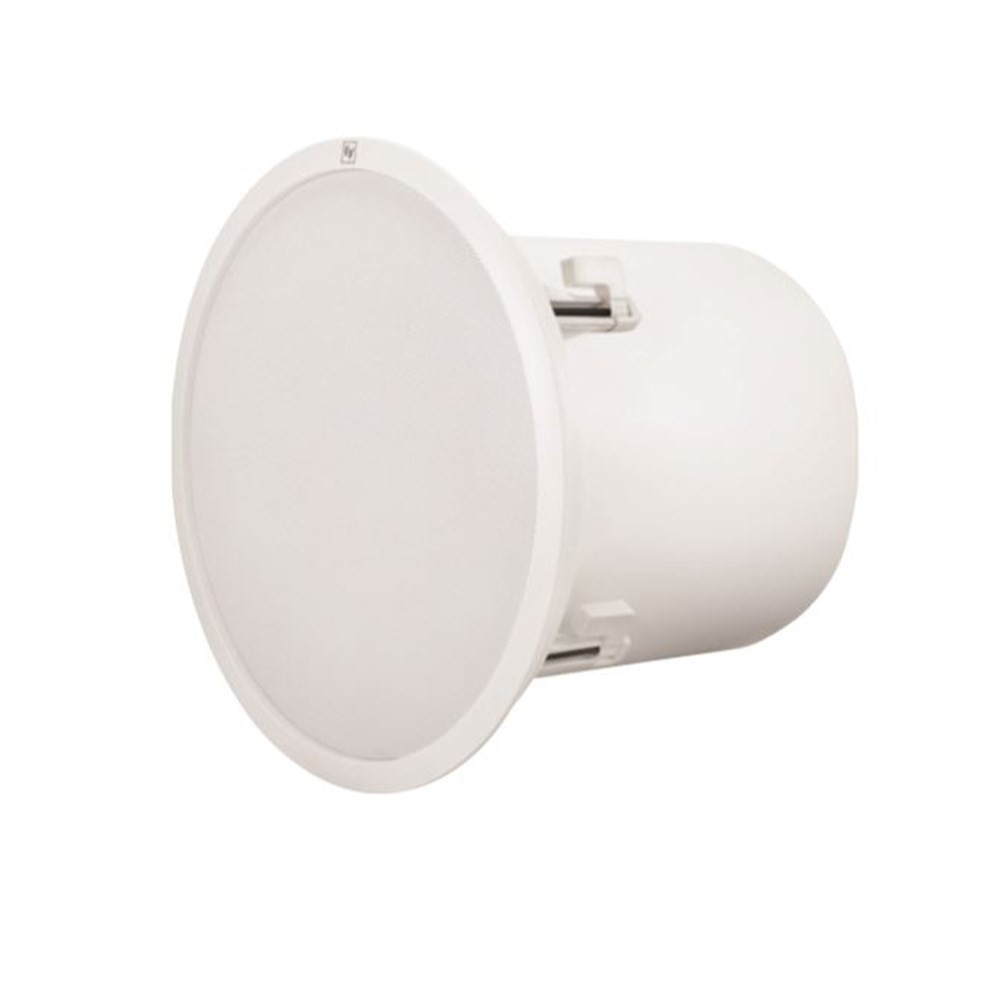
If you've ever walked into a café, retail store, or corporate office and noticed how clean and even the background music sounded — without being able to spot a single speaker — there's a good chance you were hearing a ceiling-mount system. The Electro-Voice EVID 40C is one of the workhorses behind that kind of invisible, effortless audio in commercial spaces right across Australia.
But here's the thing: ceiling speakers aren't all created equal, and what works brilliantly in a small boardroom might fall flat in a busy restaurant. So rather than rattling off a spec sheet, let's walk through exactly where and how the EVID 40C actually performs — and where you might want to look elsewhere.
What Makes the EVID 40C Different From Most Ceiling Speakers?
Before we get into use cases, it helps to understand what you're actually getting. The EVID 40C packs an 8-inch coaxial driver — that's a full-range woofer with a tweeter mounted concentrically in the centre. Most competing ceiling speakers in commercial installs run 4 to 5-inch drivers. That size difference matters more than you'd think.
- Higher output: Up to approximately 112 dB continuous SPL, which is significantly louder than most ceiling speakers in its class.
- Fuller low end: The 8-inch driver extends down to around 80 Hz without needing a separate subwoofer in many situations.
- 160-degree dispersion: One of the widest coverage patterns available, meaning fewer speakers to cover the same floor area.
- Dual-mode operation: Runs at 8 ohms for direct connection, or via built-in 70V/100V transformer taps (60W, 30W, 15W, 7.5W) for distributed commercial systems.
- 100W continuous power handling in direct-drive mode, 200W program.
The coaxial design is genuinely important for ceiling installs. Because both the woofer and tweeter radiate from the same point, every listener under the speaker hears a tonally consistent sound. With non-coaxial designs, people sitting off-axis can hear a noticeably different tonal balance — fine in a storage room, not ideal in a restaurant where guests are spread across the floor.
Use Case 1: Restaurants, Cafés and Hospitality Venues
This is arguably where the EVID 40C earns its keep in Australia. Picture a mid-sized café in Melbourne's inner suburbs or a waterfront restaurant in Noosa. You need background music that's present without being intrusive, covers the entire dining area evenly, and doesn't require a forest of visible speakers hanging off the walls.
Why the EVID 40C works here:
- The wide 160-degree dispersion means a single EVID 40C covers a surprisingly large seating area. In a standard 2.7m ceiling height, one speaker comfortably covers roughly 25–30 square metres of floor space for background music levels.
- The coaxial driver ensures guests at every table hear the same tonal quality — not just the people directly underneath.
- The 8-inch driver delivers enough low end for music playback without necessarily needing a subwoofer, keeping install costs down.
- The paintable steel grille disappears into the ceiling. Most patrons will never notice it.
Practical tip: For a typical 100–120 sqm restaurant with 2.7m ceilings, you'd be looking at roughly 4–6 EVID 40C units on a 70V/100V distributed system. Compare that to potentially needing 8–12 smaller 4-inch ceiling speakers to achieve similar coverage and SPL. Fewer speakers, fewer cable runs, less install time — the maths works in your favour.
Honest limitation: If your venue has very shallow ceiling plenums (less than about 200mm depth above the tile), the EVID 40C's mounting depth may be a problem. You'd need to check your ceiling cavity before committing.
Use Case 2: Retail Spaces and Shopping Centres
Australian retail environments — from boutique shops on Chapel Street to large-format stores in suburban shopping centres — need audio that does two jobs: play background music and handle paging announcements clearly.
Why it excels in retail:
- The high sensitivity (approximately 92 dB at 1W/1m) means these speakers are efficient. On a 70V distributed system, even the lower transformer taps deliver usable volume for background music in a retail environment.
- Speech intelligibility is excellent thanks to the coaxial design. Paging announcements come through clearly across the floor, even during busy trading hours.
- The sealed back enclosure means performance is consistent regardless of what's happening in the ceiling void above — ducting, cabling, varying cavity depths won't affect the sound.
Real-world scenario: A mid-sized clothing retailer with an open floor plan of about 200 sqm and a standard drop ceiling. Eight EVID 40C units on the 30W transformer tap, powered by a single 240W 70V amplifier. Total system: one amp, eight speakers, a simple mixer for music input and a paging mic. Clean, even coverage throughout the store with plenty of headroom for busy Saturday afternoon trading when ambient noise levels spike.
Use Case 3: Corporate Offices and Boardrooms
Open-plan offices, meeting rooms, and corporate common areas across Australian CBDs are increasingly fitted with distributed ceiling audio. Whether it's background masking noise, music in communal areas, or paging for emergencies, the EVID 40C handles it.
Where it fits in the corporate world:
- Open-plan offices: Running on low transformer taps (7.5W or 15W at 70V), the EVID 40C delivers subtle background audio or white noise masking without dominating the space. The wide dispersion ensures even coverage across banks of desks.
- Boardrooms and meeting rooms: A single EVID 40C can cover a standard 30–40 sqm boardroom. The coaxial driver ensures clear speech reproduction from ceiling-mounted conferencing systems.
- Reception areas and lobbies: First impressions matter. Clean, full-range background music from an invisible source sets the right tone without the aesthetic compromise of surface-mount speakers.
A note for AV integrators: The EVID 40C's quick-mount dog-ear clamp system is genuinely time-saving on large office fit-outs. When you're installing 30 or 40 speakers across a floor plate, those few minutes saved per unit add up fast.
Use Case 4: Houses of Worship
Churches, temples, and community worship spaces across Australia often have drop ceilings and need audio that covers congregation seating evenly. The challenge is usually delivering clear speech (sermons, readings) alongside music (worship bands, choirs, recorded tracks) without visible speaker clusters disrupting the aesthetic.
Why worship spaces love the EVID 40C:
- The 8-inch driver handles the low-mid warmth of spoken voice beautifully, and the coaxial tweeter adds the articulation needed for speech intelligibility.
- For worship music, the low-frequency extension means you get genuinely musical playback — not the thin, tinny sound that plagues smaller ceiling speakers when asked to reproduce full-range music.
- The high SPL capability means the system can handle energetic worship music at realistic levels without distortion.
Practical consideration: In worship spaces with high ceilings (above 4 metres), ceiling-mount speakers become less effective regardless of brand. If your worship space has cathedral-height ceilings, you'd be better served by pendant speakers or a dedicated PA system. The EVID 40C is at its best in spaces with standard commercial ceiling heights of 2.4 to 3.5 metres.
Use Case 5: Education and Healthcare
Schools, universities, medical centres, and hospitals need reliable audio for paging, emergency announcements, and background music in common areas. These environments have specific requirements that the EVID 40C addresses well.
- Classrooms: A single EVID 40C on a low transformer tap can reinforce a teacher's voice from a wireless microphone system, improving intelligibility for students at the back of the room.
- Hospital waiting rooms: Unobtrusive background music and clear paging. The flush-mount design meets the clean aesthetic requirements of healthcare environments.
- University common areas: Cafeterias, libraries, and student lounges benefit from the wide, even coverage pattern.
Important for these environments: The 70V/100V distributed system approach is essentially mandatory in education and healthcare, where long cable runs and zone control are non-negotiable. The EVID 40C's built-in transformer with multiple tap options gives system designers the flexibility they need.
How Does It Stack Up Against the Competition?
Let's be straight about where the EVID 40C sits relative to the speakers you'll most commonly see spec'd alongside it in Australian commercial projects.
vs JBL Control 24CT
The JBL is a solid, reliable 4-inch ceiling speaker and it's a popular choice for smaller rooms. But it's a fundamentally different beast. The EVID 40C delivers roughly 6 dB more sensitivity and significantly more low-frequency output. In practical terms, that means you'll need roughly twice as many JBL units to achieve the same coverage and SPL in a medium to large space. The JBL wins on size — its smaller cutout diameter fits into tighter ceiling spaces — but if output and coverage are priorities, the EVID 40C is the stronger choice.
vs Bose FreeSpace DS 40F
The Bose DS 40F is a well-engineered speaker with a loyal following in the hospitality sector. It matches the EVID 40C's 160-degree dispersion but uses a smaller 4.5-inch driver. The result: lower maximum SPL and less low-frequency extension. The Bose commands a price premium in Australia, often sitting $50–$100 above the EVID 40C per unit. Unless you're specifically integrating into an existing Bose ecosystem, the EV offers better value for output per dollar.
vs Atlas Sound FAP42T
The Atlas FAP42T is a budget-friendly option with a 4-inch coaxial driver. It does the job for basic paging and light background music, but it simply can't match the EVID 40C's output or low-frequency performance. If budget is the primary concern for a basic paging system, the Atlas makes sense. For anything involving music playback or higher SPL requirements, the EVID 40C is worth the step up.
Who Should Buy the EVID 40C — And Who Shouldn't
It's ideal for:
- AV integrators and system designers specifying distributed audio for medium to large commercial spaces
- Venue owners wanting high-quality, invisible ceiling audio with genuine music playback capability
- Hospitality fit-outs where fewer speakers mean lower total install cost
- Projects requiring both music and speech — the coaxial design handles both well
- 70V/100V distributed systems where the transformer tap options provide flexible zone design
Look elsewhere if:
- You have very shallow ceiling plenums (under 200mm) — the mounting depth won't fit
- You need a tiny, ultra-discreet speaker for small rooms — a 4-inch model like the JBL Control 14C/T would be more appropriate
- You're installing in outdoor or wet environments — the EVID 40C is designed for indoor use. Look at the EV EVID series surface-mount models for outdoor applications
- Your ceilings are above 4 metres — pendant speakers or column speakers will serve you better at that height
Installation Tips From the Field
A few practical notes for anyone specifying or installing the EVID 40C in Australian projects:
- Measure your ceiling cavity first. The EVID 40C needs approximately 200mm of depth above the ceiling tile. Check for obstructions like ductwork, structural members, and cable trays before finalising speaker positions.
- Use the right transformer tap. Don't just default to the highest tap. For background music in a quiet office, 7.5W or 15W per speaker is often plenty. Save the 60W tap for spaces where you genuinely need high SPL, like noisy retail or energetic hospitality venues.
- Plan your zones carefully. The beauty of 70V/100V systems is zoning. Group speakers by function — dining area, bar, kitchen, amenities — so each zone can be independently controlled.
- Consider the EVID 40S subwoofer if your application demands deep bass (nightclubs, bars with live music). The 40C handles music well for a ceiling speaker, but physics is physics — an 8-inch driver in a sealed enclosure has limits below 80 Hz.
- Don't forget the grille is paintable. For venues with coloured or dark ceilings, painting the grille to match makes a surprising difference to the finished aesthetic.
Frequently Asked Questions
Can I use the EVID 40C for outdoor installations?
No. The EVID 40C is designed for indoor ceiling-mount applications. For outdoor installs, Electro-Voice offers the EVID surface-mount range, which includes weather-resistant models rated for Australian outdoor conditions.
How many EVID 40C speakers do I need for my space?
As a rough guide for background music at standard 2.7m ceiling height: one EVID 40C per 25–30 square metres. For speech-only paging, you can stretch that to one per 35–40 sqm. For higher SPL music playback, tighten spacing to one per 15–20 sqm. A qualified AV integrator can run acoustic modelling software for precise placement.
Do I need a subwoofer with the EVID 40C?
For background music and speech in most commercial applications, no. The 8-inch driver provides noticeably more bass than smaller ceiling speakers. For applications where deep bass is important — bars, fitness centres, retail spaces playing bass-heavy music — adding an EVID 40S ceiling subwoofer will round out the low end nicely.
What amplifier do I need?
For 70V/100V distributed systems, match your amplifier wattage to the total tap wattage of all connected speakers, plus 20–30% headroom. For example, ten EVID 40C units on the 30W tap equals 300W total — a 400W 70V amplifier would be appropriate. Brands like Crown, Lab Gruppen, and QSC all make suitable commercial amplifiers available in Australia.
Is the EVID 40C suitable for home use?
Technically yes — it can run at 8 ohms on a standard home amplifier. However, it's designed and priced for commercial applications. For home ceiling audio, you might find better value in dedicated residential ceiling speakers. That said, if you're building a serious home theatre or entertainment space and want commercial-grade output, it's a legitimate choice.
The Bottom Line
The Electro-Voice EVID 40C is a genuinely capable ceiling speaker that punches above its weight class. The combination of an 8-inch coaxial driver, 160-degree dispersion, and flexible 70V/100V transformer taps makes it one of the most versatile commercial ceiling speakers available in Australia. It covers more area per unit than most competitors, delivers fuller sound without a subwoofer in many scenarios, and the install-friendly design keeps labour costs manageable.
If you're fitting out a restaurant, retail space, corporate office, or any commercial venue where you need invisible, high-quality ceiling audio — and your ceiling cavity has the depth for it — the EVID 40C deserves serious consideration.
Check the current price of the Electro-Voice EVID 40C at MusiconStage — Australia's trusted source for professional audio equipment.
Got questions about specifying the EVID 40C for your project? Get in touch with the MusiconStage team for expert advice on commercial audio systems tailored to Australian venues.