
Dynacord CMS 600-3: Real-World Uses for Aussie Sound Operators 2026
Dynacord CMS 600-3: How This Mixer Actually Performs in Real Australian Scenarios
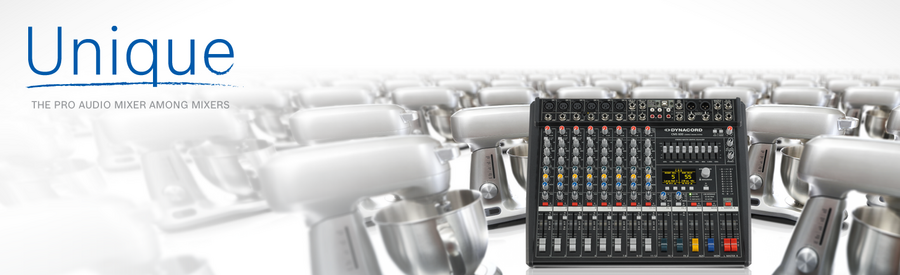
If you've spent any time running sound for community halls, worship services, or small-to-mid-sized venues across Australia, you've probably crossed paths with a Dynacord mixer at some point. The brand's been a staple in European and Australian pro audio for decades — and the CMS 600-3 sits right in the sweet spot where serious build quality meets practical, no-nonsense mixing.
But here's what most product pages won't tell you: whether this mixer actually suits your specific situation. A corporate AV installer in Sydney has very different needs from a solo muso running their own PA at RSL gigs in regional Queensland. So let's break down exactly where the CMS 600-3 shines, where it's overkill, and where you might want something different entirely.
What You're Actually Getting With the CMS 600-3
Before we get into scenarios, a quick reality check on what this desk brings to the table. The Dynacord CMS 600-3 is a compact analogue mixer with six mic/line channels, built-in digital effects, and Dynacord's signature preamp design. It's the third generation of the CMS 600 series, which tells you something — they've had time to refine it.
Key practical points worth knowing:
- Six mic/line inputs with high-quality preamps that handle everything from condensers to passive dynamics without fuss
- Built-in 24-bit effects processor with reverbs, delays, chorus, and combination effects — genuinely usable, not just a checkbox feature
- 3-band EQ per channel with swept mid — this matters more than people think for live work
- Robust metal construction that's built for touring and permanent installation alike
- Two aux sends for monitor mixes or effects routing
- Stereo outputs plus dedicated monitor and recording outputs
What stands out immediately when you pull it out of the box is the build quality. This isn't a lightweight plastic unit — it's a properly constructed piece of German-engineered audio gear. The faders feel solid, the knobs have resistance, and the connectors are the type that'll still work reliably five years from now.
Use Case 1: Small Venue Permanent Install
This is arguably where the CMS 600-3 earns its keep most convincingly. Think community halls, small function centres, council meeting rooms, and RSL clubs across Australia. These venues typically need a mixer that:
- Handles 2-4 microphones for speeches and presentations
- Provides clean, reliable audio without needing a sound tech on site
- Survives being operated by volunteers or staff with minimal audio training
- Stays rock-solid for years without maintenance dramas
The CMS 600-3 ticks every one of those boxes. Six channels gives you enough room for a couple of lectern mics, a wireless handheld, background music input, and still have headroom for the occasional guest who rocks up with a laptop presentation. The swept mid EQ is a genuine lifesaver in halls with dodgy acoustics — and let's be honest, that's most community halls in Australia.
Real-world tip: For permanent installs, set up the EQ to tame the room's worst resonances, label each channel clearly, and use the built-in effects sparingly — just a touch of reverb on speech mics helps liven up dead-sounding rooms without making things muddy. Volunteers will thank you for the simplicity.
Use Case 2: Worship and Church Sound
Houses of worship are one of the most common applications for compact mixers in Australia, and the CMS 600-3 fits a specific niche here: smaller congregations with straightforward audio needs.
If your Sunday service involves a pastor with a lapel mic, a couple of handheld mics for readings and announcements, and perhaps a single instrument input for acoustic guitar or keyboard — six channels is perfect. You're not paying for capacity you'll never use.
Where it gets interesting is the effects section. A tasteful hall reverb on vocals can genuinely transform the feel of a small worship space, and Dynacord's effects algorithms are a clear cut above what you'd find on most compact mixers in this class. They sound natural rather than artificial, which matters enormously in a reverberant church environment.
Where it might not suit: If your worship team includes a full band — drums, bass, keys, multiple vocalists — you'll outgrow six channels immediately. In that case, you're looking at the CMS 1000-3 or stepping up to a digital desk. Don't try to make the 600-3 do what it wasn't designed for.
Use Case 3: Solo Musicians and Small Acts
Here's a scenario that comes up constantly across Australian pubs, cafés, and small venues: a solo performer or duo running their own sound. You're singing, playing guitar, maybe running backing tracks — and you need a mixer that's compact enough to fit on a small table next to your gear but capable enough to sound professional.
The CMS 600-3 handles this brilliantly. A typical setup might look like:
- Channel 1: Vocal mic
- Channel 2: Acoustic guitar (either DI or mic)
- Channel 3: Second instrument or second vocal
- Channel 4-5: Stereo backing tracks from laptop or phone
- Channel 6: Spare for guest performers
The built-in effects mean you're not carting around a separate reverb unit, and the aux sends let you set up a basic monitor mix. For musos doing regular pub gigs around Australia, this kind of simplicity is gold. Less gear to transport means quicker setup, fewer points of failure, and more time actually performing.
Practical consideration: The CMS 600-3 is not a powered mixer — it's a mixing console only. You'll still need a separate power amplifier or powered speakers. If you're after an all-in-one solution, that's a different product category. But if you've already got powered tops or a power amp rack, this slots in perfectly.
Use Case 4: Corporate and Conference AV
Small corporate events, boardroom presentations, and conference breakout rooms are another natural fit. The typical requirement is dead simple: two to four microphones (podium, lapel, handheld), a laptop input for presentations, and clean output to ceiling speakers or a portable PA.
What makes the Dynacord stand out in this context is reliability and noise performance. Corporate clients notice hum, hiss, and dropouts — these are deal-breakers in a professional setting. Dynacord's preamps are clean and quiet, and the build quality means you're not going to have a channel die mid-presentation because a dodgy solder joint gave up.
For AV integrators around Australia installing these in boardrooms and function spaces, the CMS 600-3 represents a set-and-forget solution. Configure it once, label it clearly, and it'll run reliably for years.
Use Case 5: Education and Schools
Australian schools — from primary through to university — constantly need compact, reliable audio solutions for assemblies, drama productions, and classroom presentations. The CMS 600-3's straightforward layout means teachers and students can operate it without extensive training, while the build quality withstands the inevitable rough handling that comes with school environments.
Six channels covers the typical school assembly setup: two or three mics, a music input, and maybe a video playback feed. The effects processor adds production value to school performances without needing extra equipment or expertise.
Who Should NOT Buy the CMS 600-3
Being honest about limitations is just as important as highlighting strengths. Here's who should look elsewhere:
- Bands needing more than six channels — seems obvious, but you'd be surprised how many people try to squeeze a full band through a compact mixer. If you need more inputs, step up to the CMS 1000-3 or 1600-3.
- Home recording enthusiasts wanting a USB interface — the CMS 600-3 is a live sound mixer. If your primary goal is recording into a DAW, you'll want something with a built-in USB audio interface like the Allen & Heath Zedi series or a dedicated audio interface.
- Users wanting digital recall and scene memory — this is an analogue desk. There's no saving presets, no app control, no scene recall. If you need those features for multi-purpose venues with different events each night, look at digital alternatives like the Allen & Heath CQ series or Yamaha TF range.
- Budget-conscious buyers who don't need the build quality — Dynacord commands a premium, and rightly so. But if your mixer sits on a desk at home and never gets transported, that rugged construction is costing you money you could spend elsewhere.
How It Stacks Up Against Common Alternatives
Dynacord CMS 600-3 vs Yamaha MG06X
The Yamaha MG06X is significantly cheaper and also offers six channels with effects. For occasional use or very budget-conscious buyers, it's a solid option. But put them side by side and the difference in preamp quality, build construction, and effects quality is noticeable. The Dynacord's mid-sweep EQ is also a major practical advantage over the Yamaha's fixed EQ. If audio quality and durability are priorities, the CMS 600-3 justifies the price difference. If you're on a tight budget for a home setup, the Yamaha does the job.
Dynacord CMS 600-3 vs Allen & Heath ZED-6FX
The ZED-6FX is another strong contender in this space. Allen & Heath's preamps are excellent, and the build quality is respectable. The choice often comes down to brand ecosystem preference and specific feature priorities. The ZED-6FX includes USB connectivity which the Dynacord lacks — a significant advantage if you want recording capability. The Dynacord edges ahead on sheer construction robustness and effects quality.
Dynacord CMS 600-3 vs Going Digital
If you're considering a compact digital mixer like the Allen & Heath CQ-12T or a Behringer XR series, you're in a different conversation entirely. Digital gives you scene recall, app control, parametric EQ, and compression on every channel. Analogue gives you immediate, tactile control with zero latency in your workflow. For permanent installs where simplicity matters, or for operators who prefer hands-on mixing, the CMS 600-3's analogue approach is actually an advantage, not a limitation.
Getting the Most Out of Your CMS 600-3
If you've decided this is the right mixer for your application, here are some practical tips from real-world use:
- Gain staging matters enormously. Set your input gains properly using the PFL system before pushing faders. This is where most beginners go wrong with any analogue mixer, and it's the single biggest factor in getting clean, professional sound.
- Use the swept mid EQ aggressively. This is your most powerful tool for cutting through room problems. Feedback ringing at a specific frequency? Sweep the mid until you find it, then cut. It's faster and more effective than reaching for a graphic EQ.
- Don't overdo the effects. The built-in reverbs and delays sound great, but subtlety is key — especially for speech applications. A setting of 20-30% on the effects return is usually plenty for adding life without muddiness.
- Label everything. Use a label maker or gaffer tape to mark each channel's purpose. This transforms usability for volunteers and casual operators.
- Invest in quality cables. A mixer this well-built deserves decent interconnects. Cheap XLR leads are false economy — they'll cause intermittent issues that make you question the mixer when it's actually the cable.
Australian-Specific Considerations
A few points that specifically matter for Australian buyers:
Heat tolerance: If you're installing in a venue without air conditioning — common in regional and rural areas — the CMS 600-3's robust construction handles heat better than many competitors with plastic housings. That said, keep any mixer out of direct sunlight and provide reasonable ventilation.
Dust and humidity: Australian conditions vary wildly from tropical Queensland to dry inland regions. The metal chassis and quality components handle environmental stress well, but regular cleaning of faders and connections extends life significantly.
Support and warranty: Dynacord is distributed through established professional audio channels in Australia. You're buying from a brand with genuine local support infrastructure — not a grey import that nobody can service when something eventually needs attention.
Frequently Asked Questions
Is the CMS 600-3 a powered mixer?
No. It's a mixing console only — you'll need separate amplification via a power amp or powered speakers. If you need a powered mixer, Dynacord makes those too, but the CMS series is console-only.
Can I record directly from the CMS 600-3?
You can take a stereo output to an external recording device, but there's no built-in USB audio interface. For direct-to-computer recording, you'd need an additional audio interface connected to the mixer's outputs.
How many effects can I use simultaneously?
The CMS 600-3 features a single effects processor, so you can run one effect at a time (or a combination preset). Each channel has its own effects send level, giving you control over how much effect is applied to each input independently.
Is six channels enough for a small band?
For a stripped-back duo or trio — yes, potentially. For a full band with drums, bass, guitars, and multiple vocals — no. Be realistic about your channel count needs and factor in growth. If you think you might need more channels within the next year, buy bigger now.
What makes Dynacord different from cheaper mixer brands?
Build quality, preamp design, and long-term reliability. You can buy a mixer for half the price, but you'll likely replace it in two to three years. The CMS 600-3 is built to run daily for a decade or more in professional environments. That long-term value proposition is the core of the Dynacord difference.
The Bottom Line: Matching This Mixer to Your Needs
The Dynacord CMS 600-3 isn't trying to be everything to everyone — and that's precisely its strength. It's a superbly built, great-sounding compact analogue mixer designed for applications where six channels is the right amount and reliability is non-negotiable.
If your use case fits within its wheelhouse — small venue installs, worship spaces, solo performance, corporate AV, or education — it's genuinely hard to beat. You're paying for Dynacord's engineering heritage, and you'll feel the difference every time you use it.
If you need more channels, USB recording, or digital features, look elsewhere — not because the CMS 600-3 is lacking, but because it's designed with a specific purpose in mind and it executes that purpose exceptionally well.
Ready to add the Dynacord CMS 600-3 to your setup? Check current pricing and availability at MusiconStage — Australia's trusted source for professional audio gear.
Need help choosing between this and another mixer for your specific application? Get in touch with the MusiconStage team — they know their gear and can match you with the right solution for your venue or performance needs.