
Dynacord CMS 600-3 Mixer with FX: Aussie Live Sound Guide 2026
Dynacord CMS 600-3 Mixer with FX: The Australian Live Sound Guide for 2026
If you've spent any time around small to mid-sized live gigs in Australia, you've likely seen a Dynacord mixer quietly doing the heavy lifting at the back of the room. The Dynacord CMS 600-3 sits at the smaller end of the CMS3 family, but it punches well above its weight for acoustic duos, houses of worship, schools, conference rooms and weekend pub gigs. This guide cuts through the marketing copy and gets into what the CMS 600-3 actually does well, where it falls short, and whether it deserves a spot in your rack or stage box this year.
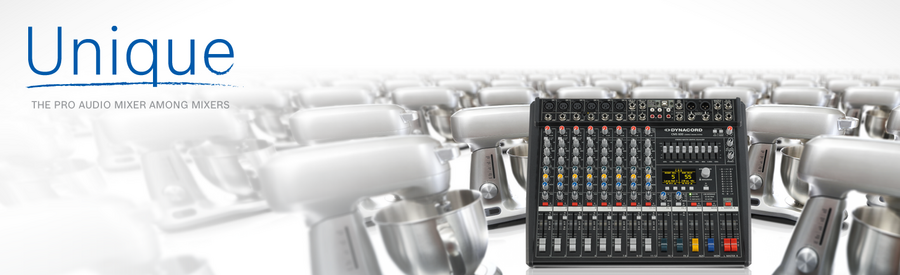
We'll walk through the channel layout, the FX engine, the preamps, real-world routing scenarios, and how it stacks up against compact mixers from Allen & Heath, Yamaha, Soundcraft and Mackie. By the end you'll know whether the CMS 600-3 is the right tool for the job, or whether you'd be better served by a sibling like the CMS 1000-3 or a digital alternative.
Want the short version? Check current pricing and availability on the Dynacord CMS 600-3 with shipping right across Australia.
What Is the Dynacord CMS 600-3?
The CMS 600-3 is the entry point into Dynacord's third-generation Compact Mixing System range. Dynacord is a German manufacturer with a long heritage in live sound reinforcement, and the CMS3 platform is essentially their distilled answer to a question working sound engineers ask all the time: "What's the smallest mixer I can take to a gig and still sound like I knew what I was doing?"
At its core, the CMS 600-3 is a 6-channel analogue mixer with four mono mic/line inputs, two stereo line channels, dedicated monitor and FX sends, a 24-bit digital effects processor, and a built-in MP3 player via USB. It's housed in a road-tough metal chassis with a rubberised wrap that survives load-ins, gear van bumps, and the occasional spilt drink at the FOH position.
Who It's Built For
- Solo performers and acoustic duos running a vocal mic and a guitar or two
- Small bands without a dedicated keys or drum mic-up rig
- Houses of worship with a pastor mic, two singers and a backing track input
- Schools, training rooms and small conference spaces
- Mobile DJs needing a clean mic input alongside their controller
- Hire companies wanting a reliable beater unit for small functions
Channel Layout and Connectivity
One of the things that immediately impresses Aussie engineers picking up the CMS 600-3 for the first time is how thoughtfully laid out the surface is. There's no wasted real estate, but you also don't feel like you're poking at sliders with a satay stick.
Input Section Breakdown
| Channel | Type | Notable Features |
|---|---|---|
| 1-4 | Mono Mic/Line | XLR + 1/4" TRS, switchable phantom power, gain trim, low-cut filter, 3-band EQ with semi-parametric mid |
| 5/6 | Stereo Line | Dual 1/4" TRS for keys, playback or sub-mixers |
| USB/MP3 In | Stereo Playback | Direct USB stick playback for walk-in music, click tracks or backing |
The mono channels share the family DNA with the larger CMS 1000-3 and CMS 2200-3 desks. That means you're getting the same Dynacord-designed mic preamps across the range, which is genuinely uncommon in this price bracket. The semi-parametric mid on the EQ is the standout feature here. A sweepable mid frequency lets you hunt down room resonances or vocal harshness in a way that fixed-mid "three-knob" EQs simply can't manage.
Outputs and Routing
- Main L/R outs: XLR balanced, ready for active speakers or a power amp
- Monitor send: Pre-fader, dedicated 1/4" output for a wedge or in-ear feed
- FX send and return: Use the internal FX or patch in an outboard reverb/delay
- Headphone output: With independent level for cue mixing
- Recording out: Stereo RCA for capture to laptop or recorder
The Built-In FX Engine: Better Than It Has Any Right to Be
Plenty of small mixers throw in a token reverb that sounds like singing into a tiled bathroom. The CMS 600-3 takes a different approach. The internal effects unit is a proper 24-bit, 100-program processor co-developed with the same DSP heritage that drives Dynacord's larger systems.
You get a sensible mix of halls, plates, rooms, chambers, delays, chorus, flanger, and a handful of multi-effects combinations. There's a tap tempo button on the surface, which is the kind of small detail that separates mixers designed by engineers from mixers designed by spreadsheets. Tapping in a delay time on the fly during a song without diving into menus is exactly what live sound demands.
FX Programs You'll Actually Use
- Vocal Plate – tight, present reverb that sits well in a busy mix
- Small Hall – natural ambience for acoustic instruments
- Slap Delay – classic short delay for vocal thickening
- Tap Delay – tempo-synced quarter or eighth-note delays
- Chorus + Hall – thickens backing vocals without washing them out
The FX can be muted via a footswitch (sold separately) which is essential if you're a one-person band who wants effects on songs but a dry vocal between tracks for crowd chat.
Sound Quality and Preamp Character
Dynacord preamps have a reputation in the touring world for being genuinely musical. They're not as transparent as a high-end Grace or Millennia, and they're not coloured like a vintage API. They sit in a sweet spot that flatters dynamic vocal mics like the SM58, Beta 58A and e835 without exaggerating sibilance.
Headroom is generous for a compact mixer. Pushing the gain on a kick drum mic or a hot condenser doesn't immediately turn things into a fizzy mess. The 3-band EQ with sweepable mid is musical rather than surgical, and you can shape a vocal or acoustic guitar without the sound becoming brittle.
For Australian gigs, where you're often dealing with rooms that have terrible acoustic treatment (think tin-roof regional clubs or concrete-floored function centres), having a sweepable mid is genuinely useful. You can pull problem frequencies out without nuking an entire band of the EQ.
Honest Limitations You Should Know About
Now for the balanced view. The CMS 600-3 isn't right for every job, and pretending otherwise wouldn't help you.
- Only six channels: If you regularly mic up a drum kit plus a band, you'll run out of inputs fast. Look at the CMS 1000-3 (10 channels) or CMS 2200-3 (22 channels) instead.
- One auxiliary monitor send: One wedge mix is fine for a duo or solo act. Bands wanting separate monitor mixes for vocalist and guitarist will hit the wall here.
- Analogue, not digital: No scene recall, no app control, no on-board recording past the basic stereo USB. If you want digital workflow, look at an Allen & Heath CQ-12T or QU-SB.
- FX returns are fixed: The internal FX has no dedicated stereo channel strip, so you can't EQ the wet signal independently in the way you can on a larger desk.
- No motorised faders or USB multitrack: If you want to record every channel discretely to a DAW, this isn't the unit for you.
How It Compares to Other Compact Mixers in 2026
| Mixer | Channels | FX | Type | Best For |
|---|---|---|---|---|
| Dynacord CMS 600-3 | 4 mono + 2 stereo | Built-in 24-bit, 100 programs | Analogue | Small live gigs, mobile use, hire stock |
| Allen & Heath ZED-10FX | 4 mono + 2 stereo | Built-in | Analogue + USB | Project studios, small live |
| Yamaha MG10XU | 4 mono + 2 stereo | SPX engine | Analogue + USB | Podcasting, light live work |
| Soundcraft Notepad-12FX | 4 mono + 2 stereo | Lexicon | Analogue + USB | Streaming, podcast, small gigs |
| Mackie ProFX10v3 | 4 mono + 2 stereo | GigFX engine | Analogue + USB | Bar gigs, basic live |
The honest take: the CMS 600-3 is more expensive than most of the comparable Yamahas, Soundcrafts and Mackies, and it doesn't include USB multitrack recording. What you're paying for is build quality (it feels like a tank), preamp character, and that thoughtfully voiced FX engine. For working musicians who load gear in and out four nights a week, the durability alone justifies the premium over plastic-chassis competitors.
Comparing your options? View full Dynacord CMS 600-3 specs and pricing with free shipping Australia-wide and authorised dealer warranty.
Real-World Setup Scenarios
Scenario 1: Solo Acoustic Performer
Channel 1 takes your vocal mic (SM58 or Beta 87A), channel 2 takes a DI from your acoustic guitar (or a feed from a Fishman/LR Baggs preamp), channel 3 stays free for a guest vocal or a harmonica mic. Stereo channel 5/6 takes a feed from your phone or laptop for backing tracks. Main outs run to a pair of active tops. One foldback wedge runs from the monitor send. Done.
Scenario 2: Small Church Service
Channels 1-3 cover pastor lapel, lectern mic, and worship leader vocal. Channel 4 takes the worship leader's acoustic guitar via DI. Stereo channel 5/6 takes a stereo feed from the keyboard or a backing track machine. Monitor send drives a single floor wedge for the worship leader. FX provides a tasteful plate reverb on vocals.
Scenario 3: School Assembly or Conference Room
Two wireless lapel receivers feed channels 1 and 2. A handheld wireless takes channel 3. Channel 4 stays free for a guest speaker. Stereo input handles laptop playback for video clips. The USB MP3 player covers walk-in and walk-out music without needing a separate device.
Australian Buyer Considerations
Buying a mixer in Australia comes with a few extra considerations that overseas review sites won't cover. Voltage is the obvious one – the CMS 600-3 sold through authorised Australian dealers is set up for 240V, so you don't need step-down transformers or worry about warranty hassles.
Warranty support matters more than people realise on gear that gets carted in and out of vans every weekend. Buying through an authorised dealer like MusiconStage means warranty claims go through Bosch Australia (Dynacord's local distributor) and you're not chasing parts from Germany on your own. Grey-import units from overseas sellers might look cheaper on paper, but the moment something goes wrong you'll wish you'd bought local.
For mobile musicians, the chassis is roughly 28cm wide and a bit over 30cm deep. It fits comfortably into most padded mixer bags, and a number of generic 12U combo amp racks will accept it on the surface deck. Weight is manageable for solo load-ins.
Frequently Asked Questions
Can the Dynacord CMS 600-3 power a passive PA speaker?
No. The CMS 600-3 is a mixer only, not a powered mixer. You'll need active speakers (with built-in amps) or a separate power amplifier. If you want an all-in-one powered mixer, look at Dynacord's PowerMate range instead.
Is the FX good enough for serious live use?
For vocal reverb, slap delay and small-band ambience, yes. Touring engineers running larger productions will still prefer dedicated outboard or plug-in effects through a digital console. For 95% of small to mid-sized gigs, the internal FX more than gets the job done.
How does it compare to the CMS 1000-3?
The CMS 1000-3 gives you 10 channels (6 mono + 2 stereo), two aux sends instead of one, and slightly more I/O flexibility. If you regularly need more than four mic inputs or two monitor mixes, the 1000-3 is worth the step up. If you don't, the 600-3 saves you weight, money and rack space.
Can I record straight into a laptop?You can take a stereo feed from the recording out (RCA) into a laptop interface, or run the main outs into a USB audio interface. The CMS 600-3 doesn't have built-in USB audio out the way some competitors do – this is one area where a Yamaha MG10XU or Soundcraft Notepad has a clear edge for podcasters and streamers.Does it include a footswitch?
No, the FX mute footswitch is sold separately. Any standard latching 1/4" footswitch will do the job, so you don't need to buy a Dynacord-branded one.
Setting It Up Properly: Quick Tips From the Trenches
- Gain stage first, EQ second. Set your input trim so the channel meter sits comfortably in the green with peaks just kissing yellow. Don't EQ until you've got proper gain.
- Use the low-cut on every vocal. The 80Hz high-pass filter cleans up handling noise, stage rumble and proximity-effect mud instantly.
- Sweep the mid before you cut. Boost the sweepable mid by about 6dB, sweep through the frequency range until you find what's offensive, then cut by the smallest amount that fixes it.
- Keep FX returns at unity. Don't drown your mix in reverb. A little goes a long way, particularly in untreated rooms.
- Run monitor sends pre-fade. The CMS 600-3's monitor send is pre-fade by default, which means moving the main fader doesn't change what the performer hears. Exactly what you want.
The Verdict: Is the CMS 600-3 Right for You?
The Dynacord CMS 600-3 is a specialist tool, not a jack of all trades. If you need an analogue mixer that sounds genuinely professional, survives years of road use, and offers FX you'll actually leave switched on, it's hard to beat in its size class. The build quality alone outlasts most of the plastic-chassis competition by a healthy margin.
It's not the right call if you need digital workflow, multitrack recording, more than one monitor mix, or more than six inputs. For those use cases, look at the larger CMS3 desks or jump to a compact digital mixer.
For solo performers, duos, small worship teams, schools, conference rooms and hire companies servicing those markets, the CMS 600-3 hits a genuine sweet spot of compact size, professional sound and bombproof reliability. It's the mixer you buy once and use for a decade.
Ready to add one to your rig? Order the Dynacord CMS 600-3 from MusiconStage – authorised Australian dealer with genuine warranty, free shipping and expert support across Australia.