
Dynacord CMS 600-3 Mixer Technical Breakdown: Specs That Matter in 2026
Dynacord CMS 600-3 Mixer with FX: Complete Technical Analysis for Australian Buyers
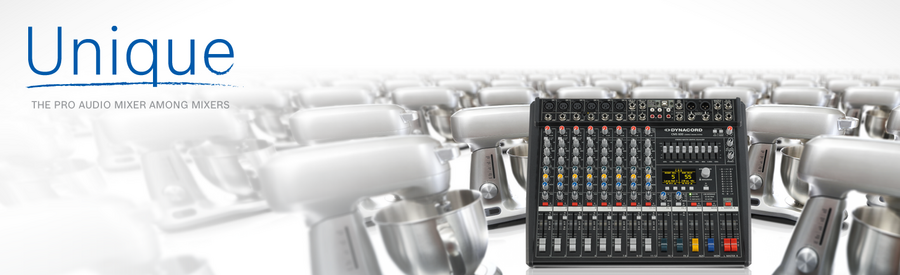
When you're looking at compact mixing consoles that genuinely deliver professional-grade audio in a format that doesn't require a roadie and a truck, the Dynacord CMS 600-3 sits in a category that deserves serious attention. This is the third generation of Dynacord's CMS compact mixing series — a line that's been refined over years of real-world deployment in venues, houses of worship, corporate events, and portable PA setups across the globe.
For Australian sound operators working smaller to mid-sized rooms, portable rigs, or fixed installations where simplicity and reliability are non-negotiable, this mixer represents a genuine workhorse option from a manufacturer with deep European engineering heritage. Let's break down exactly what you're getting, what the specifications actually mean in practice, and whether the CMS 600-3 deserves a place in your setup.
Dynacord's CMS Series: Engineering Heritage That Matters
Dynacord has been building professional audio equipment since 1947 in Straubing, Germany. Now operating under the EV/Bosch Professional Audio umbrella, they've maintained a reputation for robust, tour-grade engineering. The CMS (Compact Mixing System) line was designed specifically to address a gap in the market: operators who need genuinely professional audio quality without the complexity, weight, or cost of full-format consoles.
The "-3" designation indicates this is the third generation, which brought meaningful improvements to the preamp architecture, effects processing, and overall signal path quality over the CMS 600-2 it replaced. That generational refinement matters — it's not just a cosmetic refresh.
Complete Technical Specifications
| Specification | Detail |
|---|---|
| Input Channels | 4 Mic/Line + 2 Stereo (6 total mixing channels) |
| Microphone Inputs | 4x XLR balanced, with phantom power (48V) |
| Stereo Line Inputs | 2x stereo channels (6.3mm TRS) |
| Mic Preamp Type | DYNACORD high-headroom preamps |
| EQ per Channel | 3-band EQ (High, Mid, Low) on mono channels |
| Effects Processor | 24-bit digital FX engine with multiple presets |
| Aux Sends | 1 Monitor send + 1 FX send |
| Main Outputs | XLR balanced stereo outputs |
| Phantom Power | +48V globally switchable |
| Signal-to-Noise Ratio | High SNR characteristic of CMS-3 generation preamps |
| Construction | Steel chassis with integrated carry handle |
| Power Supply | Internal universal power supply |
Preamp Architecture: Where the CMS 600-3 Earns Its Keep
The four mono input channels each feature Dynacord's proprietary microphone preamp design, and this is genuinely where the money goes in a mixer like this. Cheap preamps introduce noise, colouration, and distortion — particularly noticeable with dynamic mics that need a fair bit of gain, or condenser mics in quiet recording scenarios.
Dynacord's preamp design in the third-generation CMS series provides high headroom with low self-noise. In practical terms, this means you can push gain on a dynamic mic like an SM58 without hearing that rising hiss floor that plagues budget mixers. For Australian venues running spoken word events, acoustic performances, or small-band setups, that clean gain structure is the difference between "sounds professional" and "sounds like a pub PA."
The 48V phantom power is globally switched — meaning it's on for all XLR inputs or off for all of them. This is standard for this class of mixer, but it's worth noting if you're running a mix of condenser and ribbon microphones (ribbons generally don't appreciate phantom power, though most modern designs are protected against it).
Channel Strip Breakdown: What You Get Per Input
Mono Channels (1-4)
Each of the four mono channels provides a comprehensive feature set for a compact mixer:
- Gain control — adjusts preamp sensitivity to match your source
- 3-band EQ — high, mid, and low frequency shaping. The mid-band is particularly useful for vocal clarity adjustments and cutting through a live mix
- Monitor send — pre-fader auxiliary send for foldback/monitor mixes
- FX send — routes signal to the internal effects processor
- Pan control — stereo placement in the main mix
- Channel fader — main level control
- Peak/clip indicator — visual feedback for gain staging
The 3-band EQ on a compact mixer might seem limiting compared to larger consoles with parametric or semi-parametric mid sections. However, Dynacord has selected the frequency centres and Q widths carefully. The mid-band, in particular, is voiced to be immediately useful for vocal and instrument work without needing surgical precision. For the scenarios this mixer targets, it's genuinely sufficient.
Stereo Channels (5/6 and 7/8)
The two stereo input channels accept line-level signals via 6.3mm TRS jacks, making them ideal for keyboards, backing tracks from laptops or media players, DJ equipment, or any stereo source. These channels feature their own EQ and routing options, maintaining mix flexibility even with the compact channel count.
Built-In Effects Processor: Practical Quality Assessment
The CMS 600-3's integrated 24-bit effects processor is one of its key selling points. Running an external effects unit with a small mixer adds complexity, cost, cabling, and another potential point of failure. Dynacord's built-in solution addresses this neatly.
The effects engine offers a selection of preset algorithms covering the most commonly needed processing types:
- Reverbs — hall, room, plate, and chamber variations
- Delays — various delay types for spatial effects
- Modulation effects — chorus and flange for instrument enhancement
- Combination presets — multi-effect patches combining reverb and delay
In real-world use, the reverb algorithms are the standout. They're smooth, musical, and don't exhibit the metallic artefacts you'll hear from cheaper digital effects sections. For vocal reverb in a live setting — which is by far the most common application — the CMS 600-3's effects are genuinely usable at a professional level. You're not going to replace a dedicated Lexicon rack unit, but for integrated effects in a compact mixer, this is well above average.
The FX send on each channel lets you dial in exactly how much of each input goes to the effects processor, and the FX return level controls how prominent the processed signal is in the overall mix. It's simple, intuitive, and it works.
Routing and Output Architecture
The CMS 600-3 provides a clean, logical output section:
- Main stereo outputs (XLR) — balanced connections for running to power amplifiers or powered speakers. The balanced XLR outputs are essential for longer cable runs common in Australian venue setups where the mixer might be positioned at front-of-house, some distance from the speaker amplification
- Monitor output — dedicated monitor send for stage foldback, controlled by the aux/monitor sends on each channel
- Record outputs — for capturing the main mix to a recording device
- Headphone output — for private monitoring and cueing
The monitor bus deserves special mention. Having a dedicated, pre-fader monitor send means you can build a completely independent monitor mix for performers on stage. Pre-fader operation means your front-of-house level adjustments won't affect what the performers hear in their monitors — a fundamental requirement for professional operation that some budget mixers compromise on.
Build Quality and Physical Design
Dynacord builds its CMS series with a steel chassis — not the plastic housings you'll find on consumer-grade compact mixers. This matters enormously in the Australian market where gear gets loaded in and out of vehicles, bumped across stages, and exposed to varying temperatures and humidity levels.
The integrated carry handle is a practical touch that shows Dynacord understands how this mixer actually gets used. Small details like solid-feeling potentiometers, clearly labelled controls, and logical layout reduce operator error in live situations where you're making adjustments under pressure.
Knob spacing is tight — that's an inherent constraint of a compact format — but Dynacord has managed the layout intelligently enough that you won't be accidentally adjusting adjacent controls during operation. The faders have appropriate resistance and feel, giving you confident level adjustments.
Check current Australian pricing for the Dynacord CMS 600-3 at MusiconStage
Real-World Performance: Where the CMS 600-3 Excels
Understanding where this mixer thrives — and where it doesn't — helps you make a genuinely informed decision.
Ideal Applications
- Small venue installations — cafes, small bars, community halls, and meeting rooms where a compact, reliable mixer is permanently installed
- Houses of worship — smaller churches and worship spaces with a single vocalist/speaker, a few instruments, and backing tracks
- Corporate events — presentations, panel discussions, and small conferences where 4 microphone inputs handle the typical requirements
- Acoustic performances — solo artists or duos with a vocal mic, instrument input, and backing tracks
- Portable PA setups — DJs, MCs, and mobile entertainers who need quality in a compact, transportable package
- Education — school halls, lecture theatres, and classroom presentations
Where You Might Need More
With four mono mic inputs, the CMS 600-3 has a clear ceiling. A five-piece band will outgrow this immediately — you'd need to look at the larger CMS models (CMS 1000-3 or CMS 1600-3) or a different format entirely. Similarly, if you need multiple monitor mixes for different performers, the single monitor bus will be limiting.
There's no digital connectivity (USB audio interface, Bluetooth, etc.) on this model, which is increasingly expected in 2026. If you need to stream audio to a laptop for recording or run backing tracks from a computer, you'll need an external audio interface or use the stereo line inputs with an appropriate adapter.
Technical Comparison: CMS 600-3 vs Common Alternatives
| Feature | Dynacord CMS 600-3 | Typical Budget Compact Mixer | Mid-Range Alternative |
|---|---|---|---|
| Preamp Quality | Professional-grade, low noise | Adequate, noticeable noise at high gain | Good, moderate noise floor |
| Effects Quality | 24-bit, musical reverbs | Basic, often metallic-sounding | Decent, limited presets |
| Build Quality | Steel chassis, professional grade | Plastic housing, lightweight | Metal/plastic hybrid |
| EQ | 3-band, well-voiced centres | 2-3 band, generic voicing | 3-band, reasonable |
| Output Quality | Balanced XLR mains | Often unbalanced only | Balanced XLR |
| Reliability | Tour-grade, proven heritage | Variable, shorter lifespan | Good for moderate use |
The key differentiator for the Dynacord isn't any single specification — it's the overall signal path quality and build reliability. You're paying for engineering refinement across every stage of the audio chain, from input to output. That cumulative quality difference is immediately audible when you A/B compare it against budget alternatives.
What the Specifications Actually Mean for Your Sound
For buyers who aren't audio engineers, here's what the technical features translate to in practical terms:
- High-headroom preamps = your microphones sound cleaner, clearer, and more natural, especially at higher gain settings
- 3-band EQ = you can shape each input's tone to reduce boominess, add clarity, or tame harshness without needing external processing
- 24-bit effects = reverbs and delays sound smooth and professional, not cheap and digital
- Balanced XLR outputs = you can run long cables to your speakers without picking up interference, hum, or noise
- Pre-fader monitor send = performers hear a consistent monitor mix regardless of what you're doing at front-of-house
- Steel chassis = the mixer survives years of regular transport and use without falling apart
Installation and Setup Considerations for Australian Users
A few practical notes specific to deploying the CMS 600-3 in Australian conditions:
Power: The internal universal power supply handles Australian 240V mains without any adapter or transformer requirements. Always use a quality power conditioner or surge protector — Australian mains can be surprisingly dirty, especially in older buildings and rural venues.
Climate: If you're installing this in a venue without climate control (outdoor stages, tin-roof halls in Queensland, or anywhere humidity is a factor), ensure adequate ventilation around the mixer. Electronics and moisture don't mix well, and Australian conditions can be punishing.
Cable runs: Take advantage of the balanced XLR outputs. Australian venues, particularly older RSL clubs, community halls, and church buildings, often have mixer-to-speaker distances that exceed what unbalanced connections can handle cleanly. Balanced connections reject interference over long runs — this is a genuine practical advantage.
Who Should Buy the Dynacord CMS 600-3?
This mixer makes the most sense for operators who:
- Need professional audio quality but don't need more than 4 mic inputs
- Value reliability and plan to use the mixer regularly over many years
- Want integrated effects without the complexity of external processing
- Run portable setups where weight and size matter
- Prefer analogue workflow — real knobs, real faders, no menus to navigate
If you need more channels, digital connectivity, or multiple monitor mixes, look at the larger CMS models or consider stepping up to a digital mixer platform. But if the CMS 600-3's feature set matches your requirements, you're getting a level of audio quality and build reliability that will serve you well for years.
Order the Dynacord CMS 600-3 with FX from MusiconStage — ships Australia-wide
Frequently Asked Technical Questions
Can I use the CMS 600-3 for recording?
Yes, via the record outputs — but this provides a stereo mix-down only, not multi-track recording. You'll need an external audio interface if you want individual channel recording. For capturing a live performance or presentation as a stereo recording, the record outputs work perfectly.
Is the phantom power safe for all microphone types?
The 48V phantom power is designed for condenser microphones and is safe for standard dynamic mics (they simply ignore it). Exercise caution with vintage ribbon microphones — while most modern ribbon designs are phantom-safe, older models may not be. When in doubt, keep phantom power off when using ribbons.
Can I connect powered speakers directly?
Absolutely. The balanced XLR main outputs connect directly to powered/active speakers. This is one of the most common configurations for the CMS 600-3 — pair it with quality powered speakers like Dynacord's own PowerSub/PowerMax series or any professional powered speakers for a complete, compact PA system.
How does it compare to digital mixers in this price range?
Digital mixers offer more channels, built-in processing, and multi-track USB recording. The CMS 600-3's advantages are immediacy of control (no menu diving), typically lower noise floor in the analogue signal path, and the proven reliability of a simpler architecture. For operators who value hands-on control and don't need extensive digital features, analogue remains compelling in 2026.
The Bottom Line: Technical Assessment
The Dynacord CMS 600-3 is a focused, well-engineered compact mixer that does exactly what it promises with genuine professional quality. It doesn't try to be everything to everyone — and that restraint is actually its strength. The preamp quality, effects processing, and build standards are a clear step above consumer-grade compact mixers, and the third-generation refinements show in the overall sonic performance.
For Australian buyers operating in the scenarios this mixer targets — small venues, worship spaces, corporate events, portable PA work — the CMS 600-3 represents a sound investment in reliable, professional-quality audio. It's the kind of gear that quietly does its job, year after year, without demanding attention or causing headaches. In professional audio, that's about the highest compliment you can pay.
Get the Dynacord CMS 600-3 Mixer with FX at MusiconStage Australia