
Dynacord CMS 600-3 Mixer in Action: Real-World Gig Guide 2026
Dynacord CMS 600-3 Mixer in Action: Real-World Gig Guide 2026
If you've been hunting for a compact analog mixer that punches well above its size, the Dynacord CMS 600-3 keeps coming up in conversations among Australian sound engineers, worship teams and covers bands. And there's a good reason for that. This isn't a flashy digital console with endless menus — it's a German-engineered workhorse built to do a handful of jobs exceptionally well, night after night.
But specs only tell half the story. What really matters is how a mixer behaves when you're setting up in a noisy RSL function room with 20 minutes before doors open, or running monitors for a five-piece band on a cramped stage. This guide walks through exactly how the CMS 600-3 performs in the situations you'll actually use it in, who it suits, and where it genuinely shines versus where you might want something else.
What You're Actually Working With
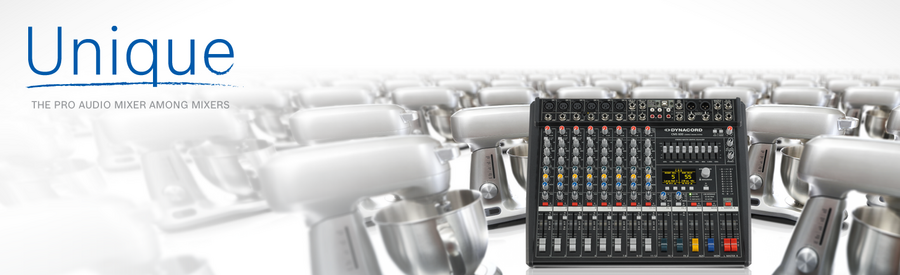
Before we get into scenarios, here's the practical layout. The CMS 600-3 gives you four mono mic/line channels with proper Dynacord preamps, plus stereo channels for keyboards, playback devices or media inputs — bringing you to a usable channel count for small-to-medium setups. You get a dual 24-bit stereo effects processor built on Dynacord's well-regarded reverb and delay algorithms, a built-in 7-band graphic EQ on the master, and genuinely musical-sounding 3-band channel EQ with a sweepable mid.
It's an unpowered mixer, so you'll pair it with an external amp or active speakers. That's actually a strength for a lot of users — you choose your own power and aren't locked into a fixed wattage. Now let's see how all that translates to real gigs.
Scenario 1: The Covers Band at a Suburban Pub
This is the CMS 600-3's natural home. Picture a four or five-piece band — a couple of vocals, an acoustic-electric guitar going DI, a keyboard, and a backing track for the odd song. You've got the four mono channels handling vocals and the DI'd instruments, and the stereo channels taking the keys and the playback feed from a phone or laptop.
Where this mixer earns its keep is the preamp quality. Vocals come through with a clarity and warmth that genuinely outclasses budget mixers in the same price bracket. The onboard FX matter here too — the reverb and delay are good enough that most pub and club acts never bother plugging in an outboard rack. You dial in a tasteful hall reverb on the lead vocal, a slap delay for that 80s number, and you're done. No laptop, no faffing about.
The 7-band master graphic EQ is the unsung hero in rooms like this. Pub function spaces are notorious for boxy, boomy acoustics. Being able to pull down problem frequencies on the master before a feedback ring becomes a feedback squeal will save your set more than once.
Scenario 2: The Church or Worship Team
Houses of worship are one of the biggest real-world buyers of the CMS 600-3, and it's easy to see why. Many church sound desks are run by rotating volunteers rather than trained engineers, so reliability and simplicity matter more than feature count.
- The clearly laid-out, one-knob-per-function design means a new volunteer can be taught the basics in a single morning.
- The musical-sounding EQ helps keep spoken word intelligible — critical for sermons and readings.
- Built-in reverb adds a touch of polish to the worship vocals without anyone needing to understand signal routing.
- Dynacord's reputation for build quality and longevity means it'll still be running smoothly years after a cheaper desk has developed crackly faders.
For a small to mid-sized congregation with a band of vocalists, an acoustic guitar, keys and maybe a cajon, the channel count is a comfortable fit. Larger churches with full drum kits and multiple instrumentalists may find themselves stretched — that's the honest limit, and we'll come back to it.
Scenario 3: Corporate Events, Conferences and MCs
For AV companies and event hire businesses, the CMS 600-3 is a brilliant second desk or small-room solution. Think breakout rooms at a conference, a wedding reception with speeches and a DJ feed, or a product launch with a couple of presenter mics and background playback.
The scenario here is usually speech-plus-playback. You've got a lectern mic, a roving handheld for the MC, and a stereo input from a laptop running the slideshow audio or a Spotify playlist. The CMS 600-3 handles this effortlessly, and its compact footprint means it tucks neatly onto a small AV trolley. The clean preamps keep speech natural and intelligible, which is exactly what you want when the audio's job is to disappear and just work.
Scenario 4: Rehearsal Spaces and Small Studios
Plenty of bands buy one of these to live permanently in the rehearsal room. It's robust enough to handle being knocked about, simple enough that everyone in the band can use it, and the FX make practice sessions feel a bit more like the real thing. For home or project studio use as a monitor mixer or for tracking a small ensemble, the quality of the preamps again makes it a sensible choice over flimsier alternatives.
How It Performs Against the Alternatives
It's worth being clear-eyed about where the CMS 600-3 sits in 2026, because there's real competition.
Versus budget analog mixers
Against the cheaper end of the market, the Dynacord wins decisively on preamp sound, build quality and FX. The difference in vocal clarity is audible, and the longevity is in a different league. If you're gigging regularly and your audio is part of how you get paid, the step up is justified.
Versus compact digital mixers
This is the more interesting comparison. Digital mixers in a similar price range offer recallable scenes, app-based wireless mixing, onboard recording and far more processing. If you value total recall, remote mixing from the floor on a tablet, or multitrack recording, a digital desk may suit you better.
But digital comes with a learning curve, a reliance on screens and apps, and a setup time that an analog desk simply doesn't have. The CMS 600-3's appeal is immediacy and dependability — you power it on and every control is exactly where you left it, physically, in front of you. For volunteer-run rooms, fast-turnaround events and engineers who think with their hands, that's a genuine advantage, not a limitation.
Who Should Buy It — and Who Shouldn't
Let's match the product to real needs honestly.
- Buy it if: you run a small covers or function band, a church or worship team, corporate breakout rooms, or you need a rugged, great-sounding compact analog desk you can hand to anyone and trust for years.
- Think twice if: you need a large channel count for a full band with miked drums and many instruments, you want app-based remote mixing, or you need onboard multitrack recording. In those cases, look at the larger CMS models or a compact digital console.
You can check current Australian pricing and stock on the Dynacord CMS 600-3 product page.
Getting the Most Out of It — Practical Tips
- Use the master graphic EQ for the room, not the mix. Set your channel EQs for tone, then use the 7-band master to tame the venue and chase out feedback.
- Don't overdo the reverb. The FX are good, which makes it tempting to drown vocals. A little goes a long way in a live room — set it, then back it off a notch.
- Gain stage properly. Set your channel gains with the preamp metering before anything else. Clean gain structure is where the Dynacord preamps reward you with that signature clarity.
- Match your amp or speakers sensibly. Because it's unpowered, pair it with quality active speakers or a solid amp that suits your venue size — this is where you control your headroom.
- Label your channels. With volunteer or rotating operators, a strip of tape and a marker prevents 90% of mid-gig confusion.
Common Mistakes to Avoid
The most frequent mistake we see is buyers expecting the channel count of a much larger desk. Plan your input list honestly before purchasing — count every mic and DI you'll realistically need. The second common error is treating it like a digital console and hunting for scene recall; embrace the analog workflow instead and you'll work faster. Finally, don't pair a premium desk like this with cheap, underpowered speakers — you'll undo the very sound quality you paid for.
Frequently Asked Questions
Is the Dynacord CMS 600-3 a powered mixer?
No — it's an unpowered (analog) mixer, so you'll need an external amplifier or active/powered speakers. That gives you the freedom to choose power appropriate to your venue.
Is it suitable for a full band with drums?
It's ideal for small bands using DI'd instruments and a few vocals. For a full kit with multiple miked instruments, you may run short on channels — consider a larger CMS model in that case.
Are the built-in effects good enough for live gigs?
Yes. The dual 24-bit FX processor uses Dynacord's respected reverb and delay algorithms, and the vast majority of pub, club and worship users never feel the need for outboard FX.
How hard is it for a beginner to learn?
Very approachable. The one-knob-per-function analog layout means a newcomer can grasp the essentials in a single session, which is why it's so popular in volunteer-run church environments.
How does it compare to a compact digital mixer?
The Dynacord wins on immediacy, build quality and simplicity; digital wins on recall, remote app mixing and recording. Choose based on whether you value fast, tactile reliability or feature flexibility.
The Verdict
The Dynacord CMS 600-3 is a specialist that knows exactly what it's for. For small-band live work, worship teams, corporate AV and rehearsal rooms across Australia, it delivers premium preamp sound, genuinely useful onboard FX and the kind of build quality that makes it a buy-once-cry-once decision. Match it to the right scenario and it'll quietly do its job for a decade or more.
Ready to put it to work at your next gig? Take a closer look at the Dynacord CMS 600-3 at MusiconStage and check availability for Australian delivery.