
Dynacord CMS 1000-3 Powered Mixer: Full Technical Breakdown for 2026
Dynacord CMS 1000-3 Powered Mixer: Full Technical Breakdown for Australian Sound Professionals
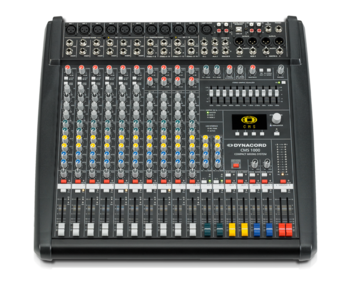
If you've spent any time running sound for small-to-medium venues, houses of worship, corporate presentations, or community events across Australia, you'll know the appeal of a genuinely capable powered mixer. No amp racks, no speaker processors, no tangled snake of cables between FOH and the stage — just one box that handles mixing, processing, and amplification in a single, road-ready unit.
The Dynacord CMS 1000-3 is the third generation of a mixer line that's been earning its keep on stages and in install environments for years. Dynacord — a German pro audio manufacturer now under the Bosch Communications Systems umbrella alongside Electro-Voice — has refined this platform considerably with each revision. The Mark 3 version brings updated preamps, expanded DSP, and refined amplifier topology into a format that still fits in the back of a hatchback.
This isn't a quick overview. We're going to pull apart the specifications, explain what actually matters in a powered mixer at this level, and give you the context you need to decide whether the CMS 1000-3 belongs in your rig.
What Exactly Is the CMS 1000-3?
At its core, the CMS 1000-3 is a compact mixing system — Dynacord's own term for their integrated powered mixer line. It combines an analogue mixing console with built-in Class-D power amplifiers and onboard digital signal processing. The "1000" designation refers to its amplifier power class, while the "3" denotes this third-generation revision.
The mixer section provides 6 mono mic/line channels plus 4 stereo channels (2 of which accept mic-level signals), giving you a total of 12 input channels that can accommodate a surprisingly wide range of source configurations. Each mono channel features a Dynacord-designed microphone preamplifier with phantom power, 3-band EQ with swept mid, and individual channel processing options.
The built-in power amplifiers deliver substantial output across two main channels, with a separate amplifier channel available for monitor duty. This three-amplifier architecture is one of the CMS series' defining features — it means you can run stereo mains and a powered monitor wedge or fill speaker without any external amplification whatsoever.
Channel Architecture: A Closer Look
Mono Input Channels (1–6)
The six mono channels are where most of your critical sources live — vocals, DI'd instruments, snare, kick, and so on. Each one features:
- Microphone preamplifier with XLR input and switchable +48V phantom power (globally switched in pairs)
- Line-level input on 6.3mm TRS jack, switchable mic/line sensitivity
- Insert point on channels 1–4, allowing you to patch in external compressors or EQ units on your most critical channels
- 3-band EQ with high (12 kHz shelving), parametric swept mid (250 Hz – 5 kHz), and low (80 Hz shelving)
- High-pass filter at 80 Hz (18 dB/octave) for cutting low-frequency rumble from vocal mics and overheads
- 2 aux sends — one pre-fader (for monitor mixes) and one post-fader (for effects or secondary sends)
- FX send to the internal effects processor
- Pan control and PFL (pre-fade listen) solo button
The swept mid EQ deserves particular attention. Unlike fixed-frequency mid controls found on many mixers in this category, a swept mid lets you target specific problem frequencies — a honky vocal resonance at 800 Hz, a boxy guitar cab at 400 Hz, or a nasal vocal around 1.2 kHz. It's the single most useful EQ feature on a live sound console, and its inclusion here puts the CMS 1000-3 ahead of most powered mixer competitors.
Stereo Input Channels (7/8, 9/10, 11/12, 13/14)
The four stereo channels are configured for keyboards, backing tracks, DJ sources, and other stereo programme material. Channels 7/8 and 9/10 include microphone preamps on XLR inputs, making them versatile enough to handle extra vocal mics or instrument sources when you've used up all six mono channels. All stereo channels feature:
- Stereo line inputs on 6.3mm TRS jacks
- 3-band EQ (fixed frequencies on stereo channels)
- Aux and FX sends
- Balance control
Additionally, one stereo channel typically includes a dedicated RCA phono input pair, handy for connecting consumer audio devices, smartphones (via RCA adapter), or background music players without needing a DI box.
The Amplifier Section: Class-D Power Where It Counts
This is where the CMS 1000-3 genuinely separates itself from the pack. Dynacord has fitted three independent Class-D power amplifiers:
| Amplifier Output | Power Rating (RMS) | Load Impedance | Typical Application |
|---|---|---|---|
| Main L (Power Amp 1) | 350W RMS | 4 ohms | Left main speaker |
| Main R (Power Amp 2) | 350W RMS | 4 ohms | Right main speaker |
| Monitor / Aux (Power Amp 3) | 200W RMS | 4 ohms | Monitor wedge or fill |
That's a combined 900 watts of total amplifier power built into a mixer that weighs under 20 kg. The Class-D topology keeps heat generation and current draw manageable — critical when you're running off a single 10-amp power circuit at a community hall or outdoor event.
A few points worth noting about these amplifiers:
- Speaker protection circuitry is built in, including DC protection, short-circuit protection, and thermal limiting. If you accidentally short a speaker cable or push too hard in 40°C Australian heat, the amps will protect themselves rather than letting magic smoke escape.
- Speakon and binding post outputs are provided, giving you proper professional connections alongside legacy options.
- The monitor amp is fed by the Aux 1 bus, meaning your pre-fader aux send directly controls what goes to the powered monitor output. This is a brilliantly practical design choice — no external amp needed for a single monitor wedge.
For Australian touring applications, the power output is well-suited to driving a pair of 12" or 15" passive speakers (like Electro-Voice's ELX series or similar) for audiences of 50 to 200 people, depending on the room acoustics and whether you're adding subwoofers to the system.
DSP Effects: Dynacord's Onboard Processing
The CMS 1000-3 features a built-in 24-bit digital effects processor with a selection of 100 preset programs covering the essentials:
- Reverbs — hall, plate, room, and chamber variants with adjustable decay
- Delays — including tempo-sync options and multi-tap configurations
- Chorus and modulation effects
- Combination programs — reverb + delay, chorus + reverb, and other paired effects
The effects quality is genuinely usable for live applications. We're not talking about the thin, metallic reverbs you'll find on budget powered mixers — Dynacord's algorithms have been refined over multiple product generations, and the reverb tails in particular sound smooth and natural. For spoken word events, a subtle room reverb adds presence without muddying intelligibility. For live music, the plate and hall programs sit nicely behind vocals without competing with the band.
Effects parameters are adjustable via a dedicated encoder and LCD display, and the FX return level is controlled by a dedicated fader, giving you precise control over how much processed signal enters the main mix.
System Processing and Output EQ
Beyond channel-level processing, the CMS 1000-3 includes system-level DSP that operates on the main and monitor output buses:
- Graphic EQ on the main outputs — a built-in graphic equaliser lets you tune the main PA response to the room. This is the feature that eliminates the need for an outboard graphic EQ unit between your mixer and amplifier.
- Feedback suppression — Dynacord's automatic feedback detection can identify and notch out feedback frequencies, which is enormously valuable when you're mixing monitors from FOH without a dedicated monitor engineer.
- Speaker processing presets — the DSP includes processing presets optimised for common speaker configurations, particularly Dynacord and Electro-Voice cabinets. These presets apply appropriate crossover points, EQ curves, and limiter settings for specific speaker models.
The speaker processing presets deserve emphasis. If you're running the CMS 1000-3 with a pair of EV ZLX or EKX passive speakers (a very common pairing in Australian rental and install applications), the built-in presets can apply manufacturer-recommended processing that would otherwise require a separate speaker management system. That's a genuine cost and complexity saving.
Check the latest Australian pricing for the Dynacord CMS 1000-3 at MusiconStage
Build Quality and Physical Design
Dynacord has always leaned toward robust construction, and the CMS 1000-3 follows that tradition. The chassis is steel with a powder-coat finish, and the overall build exudes durability. Key physical specifications:
| Specification | Detail |
|---|---|
| Dimensions (W × H × D) | Approximately 483 × 175 × 475 mm |
| Weight | Approximately 18 kg |
| Construction | Steel chassis, powder-coated |
| Cooling | Convection with internal fan (variable speed) |
| Mains Voltage | 230V AC, 50 Hz (Australian compatible) |
| Rack Mountable | Yes — standard 19" rackmount width |
The 19-inch rack-mountable format is a practical advantage for installation applications. You can mount the CMS 1000-3 in a standard equipment rack alongside wireless microphone receivers and media players for a clean, integrated system. For portable use, the unit fits into standard mixer bags and cases designed for 19-inch rack-width equipment.
One design choice worth appreciating: the ventilation is designed for both tabletop and rack-mounted operation. Some powered mixers overheat when rack-mounted because airflow is restricted, but Dynacord has accounted for this with appropriate internal fan placement and thermal management. Important when Australian summer temperatures push ambient conditions well above the 25°C that most equipment is tested at.
Connectivity and I/O Summary
| Connection Type | Details |
|---|---|
| Mic Inputs (XLR) | 8 × XLR (channels 1–6 mono, 7/8 and 9/10 stereo) |
| Line Inputs (TRS) | All channels — 6.3mm TRS jacks |
| Stereo RCA Input | 1 × stereo pair (channels 13/14) |
| Insert Points | Channels 1–4 (6.3mm TRS) |
| Main Outputs | XLR balanced L/R |
| Record Outputs | RCA stereo pair |
| Aux Outputs | 2 × 6.3mm TRS |
| Speaker Outputs | Speakon (NL4) and binding posts — Main L, Main R, Monitor |
| Headphone Output | 6.3mm TRS stereo |
| Phantom Power | +48V DC, switchable |
The balanced XLR main outputs are essential for any application where you might need to send the mix to a recording device, a broadcast feed, or a secondary amplification system (for delay speakers or a cry room feed, for instance). The record outputs on RCA provide a convenient, level-adjusted feed for simple recording setups.
How It Compares: CMS 1000-3 vs the Competition
The powered mixer market in Australia includes options from Yamaha (EMX series), Behringer (PMP series), and a handful of others. Here's how the Dynacord stacks up on the specifications that actually matter:
| Feature | Dynacord CMS 1000-3 | Yamaha EMX5 | Behringer PMP4000 |
|---|---|---|---|
| Total Input Channels | 12 (6 mono + 4 stereo) | 12 (4 mono + 4 stereo) | 16 (8 mono + 4 stereo) |
| Mono Mic Channels | 6 | 4 | 8 |
| Power Output (per side) | 350W @ 4Ω | 630W @ 4Ω | 600W @ 4Ω |
| Dedicated Monitor Amp | Yes (200W) | No | No |
| Swept Mid EQ | Yes (mono channels) | No (fixed 3-band) | Yes |
| Speaker Processing Presets | Yes (Dynacord/EV) | No | No |
| Feedback Suppression | Yes (automatic) | Yes (basic) | Yes (FBQ system) |
| Build Quality | Professional grade | Professional grade | Semi-professional |
The most notable differentiator is the dedicated third amplifier for monitors. Neither the Yamaha nor the Behringer offers this — with those units, if you want a powered monitor, you need an external amplifier. The Dynacord gives you a complete FOH-plus-monitor system in a single box, which is a significant practical advantage for solo operators, small worship teams, and corporate AV setups where simplicity is paramount.
The Yamaha EMX5 does offer more raw amplifier power per channel, which matters if you're pushing larger passive speakers in bigger rooms. But for typical Australian community halls, function rooms, and small venues where the CMS 1000-3 lives, 350 watts per side is ample — and having that third monitor amp available is often more valuable than extra headroom on the mains.
Real-World Applications: Where the CMS 1000-3 Shines
Houses of Worship
This is arguably the CMS 1000-3's sweet spot. A typical small-to-medium church needs 4–6 vocal mics, a keyboard input, a backing track input, and a single monitor mix for the worship team. The CMS 1000-3 handles all of this with its built-in amps, speaker processing, and feedback suppression — and it can be operated by a volunteer with basic training. The speaker presets mean you don't need an experienced system tech to tune the PA.
Corporate and Conference Events
For presentations, panel discussions, and corporate functions, the CMS 1000-3 provides clean, reliable amplification without the complexity of a component system. The automatic feedback suppression is particularly valuable in conference settings where presenters walk around with lapel mics near the speaker system.
Schools and Community Halls
Australian schools and community organisations frequently need a PA system that "just works" — one that a non-technical operator can power up and use for assemblies, performances, and events. The CMS 1000-3's integrated design eliminates the most common setup errors (wrong amplifier gain, missing speaker processing, incorrect signal routing) because everything is pre-configured inside a single unit.
Small Bands and Solo Performers
For acoustic duos, solo singer-songwriters, and small jazz combos playing restaurants, wine bars, and private functions, the CMS 1000-3 paired with a couple of compact passive speakers creates a complete, portable PA system. Throw in a single monitor wedge on the dedicated monitor amp, and you've got a professional-grade setup that fits in a car boot.
View the Dynacord CMS 1000-3 and order with Australian warranty at MusiconStage
What the Specifications Don't Tell You
Specs are essential, but experienced sound engineers know they don't tell the whole story. Here are the things worth understanding beyond the datasheet:
Preamp Quality
Dynacord's mic preamps have always been a step above what you'd expect in a powered mixer. They're clean, with low self-noise and enough gain for dynamic microphones at a distance — which matters enormously for theatrical and spoken word applications where you can't always get the mic right on the source. The third-generation preamps in the CMS 1000-3 continue this tradition, and you'll notice the difference if you're coming from a budget powered mixer with mediocre preamp design.
Thermal Performance
Australia throws some brutal operating conditions at pro audio gear. The CMS 1000-3's thermal management is designed for continuous operation, but like any amplifier, it will derate (reduce output power) as temperatures climb. In practice, this means that if you're running an outdoor event in 38°C Darwin heat with the mixer in direct sun, you won't get the full rated output. Keep it shaded, ensure adequate ventilation if rack-mounted, and you'll be right.
The Bosch/EV Ecosystem
Being part of the Bosch Communications family gives the CMS 1000-3 an advantage that isn't obvious from the spec sheet: ecosystem integration. The speaker processing presets are optimised for Electro-Voice cabinets, which are widely available and well-supported in Australia. If you're building a system from scratch, pairing the CMS 1000-3 with EV passive speakers gives you a factory-optimised combination that would otherwise require separate speaker management processing.
Technical Considerations Before You Buy
Before committing, here are the technical factors to weigh:
- Do you need more than 6 mono mic channels? If your typical setup requires 8 or more individual microphone channels, the CMS 1000-3 may feel tight. While channels 7/8 and 9/10 offer mic inputs, they're stereo channels with shared EQ — less flexible than dedicated mono channels. If channel count is your primary concern, look at the larger CMS 1600-3 or CMS 2200-3 models in the range.
- Is the amplifier power sufficient? At 350W per side into 4 ohms, the CMS 1000-3 is well-matched to efficient passive speakers in rooms up to about 200–250 capacity. For larger venues, you'll either need more efficient speakers, additional subwoofers (powered separately), or a step up to the CMS 1600-3 with its higher output.
- Do you value the monitor amp? If you always run monitors from a separate amp anyway, or you use in-ear monitors exclusively, the third amplifier is less compelling. But for operators who need a single-box solution with monitor capability, it's a standout feature.
- Digital vs analogue workflow: The CMS 1000-3 is fundamentally an analogue mixer with digital effects and system processing. If you need scene recall, remote control via tablet, or multi-track recording outputs, a digital mixer with a separate power amplifier may serve you better.
- Weight considerations: At around 18 kg, it's not featherweight. If portability is critical and you're loading in solo, consider whether a lightweight digital mixer plus a compact Class-D amplifier might be an easier carry — though you lose the integration advantage.
Frequently Asked Technical Questions
Can I use the CMS 1000-3 as a mixer only, without the built-in amps?
Yes. The balanced XLR main outputs provide a line-level signal that can feed external power amplifiers or powered speakers. You can use the CMS 1000-3 purely as a mixing console with effects processing, sending the outputs to whatever amplification you choose. This also makes it a viable option as a mixer-only solution if you upgrade to powered speakers later but want to keep using the console.
What speakers pair best with the CMS 1000-3 in Australia?
The most natural pairing is with Electro-Voice passive speakers — the ELX112, ELX115, ZLX-12, or EKX-12P series. The built-in speaker processing presets are optimised for these cabinets. That said, any passive speaker rated at 4 ohms or above with appropriate power handling (350W or higher continuous) will work well. JBL JRX series, Yamaha CBR series, and RCF C-series are also common pairings in the Australian market.
Is it suitable for permanent installation?
Absolutely. The rack-mountable format, robust construction, and integrated amplification make the CMS 1000-3 an excellent choice for permanent installations in churches, community halls, school auditoriums, and conference rooms. Many Australian integrators specify Dynacord CMS mixers for install applications precisely because the all-in-one design minimises points of failure and simplifies maintenance.
How does the phantom power work?
The +48V phantom power is globally switchable, typically activated via a single switch or in channel pairs. Condenser microphones (like small-diaphragm overhead mics or common gooseneck lectern mics) require this to operate. It's safe to leave phantom power on even with dynamic microphones connected, though it's good practice to mute channels before engaging or disengaging phantom power to avoid pops through the PA.
The Verdict: Who Should Buy the Dynacord CMS 1000-3?
The CMS 1000-3 occupies a specific and well-defined niche in the Australian pro audio landscape. It's built for operators who value simplicity, reliability, and integration over maximum channel count or raw amplifier power.
If you're a church tech volunteer who needs a system that works every Sunday without a degree in audio engineering, this is your mixer. If you're a solo performer or small band who wants a complete PA in two or three boxes, this delivers. If you're an AV integrator specifying a permanent install for a school or community hall, the CMS 1000-3's track record and build quality give you confidence that it'll still be running trouble-free in five years.
Where it's not the right choice: large-format live sound, applications requiring extensive digital recall and remote mixing, or situations where you genuinely need more than about 8 microphone inputs. For those scenarios, a digital console with separate amplification is the better path.
But within its intended application range, the Dynacord CMS 1000-3 is genuinely hard to beat. German engineering, Bosch-backed reliability, practical features like the third monitor amplifier, and sound quality that consistently impresses — it's a powered mixer that earns respect from experienced sound engineers, which is no small achievement in a category that often attracts scepticism.
Ready to buy? Get the Dynacord CMS 1000-3 with full Australian support at MusiconStage