Dynacord CMS 1000-3 Powered Mixer: Beginner's Guide for Aussies 2026
Dynacord CMS 1000-3 Powered Mixer: A Beginner's Guide for Australian Sound Setups in 2026
If you've been researching sound systems for your venue, band, church, or event space, you've probably come across a dizzying number of mixers, amplifiers, and speakers — each sold separately, each with its own specs to decode. It's enough to make anyone's head spin.
That's exactly where powered mixers come in, and the Dynacord CMS 1000-3 is one of the most respected names in this category. But before we dive into this specific unit, let's make sure you understand what a powered mixer actually is, why it matters, and whether it's the right approach for your needs.
What Is a Powered Mixer? (And Why Should You Care?)
Think of a typical sound system as having three core parts:
- The mixer — where all your microphones, instruments, and audio sources plug in. This is your control centre, where you adjust volumes, EQ (tone), and effects.
- The power amplifier — the muscle that takes the mixer's output signal and makes it powerful enough to drive speakers.
- The speakers — the part the audience actually hears.
In a traditional setup, the mixer and amplifier are separate boxes. You run cables between them, you carry them separately, and you need to match their specs carefully. A powered mixer combines the mixer and the power amplifier into a single unit. Plug your mics and instruments into one side, connect your speakers to the other, and you're good to go.
It's a bit like the difference between buying a separate oven and cooktop versus getting a freestanding oven with the cooktop built in. Same cooking, fewer boxes to deal with.
Who Is Dynacord? A Quick Background
If you're new to pro audio, you might not have heard of Dynacord — and that's perfectly normal. They're a German manufacturer with over 70 years of history in professional sound equipment. They sit within the same family of brands as Electro-Voice (EV) and Bosch Professional Audio, which means serious engineering resources behind every product.
Dynacord has built a particularly strong reputation in the installed sound and portable PA market across Europe, and they've steadily grown their presence in Australia. Their CMS series of powered mixers has been a staple for houses of worship, schools, function venues, and working musicians who need reliable, high-quality sound without a complicated setup.
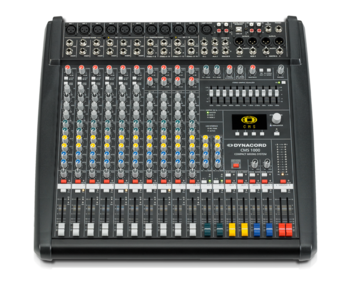
Understanding the Dynacord CMS 1000-3: What You're Actually Getting
The "CMS" stands for Compact Mixing System, and the "1000-3" tells you this is the third generation of the CMS 1000 series. That matters because third-generation products have had years of real-world feedback baked into their design. Bugs get ironed out, features get refined, and reliability improves with each iteration.
Input Channels Explained Simply
The CMS 1000-3 gives you a generous number of input channels — places where you plug in microphones, instruments, and other audio sources. Here's how to think about what you get:
- Microphone/line channels — These accept both microphones (via XLR connectors, the chunky round ones) and line-level sources like keyboards or audio players. Each channel has its own volume control and EQ adjustments.
- Stereo channels — Designed for sources that have left and right outputs, like backing tracks from a laptop, a keyboard, or a DJ setup.
What does this mean for you? In practical terms, you can run multiple microphones for vocalists and speakers, plug in instruments, and still have room for background music or playback — all at once. For a small to medium event, church service, or pub gig, this is more than enough flexibility.
Built-In Power Amplifier: The Heart of the Unit
This is what makes the CMS 1000-3 a powered mixer. Inside the chassis sits a Class D power amplifier delivering serious wattage to your speakers.
New to amplifier classes? Don't worry about the technical details too much. Class D simply means the amplifier is designed to be efficient and lightweight — it generates less heat and uses less power than older amplifier designs, which is exactly what you want in an all-in-one unit.
The built-in amplifier is powerful enough to drive passive speakers (speakers without their own amplification) for small to medium-sized rooms, outdoor gatherings, or function spaces. You won't need a separate amp rack — just connect your speakers directly to the CMS 1000-3's speaker outputs.
Effects Processing: Built-In and Ready to Go
One of the genuinely useful features for beginners is the built-in effects processor. The CMS 1000-3 includes a range of digital effects — most importantly reverb (that natural room ambience you hear in professional recordings) and delay.
Why does this matter? Without built-in effects, you'd need to buy a separate effects unit, cable it into your mixer, and learn to operate yet another piece of gear. The CMS 1000-3 keeps things simple: dial in the effect you want using the onboard controls, and adjust how much effect each channel receives. Vocals suddenly sound polished and professional without any extra equipment.
EQ and Tone Shaping
EQ (equalisation) is how you adjust the tonal character of each sound source. Think of it like the bass and treble controls on a home stereo, but with more precision.
Each channel on the CMS 1000-3 features dedicated EQ controls, allowing you to:
- Reduce muddiness in a vocal by cutting low frequencies
- Add clarity and presence to a guitar
- Tame harsh or piercing sounds
- Shape the overall tone to suit your room
Additionally, the CMS 1000-3 includes a graphic equaliser on the main output. This is your master tone control for the entire mix — incredibly useful for taming room acoustics. Every room sounds different (hard walls reflect sound, carpet absorbs it), and the graphic EQ lets you compensate.
Feedback Suppression: A Beginner's Best Friend
If you've ever heard that awful high-pitched squeal from a PA system, that's feedback — and it's the number one fear for anyone new to running live sound. The CMS 1000-3 includes Dynacord's feedback suppression system, which automatically detects and reduces feedback frequencies.
This doesn't mean you can point a microphone directly at a speaker and expect silence, but it does mean the system is actively helping you avoid those embarrassing squeals during a presentation, sermon, or performance. For beginners, this feature alone can be worth its weight in gold.
Why Choose a Powered Mixer Over Separate Components?
This is a question every beginner should ask, because the answer determines your entire setup approach.
Advantages of a Powered Mixer Like the CMS 1000-3
- Simplicity — Fewer boxes, fewer cables, fewer things to go wrong. Plug in your sources, connect your speakers, and you're mixing.
- Portability — One unit to carry instead of a mixer plus a separate amplifier. For mobile DJs, gigging musicians, and event organisers who set up in different locations, this is a genuine practical benefit.
- Matched components — The mixer and amplifier are designed to work together perfectly. No guessing about whether your amp is compatible with your mixer's output levels.
- Cost efficiency — Buying a quality powered mixer is typically less expensive than buying a comparable mixer and amplifier separately.
- Less to learn — For beginners, reducing the number of separate components means a gentler learning curve.
When Separate Components Might Be Better
In the interest of honest advice, powered mixers aren't always the best choice:
- Very large venues — If you need massive amounts of power for a large outdoor festival or arena, separate dedicated amplifiers will give you more headroom and flexibility.
- Highly customised systems — If you want to choose every single component individually and you have the technical knowledge to match them, separates offer more options.
- Powered speakers — If you're using active (powered) speakers that have their own built-in amplifiers, you don't need the amplifier section of a powered mixer. In that case, an unpowered mixer might make more sense.
For most beginners setting up sound for small to medium applications, though, a powered mixer hits the sweet spot of capability versus complexity.
What the Dynacord CMS 1000-3 Does Particularly Well
Build Quality and Reliability
Dynacord builds gear for the professional market, and you can feel it when you use the CMS 1000-3. The knobs feel solid, the faders are smooth, and the chassis is built to handle life on the road. This isn't consumer-grade equipment dressed up with pro-looking features — it's genuinely professional gear that happens to be accessible enough for beginners to use.
For Australian users, reliability matters enormously. If you're running sound for a church service every Sunday, a weekly pub gig, or regular corporate events, you need gear that works every single time without drama. Dynacord's reputation for reliability is well-earned.
Sound Quality
The preamps (the circuits that boost your microphone signal to a usable level) in the CMS 1000-3 are notably clean and quiet. In non-technical terms: your microphones will sound clear and natural, without the hiss or noise that cheaper mixers sometimes introduce.
The built-in effects sound genuinely good — not like an afterthought bolted on to tick a feature box. The reverbs are usable and musical, which means your vocals and instruments benefit from effects that actually enhance the sound rather than muddying it.
Intuitive Layout
Dynacord has designed the control surface to be logical and readable. Channels are clearly labelled, controls are grouped sensibly, and the signal flow (the path audio takes from input to output) follows a natural left-to-right, top-to-bottom pattern. If you've never used a mixer before, this kind of thoughtful layout makes the learning process significantly less intimidating.
Common Beginner Mistakes to Avoid
Whether you choose the CMS 1000-3 or any powered mixer, here are the mistakes we see beginners make most often:
- Using powered speakers with a powered mixer's amplified outputs — This sends an already-amplified signal into a speaker that amplifies it again. At best, it sounds terrible. At worst, you damage your speakers. If you have powered speakers, use the mixer's line outputs instead.
- Running everything at maximum volume — It's tempting to crank everything up, but this leads to distortion and potential damage. Start with all faders down, bring them up gradually, and use the level meters to stay in the safe zone.
- Ignoring the gain structure — Each channel has a "gain" knob (sometimes called "trim") at the top. This sets the initial input level and needs to be set correctly before you touch the channel fader. Getting this right is the single most important thing for clean sound.
- Not using the graphic EQ — The graphic EQ on the main output exists to help your system sound good in the specific room you're in. Ignoring it means you're fighting the room's acoustics unnecessarily.
- Forgetting phantom power — Condenser microphones need phantom power (a small electrical charge sent through the cable) to operate. The CMS 1000-3 provides this, but you need to switch it on. If your condenser mic isn't working, this is almost always why.
What You'll Need Alongside the CMS 1000-3
A powered mixer is the brain and the muscle of your system, but you'll still need:
- Passive speakers — Since the CMS 1000-3 has built-in amplification, pair it with good-quality passive speakers. Electro-Voice makes excellent options that pair naturally with Dynacord gear, though any compatible passive speakers will work.
- Speaker cables — Not instrument cables, not microphone cables. Speaker cables are designed to handle the higher power levels between your amplifier and speakers. Using the wrong cables can cause performance issues or damage.
- Microphones and XLR cables — Standard dynamic microphones (like the ubiquitous Shure SM58 for vocals) connect via XLR cables.
- Speaker stands — Getting your speakers up to ear height makes an enormous difference to how your system sounds for the audience.
Is the CMS 1000-3 Right for You? A Quick Decision Guide
The CMS 1000-3 is an excellent choice if you:
- Need a reliable all-in-one solution for small to medium venues
- Run sound for a church, school, community group, or small business
- Play in a band that does pub gigs, functions, or small festivals
- Want professional sound quality without a complex multi-component setup
- Value German engineering and long-term reliability
- Need built-in effects and feedback suppression
You might want to look elsewhere if you:
- Already own powered (active) speakers — consider an unpowered mixer instead
- Need to fill very large venues (500+ people outdoors) — you may need more power
- Want extensive digital mixing features like scene recall and tablet control — look at digital mixers
Getting Started: What to Expect in Your First Week
If you do go ahead with the CMS 1000-3, here's a realistic picture of your first week:
Day one: Unbox it, connect a single microphone and a pair of speakers. Practice adjusting the gain, channel fader, and master volume. Get comfortable with the basic signal flow.
Days two to three: Add more sources — a second microphone, perhaps a keyboard or laptop for backing tracks. Practice balancing multiple sources and using the EQ to make each one sit well in the mix.
Days four to five: Experiment with the built-in effects. Add a touch of reverb to vocals and hear the difference. Try different effect presets to find what works for your application.
End of week one: You should be comfortable enough to run a basic event. You won't be an expert yet — that takes months of practice — but you'll be able to deliver clean, clear, feedback-free sound that your audience will appreciate.
Frequently Asked Questions from Beginners
Can I record from the CMS 1000-3?
Yes. The CMS 1000-3 provides recording outputs that you can connect to a recording device or audio interface. This is handy for recording services, rehearsals, or live performances.
How heavy is it?
Powered mixers are heavier than unpowered mixers because of the built-in amplifier. The CMS 1000-3 uses Class D amplification which keeps the weight manageable, but it's still a substantial unit. Plan to have a sturdy table or rack to place it on.
Do I need any technical training to use it?
Not formally, no. Dynacord designs the CMS series to be approachable, and there are plenty of resources available online. That said, spending an afternoon watching beginner-level mixing tutorials on YouTube will fast-track your learning enormously.
What's the warranty situation in Australia?
Dynacord products sold through authorised Australian dealers like MusiconStage come with manufacturer warranty coverage. Always buy from an authorised dealer to ensure your warranty is valid — grey imports may not be covered.
Ready to Get Started?
The Dynacord CMS 1000-3 represents one of the smartest ways for Australian beginners to get into live sound. It combines professional-grade audio quality with the simplicity of an all-in-one design, backed by decades of German engineering heritage.
If you're ready to explore the CMS 1000-3 further, check out the Dynacord CMS 1000-3 at MusiconStage — an authorised Australian dealer with local support and warranty coverage.
And if you're still weighing up your options or have questions about whether this is the right fit for your specific situation, don't hesitate to reach out to the team at MusiconStage. They're Australian-based, they know their gear, and they can help you put together a complete system that matches your needs and budget.