
Drum Mic Kits Compared: Shure PGA DrumKit7 Buyer's Guide 2026
Drum Mic Kits Compared: Is the Shure PGA DrumKit7 the Right Choice for You in 2026?
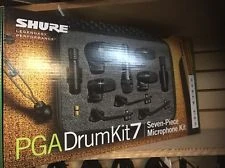
Buying a drum microphone kit is one of those decisions that can either save you hundreds of dollars and years of headaches — or leave you wishing you'd done more homework. If you've landed here, you're probably weighing up the Shure PGA DrumKit7 against a handful of other contenders, trying to figure out which seven-piece kit actually delivers professional results without cleaning out your bank account.
Good news: that's exactly what this guide is for. We're going to pull apart the PGA DrumKit7 piece by piece, stack it up against the competition, and give you honest, no-nonsense advice on whether it's the right fit for your setup — whether you're gigging around Sydney, recording in a Melbourne home studio, or running sound at a community venue in regional Queensland.
What's Actually in the Shure PGA DrumKit7 Box?
Before we compare anything, let's be clear about what you're getting. The PGA DrumKit7 is a seven-microphone package designed to cover a full standard drum kit in one purchase. Here's the breakdown:
- 1x PGA52 — Kick drum microphone (dynamic, cardioid). Purpose-built for bass drums with a tailored low-frequency response that captures the punch and thump without turning muddy.
- 3x PGA56 — Tom/snare microphones (dynamic, cardioid). Compact clip-on design with a frequency response shaped for close-miking toms and snare. The integrated swivel adaptor makes positioning a breeze.
- 3x PGA81 — Overhead/hi-hat condenser microphones (condenser, cardioid). Pencil condensers with a smooth, flat response ideal for capturing cymbals, hi-hats, and overall kit ambience.
You also get three AP56DM drum mounts for the PGA56 microphones, XLR cables for every mic in the kit, and a rugged carrying case. That last point matters more than people realise — individual mic cases get lost on gigs, but a single carry case keeps everything together and protected.
Why the PGA DrumKit7 Stands Out: Key Strengths
Let's talk about what Shure has genuinely nailed with this kit before we get into comparisons.
Three Condensers, Not Just Dynamics
This is the PGA DrumKit7's most significant advantage in its price bracket. Many competing kits at similar price points give you seven dynamic mics, or perhaps one condenser and six dynamics. Shure includes three PGA81 pencil condensers, which makes a substantial difference to your overhead and cymbal sound. Condensers capture the shimmer, detail, and transient attack of cymbals far more accurately than dynamics. If you've ever wondered why your overhead recordings sound dull or lifeless, the microphone type is almost certainly the reason.
Shure Build Quality and Reliability
There's a reason Shure has been the go-to brand on stages worldwide for decades. The PGA series sits below their flagship SM and Beta lines, but it still inherits the robust build quality the brand is known for. These mics handle the rigours of live performance — accidental stick hits, transport bumps, humidity changes during outdoor gigs. For Australian conditions specifically, where you might be playing an outdoor festival in 38-degree heat one weekend and a humid coastal venue the next, that reliability matters.
Integrated Drum Mounts
The included AP56DM drum mounts clip directly onto tom and snare rims, eliminating the need for separate mic stands around your kit. This is a practical advantage that's easy to underestimate until you've tried to squeeze four mic stands into the tight space around a drum kit on a small pub stage. Less clutter, faster setup, fewer things to knock over.
Complete Cable Package
Every microphone comes with its own XLR cable. It sounds basic, but several competing kits ship without cables, and buying seven quality XLR leads separately adds $100-$180 to your total cost. Factor this into any price comparison.
Head-to-Head: PGA DrumKit7 vs the Competition
Now for the comparison you're really here for. Let's stack the Shure PGA DrumKit7 against the drum mic kits it's most commonly compared to in Australia.
| Feature | Shure PGA DrumKit7 | Audix FP7 | Sennheiser e600 | AKG Drum Set Session I |
|---|---|---|---|---|
| Total Mics | 7 | 7 | 7 (varies by pack) | 7 |
| Condenser Mics Included | 3 (PGA81) | 2 (FP5) | 2 (e614) | 2 (P17) |
| Dynamic Mics Included | 4 (1x PGA52, 3x PGA56) | 5 (1x f6, 4x f2) | 5 (1x e602-II, 4x e604) | 5 (1x D112, 4x P4) |
| Cables Included | Yes — all 7 | No | No | Varies |
| Drum Mounts | 3x AP56DM | 4x DVICE clips | 4x MZH604 clips | 4x clips |
| Carrying Case | Yes | Yes | Yes | Yes |
| Approx. AU Price Range | $850–$1,050 | $800–$950 | $1,100–$1,400 | $850–$1,100 |
| Best For | Balanced live/studio use | Live sound, loud stages | Premium studio recording | Studio-leaning projects |
Shure PGA DrumKit7 vs Audix FP7
The Audix FP7 is probably the most direct competitor. At a similar price point, you get seven mics with Audix's well-regarded f-series dynamics and two FP5 condensers for overheads. The Audix dynamics — particularly the f6 kick mic — are excellent for live sound and handle high SPLs without flinching.
Where the Shure wins: You get three condensers instead of two, which gives you dedicated mics for left overhead, right overhead, and hi-hat without needing to buy anything extra. The included XLR cables also add genuine value that's easy to overlook. If you're starting from scratch with no cables in your kit, the PGA DrumKit7 is ready to plug in straight away.
Where Audix wins: The f-series dynamics arguably have a slightly more refined sound than the PGA dynamics, particularly on toms. The DVICE clips are also excellent — some engineers prefer them to Shure's AP56DM mounts. And you get four clips instead of three, covering all your toms plus the snare.
Verdict: For someone who primarily does live sound and already owns cables, the Audix FP7 is a strong alternative. For a complete, out-of-the-box solution with more overhead flexibility, the Shure edges ahead.
Shure PGA DrumKit7 vs Sennheiser e600 Series Drum Pack
Stepping up in price, the Sennheiser e600 drum pack includes the legendary e602-II kick mic, four e604 clip-on dynamics, and two e614 condensers. This is a genuinely premium kit.
Where Sennheiser wins: The e602-II is widely considered one of the best kick drum microphones available at any price. It delivers a huge, controlled low end that sits beautifully in a mix with minimal EQ. The e604 tom mics are also superb — they've been an industry standard on hire company riders for years. If sound quality alone is your deciding factor, the Sennheiser kit has the edge.
Where the Shure wins: Price. You're looking at saving $250–$400 going with the PGA DrumKit7, and you get the included cables. The third condenser is also a genuine advantage — the Sennheiser pack gives you only two condensers, same as the Audix. For gigging musicians on a tighter budget, the Shure delivers solid professional quality without the premium price tag.
Verdict: If budget allows and recording quality is paramount, the Sennheiser is the better investment for studio work. For live sound and mixed-use scenarios where value matters, the PGA DrumKit7 holds its own impressively.
Shure PGA DrumKit7 vs AKG Drum Set Session I
AKG's drum kit package includes the iconic D112 kick mic alongside P4 dynamics and P17 condensers. The D112 alone has a storied reputation, having been used on countless recordings since the 1980s.
Where AKG wins: The D112 is a genuine classic. Its distinctive egg shape and punchy, present bass drum sound have earned it a permanent place in studios worldwide. If you value having a kick mic with serious pedigree, the AKG package delivers.
Where the Shure wins: The P4 and P17 microphones, while decent, don't carry the same consistent quality as Shure's PGA series across the board. The PGA DrumKit7 is a more balanced package overall — every mic in the kit pulls its weight, rather than one standout mic carrying the rest. The three condensers also give you more recording flexibility.
Verdict: The AKG set is worth considering if you particularly value the D112 kick mic. As an overall package, the PGA DrumKit7 offers better consistency across all seven microphones.
Who Should Buy the Shure PGA DrumKit7?
Not every drum mic kit suits every drummer or engineer. Here's an honest breakdown of who this kit is genuinely right for — and who should look elsewhere.
Best For: Gigging Drummers Who Also Record
If you play live regularly and want to record demos or tracks in a home studio, this kit hits a sweet spot. The dynamics handle stage volumes brilliantly, while the three PGA81 condensers give you proper studio-quality overhead capture. You won't outgrow this kit quickly, and the included cables and case make load-in and pack-down straightforward.
Best For: Churches, Schools, and Community Venues
Organisations that need reliable, set-and-forget drum miking will appreciate the PGA DrumKit7. The drum mounts keep things tidy, the mics handle accidental abuse (because it will happen), and the Shure name means any volunteer sound operator can find tutorials and guidance online. The complete package also simplifies budgeting — no surprises with additional cable or mount purchases.
Best For: Sound Engineers Building a Mic Collection
Buying a kit is substantially cheaper than purchasing seven individual microphones of equivalent quality. The PGA DrumKit7 gives you a solid drum mic foundation that you can upgrade piece by piece over time. Start with this kit, then swap in an SM57 on the snare or a Beta 52A on the kick as your budget allows. The PGA81 overheads are good enough that many engineers never feel the need to replace them.
Consider Something Else If: You're a Serious Studio Engineer
If your primary focus is professional studio recording and budget isn't the main constraint, the Sennheiser e600 pack or a custom selection of individual mics (SM57s, a Beta 52A, and dedicated large-diaphragm condensers) will give you better results. The PGA series is designed to be excellent value, not to compete with mics costing two or three times as much individually.
Consider Something Else If: You Only Need a Basic 4-Mic Setup
For smaller kits or simpler miking approaches (kick, snare, two overheads), a seven-piece kit is overkill. Shure offers the PGA DrumKit4, and you could also put together a custom four-mic setup for less money. Don't buy seven mics if you're only going to use four.
Technical Specs Worth Understanding
Let's dig into the specifications that actually matter for real-world performance.
PGA52 Kick Drum Mic
- Type: Dynamic, cardioid
- Frequency Response: 50 Hz – 12 kHz
- Key Characteristic: Tailored low-mid scoop and presence peak designed specifically for kick drums. This means less EQ work at the mixing desk.
- Practical Note: The built-in frequency shaping means this mic sounds great on kick drums but isn't particularly versatile for other applications. That's by design — it's a specialist tool.
PGA56 Tom/Snare Mics
- Type: Dynamic, cardioid
- Frequency Response: 50 Hz – 15 kHz
- Key Characteristic: Compact profile with integrated swivel adaptor. The frequency response is shaped to emphasise the attack and body of drums while controlling bleed from adjacent sources.
- Practical Note: The clip-on mount is secure but straightforward to reposition. Once you find the sweet spot on a tom rim, it stays put even during vigorous playing.
PGA81 Condenser Mics
- Type: Condenser, cardioid
- Frequency Response: 40 Hz – 18 kHz
- Key Characteristic: Smooth, flat response with natural high-frequency detail. Requires 48V phantom power from your mixer or interface.
- Practical Note: These are genuinely good pencil condensers that punch above their price point. They work well not just as drum overheads but also for acoustic guitar, strings, and choir recording. Versatile mics that earn their keep beyond the drum kit.
Important: The PGA81 condensers require phantom power. Make sure your mixer, audio interface, or stagebox can supply 48V phantom power on at least three channels. Most modern mixers and interfaces handle this easily, but it's worth confirming before you buy if you're running older gear.
Getting the Best Results: Setup Tips for the PGA DrumKit7
Owning good mics is only half the equation. Here are some practical tips to get the most out of this kit.
Kick Drum (PGA52)
Position the PGA52 just inside the resonant head port hole, angled slightly toward the beater. Moving it closer to the beater emphasises attack and click; pulling it back toward the port hole or even outside the drum gives you more boom and resonance. Start about 5-10cm inside the hole and adjust to taste.
Toms and Snare (PGA56)
Clip the mounts onto the rim with the mic capsule pointing at the centre of the drumhead, roughly 2-5cm above the head. Angle matters — pointing too far toward the centre can result in proximity effect bass build-up, while too far toward the edge thins the sound. Most engineers find a 45-degree angle from the rim works as a starting point.
Overheads (PGA81)
For live sound, a spaced pair positioned about 60-90cm above the cymbals works well. For recording, consider a spaced pair or XY coincident configuration — the PGA81's tight cardioid pattern makes XY particularly effective for controlled stereo imaging. Use the third PGA81 as a dedicated hi-hat mic, positioned 10-15cm above and slightly to the side of the hi-hat cymbals.
Value Analysis: What You're Really Paying For
Let's break down the true value proposition. If you were to purchase equivalent Shure microphones individually:
| Component | Approx. Individual AU Price | Quantity | Subtotal |
|---|---|---|---|
| PGA52 Kick Mic | $180–$220 | 1 | $180–$220 |
| PGA56 Tom/Snare Mic | $130–$160 | 3 | $390–$480 |
| PGA81 Condenser Mic | $160–$200 | 3 | $480–$600 |
| XLR Cables (5m) | $15–$25 | 7 | $105–$175 |
| Drum Mounts | $25–$35 | 3 | $75–$105 |
| Estimated Individual Total | $1,230–$1,580 |
Against the kit price of roughly $850–$1,050, you're looking at savings of $300–$500 compared to buying everything separately. That's a significant saving, and it's one of the strongest arguments for buying a bundled kit over piecing things together individually.
Common Mistakes When Buying Drum Mic Kits
Before you pull the trigger on any drum mic kit, avoid these common pitfalls:
- Ignoring the condenser count. More condensers means better overhead and cymbal capture. A kit with all dynamics will sound noticeably flat on top. The PGA DrumKit7's three condensers are a genuine advantage here.
- Forgetting about phantom power. Condensers need 48V phantom power. If your mixer only has phantom power on a couple of channels, you'll need to budget for an upgrade or an external phantom power supply.
- Not factoring in cables and accessories. A $750 kit that doesn't include cables ends up costing $900+ once you add them. Always compare total cost, not just sticker price.
- Buying more mics than you need. If you're only miking kick and snare with a pair of overheads, a four-piece kit makes more sense. Don't pay for seven mics you won't use.
- Overlooking channel count. Seven mics need seven mixer/interface channels. Make sure your setup has enough inputs before buying a seven-piece kit. Many budget audio interfaces only offer two or four inputs.
Questions to Ask Yourself Before Buying
Run through this checklist to make sure you're making the right choice:
- How many mics do I actually need? Count your drums and cymbals, then decide your miking approach. Seven covers a standard five-piece kit comprehensively.
- Do I have enough mixer/interface inputs? You need at least seven channels, with phantom power on three of them for the PGA81 condensers.
- Is this primarily for live sound, recording, or both? The PGA DrumKit7 handles both well, but dedicated studio engineers may want higher-end options.
- What's my realistic total budget? Remember to include any stands, cables, or adapters you might still need beyond what's in the box.
- Am I planning to upgrade individual mics later? If so, the PGA DrumKit7 is an excellent starting platform — you can swap in SM57s, Beta mics, or other favourites over time.
The Honest Verdict
The Shure PGA DrumKit7 is, in our assessment, the best complete value proposition in seven-piece drum mic kits available in Australia right now. It's not the cheapest option, and it's not the absolute best-sounding — but it strikes an exceptional balance between sound quality, build reliability, included accessories, and overall cost.
The three-condenser configuration is the standout feature that genuinely separates it from most competitors at this price point. Combined with Shure's well-earned reputation for reliability, the included cables and mounts, and the practical carrying case, it's a kit that's ready to work straight out of the box.
For gigging musicians, worship teams, school programs, small venue operators, and home studio owners who want professional drum sound without spending $1,500+, the PGA DrumKit7 is difficult to beat. It's the kind of purchase that pays for itself quickly and doesn't leave you wanting an upgrade after six months.
Check Price & Availability — Shure PGA DrumKit7 at MusiconStage
Frequently Asked Questions
Can I use the PGA81 condensers for instruments other than drums?
Absolutely. The PGA81 is a versatile pencil condenser that works beautifully on acoustic guitar, strings, piano, percussion, and as a choir mic. Buying the DrumKit7 effectively gives you three general-purpose condensers as a bonus.
Do I need a drum mic kit, or should I buy individual mics?
If you're starting from scratch, a kit offers substantially better value — typically 25-35% cheaper than buying equivalent individual mics plus cables and accessories. If you already own some quality mics and just need to fill gaps, buying individual pieces makes more sense.
Is the PGA DrumKit7 good enough for professional recording?
For demo-quality and project studio recording, yes. The PGA series produces clean, usable tracks that mix well. For commercial-level studio recordings where every nuance matters, most professional engineers would step up to the SM/Beta series or equivalent-tier mics from other brands.
What's the difference between the PGA DrumKit7 and the PGA DrumKit4?
The DrumKit4 includes just four mics: one PGA52 kick mic, two PGA56 tom/snare mics, and one PGA81 condenser overhead. It's designed for simpler miking setups and costs considerably less. Choose the DrumKit7 if you want full tom miking and three overhead/cymbal mics.